
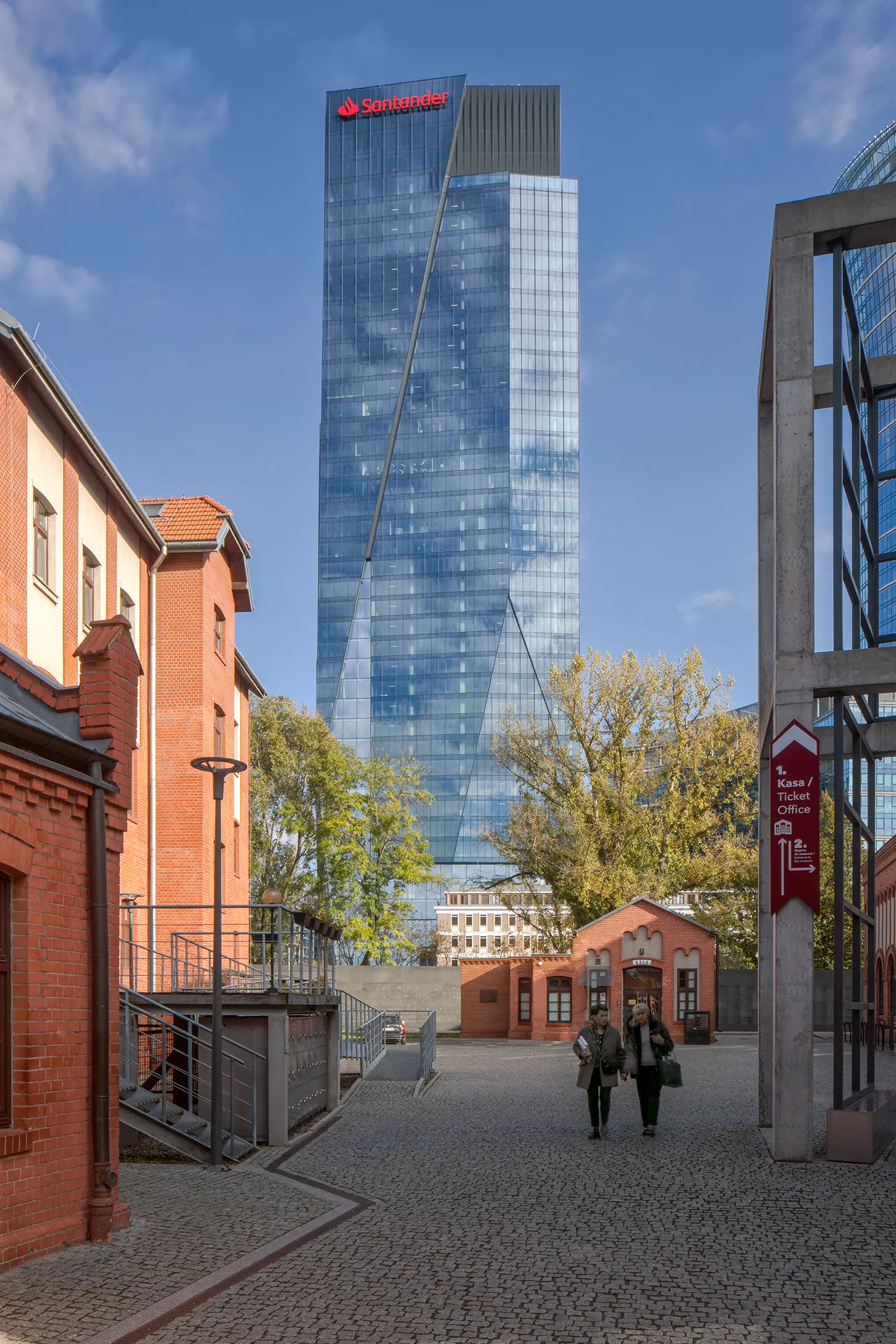
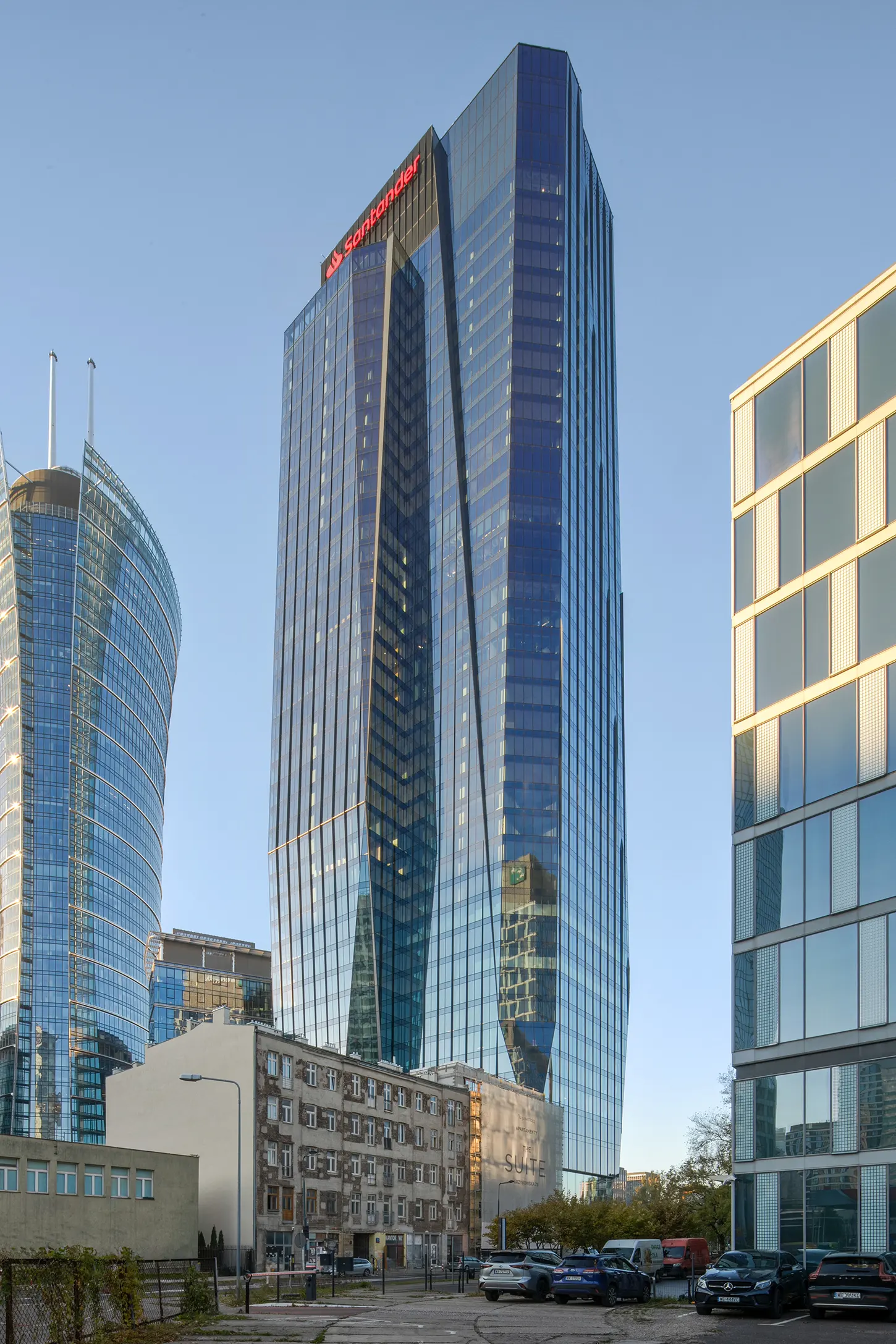
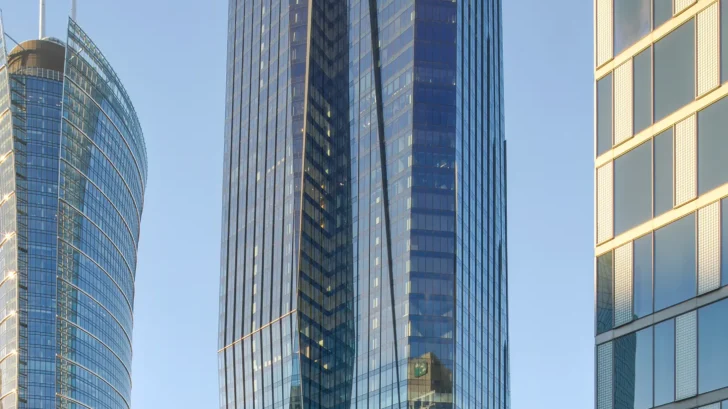
The Bridge Tower in Warsaw (Poland), designed by UNS for Ghelamco and delivered in collaboration with Projekt Polsko-Belgijska Pracownia Architektury, establishes a striking new presence in the city’s skyline. Rising 174 metres, this contemporary office tower seamlessly connects with the historic Bellona building, a former printing house and protected monument—via a double-height glazed lobby. The result is a thoughtful architectural dialogue, where Warsaw’s past and future are visually and functionally intertwined.
Spatial Organisation and Urban Integration
The Bridge Tower introduces 47,000 square metres of office space, complemented by approximately 280 parking spaces, extensive bicycle facilities, chargers for electric vehicles, and dedicated parking for e-bikes and scooters. The 40th floor features a private terrace reserved exclusively for tenants, offering panoramic city views. UNS’ approach extends to the renovation of the Bellona building’s interiors, reinforcing the project’s commitment to both heritage and contemporary workplace needs.
Connecting Eras: The Central Lobby
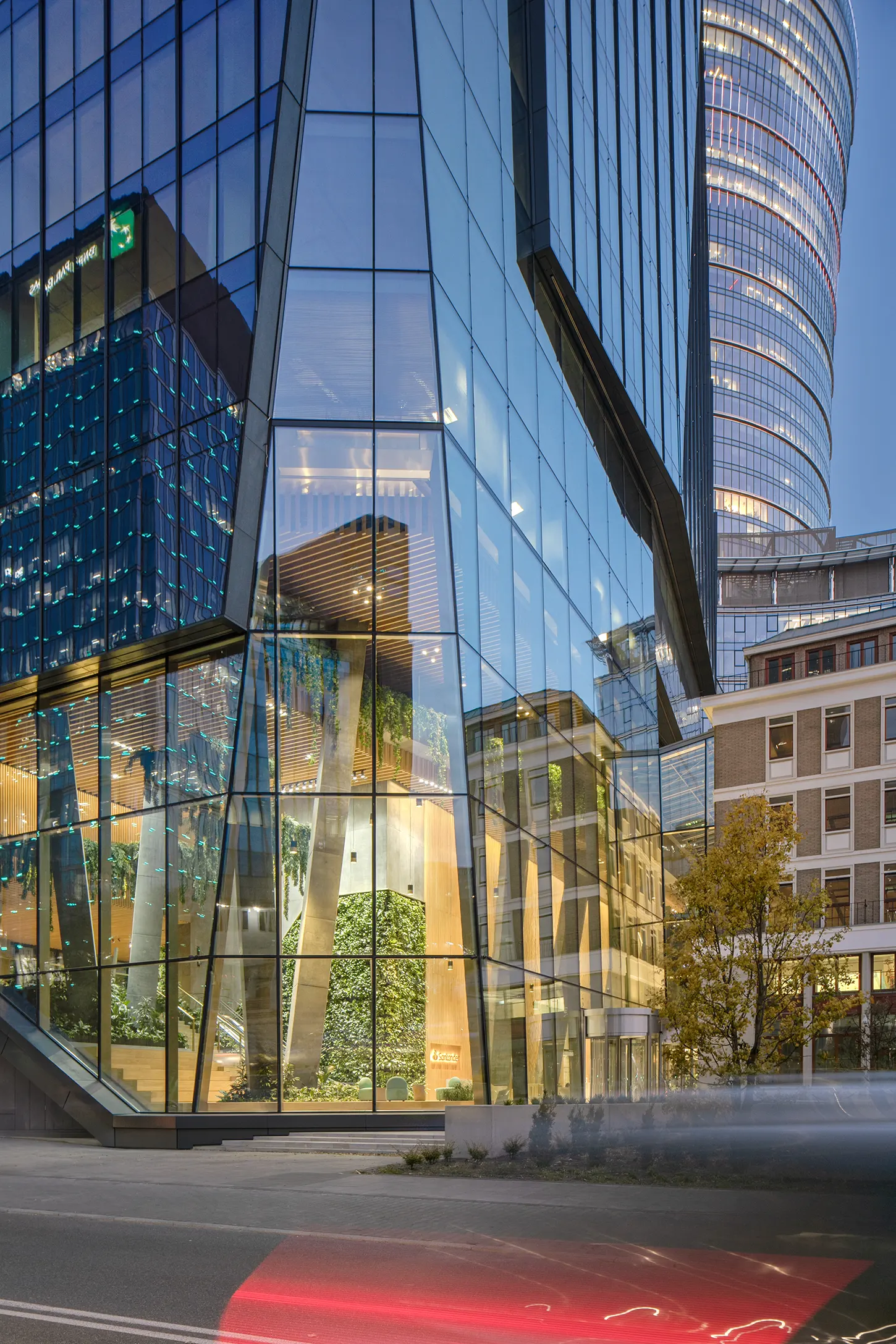
At the heart of the development is a transparent “bridge”, a double-height glass volume that links the new tower to the Bellona building. This space preserves original elements, including the colonnade, staircase, and three of the four historic facades, meticulously restored under conservation guidelines. The intervention introduces a new staircase, panoramic elevator, and internal atrium, breathing new life into the monument and enhancing its usability.
Materiality and Atmosphere
The connective lobby’s design balances robust graphite-toned concrete columns with warmth and greenery. Wooden panels, green walls, and plant installations create a welcoming environment, while a mezzanine and wide multifunctional stairs provide areas for informal meetings and moments of pause. This lobby becomes a vibrant focal point, fostering interaction and community within the development.
Technological Innovation and Sustainability
The Bridge Tower exemplifies sustainable urban development. Designed for energy neutrality, the building is powered by renewable energy from nearby photovoltaic farms. An advanced Building Energy Management System monitors and optimises energy use, while innovative vacuum sewer technology reduces water consumption in toilets by up to 75 percent. The project is the first commercial property in Central and Eastern Europe to achieve both SmartScore and WiredScore certification, and is set to receive BREEAM, Well, Green Building Standard, and Building Without Barriers accreditations.
Smart Operations and Health
Ghelamco’s proprietary Signal OS platform enables smart management of water, energy, and air quality throughout the building. Health and safety measures include virucidal UV lamps in lifts and air handling units, ensuring a safe and comfortable environment for all occupants. These features, combined with the project’s sustainability credentials, establish a new standard for responsible urban development while safeguarding the Bellona building’s historical significance.
Ben van Berkel, Founder and Principal Architect of UNS, states: “By carefully blending the historic Bellona building with a modern high-rise, The Bridge Tower created a space that not only respects history but also embraces innovation. This connection is more than just visual – it is functional, sustainable, and designed to enhance the everyday experience of its users.”
Discover more of the project in our gallery:
Project Credits
Client: Ghelamco Poland
UNS Team: Ben van Berkel, Arjan Dingsté, Juergen Heinzel, Stella Nikolakaki, Piotr Kluszczynski, Bogdan Chipara, Vladislava Parfjonova, Fabio Negozio, Ilaria Ronchi, Bart Bonenkamp, Yinfei Gu, Thys Schreij, Robert Duffield, Daniel Cely
Advisors: Structure and MEP: WSP Poland; Local Architect: PPBPA (Projekt Polsko Belgijska Pracownia Architektury); Lighting Design: Licht&Soehne; Green Design: Moss
Photography: Piotr Krajewski