

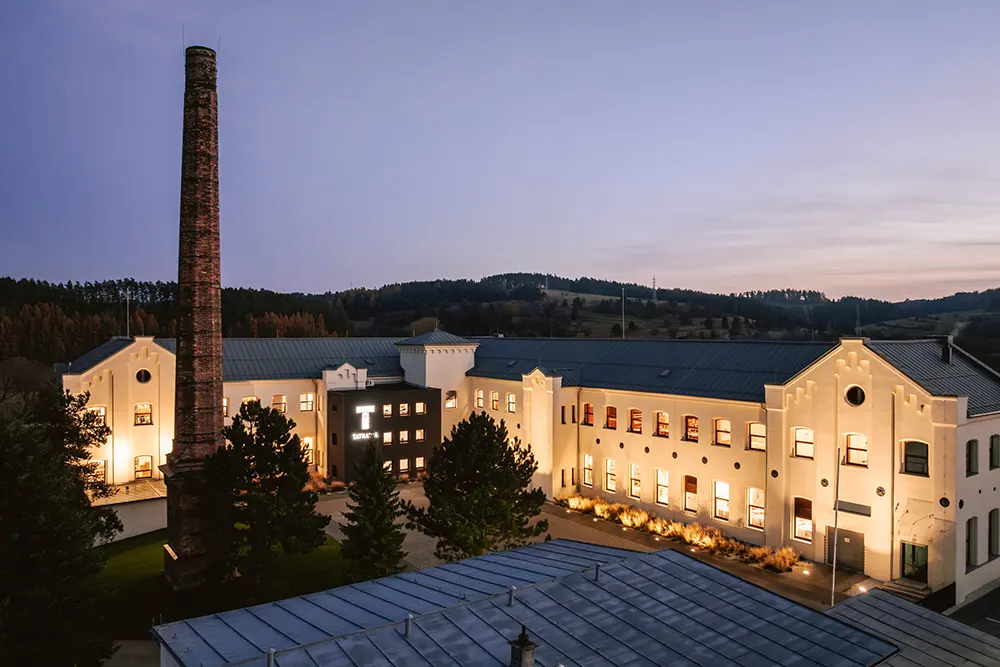
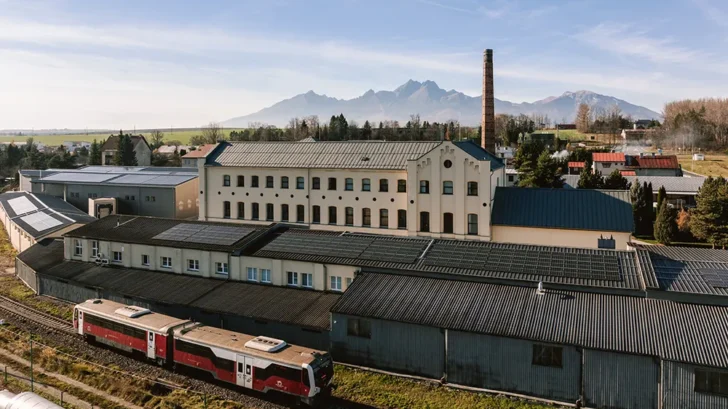
Pradiareň Kežmarok by BEEF ARCHITEKTI transforms a former spinning mill complex beneath the High Tatras into a contemporary production and administrative facility while retaining the building’s original industrial character. Founded in 1860 by Karol Wein, the mill once ranked among the most advanced factories in the Austro-Hungarian Empire, operating continuously until 1946. Under the later name Tatraľan, the site functioned as a mechanical flax spinning and weaving mill that employed up to 2,500 workers before production eventually ceased after 1989.
INDUSTRIAL ARCHITECTURE
Despite decades of neglect, the complex retained architectural significance, leading to the main production building receiving National Cultural Monument status. When the current investor acquired the site, the condition of the structure required extensive intervention. A stream runs directly beneath the building, while parts of the foundations rest on wooden piles weakened by prolonged exposure to moisture. Water infiltration had damaged masonry, floors, and ceilings, making comprehensive structural reinforcement and conservation work unavoidable.
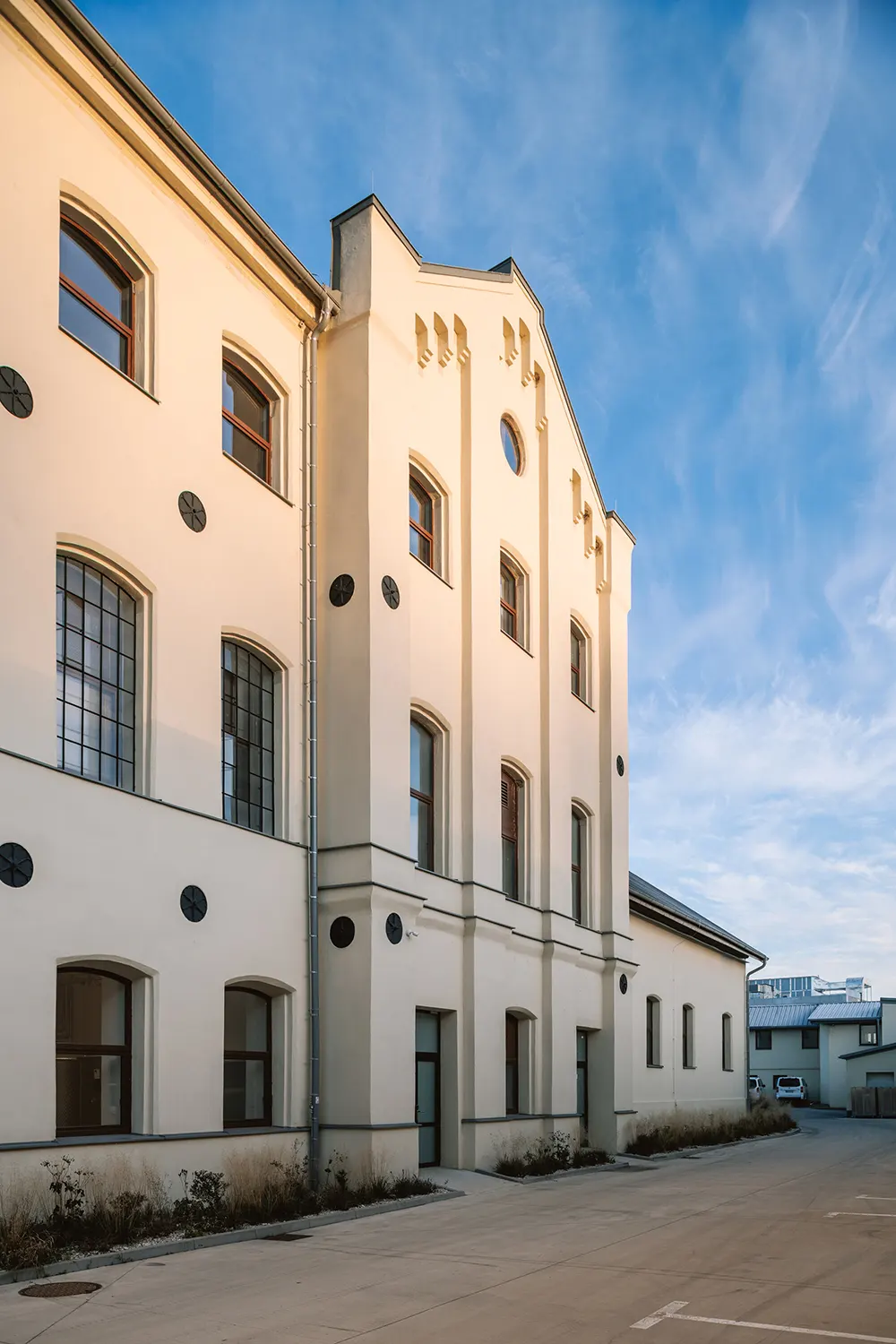
In 2019, the investor initiated an architectural competition aimed at integrating a contemporary production and administrative program for a spirits manufacturer within the historic structure. The winning proposal by BEEF ARCHITEKTI focused on establishing a clear relationship between the original industrial fabric and new architectural layers while reopening the site to public life. Although the mill sits on the edge of Kežmarok within an industrial zone, the project positions it as a potential urban anchor through the introduction of accessible public spaces.
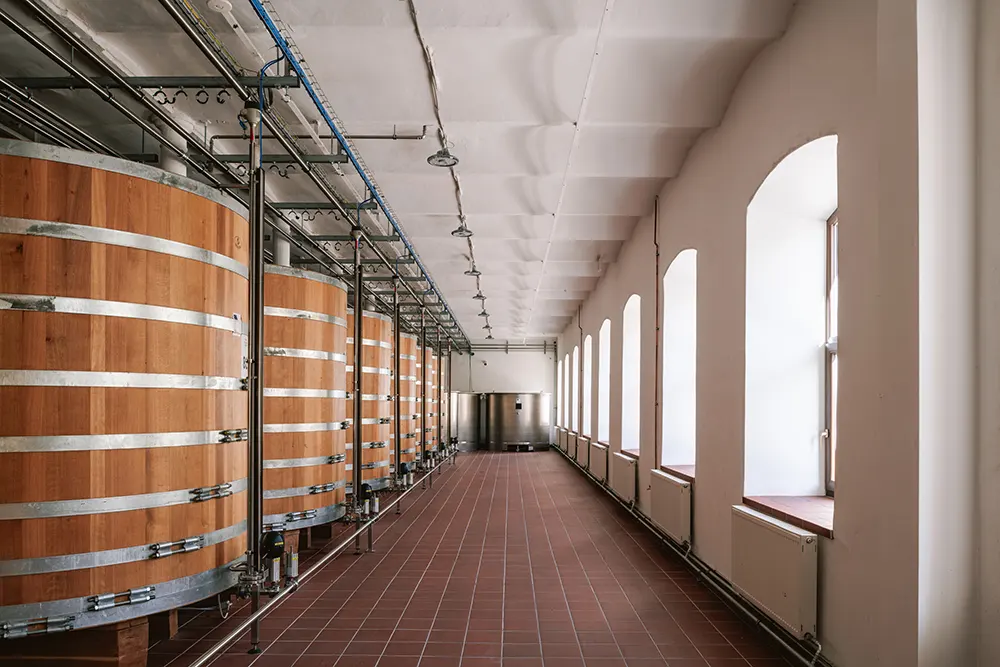
The masterplan proposes a combination of production, cultural, recreational, and social functions. A new extension introduces public-facing programs on the ground floor, including a café, company store, and a museum dedicated to the history of flax processing. The first completed phase concentrated on adapting the original building to house production facilities, administrative offices, tasting rooms, and guest apartments, allowing the site to regain activity while supporting its new operational role.
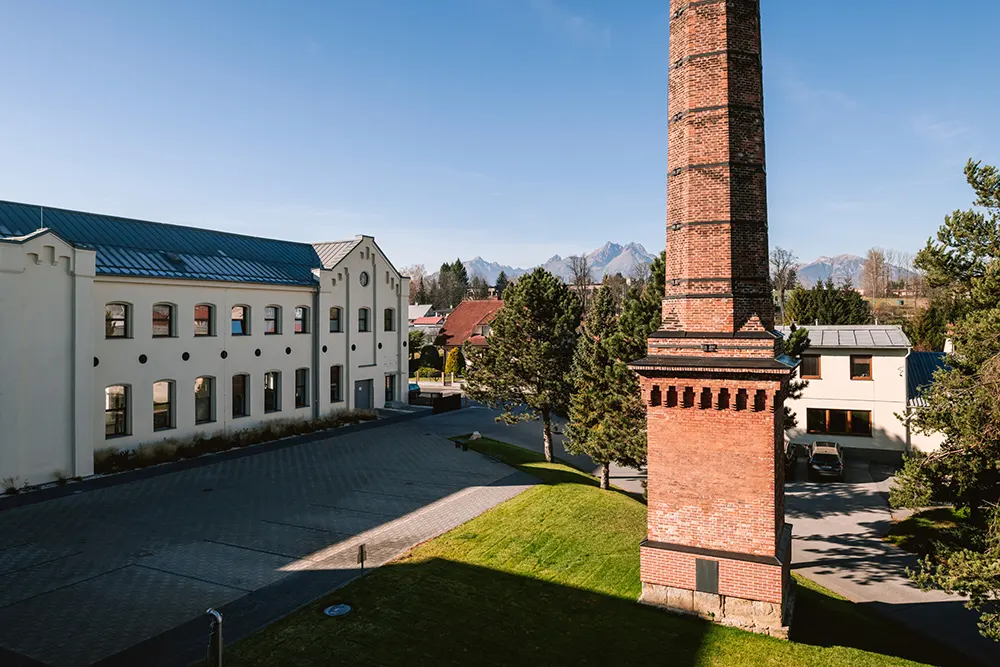
Given its protected status, the project required close coordination with the Heritage Office. The design team preserved key architectural details, including cast-iron structural elements decorated with flax-flower motifs and the original brick chimney. The chimney now awaits conversion into a panoramic viewing tower oriented toward the Tatra Mountains, further extending the site’s public dimension.
Respect for the existing structure guided decisions throughout the process. Later additions that disrupted the original proportions, particularly the boiler house, were removed to restore the clarity of the building’s massing. One smaller annex remained for functional reasons, providing staff facilities, yet its separation from the main volume maintains a legible architectural composition. Exposed cast-iron elements remain visible alongside terracotta floors and light plaster finishes. New architectural components adopt a restrained palette, ensuring the historic fabric continues to define the spatial character.
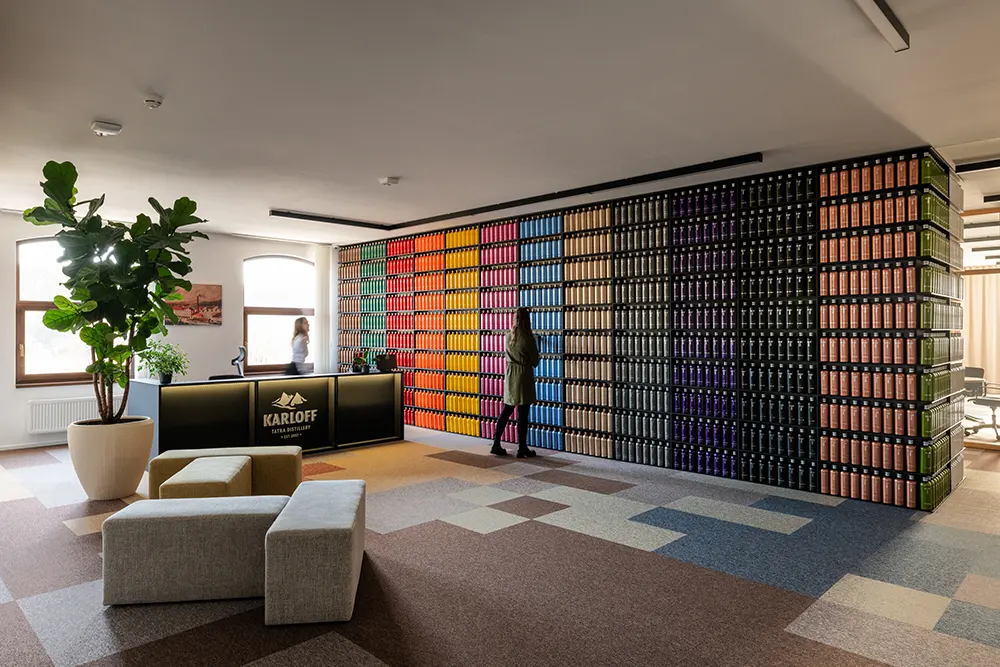
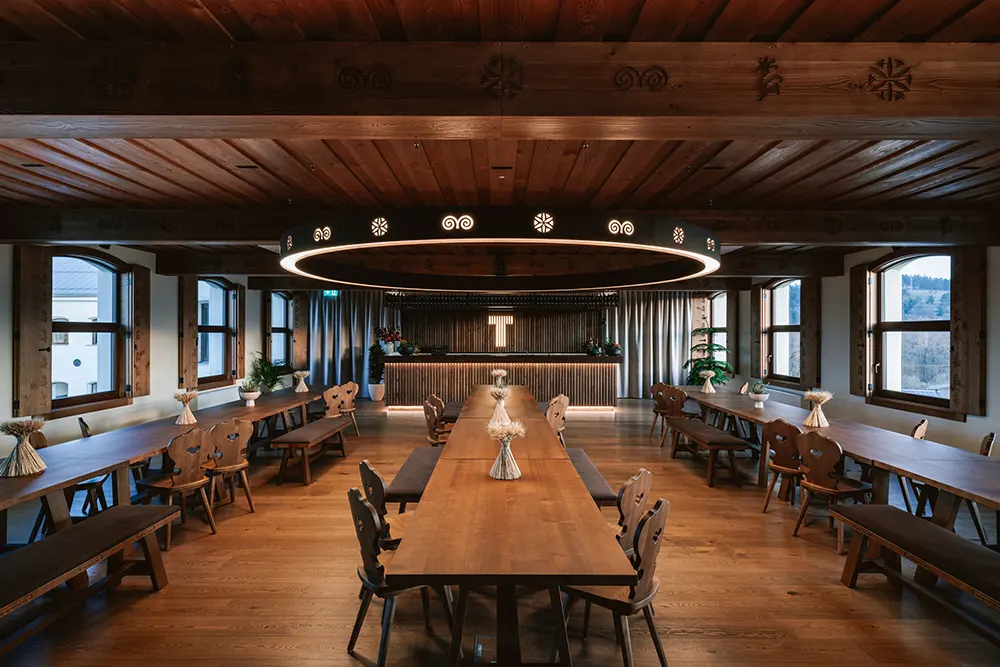
Inside, the renovation emphasizes the logic of the original construction. Cast-iron columns, brick vaults, and semi-vaulted ceilings remain intact and visible. Cleaning and repainting preserved the natural texture of the surfaces, while new floors, railings, and lighting systems appear with deliberate simplicity. Technical upgrades, particularly fire safety measures required for alcohol production and storage, were integrated carefully to limit visual disruption.
The project’s significance lies in its ability to introduce a new purpose without erasing the building’s identity. By combining careful restoration with contemporary use, Pradiareň Kežmarok now functions as an active production site and a public destination. The redevelopment also provides a new shared space within an area previously defined by industry alone, positioning the former mill as a renewed focal point within Kežmarok’s evolving urban fabric.
Studio: BEEF ARCHITEKTI
Author: Rado Buzinkay, Andrej Ferenčík
Co-author: Lukáš Valenčin
Project location: Pradiareň, Kežmarok, Slovakia
Project year: 1st phase: 2022
2nd phase: 2025-2026
Completion year: 1st phase: 2024
Usable floor area: 4 622 m²
Plot size: 12 199 m²
Client: Karloff
Photographer: Jakub Čaprnka