
.lacum respira by .ket bureau is a lakeside pavilion conceived for St. Moritz, where landscape serve as an active framework shaping daily life. Set along the shores of Lake St. Moritz, the project responds to a place defined by seasonal rituals, alpine geography, and a long tradition of engaging with nature through sport, gathering, and contemplation. The pavilion approaches this setting with restraint, positioning architecture as a continuation of the terrain rather than an object placed upon it.
CULTURAL
The lakeshore holds a particular significance within St. Moritz, functioning as a shared ground for winter festivals, movement, and pause. Any intervention here demands sensitivity. The ambition behind .lacum respira lies in creating a structure that absorbs the character of its surroundings, allowing the presence of water, mountains, and light to shape its form and atmosphere. The architecture avoids monumentality, instead settling into the landscape through proportion, material, and rhythm.
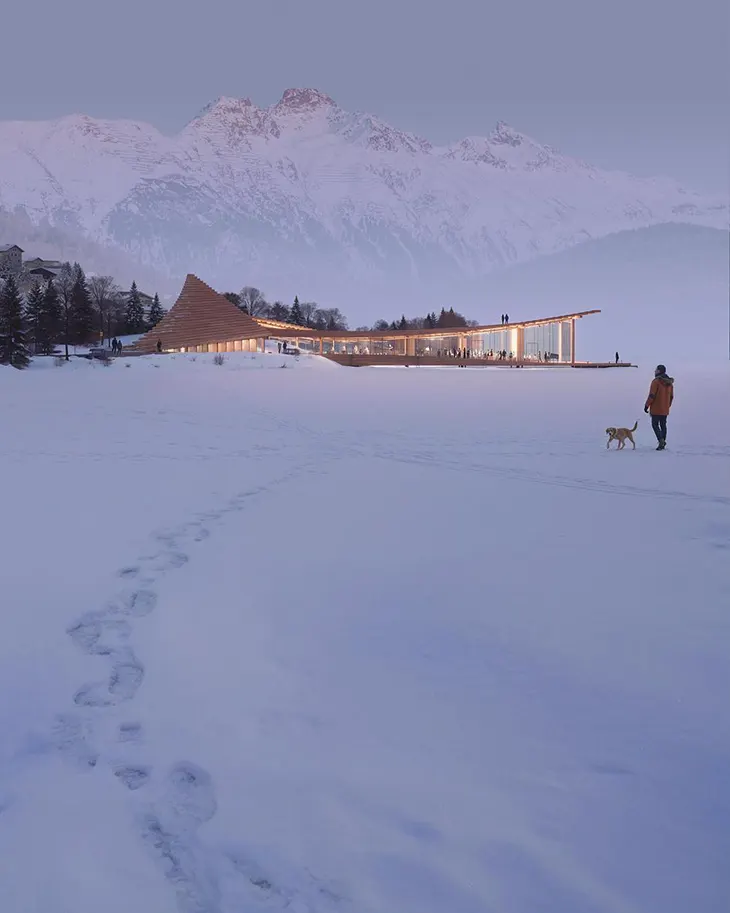
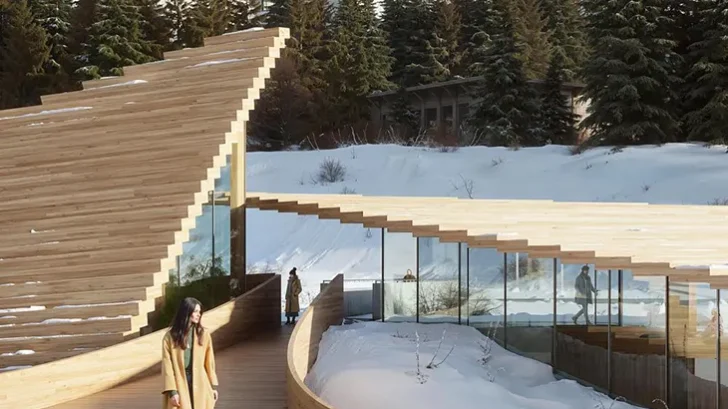
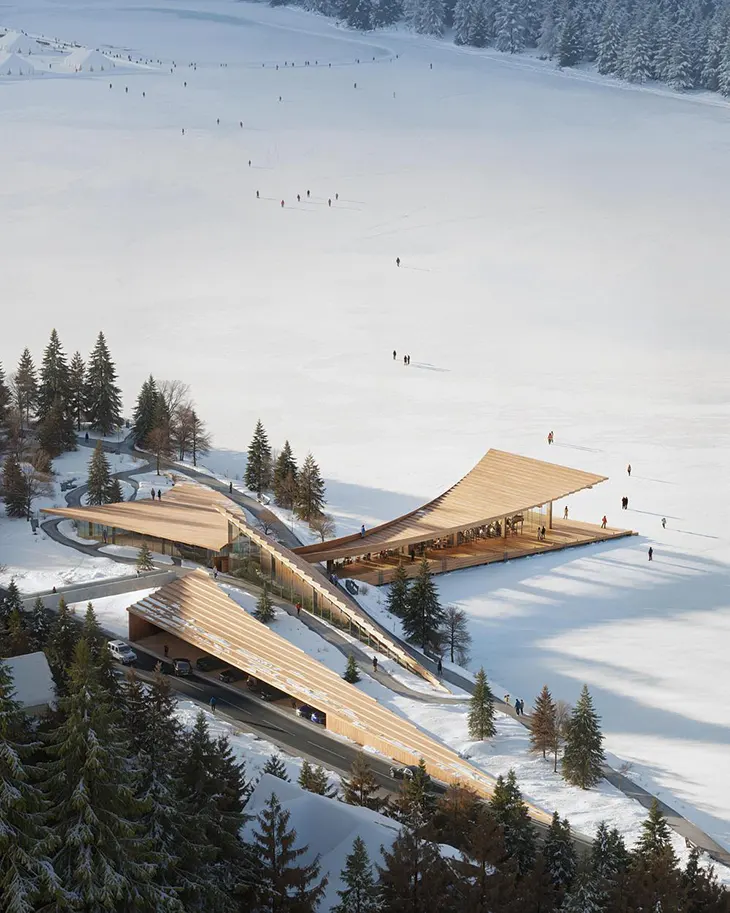
The design draws inspiration from traditional Swiss wooden architecture, known for its clarity and close relationship with climate and place. Rather than reproducing historical forms, the pavilion interprets these principles through a contemporary lens. Its sloping silhouettes echo the contours of the surrounding relief, tracing gentle lines that follow the lakeshore and align visually with the mountain horizon. The building appears to grow out of the site, reinforcing the sense that it belongs to the natural order of the Engadin valley.
Programmatically, the complex operates as a flexible system intended for year-round use. It integrates a service block with a restaurant, a spa area, a multifunctional conference space, panoramic rooftop zones, and a pier extending into the lake. These elements are arranged to encourage fluid movement rather than fixed sequences. Interior and exterior spaces connect continuously, allowing the experience of the pavilion to shift with weather, light, and season.
Large glazed surfaces invite the landscape inside, dissolving boundaries between enclosed spaces and the open environment. Spatial transitions move between expansive and intimate moments, from open dining areas oriented toward the lake to quieter spa zones set apart from public flow. Narrow passages, bridges, and terraces guide visitors gradually toward the water, heightening awareness of proximity and movement. The pier acts as both a functional extension and a symbolic threshold, marking the passage from land to lake.

Material choices anchor the project firmly within its context. The primary structure uses locally sourced glued ash wood, selected for its strength and thermal performance. Larch forms the pier and columns, chosen for durability in alpine conditions. Concrete appears only at the foundation level, providing structural stability while maintaining a clear distinction from the organic upper structure. Wood surfaces are treated with natural oils and environmentally responsible finishes that protect against moisture and UV exposure while allowing the material to age naturally.
Environmental performance relies on passive strategies. Daylight penetrates deep into the interiors, while cross ventilation supports comfort and reduces energy demand. These decisions position sustainability as an inherent quality of the architecture, derived from orientation, material intelligence, and respect for local climate.
.lacum respira operates as more than a pavilion. It acts as a spatial mediator between city and lake, architecture and landscape. The project frames building as an act of listening, where form responds to site, and space allows the presence of water, air, and mountain to remain dominant.