
Located in the south of Iceland near Kirkjubæjarklaustur, the Skaftárstofa Visitor Center serves as a gateway to Vatnajökull National Park and the wider Skaftárhreppur district. Designed by Arkís Architects, the project approaches architecture as a continuation of the terrain rather than an object placed upon it. The building sits at Sönghóll, where landform, climate, and long-standing construction practices guide both spatial organization and material choice.
CULTURAL
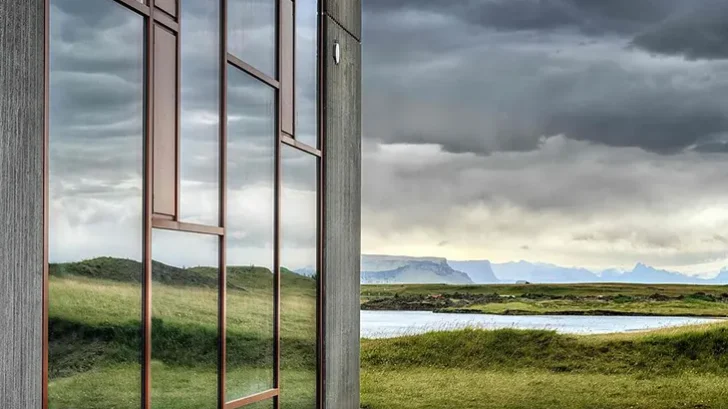
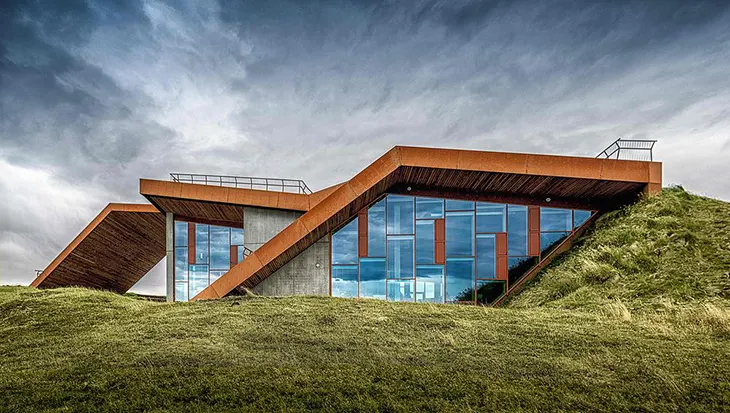
The design draws from regional architectural traditions in which earth and structure work together through mass, profile, and texture. The visitor center adopts a low, grounded presence that follows the contours of the hilly site. Its form reflects the way buildings in the Skaftárhreppur area historically grew from the land, using topography as a shaping force rather than an obstacle. This relationship becomes immediately legible through the turf-covered roof, sourced directly from the site, which visually continues the surrounding landscape and allows visitors to walk across the building itself.
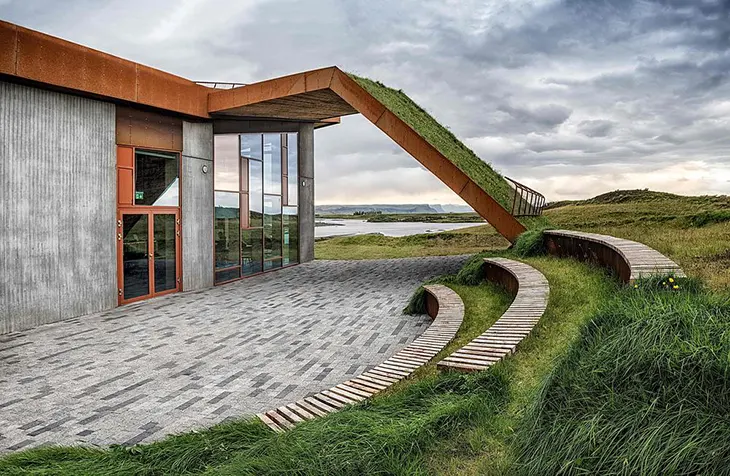
A rooftop walkway and viewing platform form part of the exhibition route, inviting visitors to experience geology and landscape as an extension of the interior narrative. From this elevated path, views open toward Öræfajökull glacier and Hvannadalshnúkur, Iceland’s highest peak, anchoring the visitor experience within the vast scale of the park. The roof functions simultaneously as circulation, exhibition space, and viewing infrastructure, reinforcing the project’s emphasis on physical engagement with place.
Completed in 2024 and opened to the public shortly after, the center functions as both a cultural venue and an information hub for the entire district. It connects directly to surrounding walking paths and external viewing platforms, positioning the building as an active node within the landscape rather than a contained destination. The entrance plaza leads to a covered terrace used for outdoor dining, oriented toward views of the Skaftá river and the distant glacial terrain beyond.
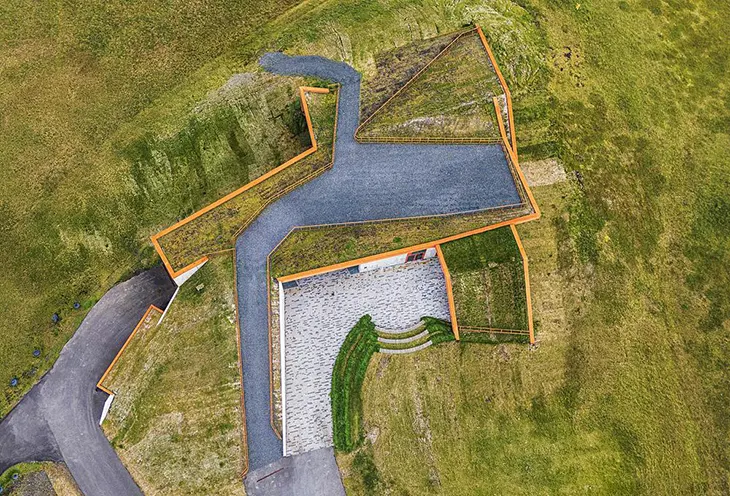
The building consists of a single above-ground level with a partial basement that houses workspaces for national park staff and storage facilities. Parking areas and access roads remain visually discreet, shaped into the terrain to reduce their presence when viewed from the village and neighboring farmland. This careful handling of infrastructure preserves the rural character of the site while maintaining functional clarity.
Environmental responsibility guided the project from design through construction. The visitor center meets international BREEAM certification standards, with strict requirements applied to material sourcing, waste monitoring, and construction practices. All interior and exterior timber cladding comes from forests in South Iceland, ensuring traceability and regional sourcing. The primary structure uses precast concrete panels with a corrugated exterior finish, while polished concrete floors in the exhibition areas incorporate river gravel from major glacial rivers in western Vatnajökull as part of the interpretive content.
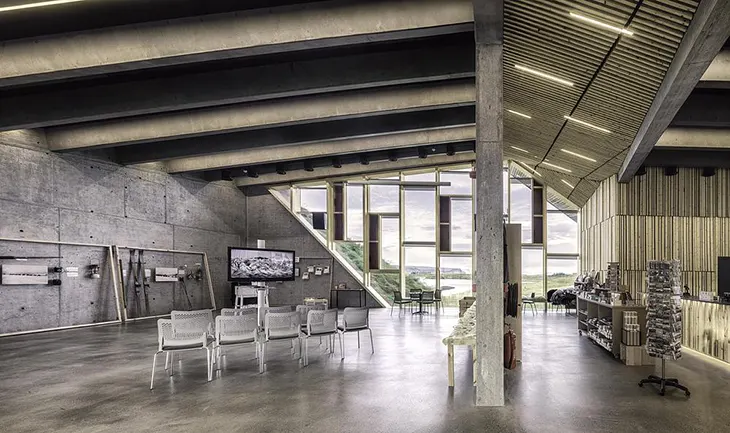
Surface water from the turf roof drains into landscape ponds, supporting local water systems. Materials were selected for durability and low maintenance, allowing natural weathering without the need for applied finishes. Cycling and walking paths link the building to its surroundings, reinforcing accessibility and long-term use.
Skaftárstofa demonstrates how a visitor center can operate as infrastructure, exhibition, and landscape intervention at once. Arkís Architects delivers a project rooted in place, where movement, material, and terrain work together to frame the experience of one of Iceland’s most significant natural environments.