
HW Studio’s Kehai House in Morelia approaches architecture through reduction, restraint, and a precise reading of space as experience. The project begins with a clear conceptual anchor drawn from Kakuzō Okakura’s writing on the void, where absence carries presence and meaning. That idea does not remain theoretical. It drives every spatial decision, turning the house into a built argument about how emptiness can structure daily life.
HOUSING
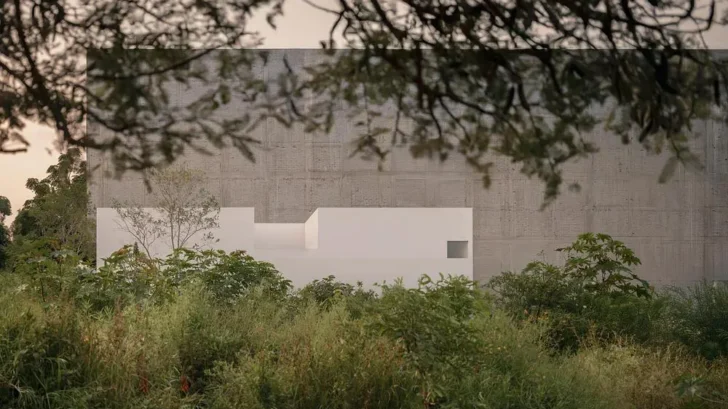
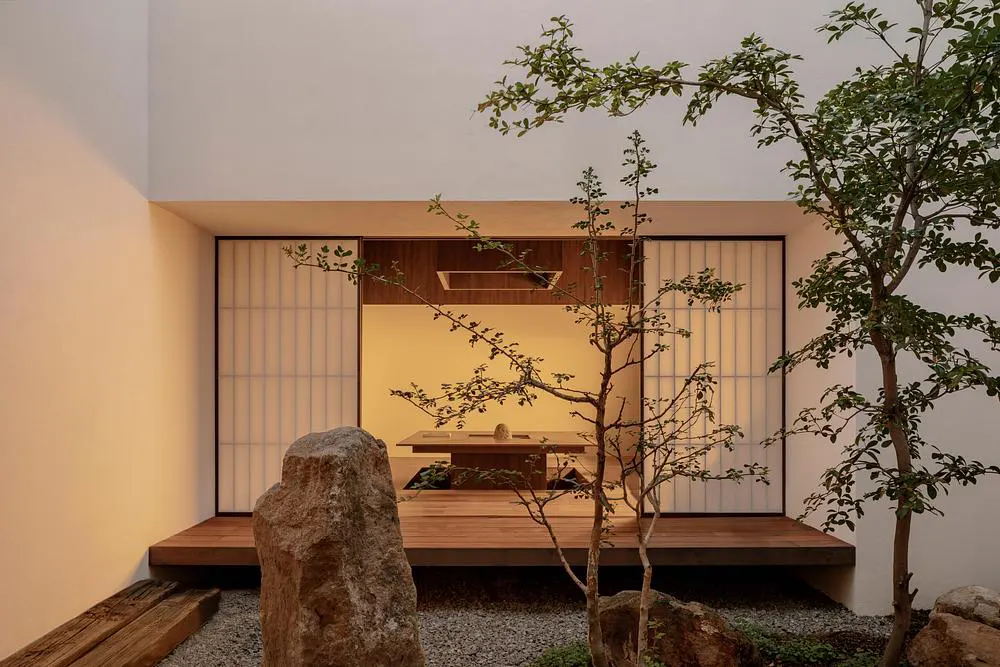
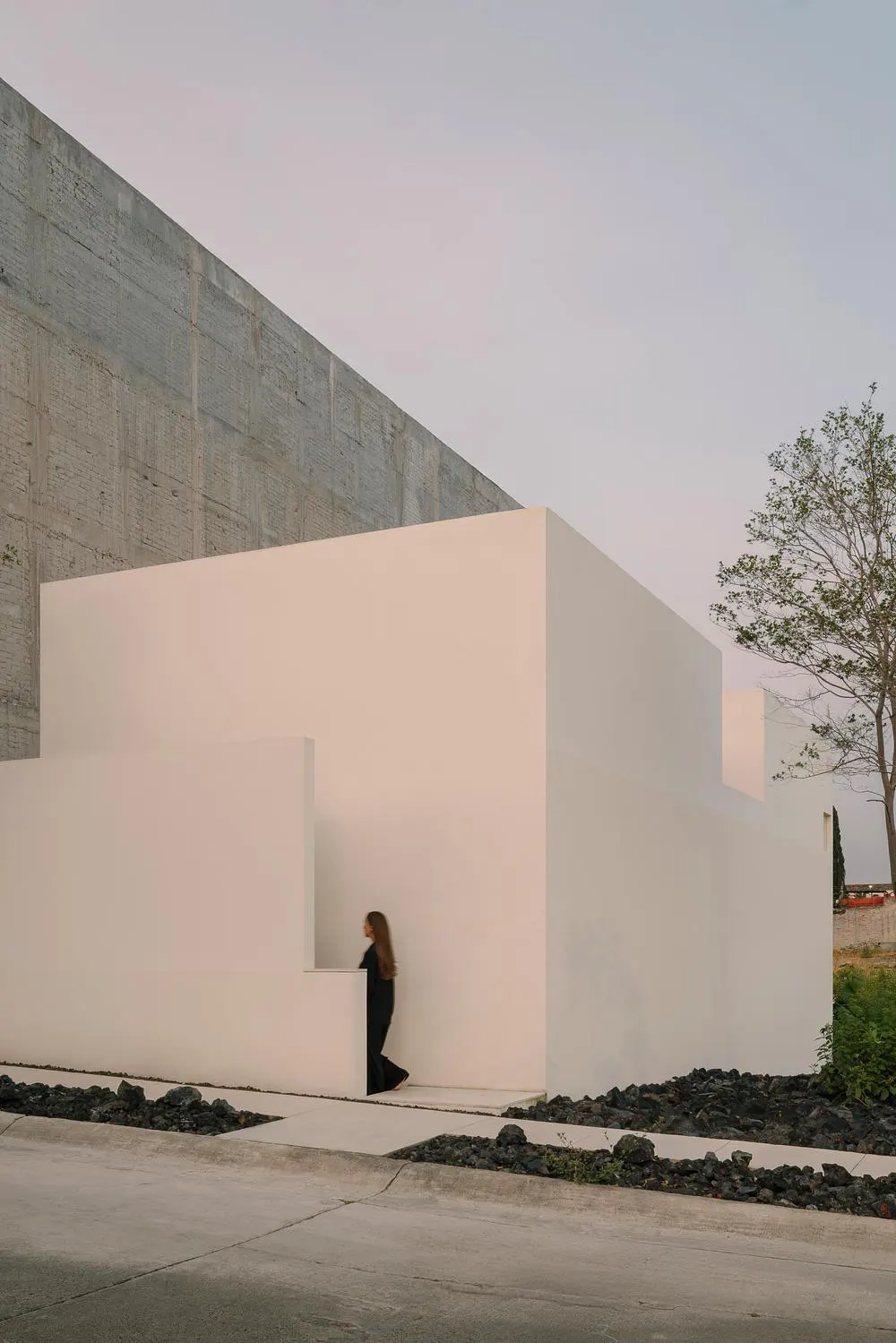
The exterior reads as a closed volume, almost indifferent to its surroundings. It sits in the city as a quiet object, without gestures that attempt to communicate with the street. This restraint feels deliberate. The house withholds rather than invites, establishing a boundary that only reveals its logic once crossed. Inside, the contrast becomes clear. The central stone garden holds the entire composition together, not as decoration, but as a spatial organizer. It defines circulation, proportions, and sightlines.
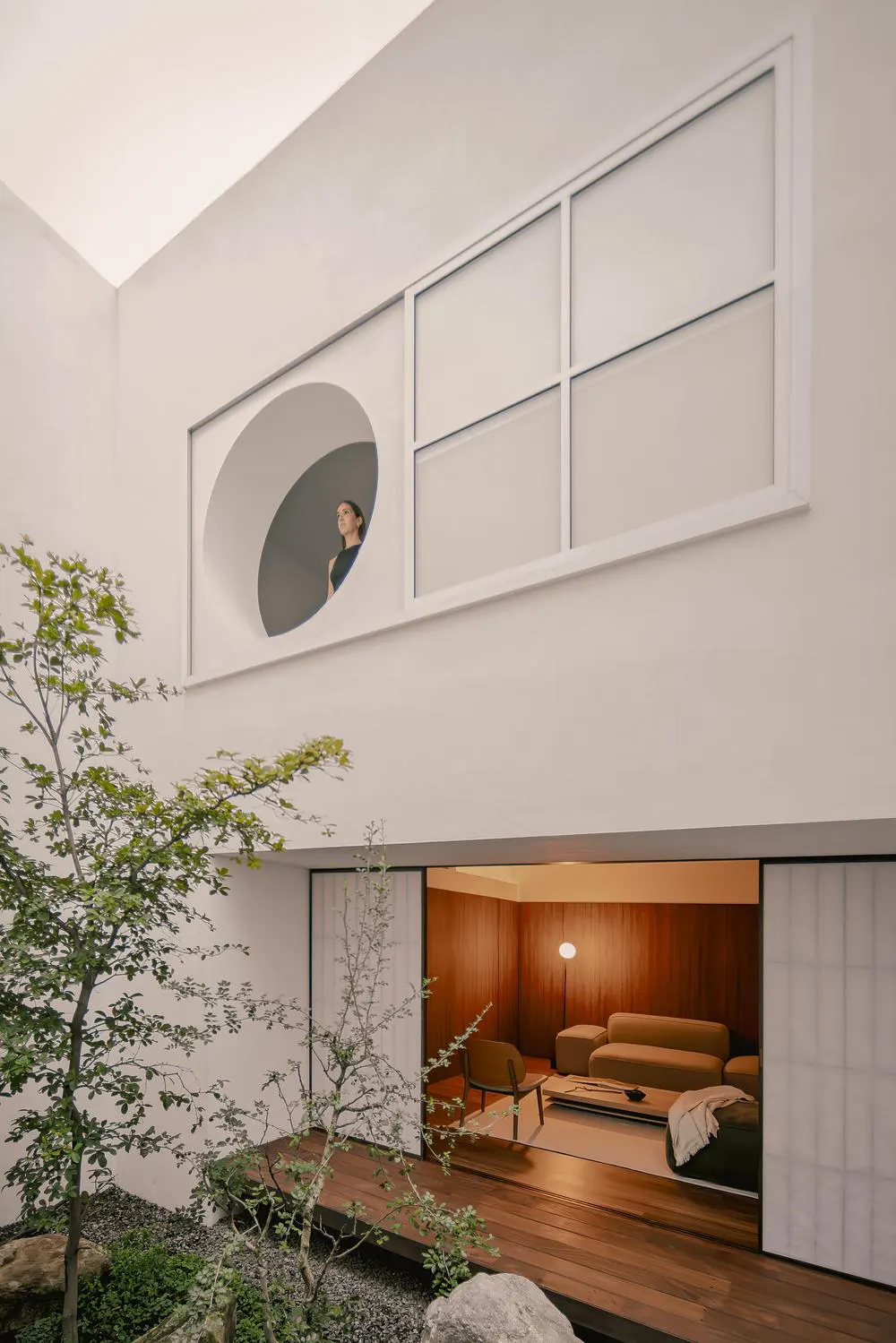
HW Studio uses this internal void to reorder expectations of domestic space. Instead of corridors or conventional transitions, movement happens around the garden. The absence of a covered connection between key areas introduces exposure as part of everyday routine. Moving between the living room and dining space requires a direct encounter with weather. Rain interrupts comfort. Waiting becomes part of inhabitation. This decision pushes the house away from convenience and toward awareness, where architecture no longer isolates but reconnects the occupant with external conditions.
Material choices reinforce that position. The use of shōji screens as primary filters for light avoids transparency in favor of diffusion. Light enters slowly, softened into gradients that shift across the day. The effect changes the perception of time within the house. Interiors feel suspended, less tied to external rhythms. The near absence of glass strengthens this inward focus. Openings are limited and intentional, framing only selected elements such as a mountain, a pine, or the central tree. The house edits the outside world, turning each view into a controlled moment rather than a continuous panorama.
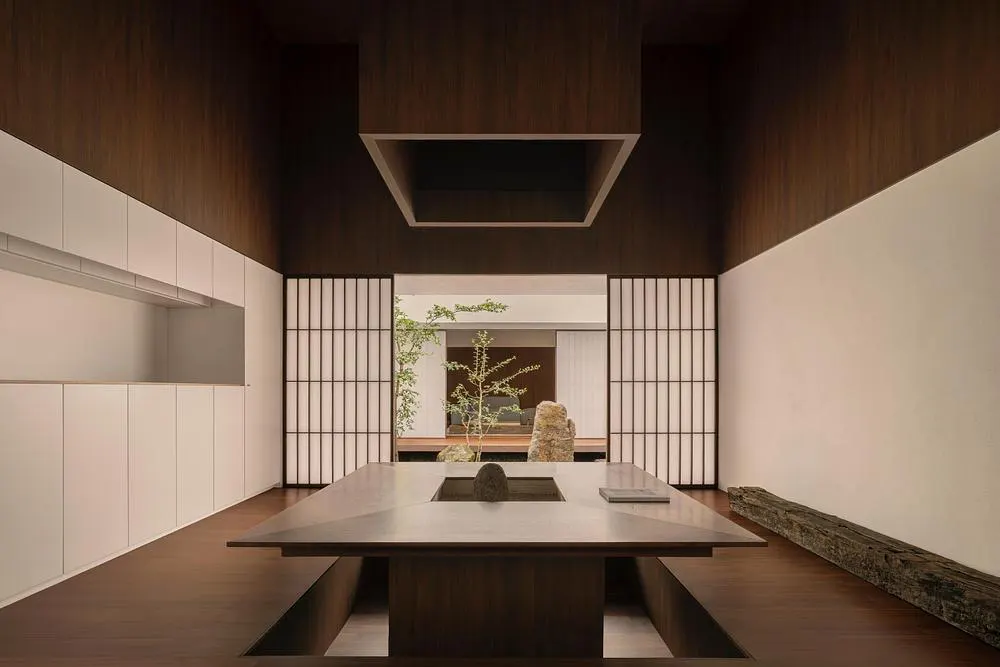
Spatial organization follows the same discipline. The kitchen and dining area occupy a double-height volume, where vertical space supports both function and atmosphere. The presence of a fire and a system to manage smoke suggests a return to more basic forms of living, anticipating scenarios where infrastructure may fail. This introduces a subtle layer of pragmatism within the conceptual framework. The living room, in contrast, operates as a place of stillness. Stones placed within the interior echo the central garden, extending its presence across the house.
The bedroom sits above, reduced to essentials. A single circular opening frames the foliage of the tree below. This gesture condenses the project’s entire logic into one moment. The window does not expand outward. It focuses inward, reinforcing the house’s central relationship with its void. The result feels controlled yet intimate, where each element serves a clear role within the larger system.
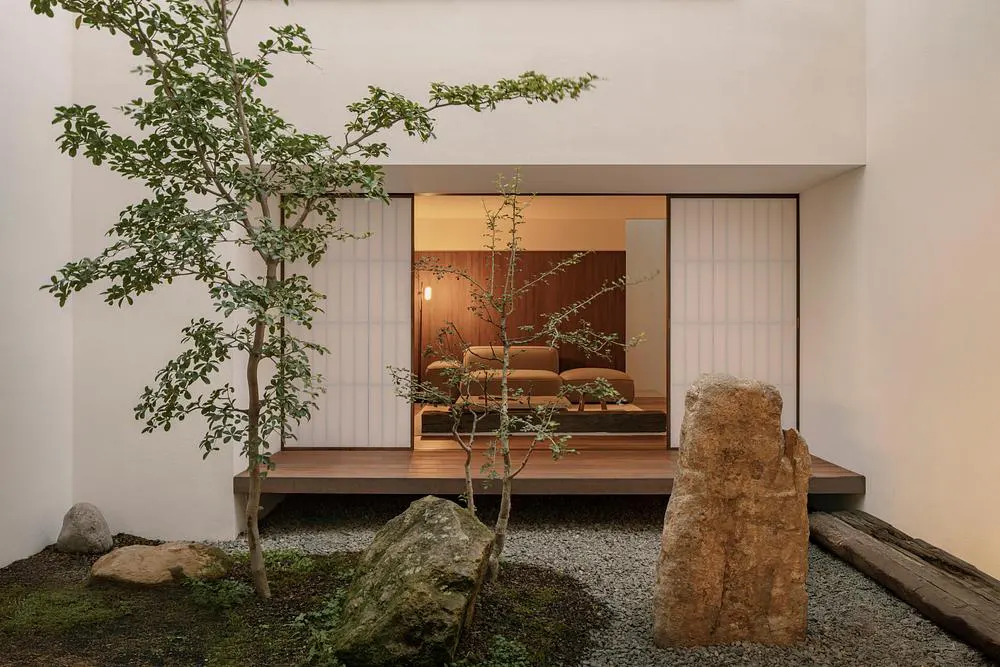
Budget constraints shape the project in a direct way. With limited resources, decisions prioritize necessity over excess. This results in a stripped-down program with no redundant spaces. Circulation remains efficient, and structural choices respond closely to site conditions. The descending entrance, aligned with stable ground, reduces construction complexity while introducing a symbolic shift. Entry becomes a physical act of lowering oneself, which aligns with the project’s broader emphasis on humility and awareness.
Kehai House operates within a specific cultural framework influenced by Japanese spatial thinking, yet it avoids imitation. Instead, it translates those ideas into a contemporary residential context in Mexico. The project does not rely on visual references or stylistic cues. It focuses on atmosphere, proportion, and experience. This approach allows the house to remain grounded in its location while engaging with a broader architectural discourse.
HW Studio presents a clear position through this project. The house resists spectacle and rejects excess. It concentrates on how space can shape behavior, perception, and routine. Every decision supports that intention, from the central void to the absence of protective transitions. The result is a controlled environment that demands attention from its occupants. It asks for participation, patience, and awareness, turning daily life into a continuous interaction with space.