
At City Place in The Woodlands, Houston, James Tapscott introduces Arc ZERO: Eclipse and Arc ZERO: Nimbus as a combined installation for the first time. Commissioned by Weingarten Art Group, the project extends Tapscott’s ongoing exploration of light, water, and atmosphere, placing two distinct works within a shared landscape structured around water treatment and public use.
ART
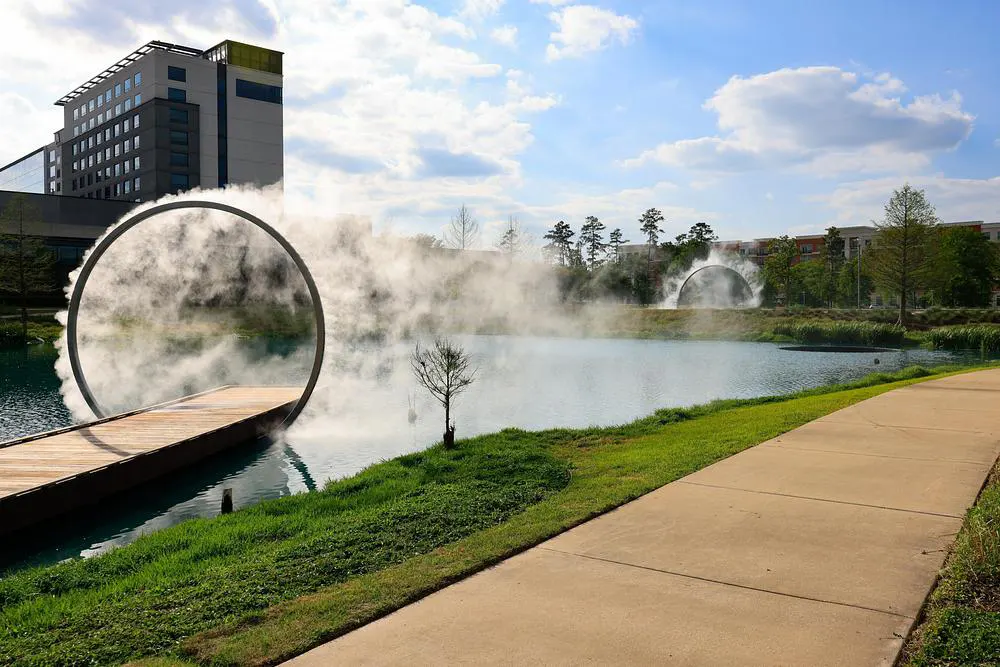
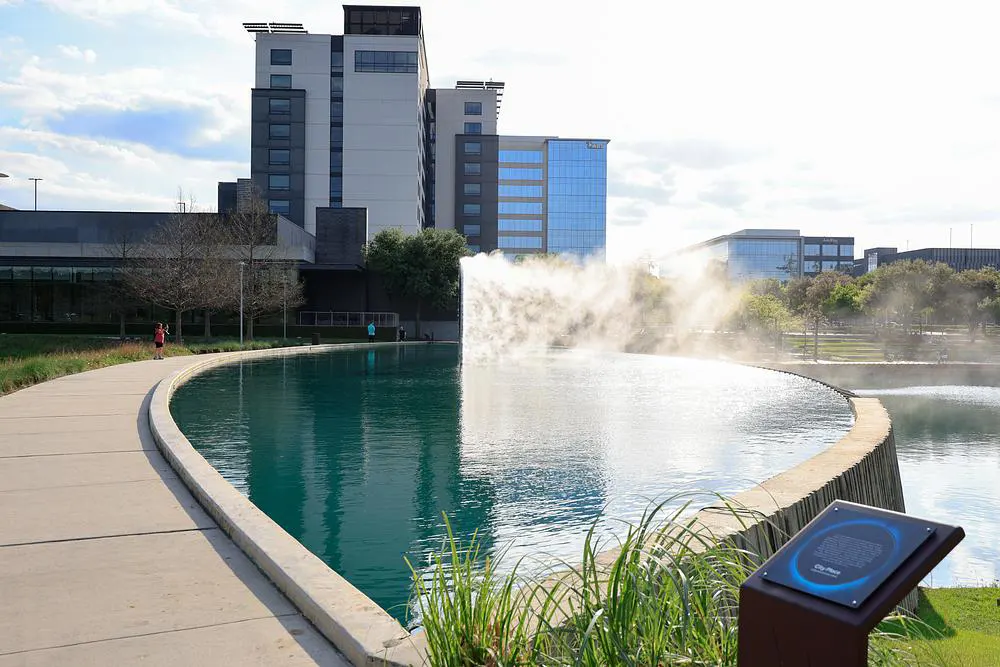
The site plays an active role in the installation. Set across two bodies of water within the park, the works operate in relation to their surroundings rather than as isolated objects. City Place functions as a system where water moves, settles, and circulates, and this condition defines how both pieces are experienced. The installation reads as a response to these environmental processes, using them as material rather than backdrop.
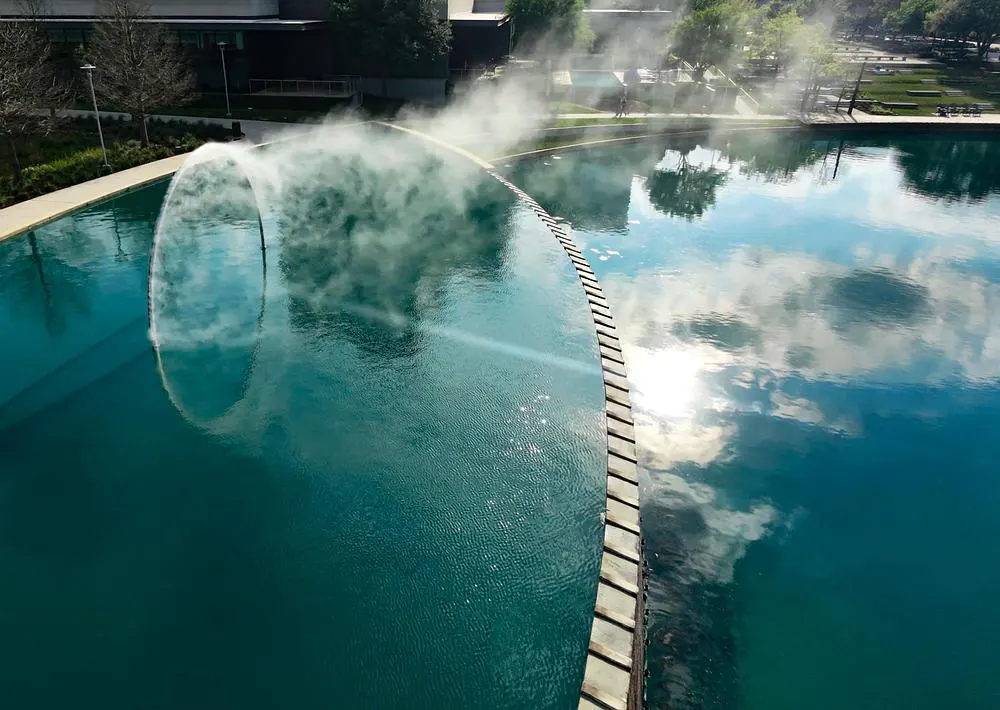
Arc ZERO: Eclipse occupies a reflecting pond, where a semicircular structure completes itself through reflection. The full circle emerges only in the relationship between object and surface, creating a form that depends on alignment and position. High-pressure mist introduces instability, breaking the reflection and reforming it in response to wind and movement. The work remains in flux, shifting continuously without settling into a fixed image.
Positioned at a higher point within the park, Eclipse changes as visitors move through the site. Distance, elevation, and angle determine perception, with the complete form revealed only from specific viewpoints. The body becomes a measuring device, defining how the work is read in space.
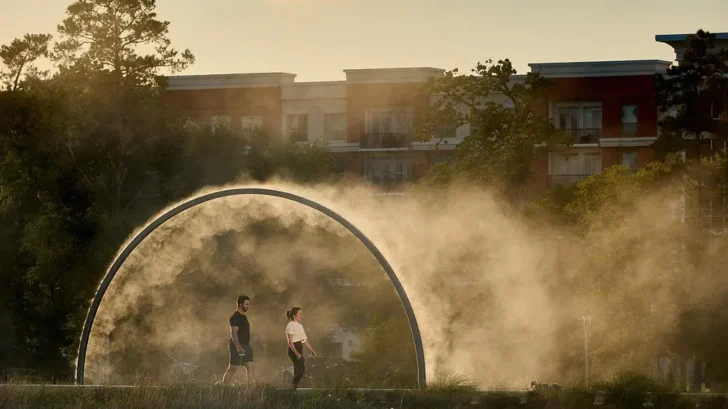
Arc ZERO: Nimbus operates through direct interaction. Installed above the water along a boardwalk, the ring forms a passage that visitors physically enter. Mist surrounds the body, reducing visibility and altering spatial awareness. The work exists as an environment rather than an image, experienced through proximity and movement.
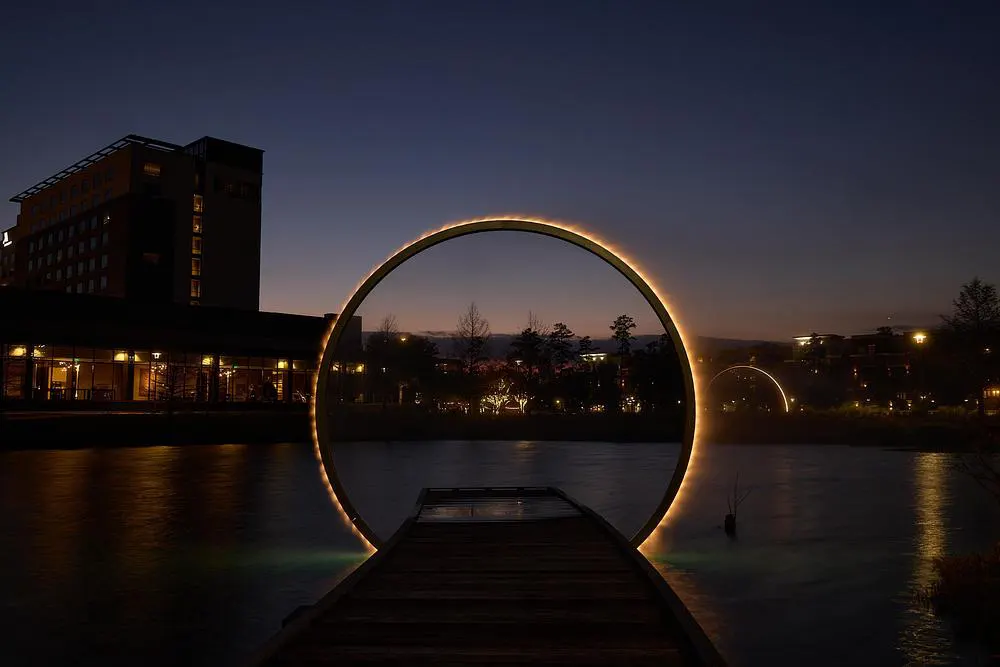
Light extends this condition. As mist catches illumination, it produces shifting halos and subtle variations in tone. Wind disperses and reforms the atmosphere, preventing the work from stabilizing. At night, internal lighting activates the structure, creating a consistent glow that interacts with the changing density of the mist.
The relationship between the two installations defines the project. Eclipse frames water as a surface, holding it in place and constructing an image through reflection. Nimbus releases it into the air, dispersing it into a field that surrounds the viewer. Together, they form a continuous reading of water across different states, still and moving, contained and dispersed.
Tapscott’s work avoids fixed interpretation. Instead, it establishes conditions that unfold through time, weather, and presence. At City Place, these conditions align with the site’s own systems, allowing the installation to operate as part of a broader landscape rather than as a separate intervention.
Arc ZERO: Duo remains on view through August 16, 2026, extending Tapscott’s practice into a new context while reinforcing his focus on perception, environment, and the shifting relationship between body and space.