
In Edgecliff, between a railway line and one of Sydney’s busiest arterial routes, Pointe Living introduces a compact residential model that challenges the conventions of medium-density housing. Designed by Luigi Rosselli Architects, the project replaces a single dwelling with ten apartments, positioning itself as a response to increasing pressure on urban housing while maintaining a level of spatial quality more commonly associated with individual homes.
RESIDENTIAL
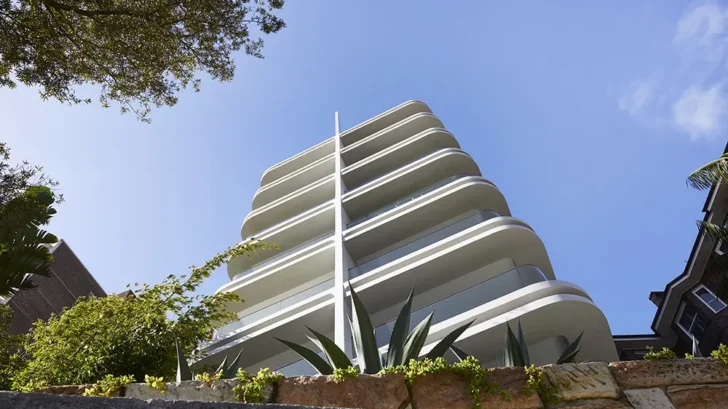
The building occupies a constrained infill site, bordered closely by neighbouring structures. Rather than competing with its context, the design adopts a slender vertical form that respects surrounding scale while establishing a distinct presence. A central structural spine with projecting concrete “ribs” defines the exterior, creating a façade that shifts in depth and orientation. These elements taper and rotate away from adjacent buildings, ensuring privacy while directing each apartment toward northern light.
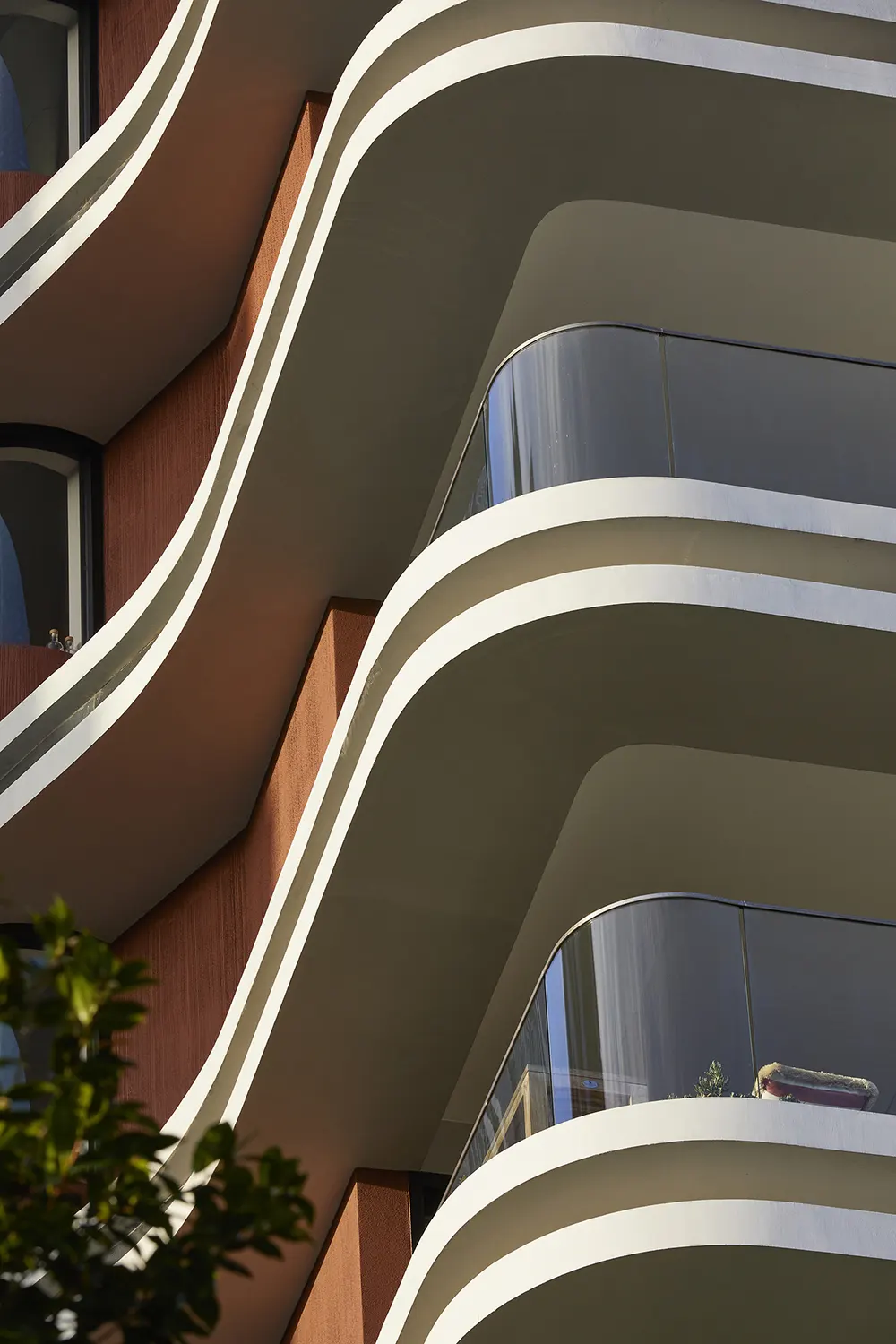
This structural logic extends into the planning of the apartments. Each residence benefits from multiple exposures, allowing cross ventilation and consistent access to daylight. The projecting balconies act as extensions of the living spaces, providing both environmental control and a clear spatial identity for each unit. The emphasis remains on comfort and orientation rather than repetition.
Internally, the project avoids the standardisation typical of multi-residential developments. Floor plans vary subtly between levels, and material selections respond to individual use rather than uniform specification. Textured rendered walls, exposed concrete ceilings, and curved glass balustrades introduce a tactile quality, while mirrored inserts within the concrete beams add a controlled visual layer. These details draw from the character of interwar apartment buildings in the area, without direct replication.
Arrival into the building follows a carefully composed sequence. A sandstone base anchors the structure, leading into a landscaped path that guides residents toward a shared lobby. This space, defined by a curved brick screen arranged in a triangular pattern, establishes a transition between exterior and interior. The gesture remains understated, focusing on material and form rather than scale.
Within the apartments, interior elements continue this approach. Custom brass lighting by Oliver Tanner and curated finishes by Atelier Alwill introduce a level of detail that supports individual expression. The project maintains consistency without uniformity, allowing each space to retain a distinct character.
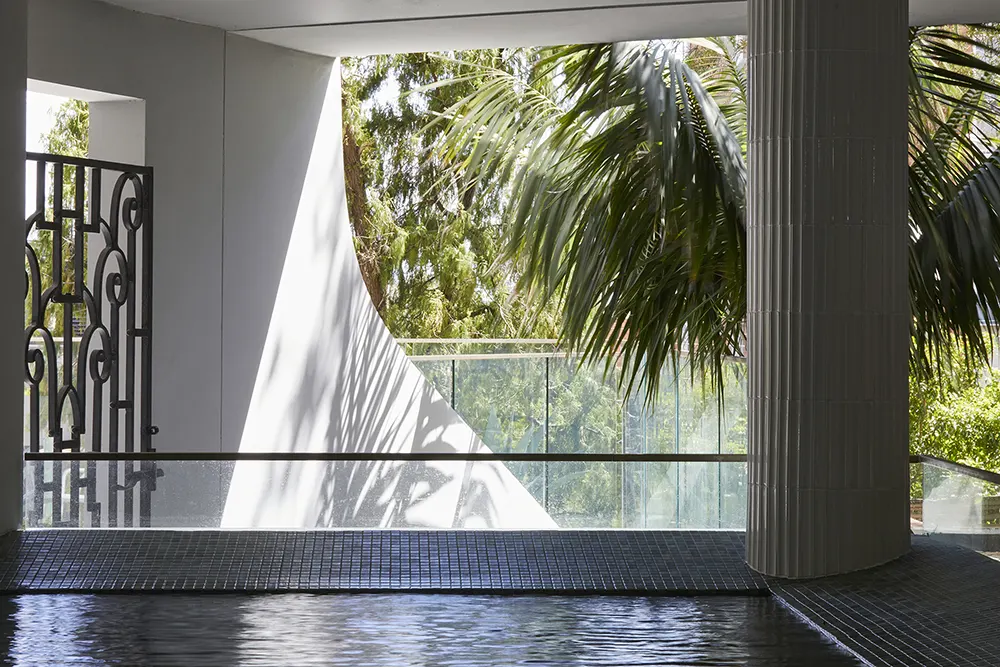
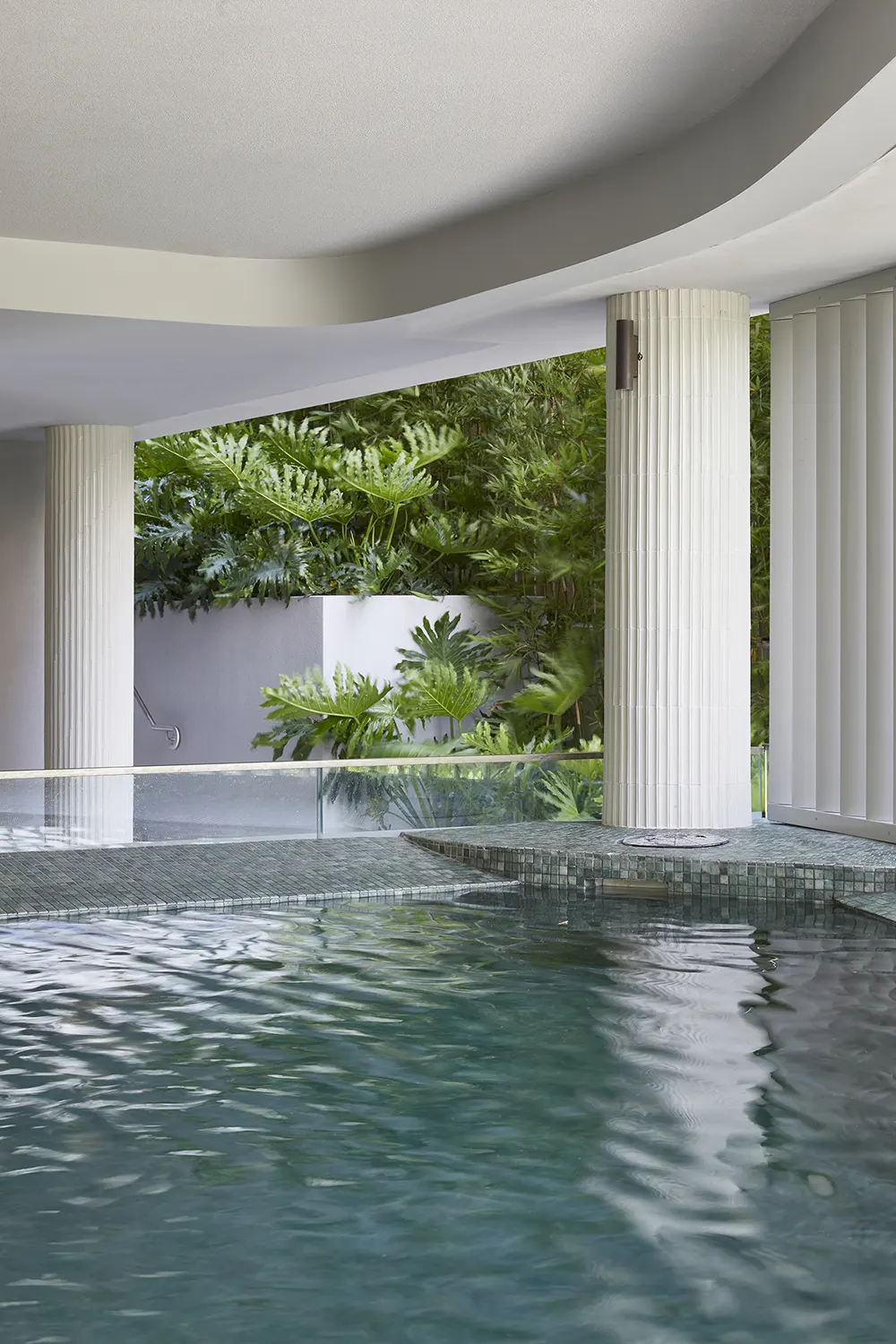
Shared amenities form a central component of the development. In addition to private balconies, residents have access to communal gardens, dining areas, and an indoor swimming pool. These spaces encourage interaction while extending the living environment beyond individual units. The integration of shared outdoor areas addresses a key limitation often associated with apartment living.
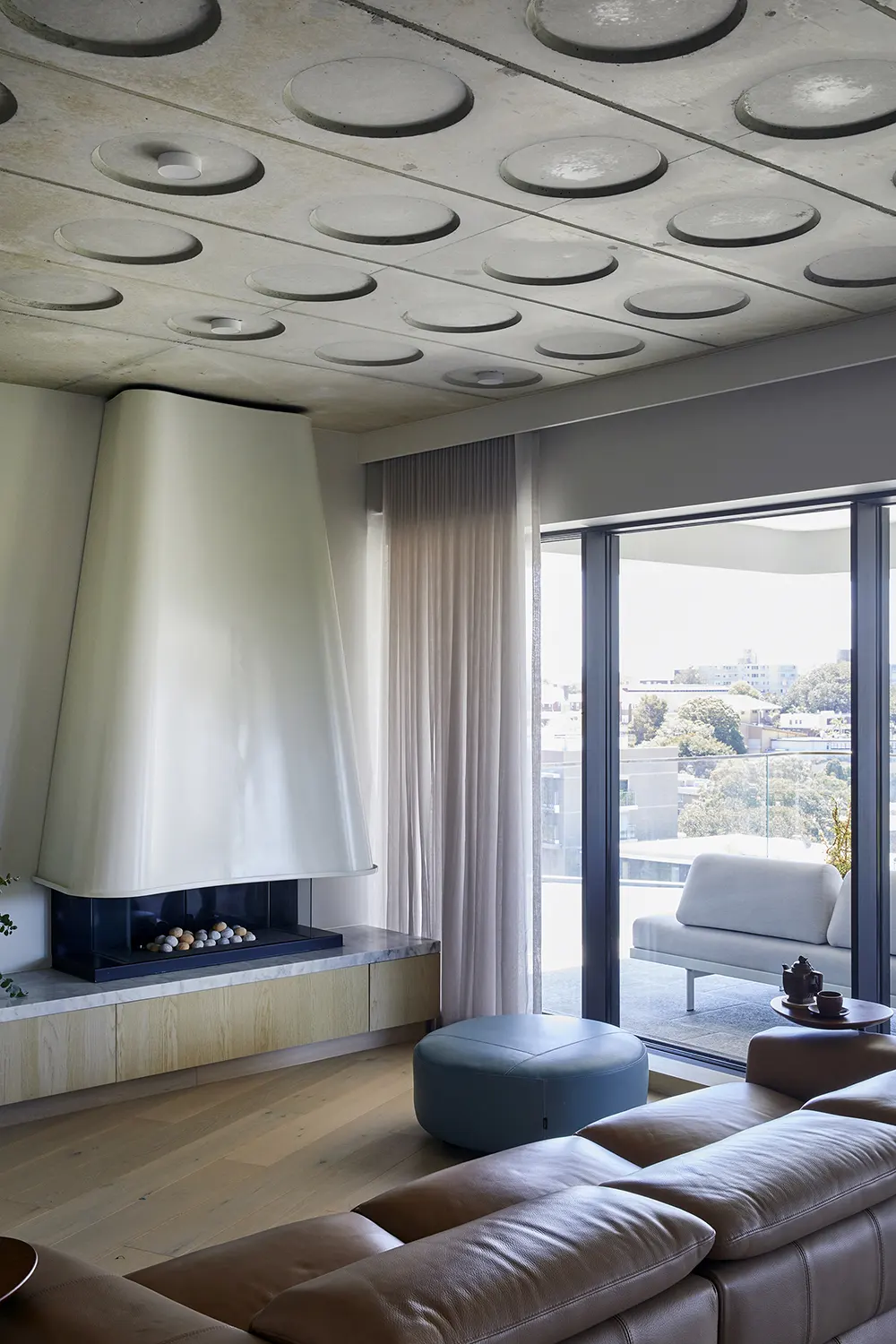
Environmental strategies are embedded within the design. North-facing orientation maximises winter light, while deep balconies and operable louvres provide shading during summer. Cross ventilation is achieved through multiple façades and open circulation zones, reducing reliance on mechanical systems. Rooftop solar panels contribute to the building’s energy performance, supporting long-term sustainability.
Material reuse reinforces this approach. Elements from the original house, including sandstone and the entry gate, have been retained and incorporated into the new structure. The existing pool has been adapted into a water tank, extending the lifecycle of the site’s previous components while embedding a sense of continuity within the project.
Pointe Living positions itself between density and individuality. It proposes an alternative to standard apartment models by focusing on variation, orientation, and shared experience, while maintaining a clear architectural identity within a tightly constrained urban condition.