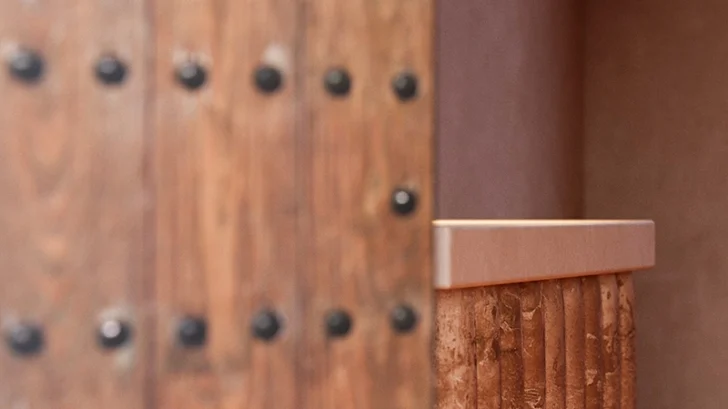

For Casa Capirote, Alejandro Cateto develops an interior around references to Seville, drawing particular influence from Triana pottery and the decorative language associated with Plaza de España. The project translates these references into a contemporary apartment through ceramic details, geometric patterns, earthy colors and adaptable spatial planning.
INTERIOR DESIGN
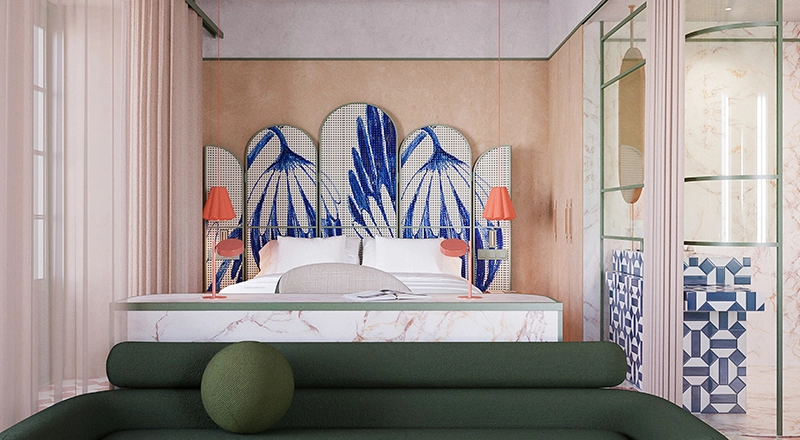
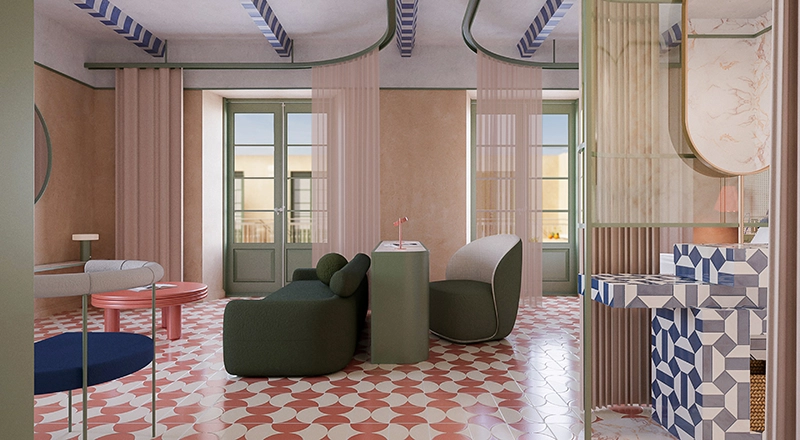
The influence of Triana pottery appears throughout the interior. Decorative motifs introduce the saturated colors and graphic qualities associated with the ceramic tradition, while specific references appear in the bed headboard, structural beams and sink. These elements give the apartment a stronger local identity without turning the space into a literal reconstruction of historic interiors.
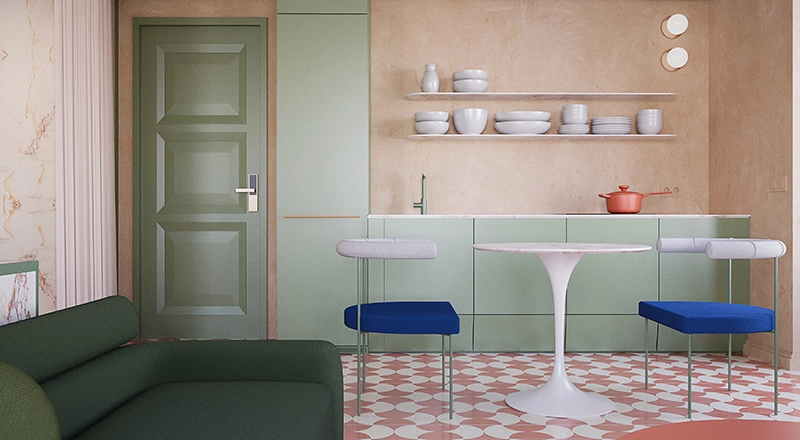
Cateto organizes the apartment as a largely open and multipurpose interior. Instead of dividing the plan into a sequence of fixed rooms, the design relies on curtains to define different zones when needed. This approach allows the apartment to shift between social and private uses while keeping the overall volume visually open.
The curtains also help preserve the circulation of natural light. By avoiding permanent internal partitions, the design allows daylight to reach deeper into the apartment and emphasizes the scale of the space. Earth and green tones respond to this natural illumination, creating a warm palette that connects the interior to the colors referenced throughout the project.
Material selection strengthens the relationship with Andalusian architecture. Lime mortar covers the walls, introducing a surface treatment associated with traditional construction methods in the region. Its texture gives the interior a softer visual character and creates a restrained base for the stronger ceramic elements.
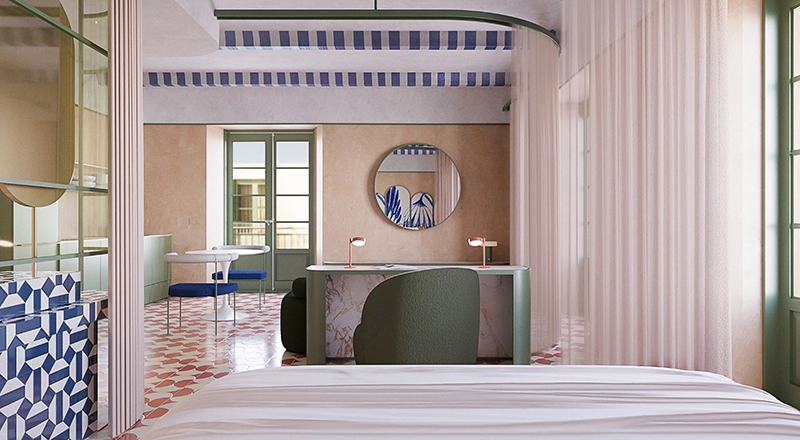
The project uses ceramics as both decorative and architectural components. Their patterns and colors introduce rhythm into otherwise simple surfaces, while their placement gives individual areas a clearer identity. The contrast between the lime mortar, ceramics and contemporary furniture keeps the interior visually controlled.
Furniture and accessories use organic forms and clean lines, bringing a contemporary character to the apartment. These pieces sit alongside the regional references without competing with them. The result depends on proportion, material and color rather than excessive decoration.
Casa Capirote works most effectively through this balance between flexibility and specificity. The open plan gives the apartment practical adaptability, while the materials and ceramic references prevent the space from feeling generic. Each design decision connects to the broader concept, from the curtain system to the use of lime mortar and patterned surfaces.
Through Casa Capirote, Alejandro Cateto approaches Seville as a source of material and visual references rather than as a decorative theme. The project takes familiar elements from local architecture and craft and gives them a contemporary role within a compact, adaptable interior.