
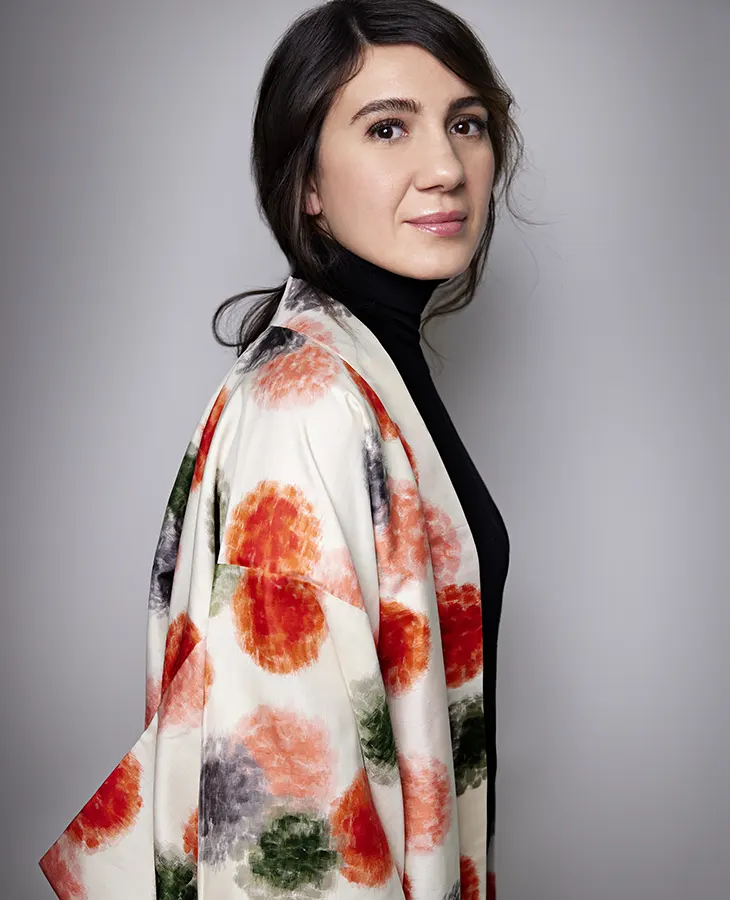
As Porro moves beyond its centenary, Maria Porro speaks with Zarko Davinic about the family company’s defining relationship with research, craftsmanship, technology and the people who turn design into reality.
Porro’s first 100 years tell a story of Italian design in constant motion. Founded in Brianza in 1925, the company has grown from a small cabinetmaking workshop into an international design brand without severing its connection to the territory, knowledge and relationships that shaped it. Across four generations, its language has evolved through technological change, new ways of living and collaborations with leading designers. What has remained consistent is an insistence on research—and a belief that innovation is meaningful only when it is supported by people, materials and the ability to make things well.
That balance between continuity and change is especially visible as Porro enters its second century. In conversation with Zarko Davinic, Maria Porro describes research and development not as a department or a stage in the calendar, but as a permanent condition. “We never stop developing new materials, lighting and product lines,” she says. “The research is constant.” Even the annual rhythm of Salone del Mobile does not create a clear beginning or end; one edition flows almost immediately into the development of the next. “We have a new collaboration with Yabu Pushelberg, and we’re finalizing a small family of armchairs,” Maria reveals, describing how Glenn Pushelberg and George Yabu were in Milan reviewing the prototypes while she was traveling. One of the many launches Porro has worked on this year.
For Maria, this ongoing process connects directly to the company’s history. Porro’s identity has never depended on overturning its origins. Instead, each generation has used them as a foundation for new production methods, forms and design languages. The result is an apparent simplicity that often conceals considerable technical complexity: precisely resolved details, highly engineered systems and material experiments brought together through industrial precision and artisanal knowledge.
LATEST INTERVIEWS ON ARCHISCENE
The story began in 1925, when brothers Giulio and Stefano Porro opened a workshop producing custom furniture for Milan’s bourgeoisie. Both were skilled cabinetmakers, and wood was at the centre of their practice. Their understanding of the material, its structure, grain and expressive possibilities, established a culture of workmanship that remains present in the company today.
After the Second World War, the second generation, cousins Carlo, Arturo and Silvio, responded to Italy’s economic and social transformation. As families and domestic life changed, Porro expanded into bedroom furniture and evolved from a workshop into an industrial company. It also began engaging more directly with the emerging culture of Italian design. Bruno Munari created the Porro logo as well as the Cubovo trolley, a design that remains in the collection.
The third generation, Lorenzo, Fabio, Giovanni and Danilo Porro, introduced digital processes that transformed both production and product development. Their focus on design led to the company’s enduring collaboration with Piero Lissoni and to modular systems whose visual clarity depended on sophisticated engineering. Under the fourth generation, represented by Maria Porro, the company strengthened its international position, developed a more strategic approach to marketing and expanded the tools it offers architects and professional partners. Its flexible, just-in-time production model made greater customization possible while supporting a leaner approach to growth.
Designing Beyond the Season
In an industry increasingly pressured to behave like fashion, introducing new products season after season, Porro’s centenary offers an alternative measure of relevance. We observed that furniture brands are being pushed to produce too much, too quickly. Maria is unequivocal: “That isn’t our approach. We don’t want to push unnecessary new products onto the market.”
“My father designed our modular shelving system in 1985, despite my grandfather’s opposition,” she recalls. “He secretly assembled the prototype on the factory’s lower level.” The system remains in production, although its materials, details and manufacturing methods have continued to evolve. “It isn’t exactly the same product,” Maria explains. “It has been modified and updated, and the way we produce it has evolved, but the core is still there.” Its survival is not evidence of creative stasis, but of a structure conceived to absorb change without losing its essential logic.
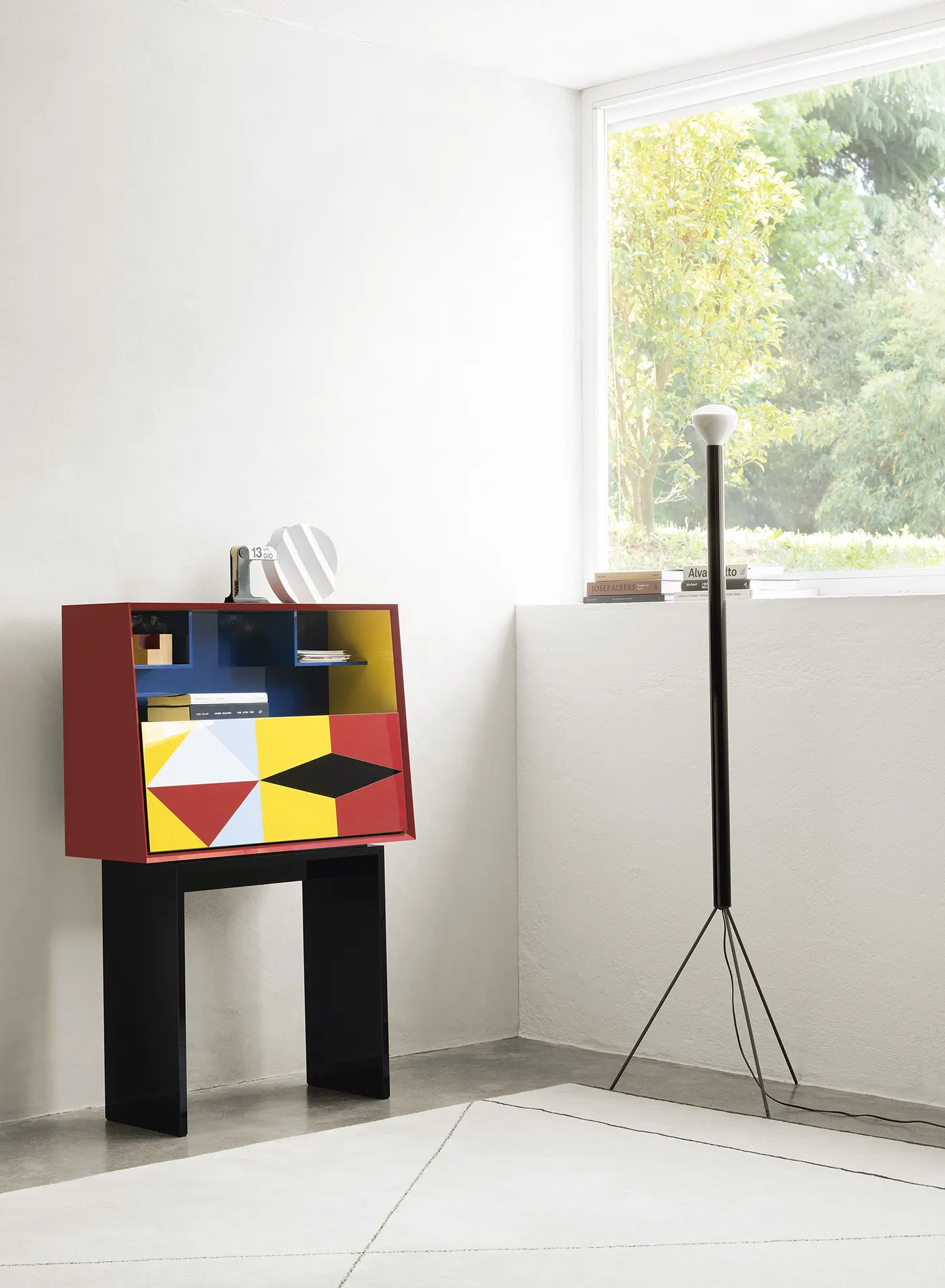
This approach can be traced through many of Porro’s defining designs. Piero Lissoni’s Shinto bed from 1992 reimagined the sleeping area around a central core, allowing an upholstered headboard, mobile storage unit and bedside surfaces to move independently while preserving a rigorous geometry. Ferro, introduced in 1994, transformed bent and welded sheet metal into a table with a broad, curved silhouette. Lissoni sketched the idea while looking at the wing of an airplane. The curved edge initially prompted a family argument over where the plates could be placed, yet Ferro became an enduring Porro icon.
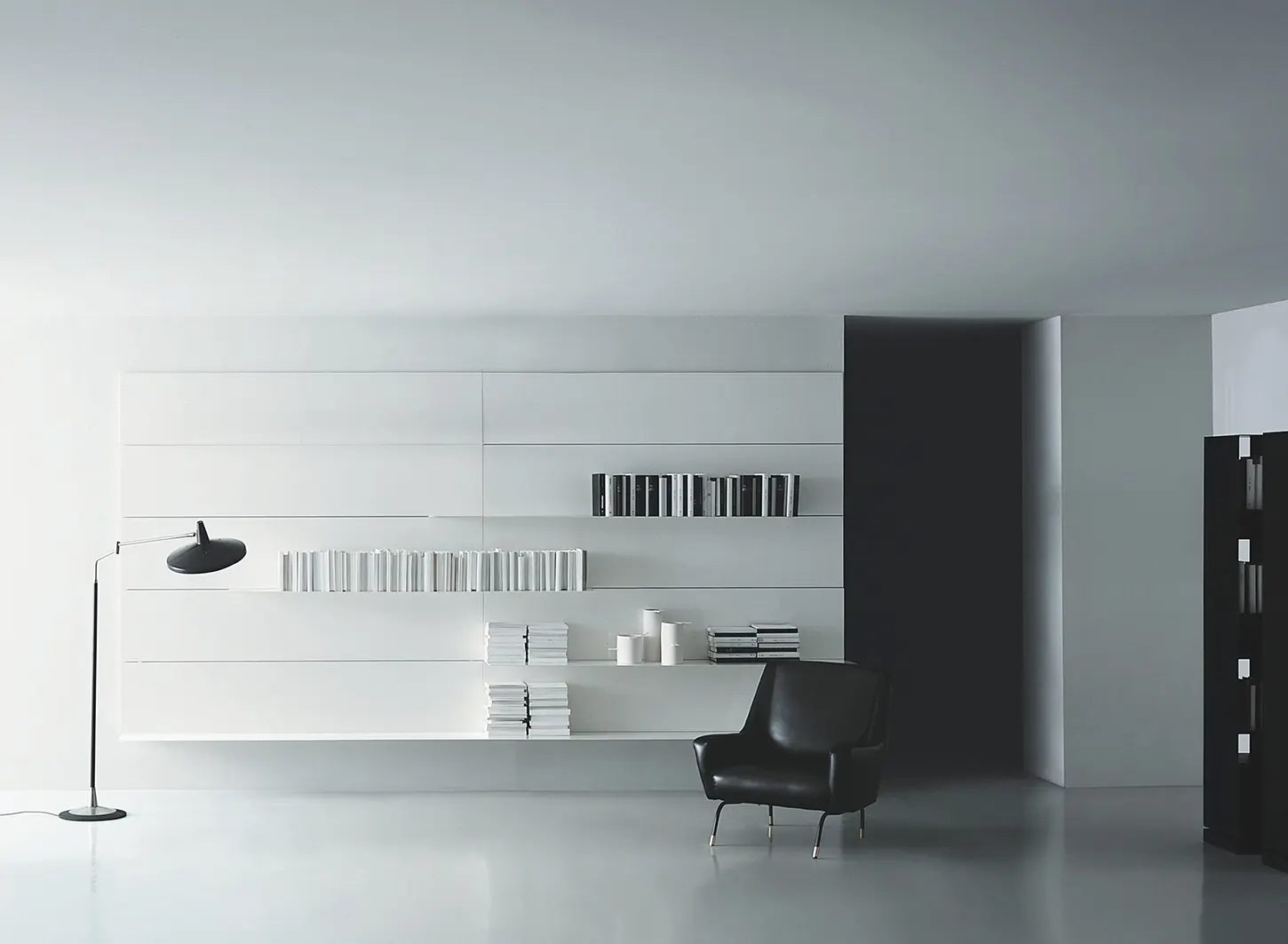
Wolfgang Tolk’s Load-it bookcase followed in 1995. Its ultra-thin, L-shaped steel shelves seemed to slice through the wall, making books appear suspended in space. As new materials and finishes were introduced, the system expanded without losing the radical simplicity of its original gesture.
Modern, designed by Piero Lissoni with the Porro Research Center in 1996, brought the logic of architectural wall units into the living area. Conceived as a flexible matrix rather than a fixed composition, it could change in scale, proportion, finish and function. Nearly three decades later, its adaptability continues to demonstrate Lissoni’s conviction that a system must be designed for endurance rather than for one or two seasons.
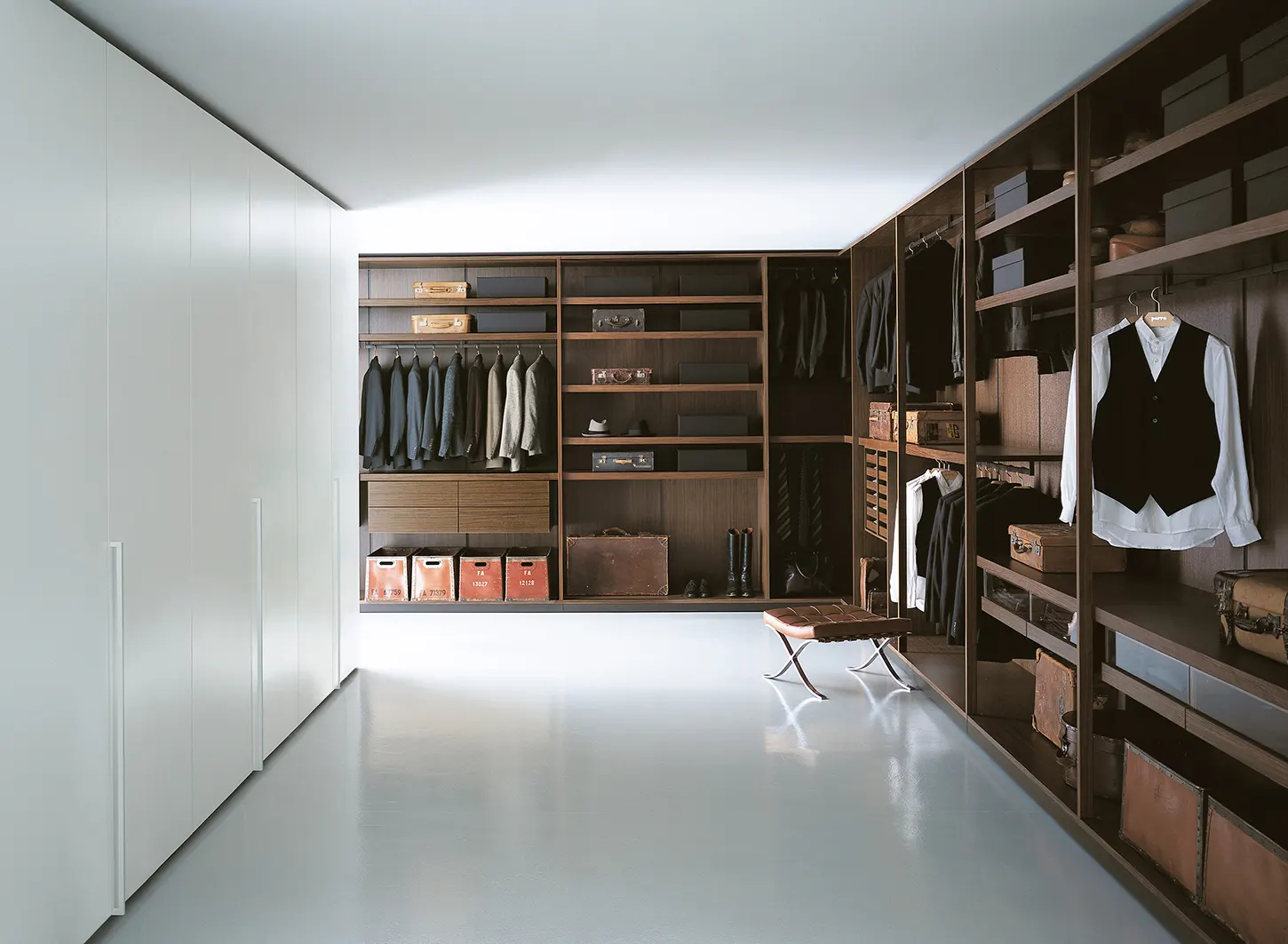
Storage, launched in 2000 by Lissoni and the Porro Research Center, rethought the wardrobe by challenging the conventional role of its side panels. Its three structural types, walk-in closet, traditional wardrobe and boiserie, could be combined to create continuous interiors, alternating open and closed elements as well as transparent and opaque materials.
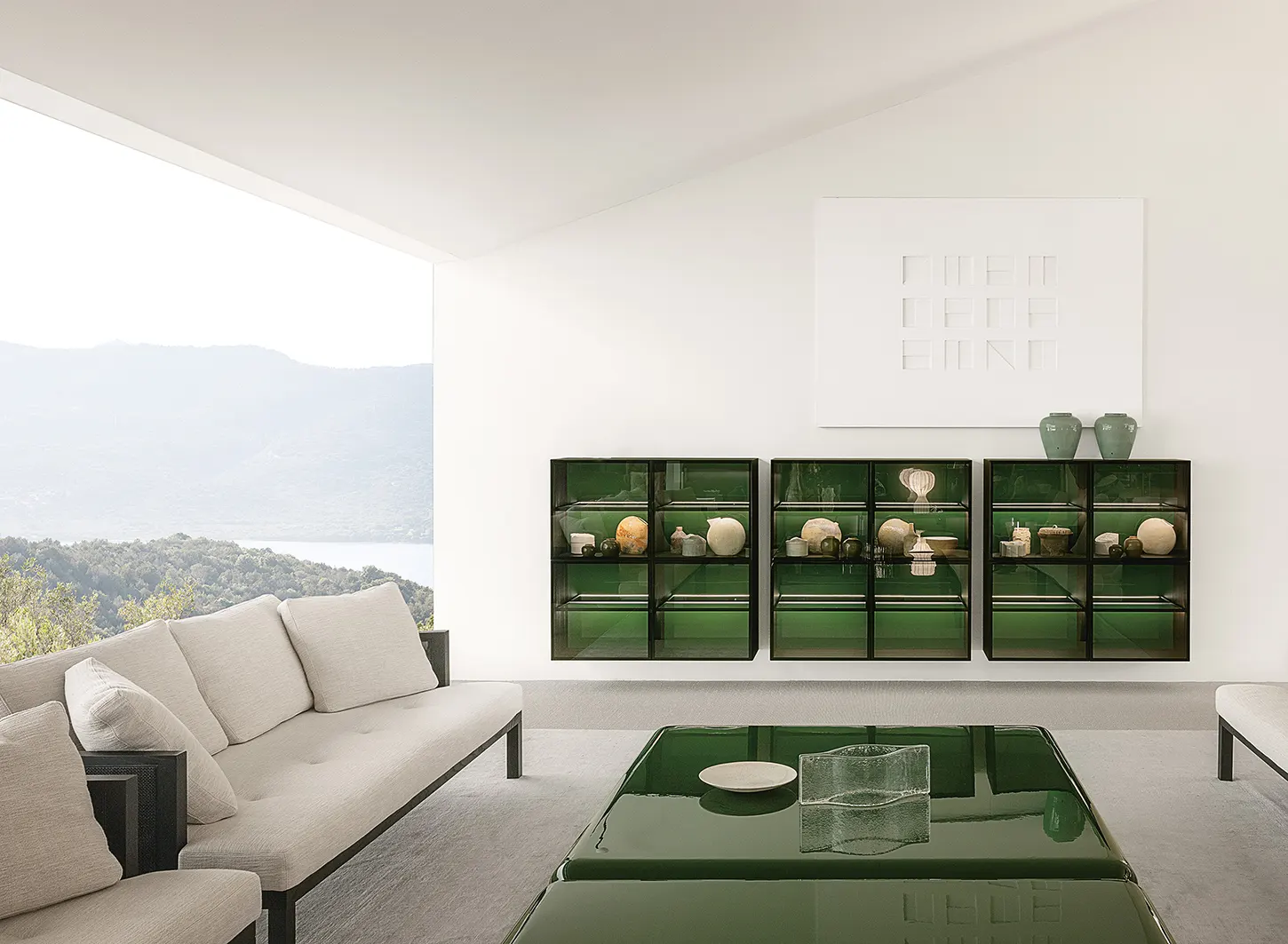
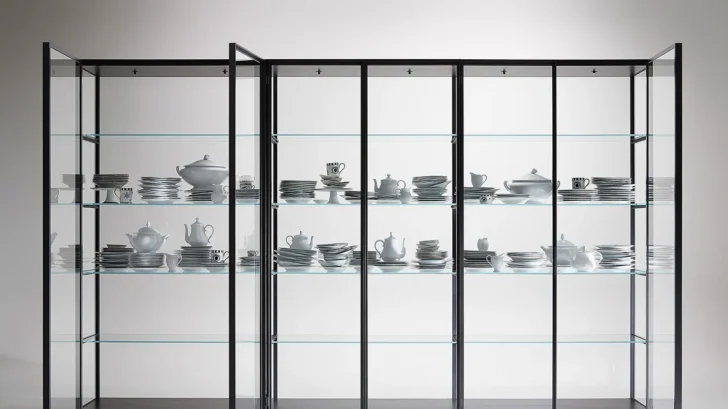
Later designs continued this exchange between exacting technology and material expression. Metallico, introduced by Lissoni in 2011, pairs the strength of solid aluminum with reduced thicknesses and carefully engineered joints. Its catalyzed painted surface is finished by hand through polishing and waxing. Ex-Libris, also from 2011, turns the cabinet into an ethereal transparent volume in which collections appear to float. GamFratesi’s Romby chair from 2020 combines a geometrically constructed solid-ash base with a compact upholstered swivel seat, distilling Porro’s identity into a piece defined by proportion, manufacturing precision and craftsmanship.
Longevity as Sustainability
For Maria, the ability of these products and systems to evolve over decades is central to Porro’s understanding of sustainability. “Longevity is real sustainability,” she says. The statement pushes the conversation beyond surface-level environmental messaging and toward the full life of an object: what it contains, how it is made, who produces it and whether it can survive repeated changes of home and use.
When inexpensive furniture is rarely judged by these standards. Consumers may not know what is inside a low-cost sofa, under what conditions it was manufactured or how the people who made it were paid. Nor is the relationship between quality, health and daily life always considered. Maria reduces the problem to a familiar test: “If you move house, that can be the end of it.” Furniture surrounds us in the place to which we return every day; its value cannot be separated from the quality and duration of that experience.
Porro’s production model is designed to reduce excess at its source. “We use a lean production system, which means we don’t keep stock or warehouses full of precut parts,” Maria explains. “From the very first cut of raw material, every component already has a destination and an owner, the name of the person who will receive it.” This made-to-order system allows Porro to provide highly tailored solutions without producing unnecessary stock. “I think that is the only way to be truly sustainable,” she adds.
Customization is supported by a substantial material library. Porro’s offer includes 19 wood species, 31 glossy and matte lacquer colors, 31 back-painted glass options, three types of glass, seven interior wardrobe finishes and five metal finishes, alongside leather, fabrics, solid woods, marble and straw. The breadth of choice is not an end in itself. It allows systems to respond precisely to an interior, its architecture and the people who inhabit it.
The same principle extends into hospitality. Despite the growth of the sector, many hotels still fail to understand the importance of authentic, high-quality design across the whole property, from stairs and finishes to beds, tables and chairs. “That’s true, although it is improving,” Maria responds. “More and more hotels understand it.” She points to Porro’s work on Kempinski residences and other hospitality projects. Yet the prevalence of imitations remains a serious concern. “We try to fight the copies, but it is almost impossible, especially in the design world,” she says. “If someone changes a design by even a millimeter, it can become very difficult to protect.” Education and cultural awareness therefore become essential forms of defense.
The Factory as an Ecosystem
Porro’s anniversary theme, It’s All About People, is more than a retrospective slogan. The company’s factory presents manufacturing as an ecosystem in which working conditions, human expertise and advanced machinery are inseparable from the final product.
“Our factory operates in natural light,” Maria says. “We don’t need to switch on artificial lighting in the factory during the day.” Windows run around the building’s perimeter, skylights open the roof to daylight, and the remaining roof surfaces carry solar panels. Four years ago, following negotiations with the unions, Porro changed its shift structure. “Employees now start at 7:00 a.m. and finish at 3:30 p.m. They have the whole afternoon free, and parents can collect their children from school.” The company has also completed a gender-equality certification process and introduced greater flexibility “for mothers and fathers, as well as for employees caring for their own parents.”
“People are essential,” Maria says. “And it shows in the product.” A person working in natural light, able to look out toward a forest and participate meaningfully in the production process, experiences the factory differently, and that difference is reflected in the work.
Porro employs around 130 people, a scale Maria describes as “a boutique manufacturer combining high technology with craftsmanship.” Artificial intelligence and robotics are already part of the production system. “They are part of the reason we can be so flexible and offer tailor-made solutions,” she explains. But automation has not removed human judgment. “Our employees are much more than workers. They are involved in the process, control quality and make decisions. It is the combination that matters.”
The contrast is visible on the factory floor. Porro works with suppliers to develop and test advanced machinery, often acting as an early testing ground for new production technologies. “In the same large space, you’ll see advanced robots that we helped design with our suppliers,” Maria says. “Then, beside those robots, you’ll see the same table on which my great-grandfather worked, still being used with glue and hand tools.” Memory and the future do not occupy separate rooms; they operate side by side.
Transferring the Culture of Design
When Davinic asks whether design is under pressure, Maria distinguishes between productive and destructive forms of it. “Design is now recognized as a way of approaching and solving problems,” she says. “It has become one of the most interesting disciplines for addressing them. In that sense, design is under pressure, but it is a positive kind of pressure.” The more difficult responsibility, particularly for a company with a century of experience, is to ensure that the culture of design reaches a new generation. “For a brand like Porro, which is 101 years old, I feel we have a responsibility to pass the culture of design on to new generations.”
Porro has partnered with a local technical school, where company managers teach students and a class visits the factory each month for practical training. Maria believes direct experience is irreplaceable. “At least once in your life, you should enter a real design factory and see and touch the materials, to see the stitching and understand how the wood is treated,” she says. Recognizing quality visually is not the same as understanding the knowledge and work it contains.
This need has become more urgent in the age of generative artificial intelligence. “With artificial intelligence, it’s possible to create beautiful images without truly understanding how something is made,” Maria warns. Digital fluency can create the impression of expertise while separating design from material, labor and history. “It can also make it easier to believe voices that may not be relevant or innovative.” For Maria, opening the production process and sharing knowledge is a way of restoring that connection.
Her commitment to education also extends to the Politecnico di Milano, where she is co-curating a new master’s program in Atmosphere Design. “Education matters because it helps people recognize when something has already been done,” she says. It therefore supports both innovation and the fight against imitation.
Young people remain interested in design, but Maria sees a need to broaden their understanding of what a design career can be. “One challenge is that everyone wants to become a famous designer, a big name, which is very difficult,” she says. “But there is also incredible work to be done in research and development, the supply chain and production.” The opportunity is not limited to becoming the celebrated name who signs a project: “You can also be the important person who makes the designer’s dream possible. That role is equally valuable.”
Manufacturing can inspire the same enthusiasm as designing, but only when people are able to encounter it. “They need to see it,” Maria says. “Once they see the process, they become interested. If it remains something unknown and invisible, they can’t connect with it.” Factory visits and training make the process visible, revealing the many forms of intelligence hidden behind a seemingly simple object.
More of Porro in our gallery:
After 100 years, Porro’s greatest achievement may be precisely this ability to make complexity appear effortless without allowing the knowledge behind it to disappear. Its history is carried by iconic products and celebrated collaborations, but also by cabinetmakers, technicians, researchers, suppliers, teachers and generations of one family willing to challenge one another. The company’s future will depend on the same network of relationships.