
In Vera, Santa Fe, Argentina, the new Judicial Morgue emerges as a nuanced exercise in architectural sensitivity. Conceived by the Architectural Office of the Judiciary of Santa Fe, the project confronts the challenge of designing for a program often relegated to the periphery of public awareness. Completed in 2024, the building occupies a 5,000 m² site on the grounds of the Regional Hospital, with 402 m² of covered space and 980 m² of semi-covered galleries. The result is a contemporary, approachable structure that quietly redefines its typology through environmental integration, spatial clarity, and a human-centered approach.
Photographer Ramiro Sosa shares with ARCHISCENE readers the images of this striking project:
Embracing the Site
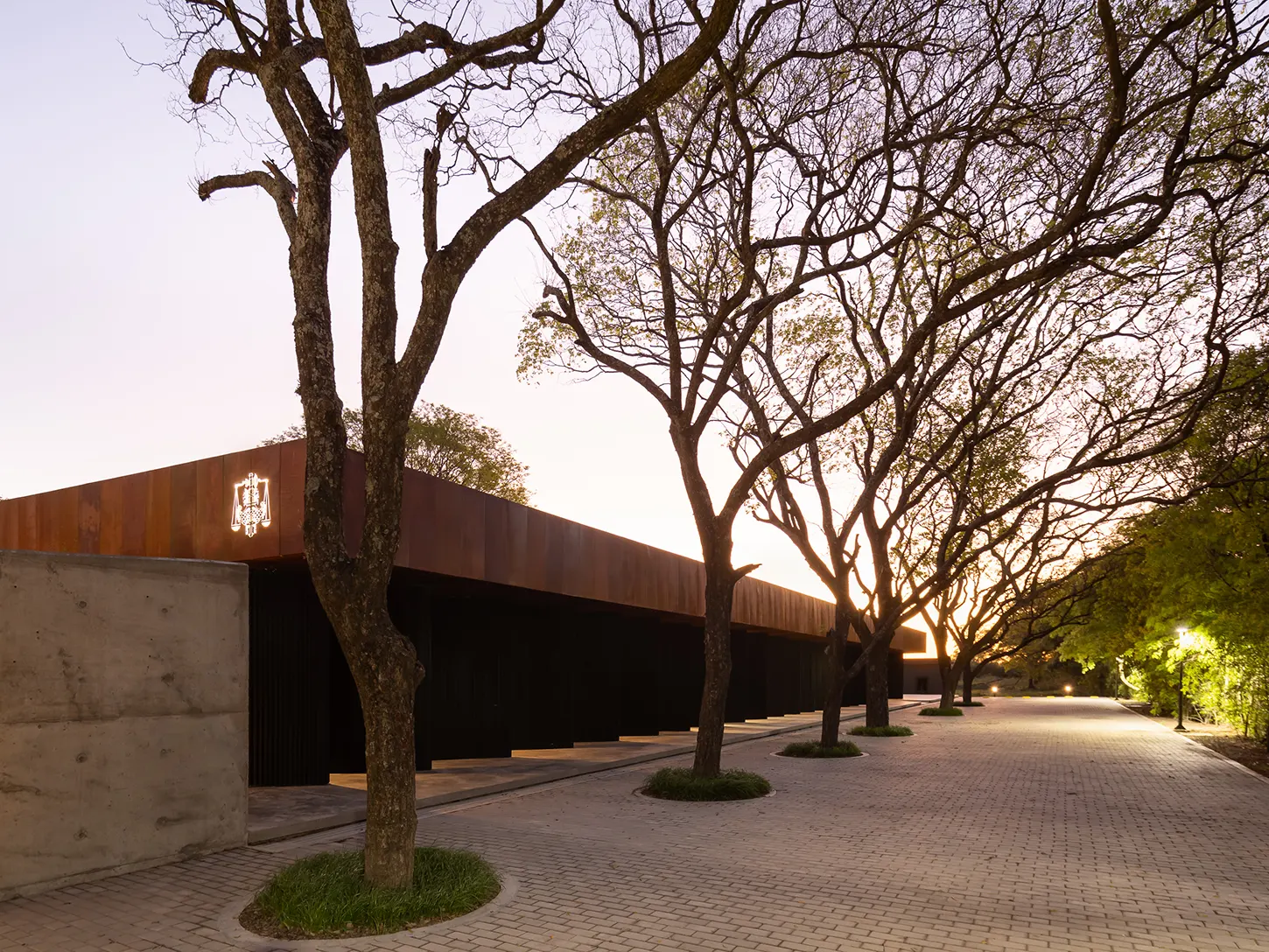
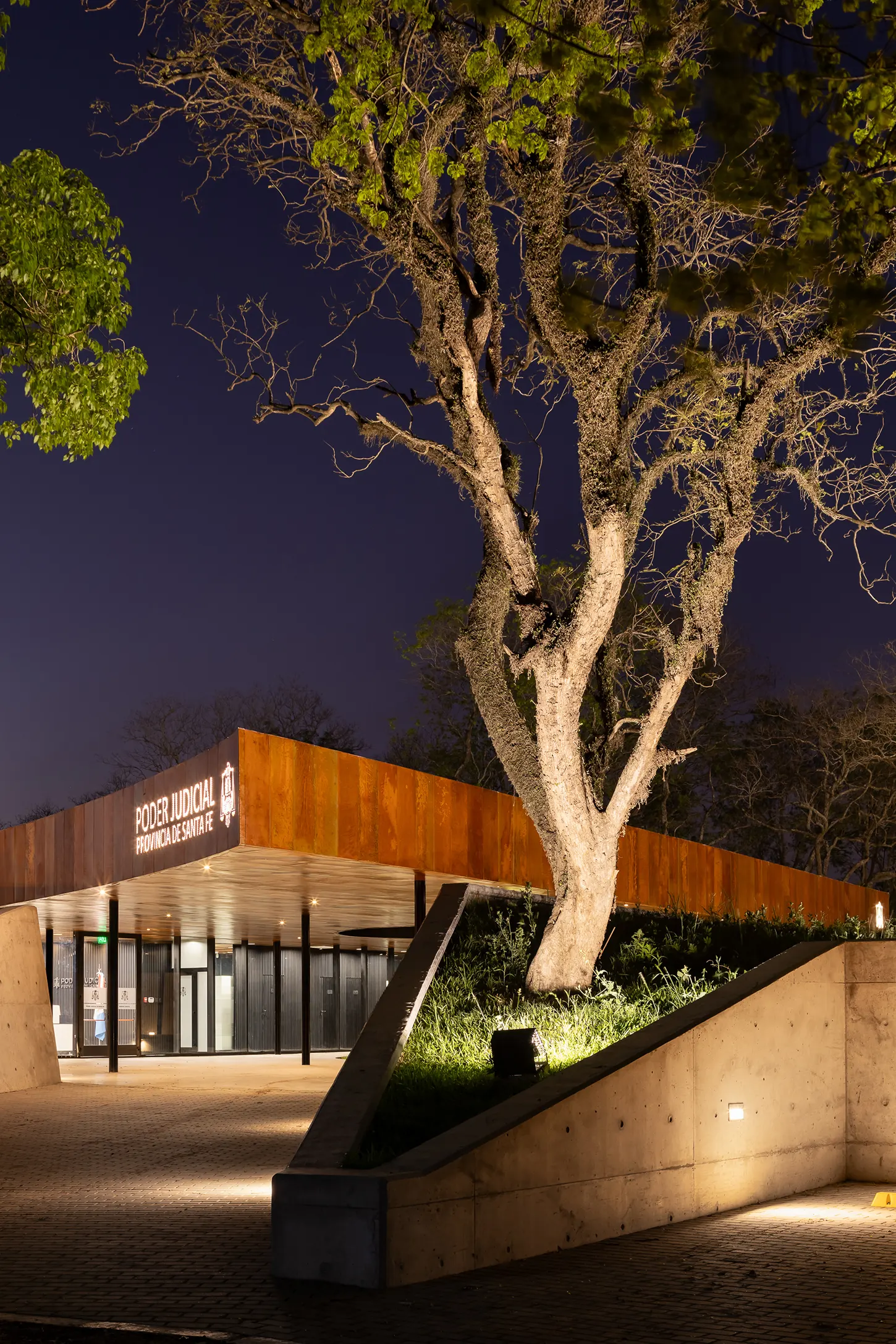
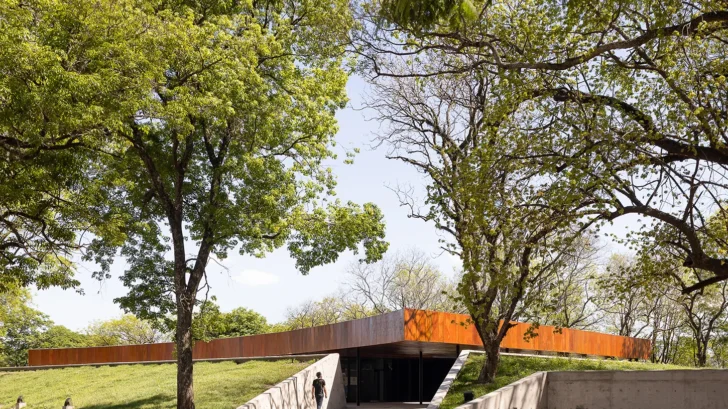
The morgue’s placement is deliberately discreet. Shielded by embankments planted with native vegetation, the building reveals only a horizontal line and the expanse of its flat roof to passersby. This subtle profile ensures the facility does not overwhelm its setting, instead inviting a sense of calm and contemplation. Approaching the building, whether along the pedestrian path or the vehicle access road, visitors traverse preserved native forest, experiencing a gradual transition from public to private space. The architects’ focus on the “fifth façade,” the roof, becomes evident in the interplay of embankments, walkways, and infrastructural elements that define the site’s abstraction.
Environmental Responsiveness
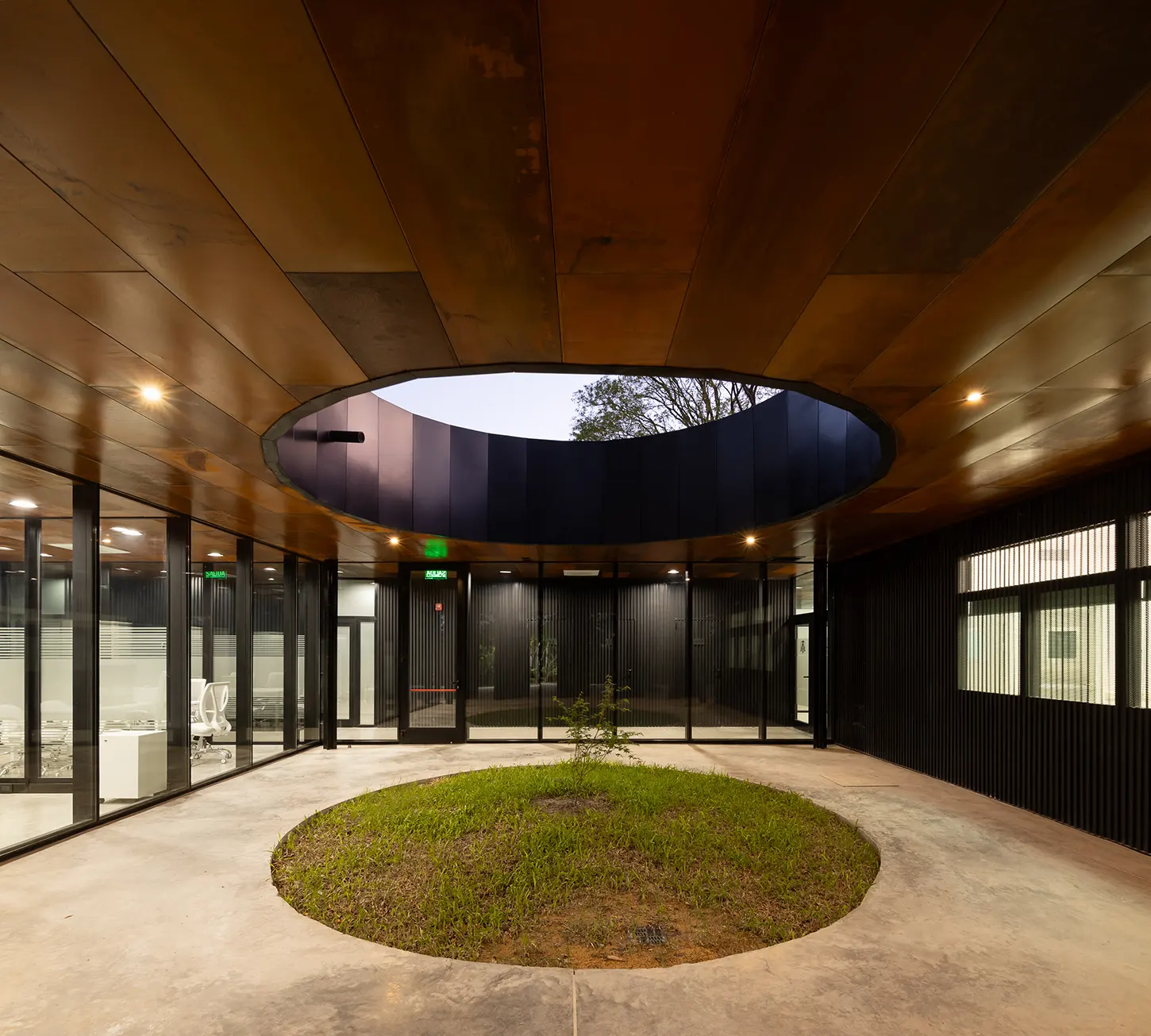
Climate and landscape are integral to the morgue’s identity. The design leverages transitional galleries as buffers, mediating between the region’s intense sun, wind, and rain and the building’s interior. These galleries act as solar screens, cooling zones, and contemplative spaces, while a Venturi tube at the entrance harnesses natural airflow for passive cooling. Carefully oriented rooms prioritize privacy and serene views, reinforcing the building’s mission to offer dignity and respect even in its most utilitarian functions.
Programmatic Clarity
The facility’s program is comprehensive and precisely organized. It includes a main hall and reception, administrative offices, meeting and identification rooms, cold storage, X-ray and image interpretation suites, inclusive locker rooms, autopsy spaces, and dedicated zones for pathological waste. Technical infrastructure, including climate control, refrigeration, and emergency power, is housed separately, contained within exposed concrete enclosures that maintain operational efficiency without compromising the building’s spatial or aesthetic qualities.
Materiality and Sensory Experience
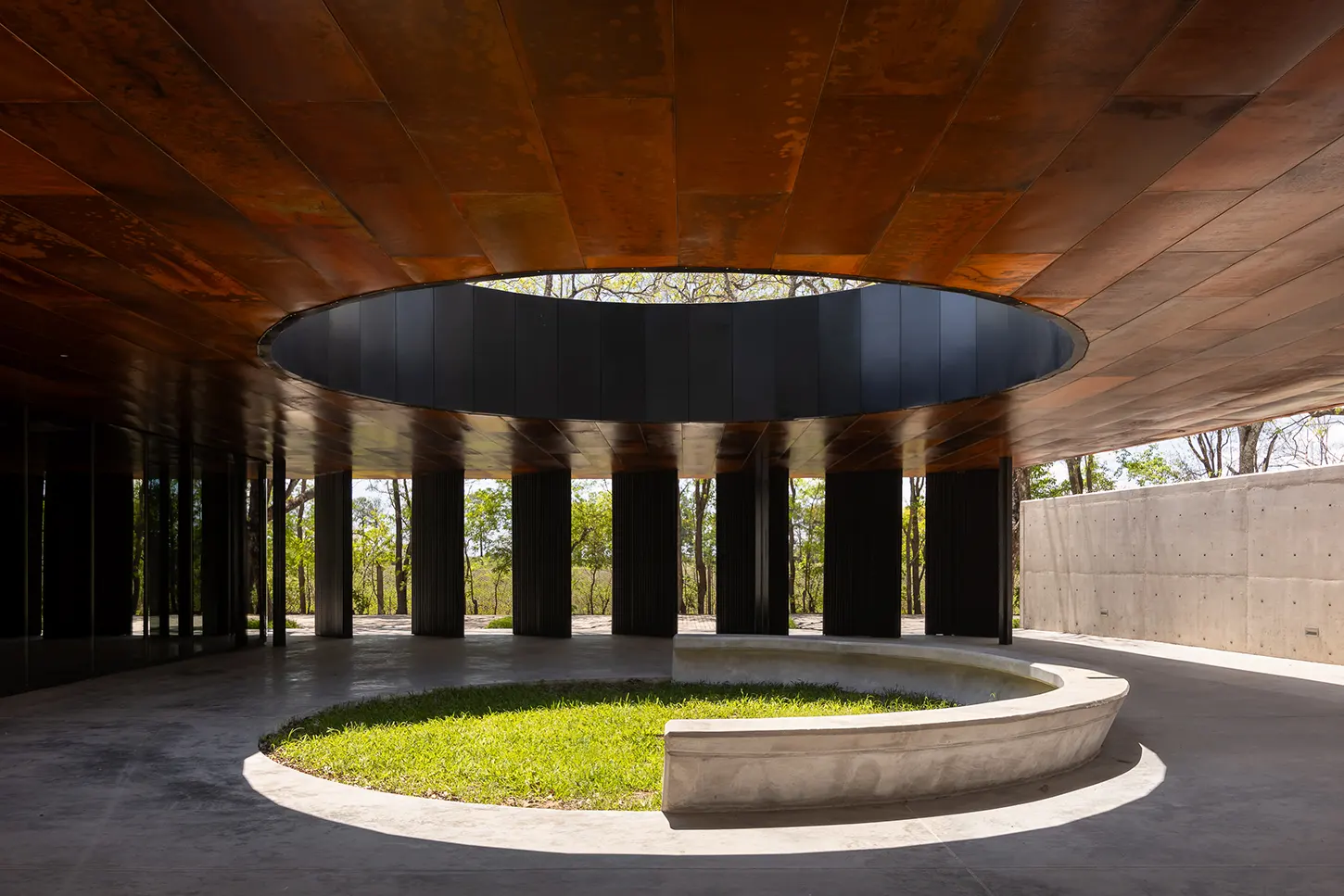
Material selection and daylight are used to soften the morgue’s clinical associations. Circular skylights in the galleries and courtyard filter sunlight and rain, animating the interiors and providing moments of warmth. A semicircular bench beneath the skylights creates a contemplative pause for visitors and staff. The courtyard, paved with multicolored river stones, introduces texture and the promise of future vegetation, further reducing the austerity of the concrete shell.
To the north, semi-covered spaces face the vehicle access road, protected by vertical screens and a preserved line of native trees. The boundary with the urban street is articulated through expressive metalwork and concrete planters, focusing attention on the main gate and institutional signage.
Technical and Sustainable Features
Biosafety and operational excellence inform every aspect of the morgue’s design. The autopsy suite features advanced climate control, specialized filtration, stainless steel autopsy tables, digital imaging, and surgical-grade lighting. Filtered natural light, delivered through micro-perforated panels, ensures a clinical yet welcoming environment. The building’s infrastructure includes autonomous solar power, a generator, pre-treated liquid waste systems, connections to municipal utilities, and robust security and surveillance measures. Permeable paving and stormwater management address environmental performance along the access road.
Material Palette and Local Craft
The building’s palette, metal roofing and structure, oxidized sheets, exposed concrete, double-glazed windows, granite mosaic floors, and custom granite countertops, reflects a commitment to durability and sensory richness. Local and national suppliers were prioritized, supporting Argentine industry and ensuring quality throughout.
Discover more of the project in our gallery:
The Judicial Morgue in Vera stands as a testament to architecture’s ability to reframe difficult subjects with sensitivity and respect. Through environmental integration, thoughtful programming, and careful material choices, the project not only fulfills its functional mandate but also encourages reflection and engagement. In doing so, it elevates the typology, offering a model for institutional architecture that is both humane and enduring.
Photography: Ramiro Sosa for more of Ramiro;s work vist @ramirososafotografia
Architectural Office: @arq.poderjudicial.santafe/