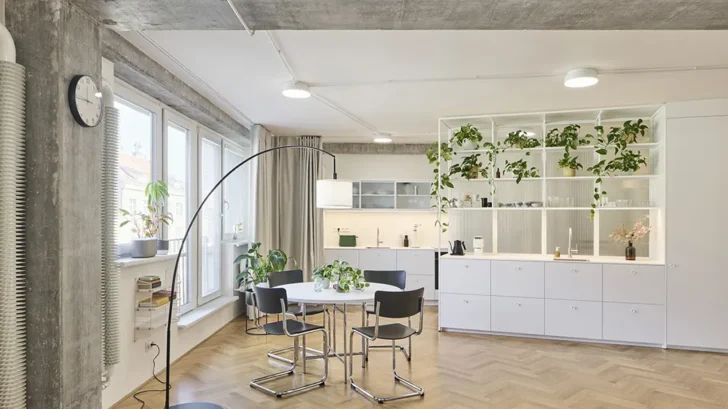

No-Wall Apartment by RDTH architekti questions one of the most familiar assumptions in residential design: that domestic life needs fixed rooms to function properly. The project removes almost all fixed partitions from the apartment, keeping only the installation shaft, skylight, and a door for the toilet. From that starting point, the architects develop an interior that treats openness as a precise spatial tool, giving the apartment the flexibility of a one-bedroom plan while suggesting the functional range of a four-room home.
INTERIOR DESIGN
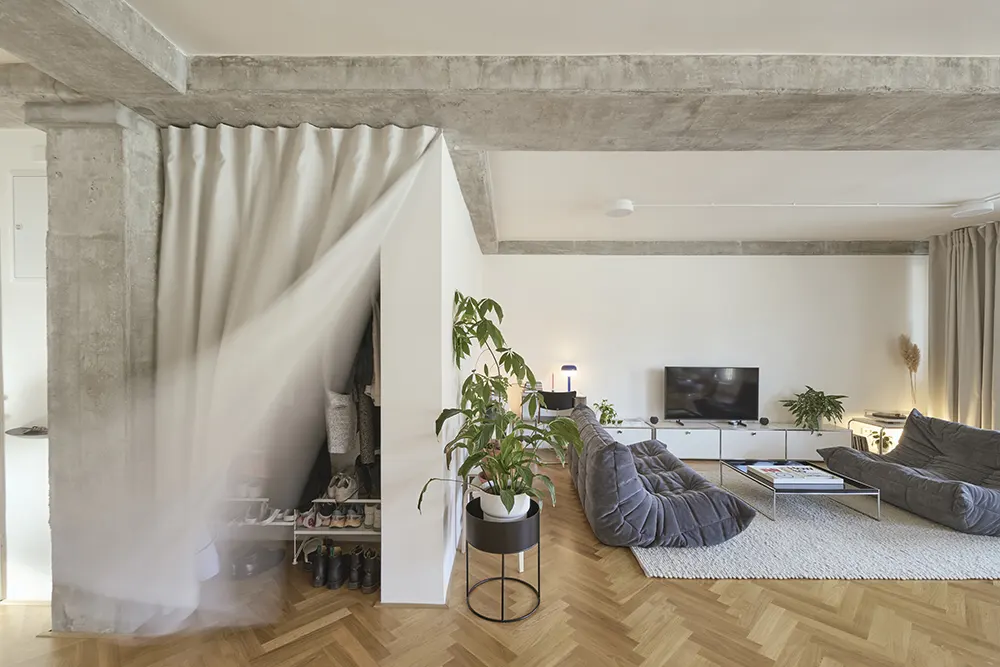
The project begins with a clear critique of the traditional apartment layout, where rooms connect to a central corridor and each function sits behind its own wall. RDTH architekti approach this model as a constraint, especially for residents who want more light, greater freedom of movement, and a stronger relationship between daily activities. In No-Wall Apartment, work, sleep, food preparation, hygiene, and leisure no longer depend on enclosed rooms. Instead, the architects use furniture, curtains, glass concrete blocks, and shifts in floor level to define areas with different degrees of privacy, sound control, and visual connection.
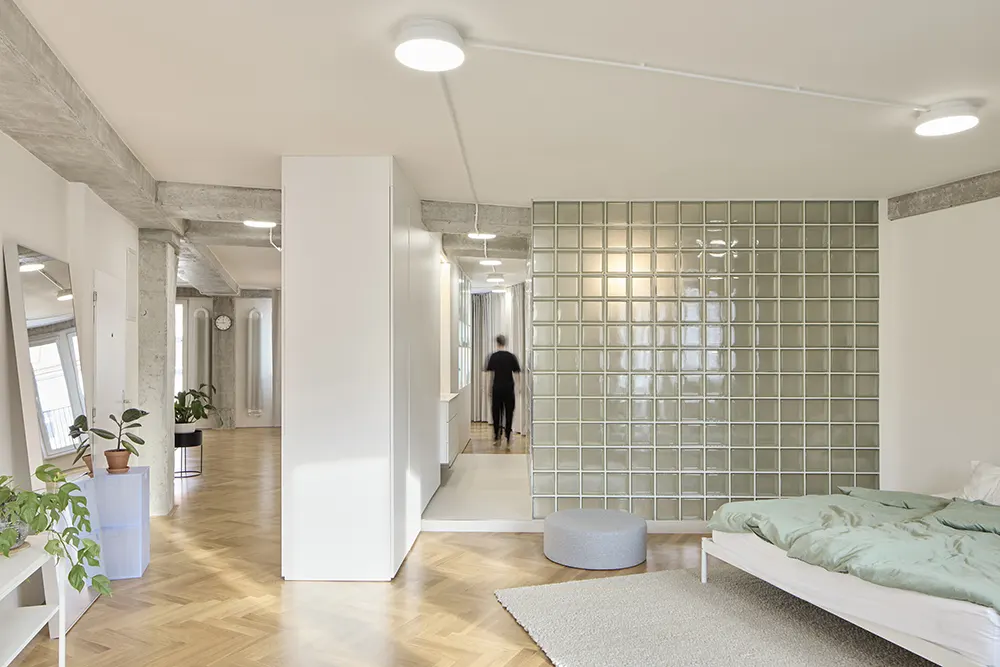
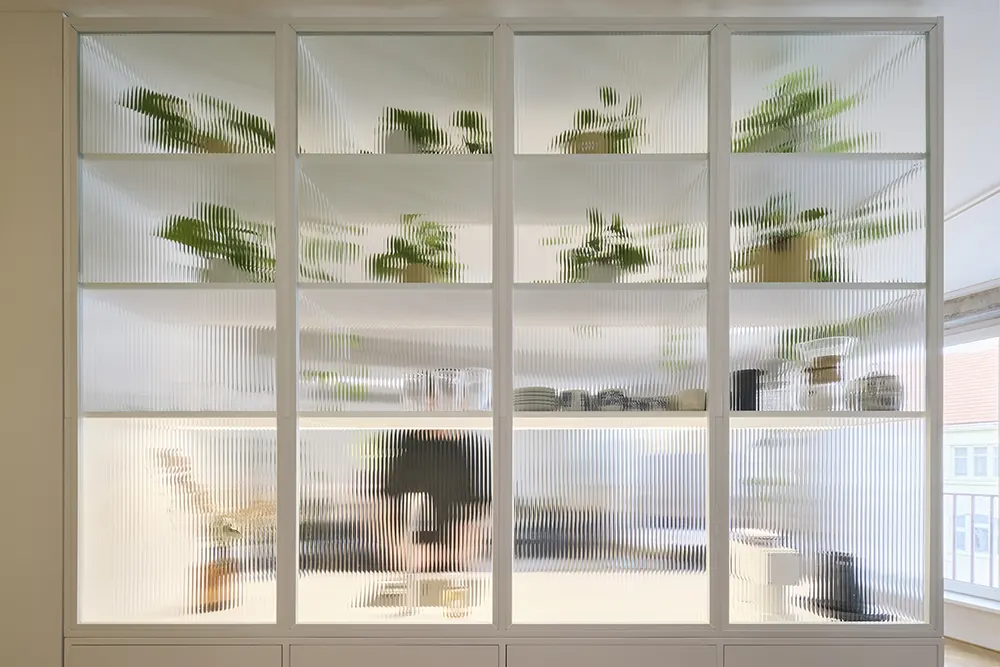
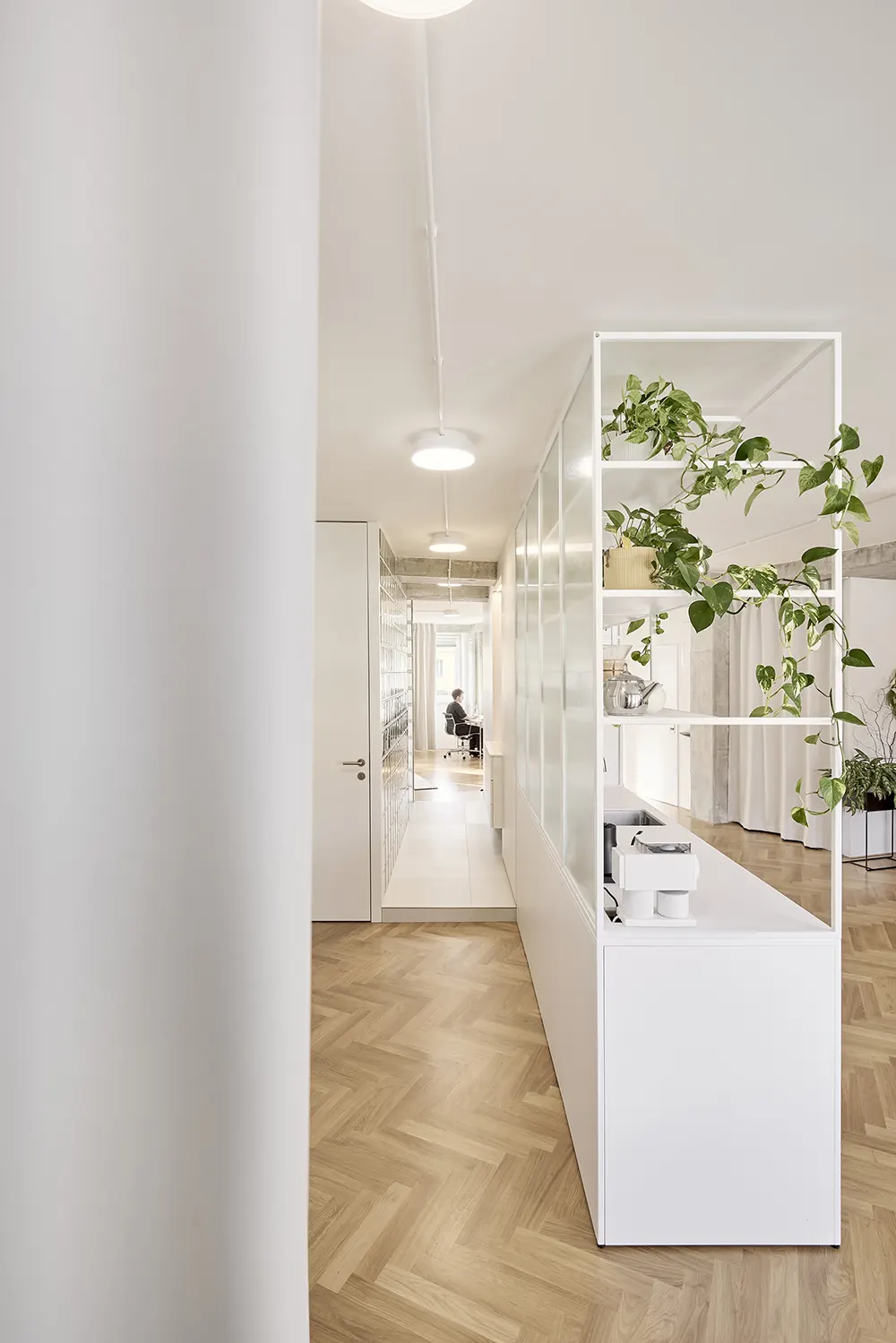
At the center of the plan, RDTH architekti place a compact furniture block, slightly rotated to organize the apartment into separate functional zones. This single move gives the interior its structure. The block creates spatial hierarchy without closing the apartment into conventional rooms, allowing movement to continue around it. The result feels fluid, but far from empty. Each zone has a clear role, while the overall plan remains open to change. Built-in furniture carries much of the organizational work, while freestanding pieces, plants, accessories, and personal objects allow the residents to shape the atmosphere over time.
The apartment contains two kitchens, each with a different purpose. The first sits directly in the living area and functions closer to a home café. It offers a social and informal point within the apartment, with the possibility of future adaptation if the residents’ needs change. The second kitchen occupies the back of the layout and includes the full set of appliances. It connects to a freestanding washer and dryer and a system of open shelves. A curtain separates this area from the rest of the apartment, allowing it to remain visually soft while staying fully accessible when needed.
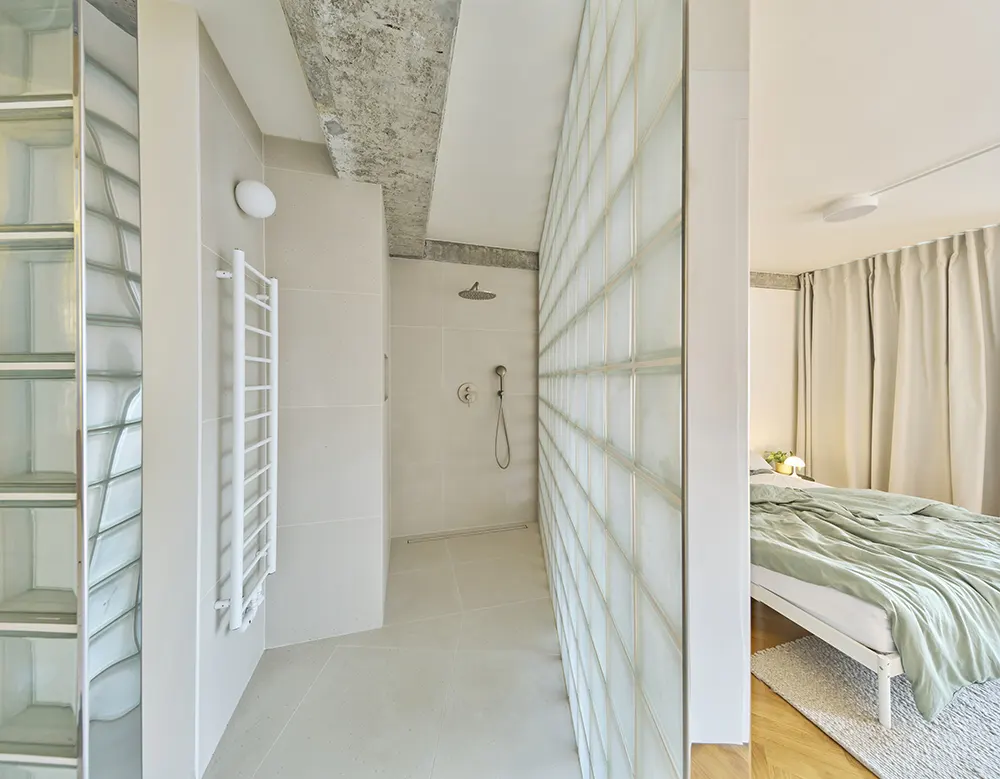
RDTH architekti treat the hygiene area with similar precision. Behind the central furniture block, the sanitary functions occupy a raised floor area that contains water and sewage distribution for the washbasin and sink. The toilet remains the only room with a classic door, separated by a wall of glass concrete blocks that allows light to pass through while maintaining privacy. The washbasin moves outside the enclosed shower space, giving it a wider role in the apartment and separating hygiene from the rigid logic of a standard bathroom layout.
Material choices give the project its direct architectural character. RDTH architekti expose the concrete skeleton of the building and return it to its raw material presence. Plastered external walls, oak parquet flooring, white built-in furniture, blackout curtains, and glass concrete blocks create a measured interior palette. The combination avoids decorative excess and gives the apartment a practical, lived-in quality. The curtains add immediate control over light and acoustics, while the glass blocks bring texture and privacy into the plan without blocking brightness.
Lighting follows the same logic of simplicity and adaptability. The entire apartment connects to a single lighting circuit, with individual lights controlled digitally through residents’ mobile phones or a home tablet. Some lights also use digital rocker switches placed in familiar positions. This system keeps the ceiling and walls free from unnecessary visual noise while giving residents flexible control over the apartment’s atmosphere throughout the day.
The project also responds to its urban setting. With shops, restaurants, cafés, sports facilities, parks, cultural institutions, a large library, and a metro station within a ten-minute walk, the apartment does not need to store everything inside. RDTH architekti use this condition as part of the spatial argument. The city absorbs some of the pressure usually placed on domestic storage, allowing the apartment to remain open, light, and spacious.
No-Wall Apartment presents openness as a conscious design decision, shaped through structure, furniture, material, and use. RDTH architekti avoid treating flexibility as an abstract concept. They give it physical form through a plan that can shift over time, accept new dividing elements, or change with the residents’ priorities. The project turns the removal of walls into a disciplined architectural strategy, creating a home that feels direct, adaptable, and carefully resolved.