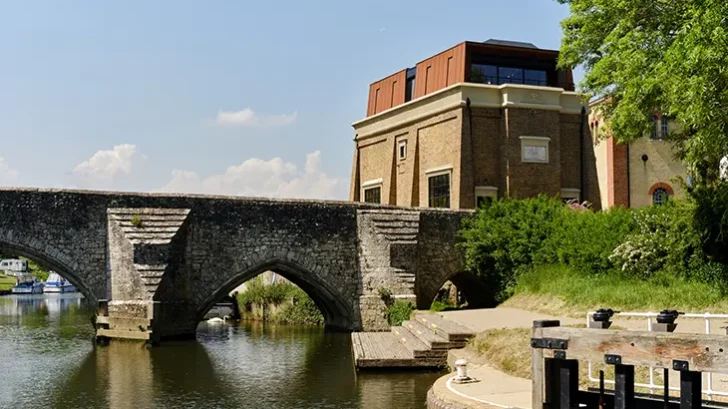

Along the banks of the River Medway in East Farleigh, Kent, a Grade II-listed boiler house built in 1860 by James Pilbrow enters a new chapter. Designed in the Egyptian Revival style, the structure once stood crowned by an obelisk chimney and formed part of Britain’s brief nineteenth-century fascination with the architecture of Karnak, Luxor, and Edfu. Decades of change and underuse altered its presence. Today, Felix Lewis Architecture & Interiors repositions the landmark as The Works, a new headquarters for Chord Electronics.
RENOVATION
Chord Electronics sought a workplace that reflected the precision and ingenuity of its hi-fi products while confronting the building’s vulnerable riverside setting. Flooding has long shaped the site. The architectural strategy therefore integrates spatial renewal with environmental resilience, allowing the historic shell to support contemporary use without retreating from its context.
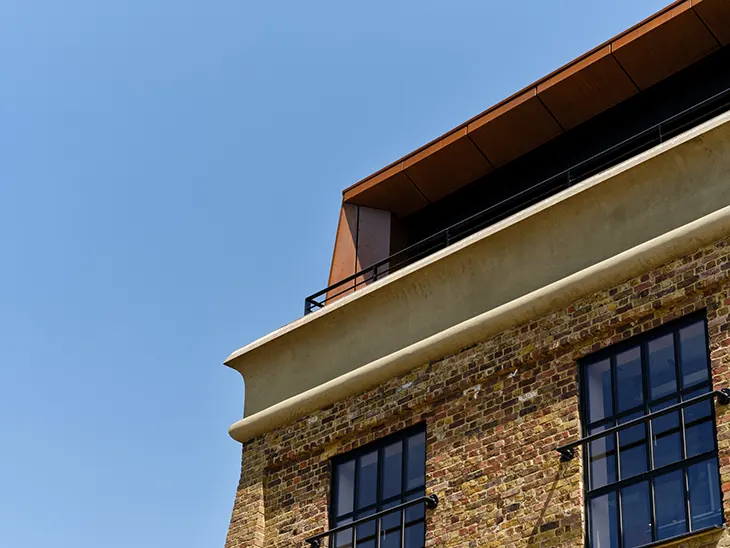
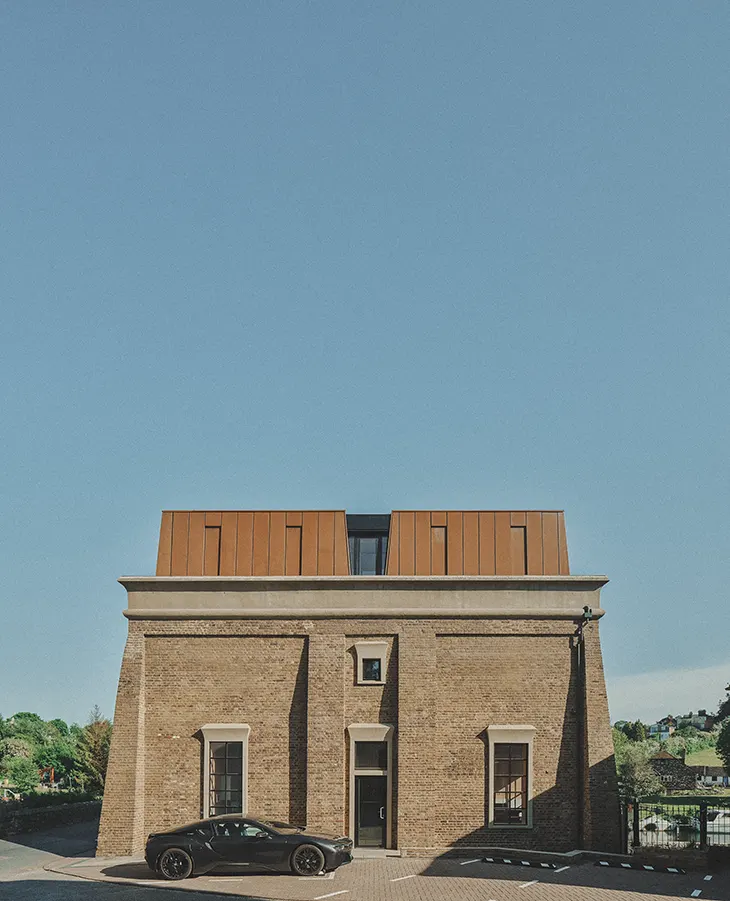
A new roof extension forms the project’s defining gesture. Inserted between the central buttresses, the addition draws from the geometry of the Egyptian pylon. Its tapered profile restores vertical emphasis to the silhouette and replaces the vanished chimney with a new architectural marker. A narrow light slot slices through the volume, admitting daylight deep into the upper floor and reinforcing the façade’s rhythm. Clad in Corten steel, the extension introduces a contemporary industrial layer that will weather into earthy tones, establishing a material dialogue with the masonry below. From the river, the intervention reads as a precise extrusion of the original mass.
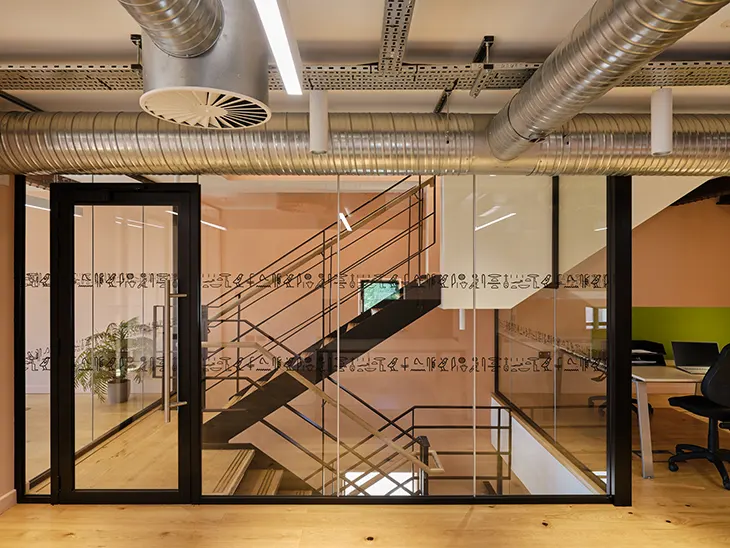
Inside, the former dark and cellular interior gives way to an open, light-filled workplace. Glazed partitions extend sightlines across floors, strengthening visual connection between teams. Steel-framed windows frame expansive views of the Medway, linking daily work to the surrounding valley. The material palette balances clarity with reference. Sandy hues recall the tones of Egyptian temple painting, while bespoke glass partitions etched with hieroglyph-inspired motifs draw a parallel between the Nile and the Medway, both rivers that define cycles of inundation and renewal.
The executive suite occupies the new rooftop storey, commanding panoramic views across the landscape. These spaces articulate Chord Electronics’ ethos through controlled detailing and disciplined spatial planning. Function directs every decision, yet aesthetic coherence guides the overall composition.
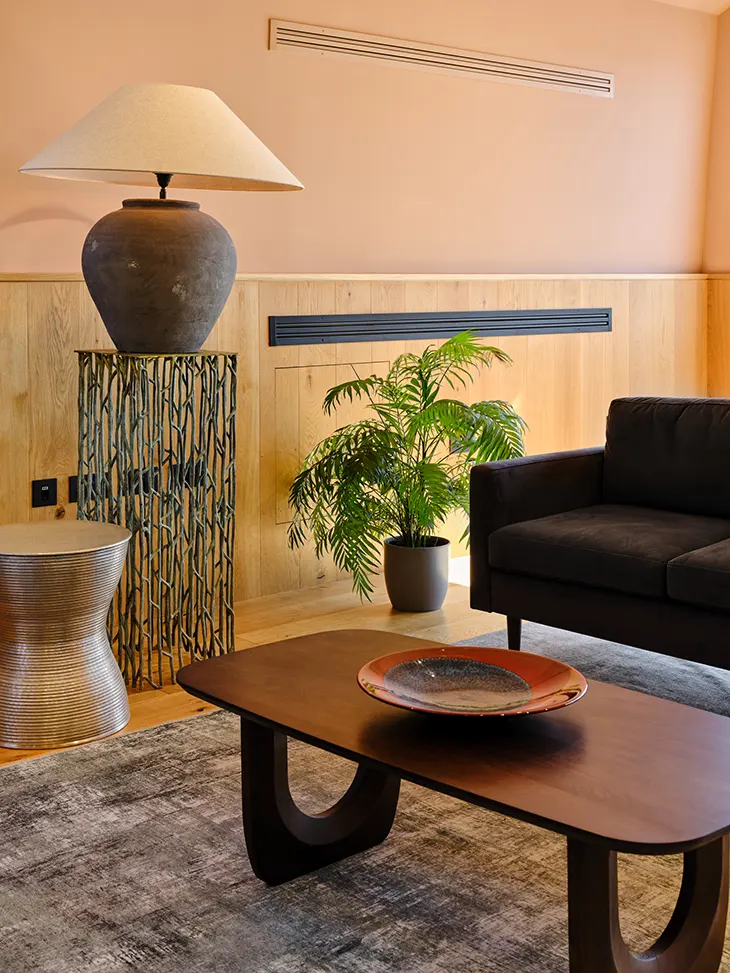
Flood resilience shapes the ground floor strategy. Tanked construction, terrazzo, and tiling mitigate water ingress. Electrical systems rise above potential flood levels, and exposed concrete at the stair base provides a durable anchor. Lightweight, movable furniture allows rapid reconfiguration after high water events. Rather than resisting the river, the project acknowledges its presence and integrates adaptability into the building’s operational logic.
John Franks, CEO of Chord Electronics, describes the result as transformative, noting how the conversion aligns the listed building’s character with a contemporary extension that reflects the brand. Felix Lewis emphasizes the ambition to respect the rare Egyptian Revival architecture while ensuring long-term viability in a challenging setting.
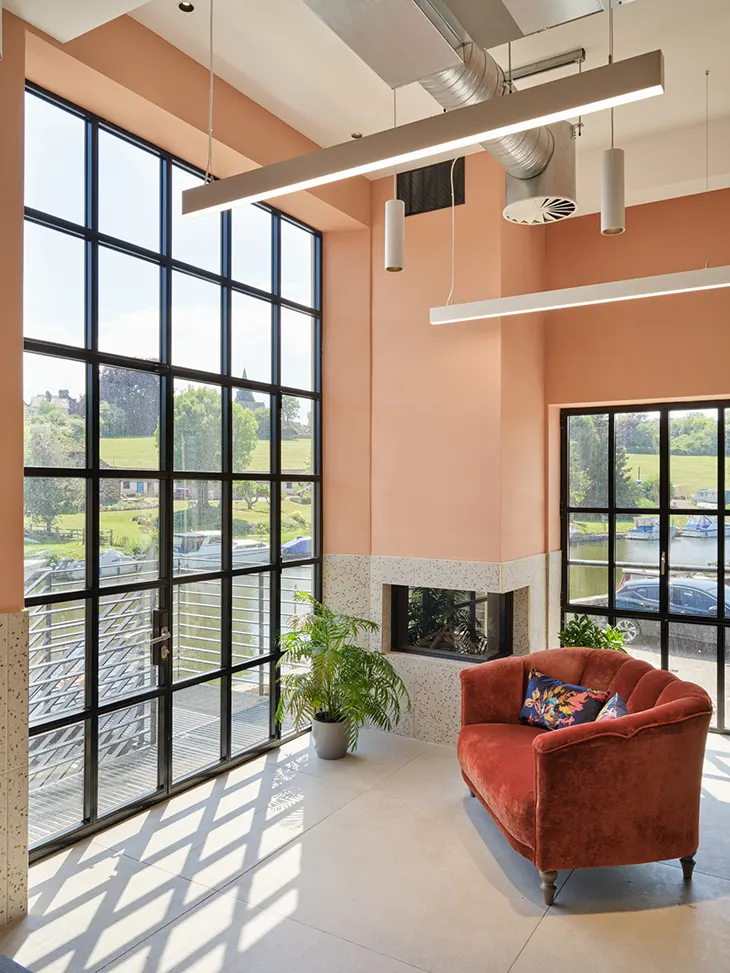
The Works reframes a Victorian industrial relic as a resilient headquarters. Through calibrated extension, spatial reordering, and flood-conscious design, Felix Lewis Architecture & Interiors deliver a workplace that connects heritage with present-day craft. The former boiler house once powered industry; it now powers design and engineering within a renewed architectural identity.