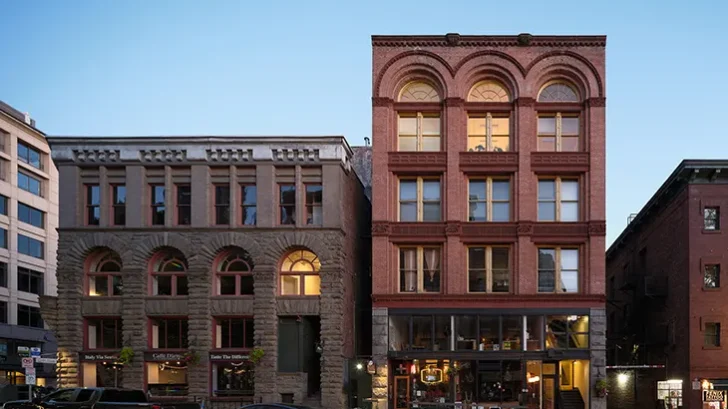

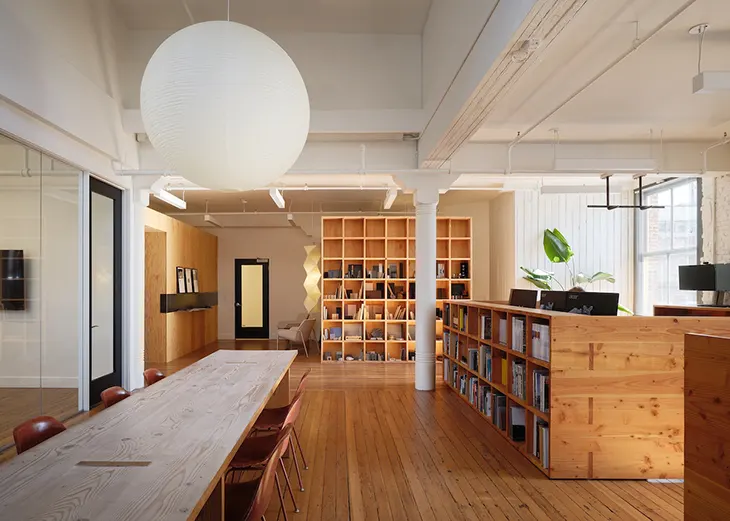
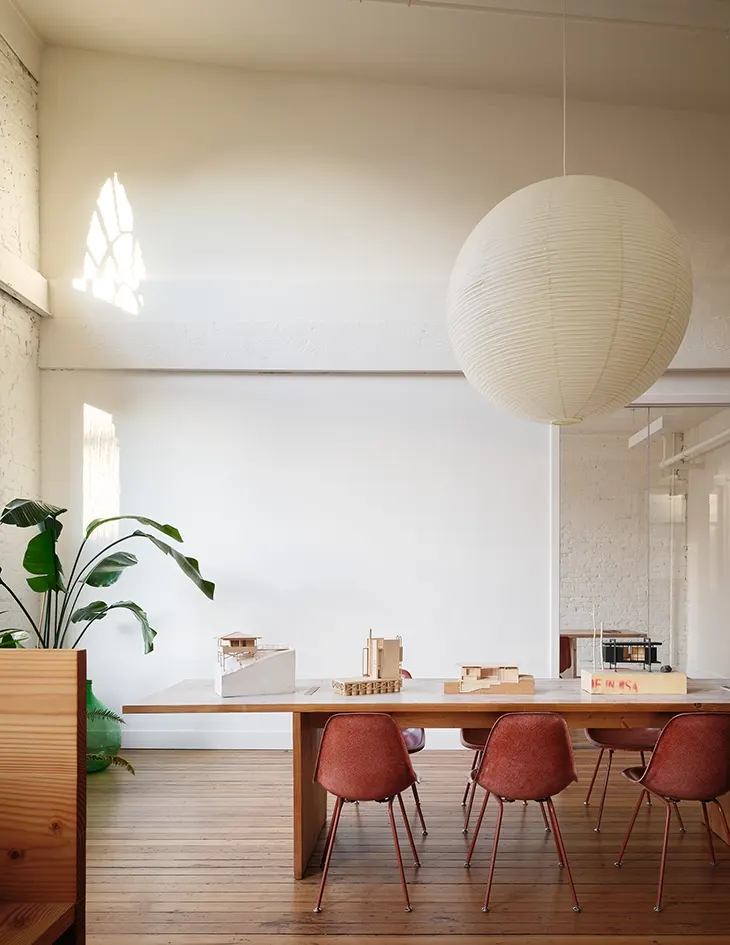
GO’C has transformed a historic Pioneer Square loft into a new architecture office that reflects both the material history of Seattle and the studio’s design approach. Located along Yesler Way, the project occupies the top floor of the Schwabacher Building, a brick landmark constructed after the Great Seattle Fire of 1889. The renovation converts a 1,600-square-foot space that previously functioned as an artist studio and residence into a working environment for the practice, integrating workstations, a conference room, a material library, kitchen, print room, and entry foyer within a cohesive interior framework.
OFFICES
Yesler Way itself carries historical significance. Once referred to as “Skid Road,” the street served as the route where timber traveled downhill toward the waterfront mills. GO’C referenced this history directly through the use of solid Douglas fir throughout the interior. The design incorporates the wood in desks, shelving systems, and partition walls, allowing the material to structure the spatial organization of the office while referencing the timber industry that shaped the area. These elements introduce warmth and texture while creating a clear architectural language rooted in place.
Workstations sit alongside desk-height partitions constructed from stacked fir planks. Oversized tongue-and-groove joinery connects perpendicular sections of these walls, forming a continuous rhythm across the workspace. This method allows the partitions to function both as structural elements and as tactile surfaces that guide movement through the office. The same Douglas fir frames additional partitions and architectural inserts, including a pivoting wall that separates the kitchen from the entry. These components unify the interior and reinforce the project’s material clarity.
The renovation maintains the openness of the loft while organizing the program around areas for collaboration and focused work. A light-filled conference room anchors meetings and presentations, while the book and material library supports the studio’s daily design research. The kitchen and entry foyer provide shared spaces that encourage informal conversation and interaction between team members and visitors. Together these zones establish a flexible workplace that balances concentration with exchange.
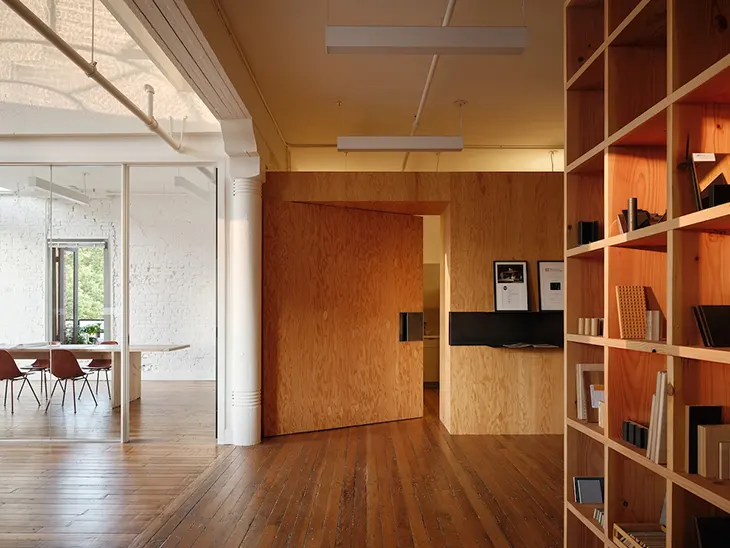
Construction for the project was led by Praxis Builders, who executed the technically demanding timber details throughout the office. The project also includes contributions from longtime collaborators. Ryan Shaeffer created a custom steel handleset and foyer display, while Matt Kelly produced the steel plate sign that marks the office entrance. These elements introduce precise metal components that contrast with the warmth of the fir while reinforcing the handcrafted character of the interior.
The office sits at a prominent corner of Pioneer Square, close to Seattle’s revitalized waterfront. Nearby landmarks such as Smith Tower, Pike Place Market, and Olympic Sculpture Park connect the studio to the surrounding cultural landscape. Large windows provide views toward Elliott Bay to the west and toward the city to the north and east, filling the office with daylight while maintaining a visual connection to mountains, forests, and waterways that define the region.
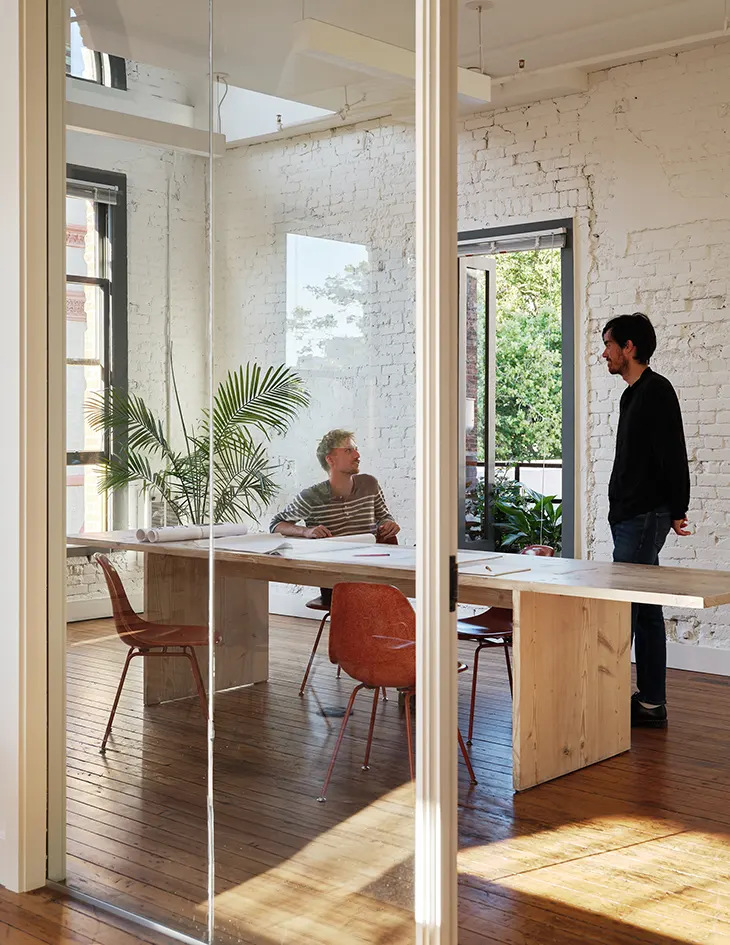
Since 2012, GO’C has hosted multidisciplinary exhibitions during Seattle’s First Thursday Art Walk, inviting collaborators and artists to share work within the studio environment. The Yesler Way office continues that tradition by offering a workspace that supports both architectural production and cultural exchange. Through its careful use of Douglas fir and its engagement with local history, the renovation establishes an office that links Seattle’s industrial past with the contemporary practice of architecture.