
Warren Woods Ecological Field Station, designed by OPAL for the University of Chicago’s Department of Ecology and Evolution, brings scientific infrastructure into direct conversation with environmental responsibility. Located in Three Oaks, Michigan, the 2,400-square-foot facility occupies a 42-acre site in southwest Michigan and serves as a place for research, education, retreats, and community engagement. As the first Certified Passive House laboratory facility in North America, the project sets a rare benchmark for laboratory architecture, proving that advanced scientific work can operate within rigorous energy standards.
EDUCATION
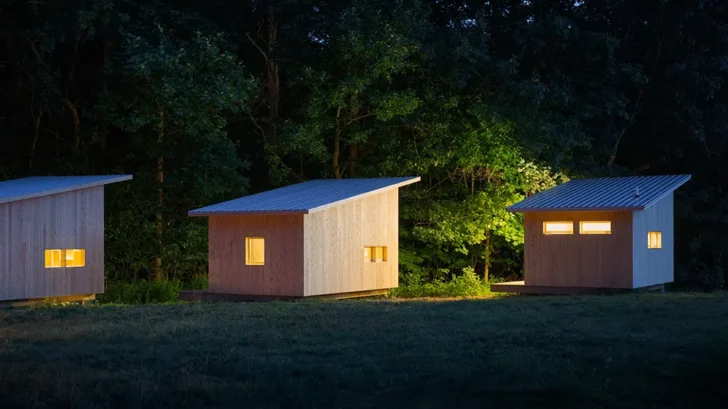
The building carries the subtitle “Just Don’t Call it a Lab,” a phrase that reflects its expanded role. Warren Woods houses a fully equipped laboratory, seminar space, bathrooms, and a small kitchen, while a second-floor loft and roof deck extend its use beyond research. Three adjacent bunkhouses and a wash house support seasonal programs, creating a compact campus for field study and collective work. The result functions as a research base, a teaching environment, and a gathering place for conversations around ecology, adaptation, and the Anthropocene.
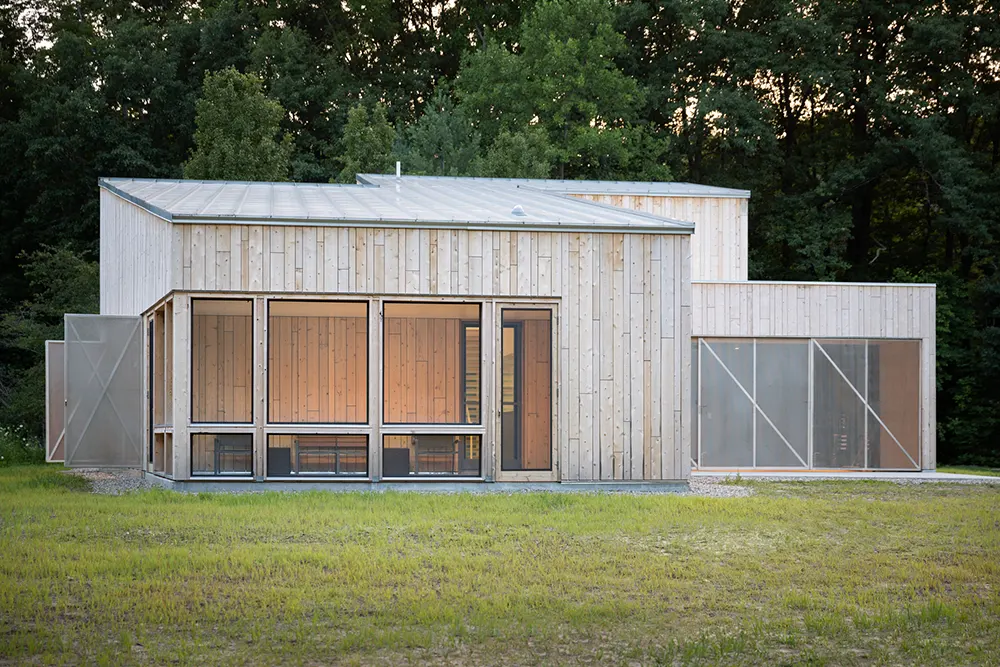
OPAL approached the project through the demands of both science and climate performance. Laboratories generate heat through plant-growth chambers, extreme low-temperature freezers, and DNA extraction equipment, so the design team placed these spaces in the cooler northwest corner of the building. This decision turns the technical load of the program into a spatial strategy. A full-building ventilation system captures or exhausts waste heat depending on seasonal needs, allowing the architecture to respond to changing internal and external conditions.
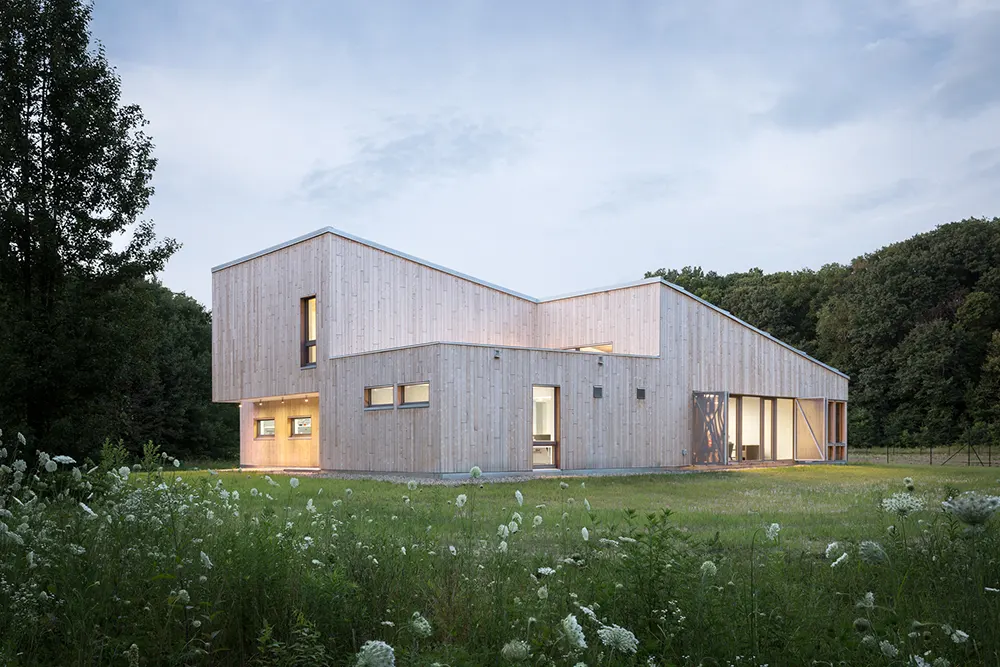
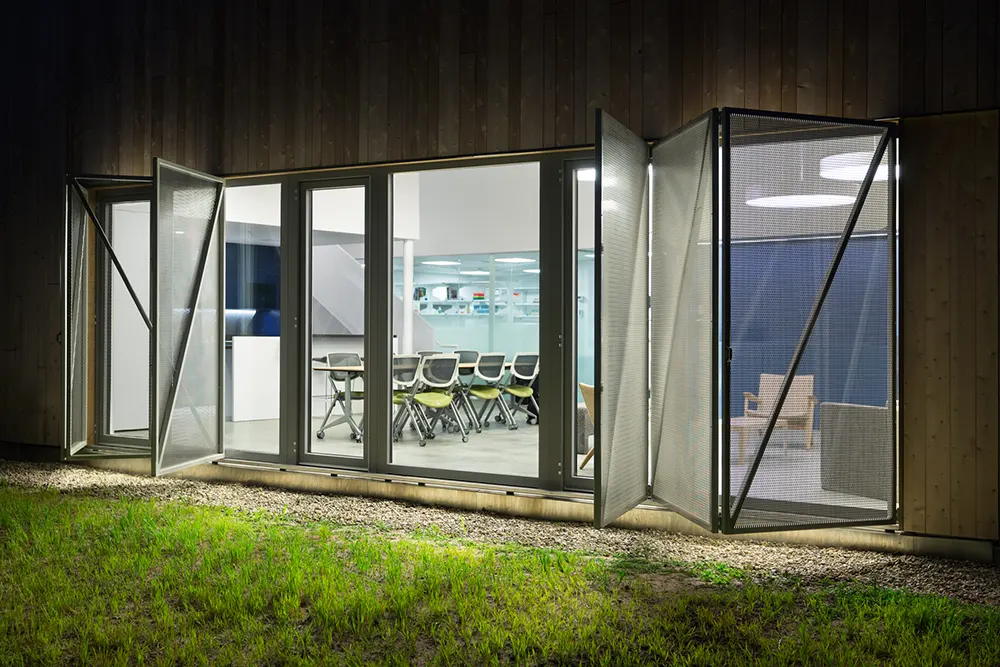
The field station uses daylight as part of its environmental and spatial strategy. Expansive south-facing glass opens the interiors to the surrounding wooded site, while a deep roof overhang shields west-facing glazing from excessive solar exposure. Operable, customized perforated-metal screens regulate seasonal solar gain and give users direct control over comfort. These elements avoid the closed-off character often associated with laboratory buildings, giving the facility an atmosphere closer to a retreat space than a sealed research box.
Architecturally, Warren Woods presents a clear and restrained form. A long shed roof organizes the building, while abstract geometric volumes give it a strong profile within the landscape. Distressed cedar siding wraps the exterior, allowing the facility to sit comfortably within its wooded context. The material choice gives the building a grounded quality, while its precise environmental systems point toward a more advanced model for remote research architecture.
Passive House performance defines the project from the ground up. A super-insulated concrete slab stabilizes interior temperatures throughout the year, reducing energy demand while supporting the technical needs of the program. The project shows that energy efficiency can shape architectural character, not simply operate as a checklist behind the walls. Every major design decision connects to orientation, internal heat loads, ventilation, comfort, or seasonal use.
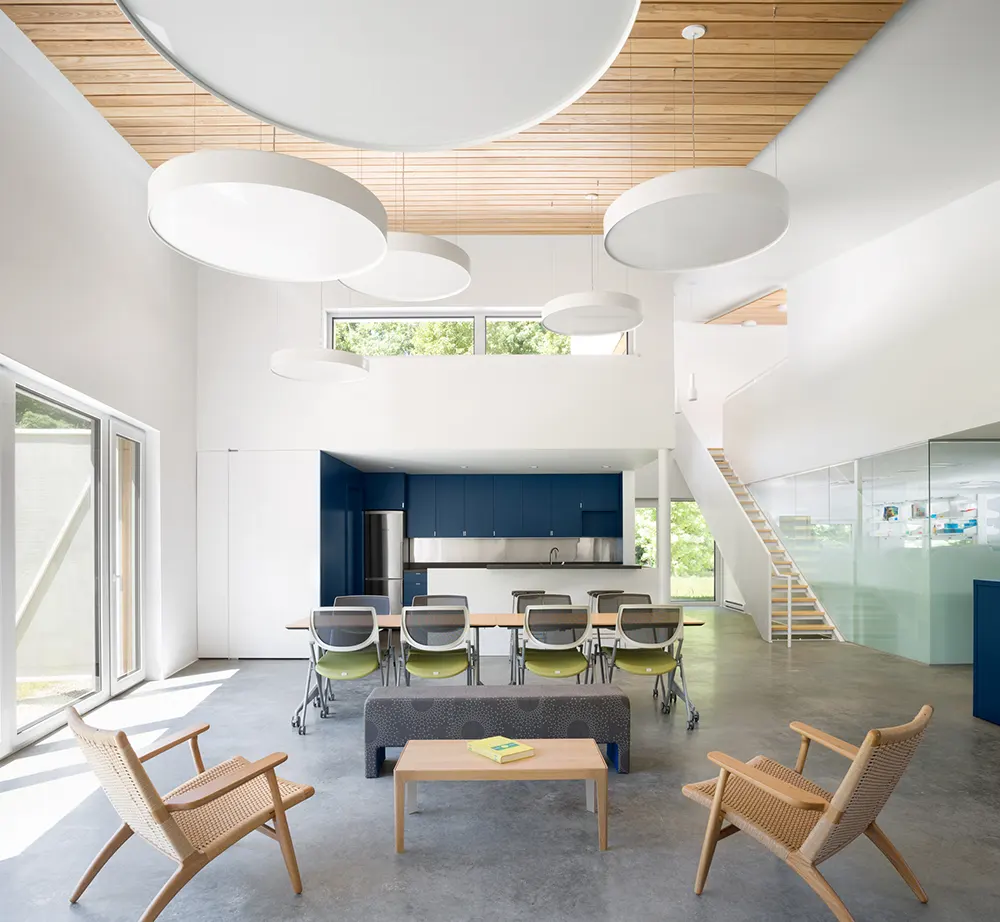
Warren Woods Ecological Field Station positions architecture as an active participant in ecological research. OPAL designed a building that supports scientific inquiry while demonstrating the values behind that work. For a facility concerned with ecology and human adaptation, the architecture carries the same urgency as the research it contains. In a remote setting, with a modest footprint and complex program, Warren Woods offers a persuasive model for how laboratories can reduce energy demand, support flexible use, and remain deeply connected to place.