
Sanjay Puri Architects completes The Primus in Jaipur, India, a nine-level commercial building designed around climate response, flexible office planning and continuous access to greenery. Located beside Jaipur Airport, the project works within a strict 30 meter height restriction while delivering 9,475 square meters of built area on a compact 1,735.88 square meter site.
COMMERCIAL
The building accommodates eight offices on each floor, with units ranging from 60 square meters to 125 square meters. Its structural system allows these offices to combine into larger workspaces, giving the project long-term flexibility as tenant needs change. Rather than treating the office floor as a closed interior, the design opens each workspace toward a series of sheltered capsule-shaped planter terraces.
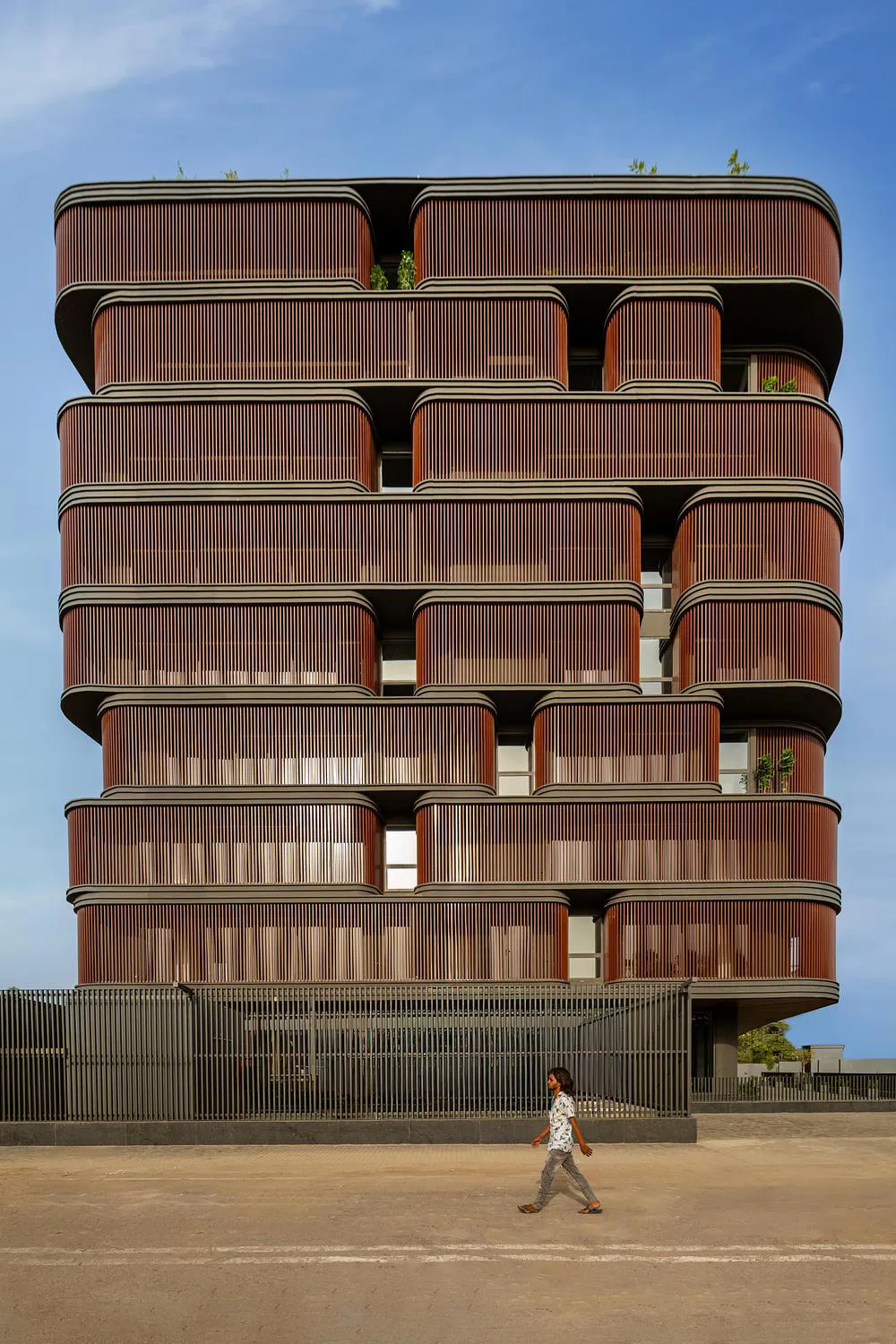
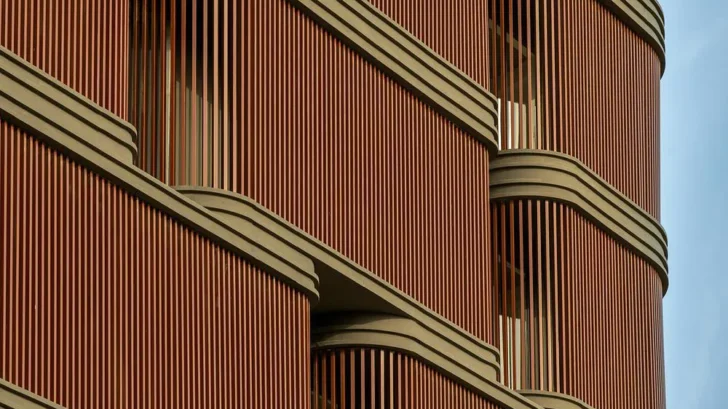
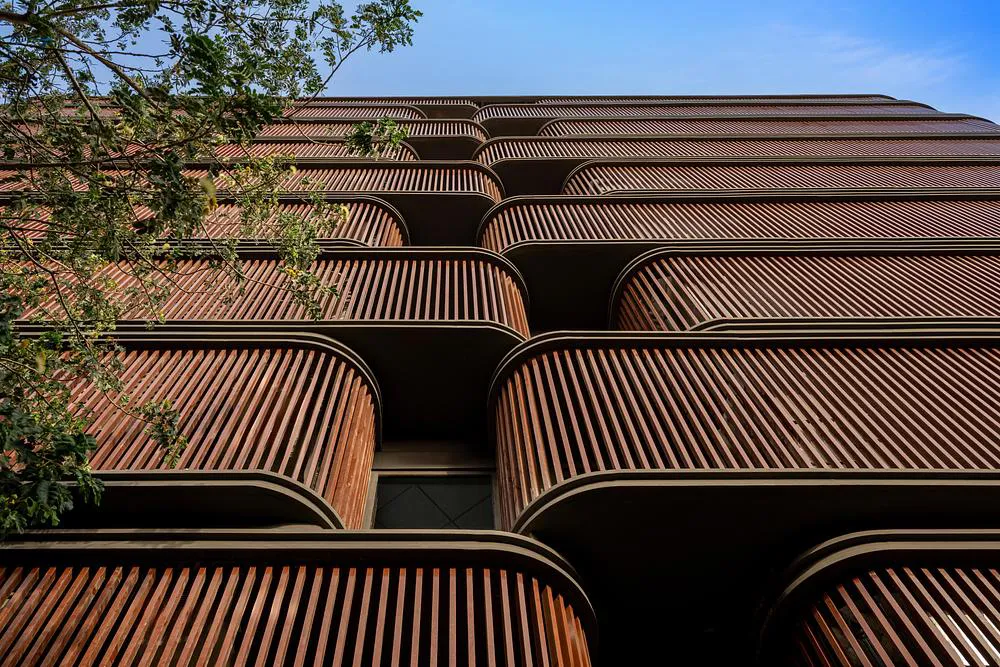
These planted modules define the project’s visual identity. Stacked vertically, they form a rhythmic facade of rounded volumes wrapped in vertical aluminum screens. The screens filter harsh sunlight, reduce heat gain and help buffer noise from the nearby arterial road and airport activity. Each office connects to these planted zones through large sliding glass openings, giving occupants access to shaded greenery throughout the workday.
Jaipur’s climate shapes the project at every level. Temperatures exceed 40°C for much of the year, making solar protection, airflow and shaded outdoor space essential to workplace comfort. The Primus responds with passive strategies instead of relying only on mechanical systems. The capsule terraces act as environmental buffers, while the vertical screens create a second skin that protects the interior from direct heat.
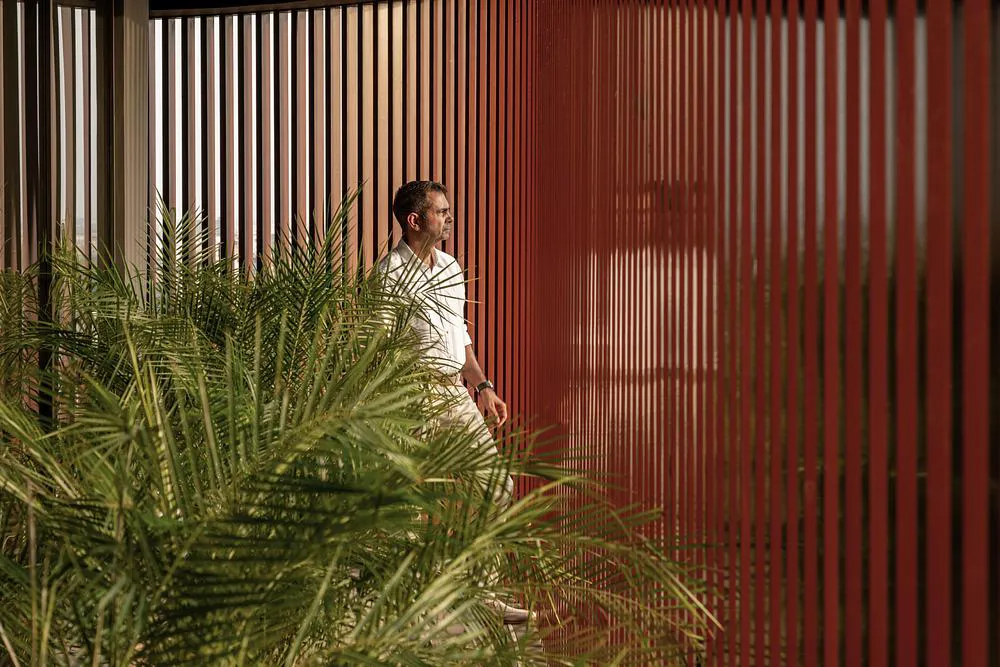
Because the building required a footprint of 1,116 square meters, the site left no room for conventional ground-level gardens. Sanjay Puri Architects shifted the landscape upward, wrapping every floor with planted terraces and adding a landscaped rooftop garden. This approach gives the building a stronger relationship with vegetation despite the density of the plot, turning the facade into an active environmental layer.
The project also reframes the office as a healthier daily environment. The terraces create moments of pause between workspaces and the city, allowing air, filtered light and planting to soften the experience of a commercial building. This biophilic approach gives each office a connection to outdoor space, supporting comfort while reducing the visual and thermal pressure of Jaipur’s urban setting.
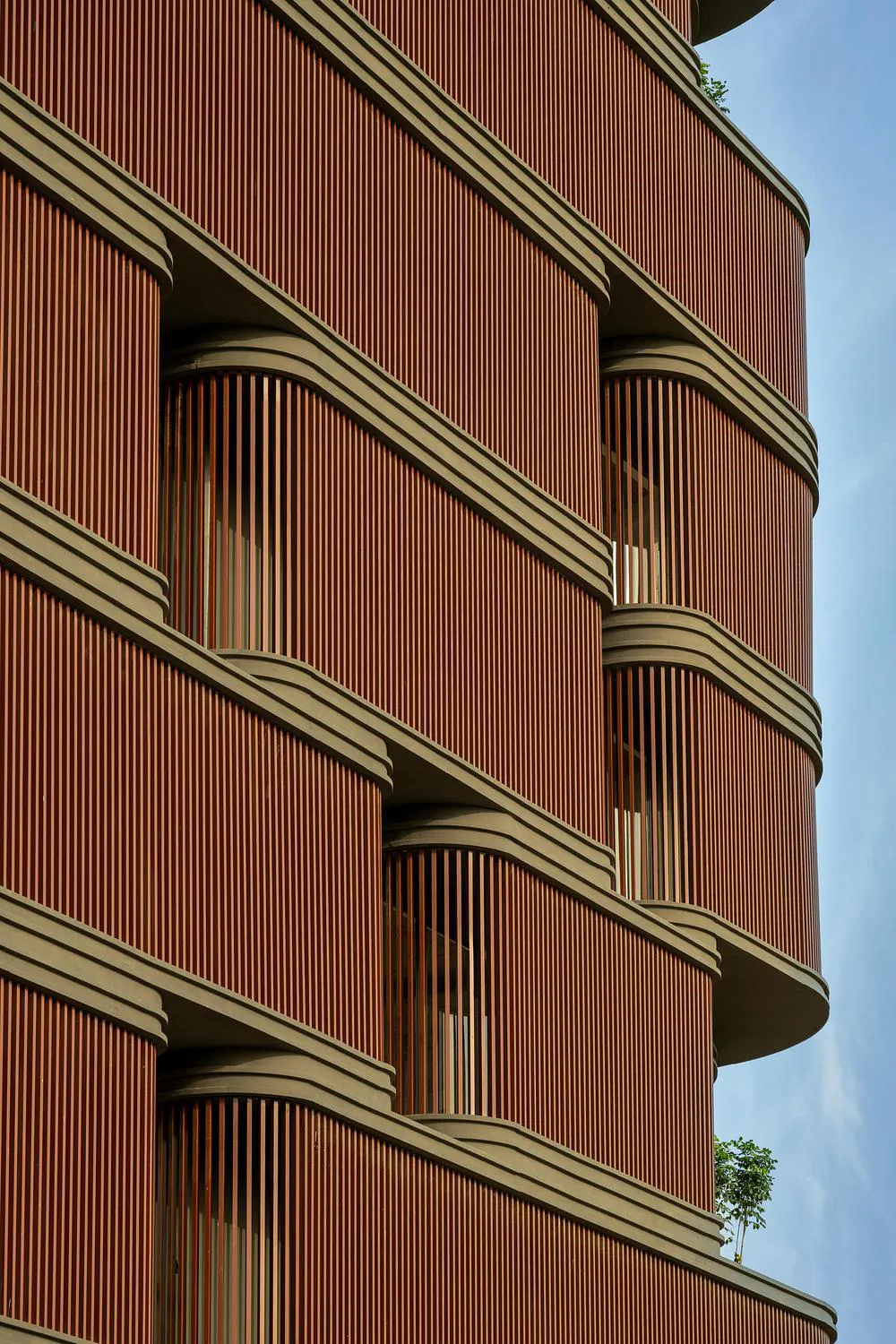
The formal language remains direct and expressive. The capsule modules give the building a sculptural presence, yet their shape comes from performance as much as image. They provide shade, hold planting, frame views and organize the facade. The result is a commercial building where environmental strategy and architectural identity work together.
The Primus shows how a constrained site can still produce a generous workplace. Height limits, airport proximity, heat and the lack of ground-level landscape become drivers of the design rather than obstacles. Through its stacked planted terraces, flexible office planning and climate-responsive facade, the building creates a breathable workspace suited to one of India’s hottest urban environments.