
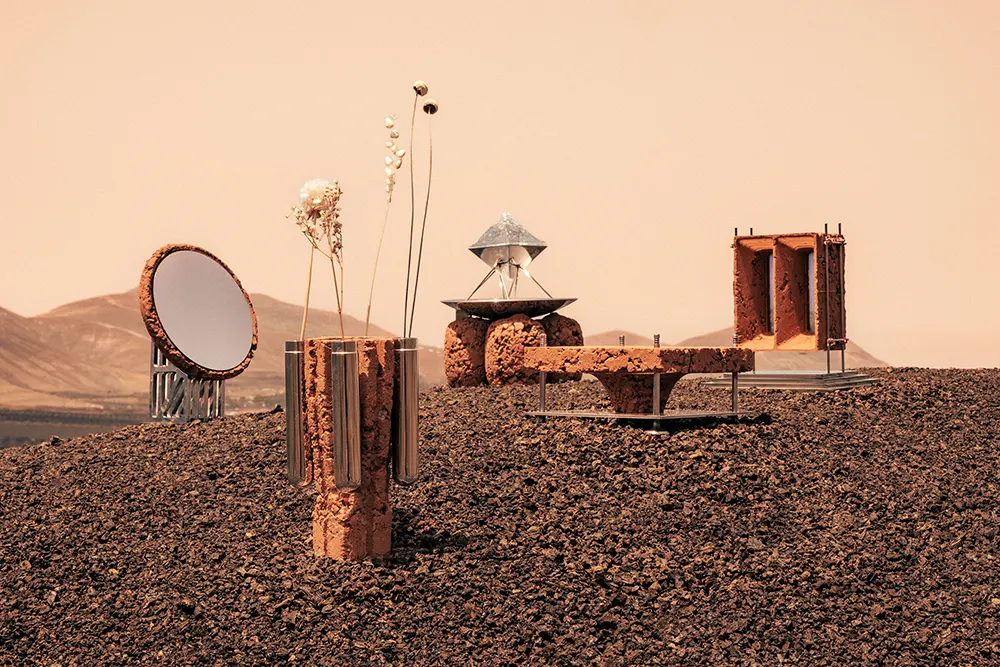
London based designer Roc H Biel presents Martian Relics, a collection of five domestic objects that considers what humans might become on Mars. The series includes a plate, mirror, window, flower pot and water filter. Biel made each piece from rammed earth and recycled stainless steel, then photographed the objects in Lanzarote’s volcanic terrain.
FURNITURE
The collection follows the idea of settling Mars through to its social and personal consequences. Biel proposes that tools and environments shape human behavior. On an arid and hostile planet, people would experience major changes in belief, self image, knowledge, nostalgia and access to resources.
Biel connects the project to the renewed space race and its language of escape. He questions the idea that humanity can leave Earth after exhausting its resources and continue the same patterns of consumption elsewhere. Martian Relics uses the imagined move to Mars as a way to examine current attitudes toward the planet.
Every object combines rammed earth with recycled stainless steel. Biel selected rammed earth because it represents an ancient construction method and a material that scarcity could make necessary on Mars. He sourced the metal from valves, pressurant tanks and stacked panel offcuts. These fragments retain links to rockets and satellites after Biel transforms them into domestic objects.
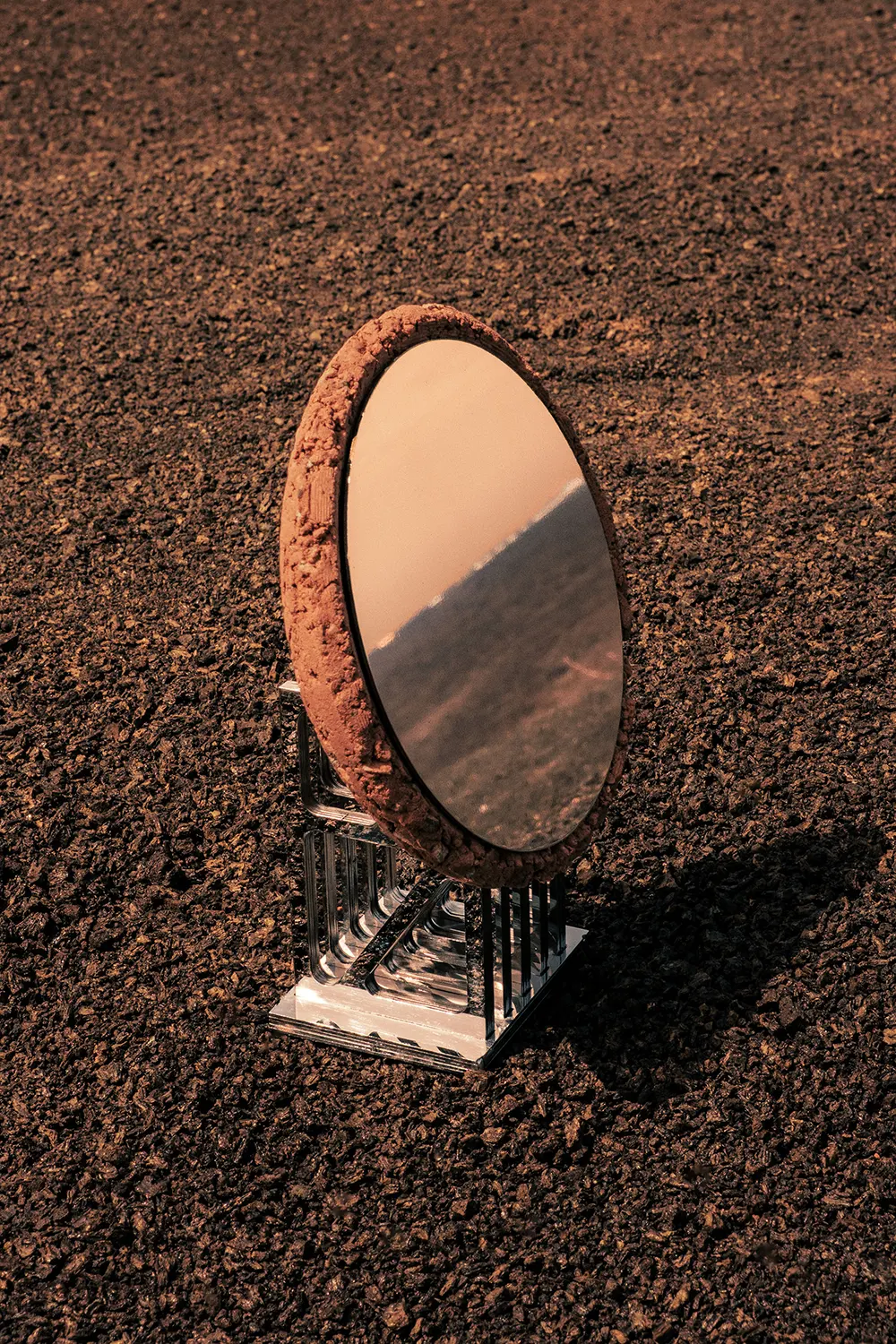
The project also develops a new technical use for rammed earth. Biel drew on his experience in industrial mold design and created molds with as many as twelve parts. He engineered them for a single axis continuous press that compresses the earth one layer at a time. This process allowed him to form intricate details throughout the five one off pieces.
Gravity Well functions as a plate for keys and pocket objects. It imagines complex space physics entering common knowledge and everyday design. Faded Signal takes the form of a table mirror that references deep space antennas. Its blurred reflection receives an image instead of projecting one, creating a response to a beauty culture focused on outward display.
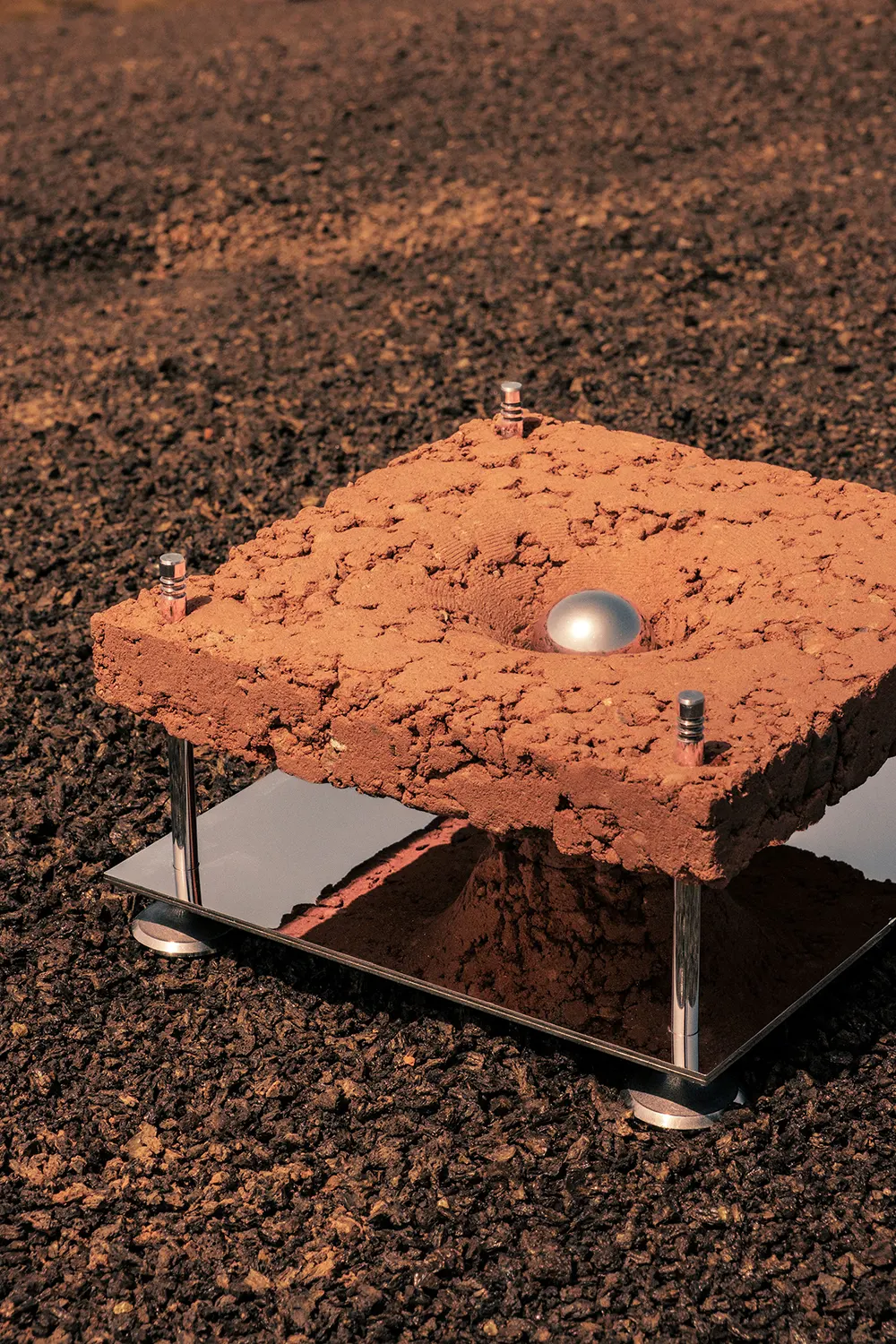
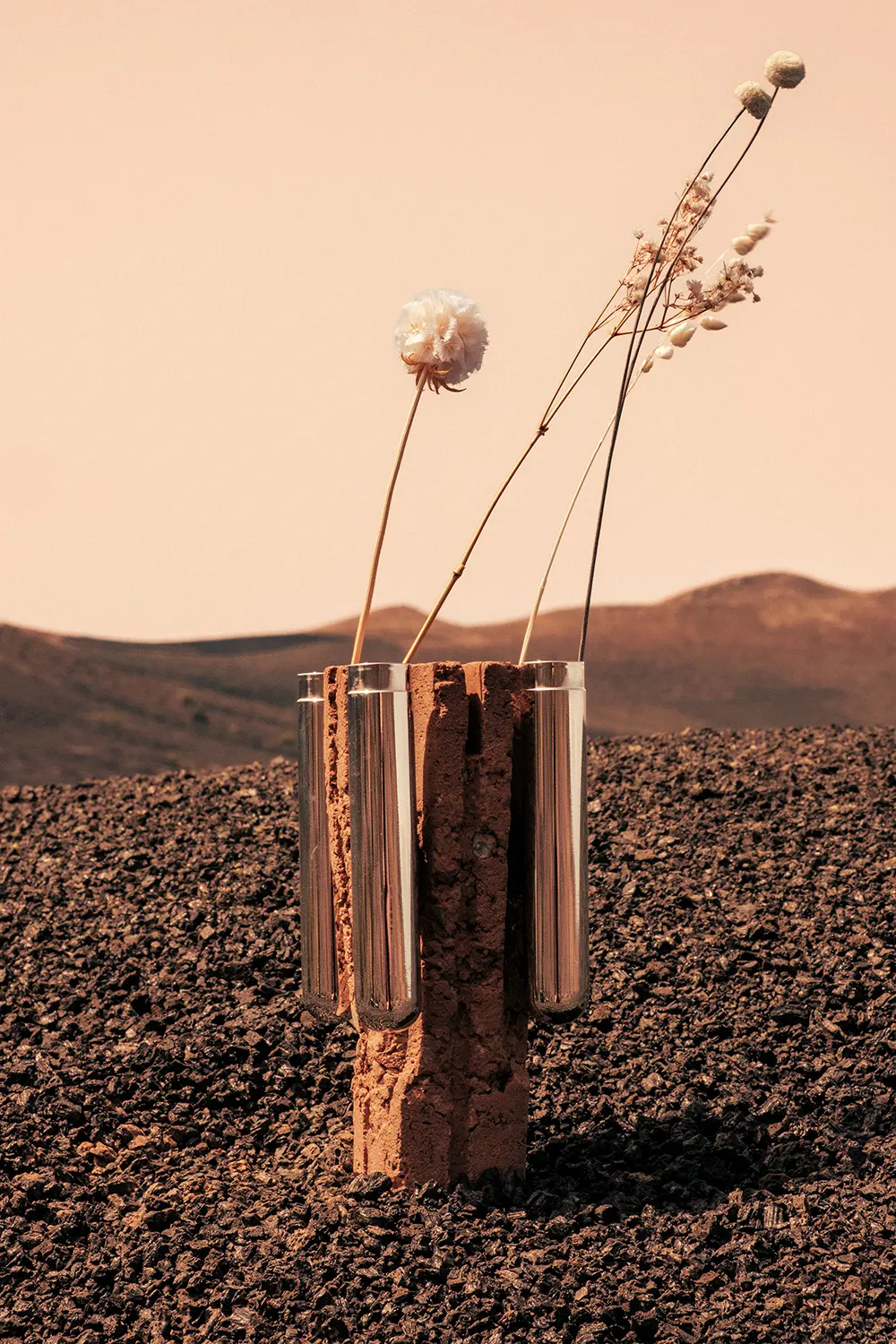
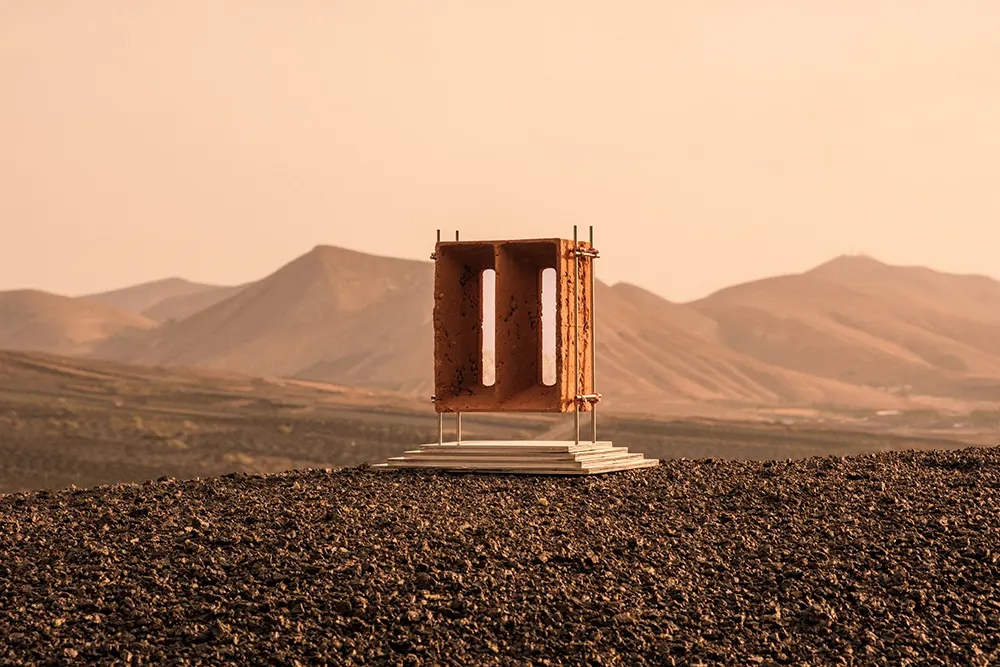
Eroded Horizon draws from Jørn Utzon’s Can Lis. The window frames a faded and unreachable view of the Mediterranean, turning the object into an expression of nostalgia for a lost environment. For Last Offering, Biel models a flower pot altar on a headstone. The object imagines people returning to the goddess Gaia through a desperate desire for an environment capable of sustaining life.
Slow Water presents a multi stage water filter through the visual language of a satellite. The object treats water as a scarce and ceremonial resource. It asks viewers to consider how an element that people often regard as limitless could become difficult to access.
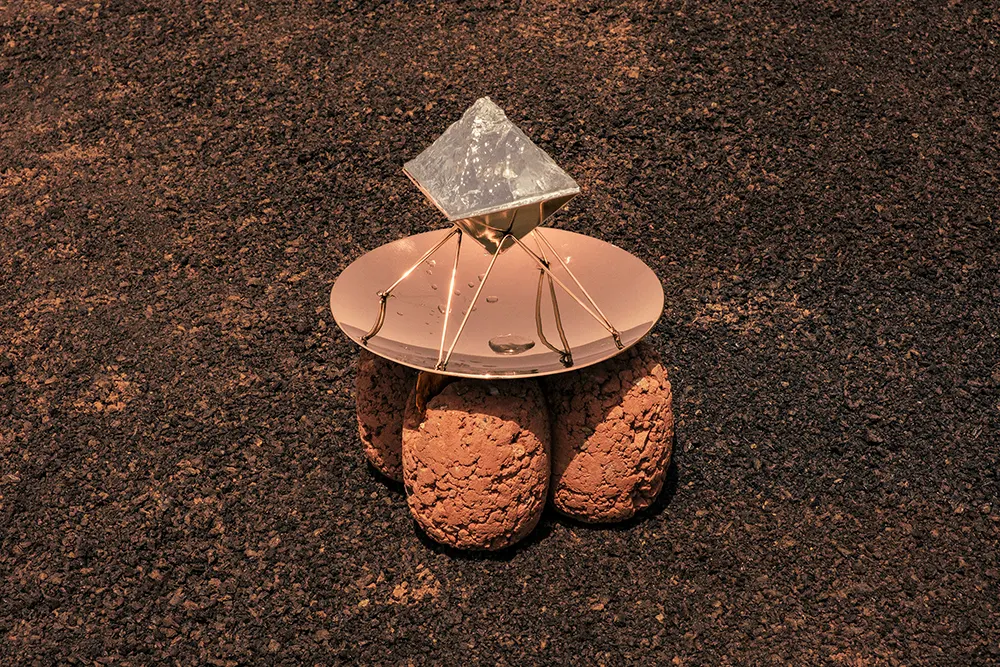
Biel made every object in his London studio and photographed the collection himself in Lanzarote. The images often resemble digital renders, though Biel used no CGI. The European Space Agency uses the island’s volcanic terrain for astronaut training because it closely resembles Mars.
DISCOVER: Roc H Biel on Dust Order and the Architecture of Contradiction
Each object exists as a single piece, weighs up to four kilograms and measures up to 22 centimeters. Biel presents Martian Relics as a warning about life on Earth, using an imagined Martian home to question consumption, scarcity and environmental responsibility.
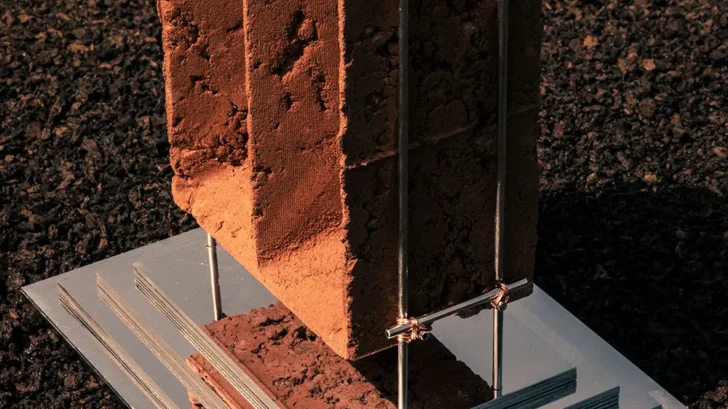
All images are photographs of physical objects; no renders or CGI were used
Designed and photographed by Roc H Biel
Location Scout and material expert: Giulliana Giorgi