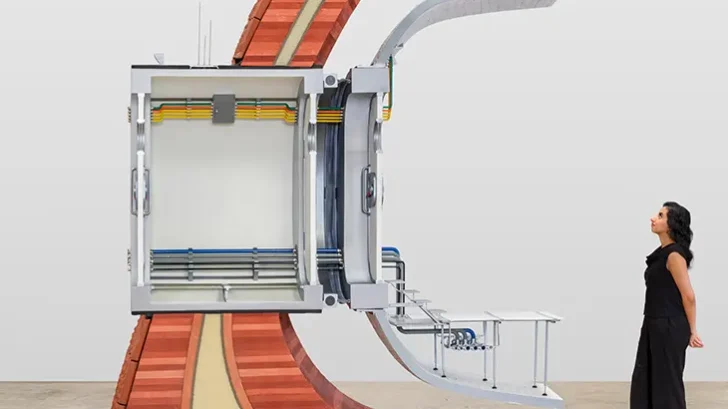

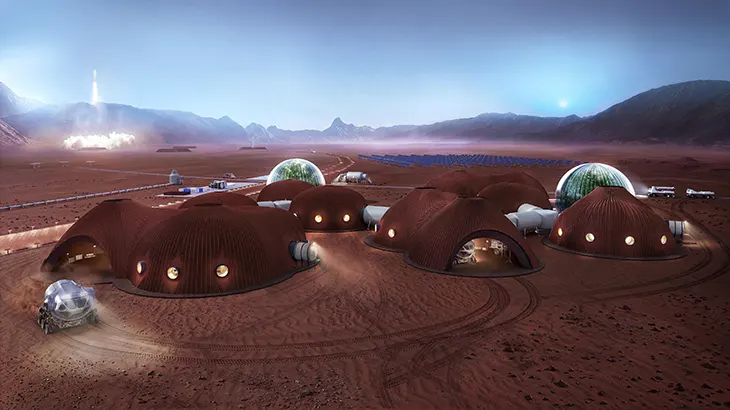
Los Angeles-based design studio AENARA presents Off-World Habitat Wall Section, a commissioned installation exploring the architecture of human habitation on Mars in 2075. The project forms part of Task Eternal, the world’s largest aerospace exhibition, opening at the new Powerhouse Parramatta museum on November 7, 2026. Through a detailed architectural cross-section, the installation reveals the structural systems, materials, and technologies necessary to create a habitable environment beyond Earth.
EXHIBITIONS
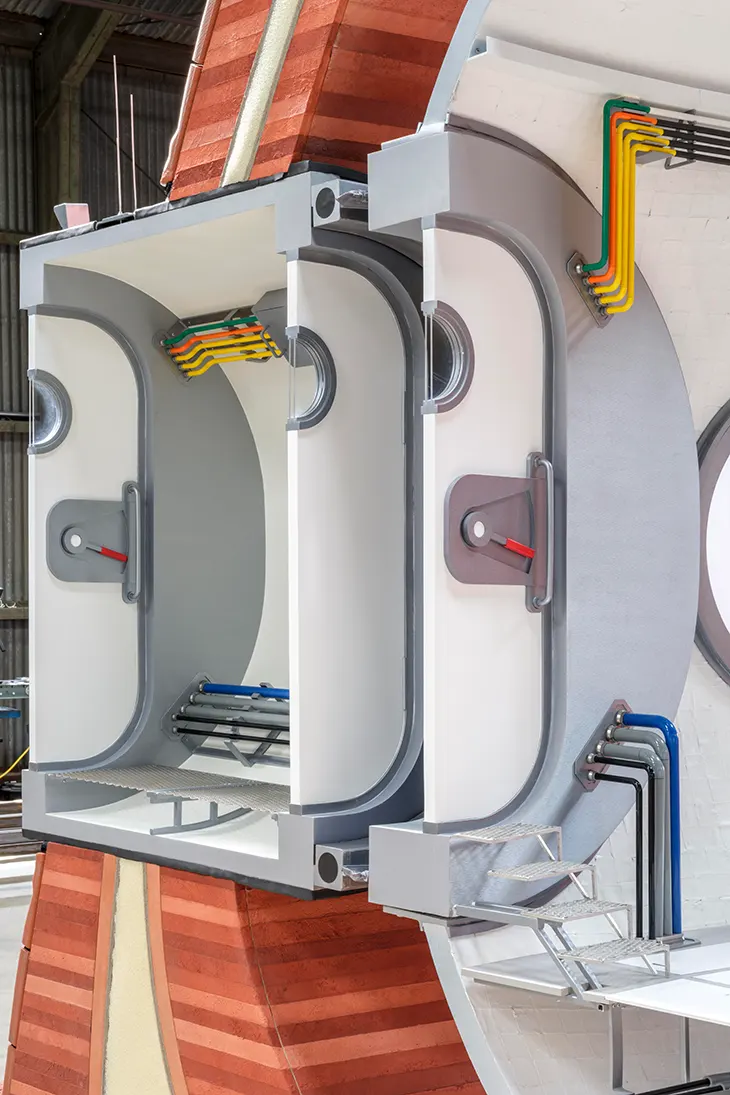
The installation examines the technical requirements of building on Mars by exposing the interior construction of a proposed habitat. Its sectional design reveals how protective walls connect with essential utilities, allowing visitors to understand the infrastructure that would support daily life in an extraterrestrial environment.
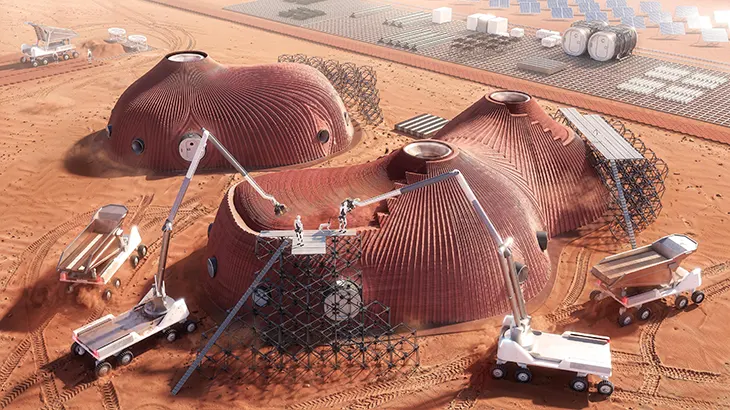
The concept incorporates 3D-printed structural shells, an inflatable membrane, and thermal insulation. Integrated systems manage power distribution, data transmission, water, and air circulation. Together, these elements address the environmental challenges of sustaining human life on a planet with conditions fundamentally different from Earth.
AENARA developed the concept through a year-long feasibility study involving NASA collaborators, industry specialists, and university partners. The NASA-endorsed research investigated methods for constructing habitats and civil infrastructure autonomously, using materials available locally on Mars.
The study explored how future missions could land equipment, deploy construction systems, and establish manufacturing processes using resources from the Martian environment. Its resulting concept of operations addresses the production of oxygen and water, alongside sulfur concrete for construction.
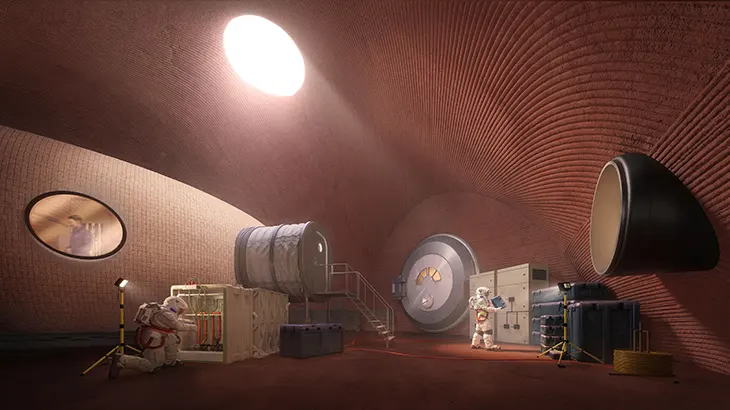
These technologies respond to the practical limitations of building far from Earth. Future extraterrestrial settlements would operate with restricted labor and infrastructure, increasing the importance of robotic construction and locally sourced materials. AENARA’s research investigates how autonomous systems could support the development of facilities capable of accommodating long-duration missions.
Alongside its technical considerations, the project addresses the psychological and physical well-being of future inhabitants. The proposed habitat incorporates natural light and large windows to establish a stronger connection with familiar terrestrial environments.
Melodie Yashar, founder of AENARA, emphasizes the importance of creating living conditions that resemble those on Earth while acknowledging the risks of occupying a hostile extraterrestrial environment. Her approach places human experience within the wider discussion of architectural performance and operational safety.
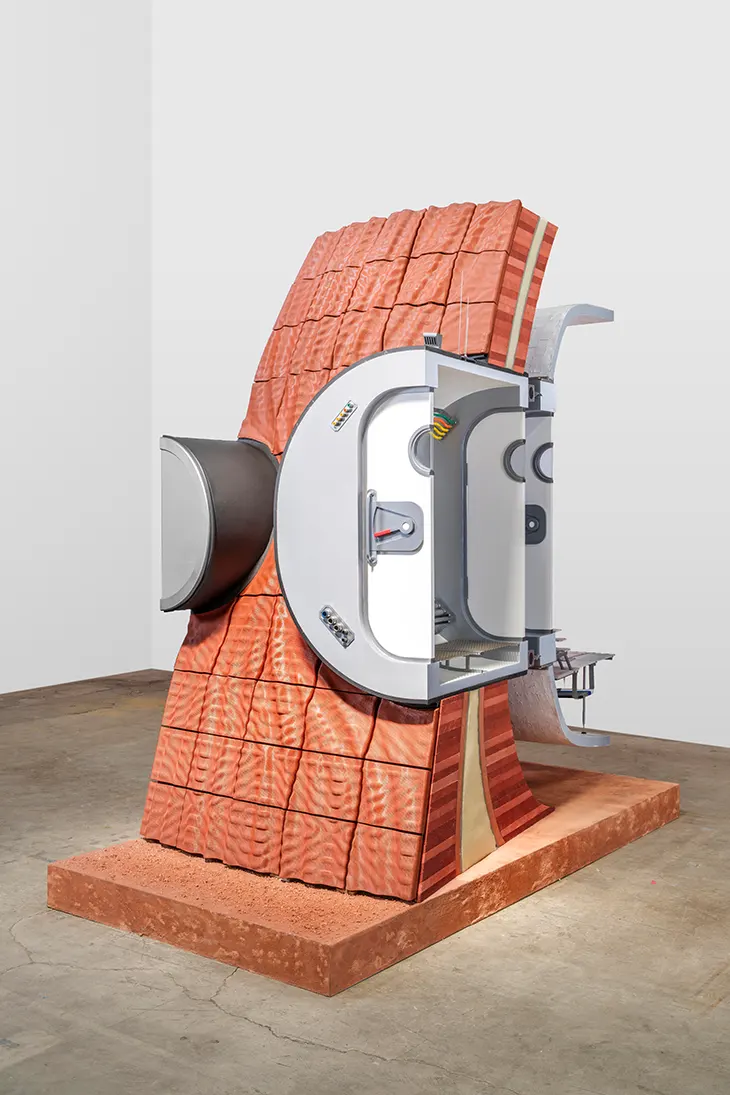
The museum installation allows visitors to examine these priorities through the building’s internal organization. By exposing the relationship between structural protection and life-support infrastructure, the project demonstrates the complexity of creating living spaces capable of sustaining people far from home.
The proposal also arrives as NASA develops plans and procurement strategies for a future lunar base. Such initiatives bring renewed attention to the practical challenges of extraterrestrial construction and the considerable development necessary before permanent human habitation becomes possible.
AENARA’s work raises questions about the social, ethical, and geopolitical responsibilities associated with building infrastructure beyond Earth. These considerations extend into the studio’s ongoing research into resource-efficient construction methods.
AENARA also considers potential applications for construction on Earth. The Off-World Habitat Wall Section presents a speculative vision of Mars in 2075 while examining technologies that could influence architectural development closer to home.