
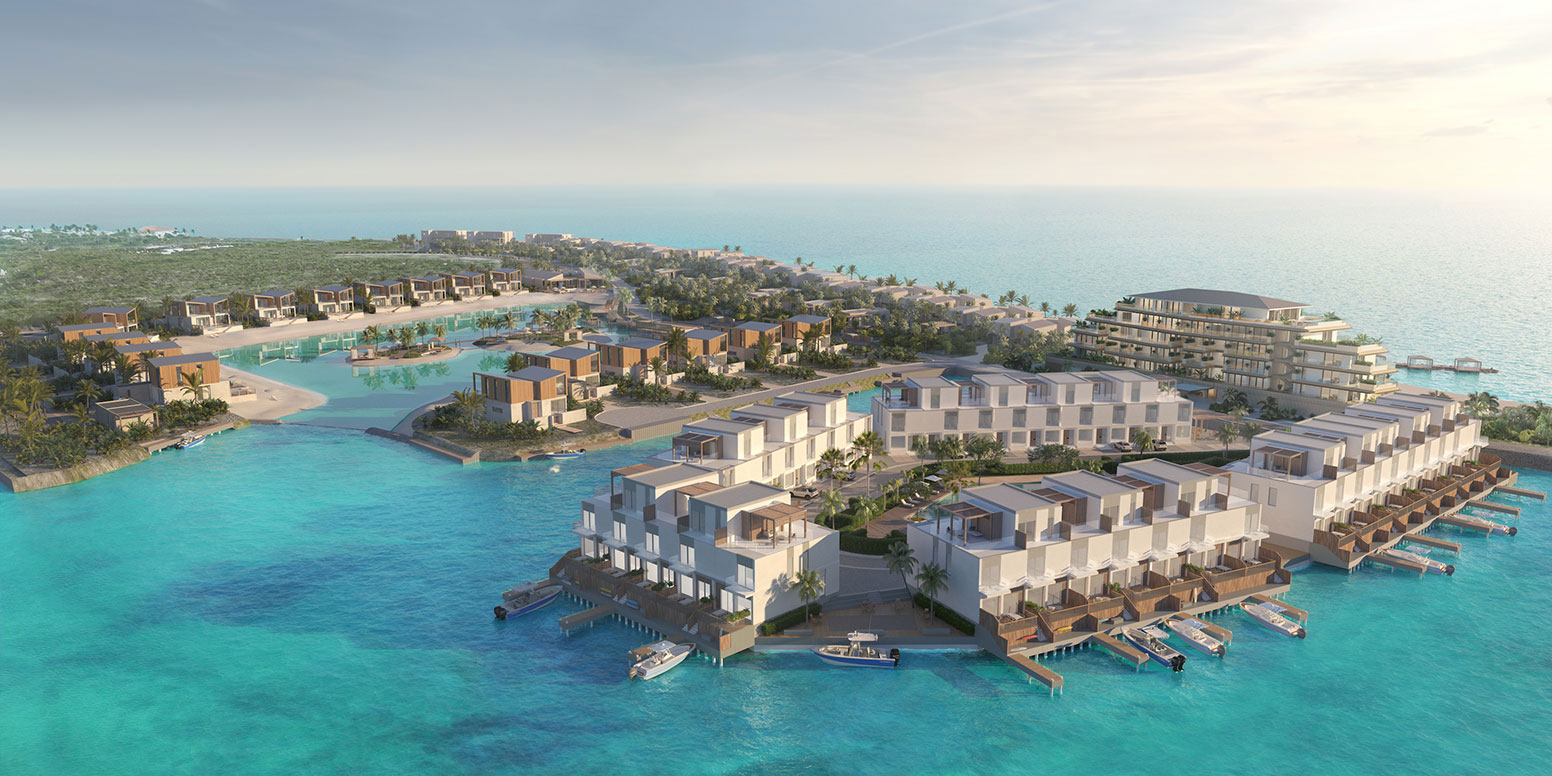
In conversation with ArchiScene Editor-in-Chief Zarko Davinic, Piero Lissoni reflects on Arc at South Bank, a six-story residential project set along the shoreline of Providenciales. Developed by Windward, the project arrives as part of a larger waterfront community that has already surpassed $300 million in sales, signaling strong demand for design-driven residential environments in the Caribbean. For Lissoni, Arc marks his first completed project in the region, introducing a new context for a practice defined by precision, restraint, and careful attention to proportion.
INTERVIEWS
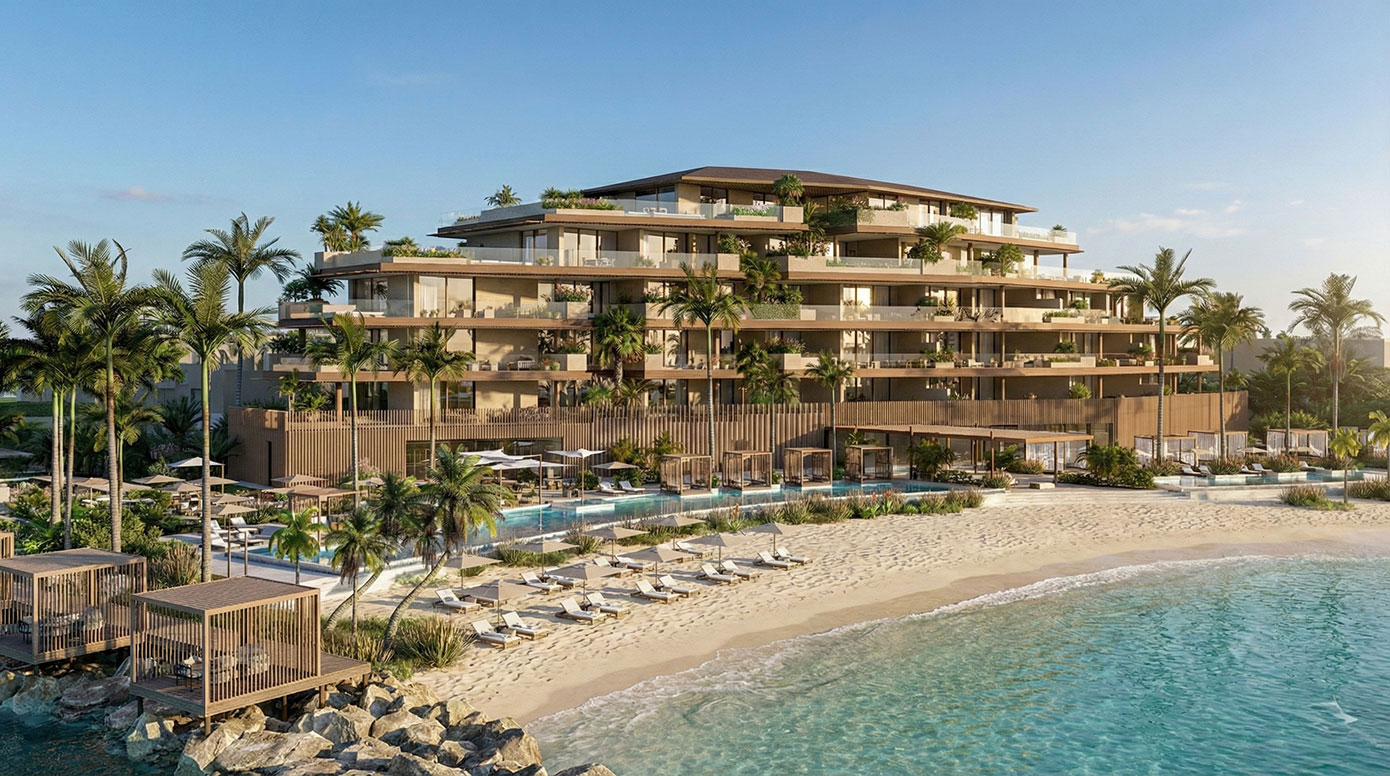
Set within a landscape shaped by contrast, where the intensity of turquoise water meets a restrained, almost minimal terrain, Arc responds directly to its surroundings. The project organizes seventeen Sky Villas across six levels, each structured to extend outward through expansive terraces that incorporate kitchens, pools, and planted spaces. These elements form a continuous spatial system that dissolves conventional boundaries between interior and exterior, allowing architecture to operate as an open framework shaped by light, climate, and view.
Throughout the conversation, Lissoni discusses the idea of continuity as a central driver in the design, where transparency and spatial flow replace separation. He explains how materials and proportions were calibrated to maintain a direct relationship with the Caribbean environment, ensuring that the residences remain connected to their setting despite their scale and market positioning. The collaboration with Windward also emerges as a key factor, grounded in mutual trust and a shared understanding of how to translate design intent into a built reality within the constraints of the island.
At a moment when island destinations increasingly attract global architectural attention, Arc introduces a specific approach that balances ambition with sensitivity. Lissoni frames the project as a collection of “flying villas,” while also acknowledging the importance of measured development that preserves the qualities that define places like Turks and Caicos. The discussion that follows moves between site, structure, and philosophy, offering a detailed look into how Arc positions itself within both the landscape and the broader conversation around contemporary residential design.
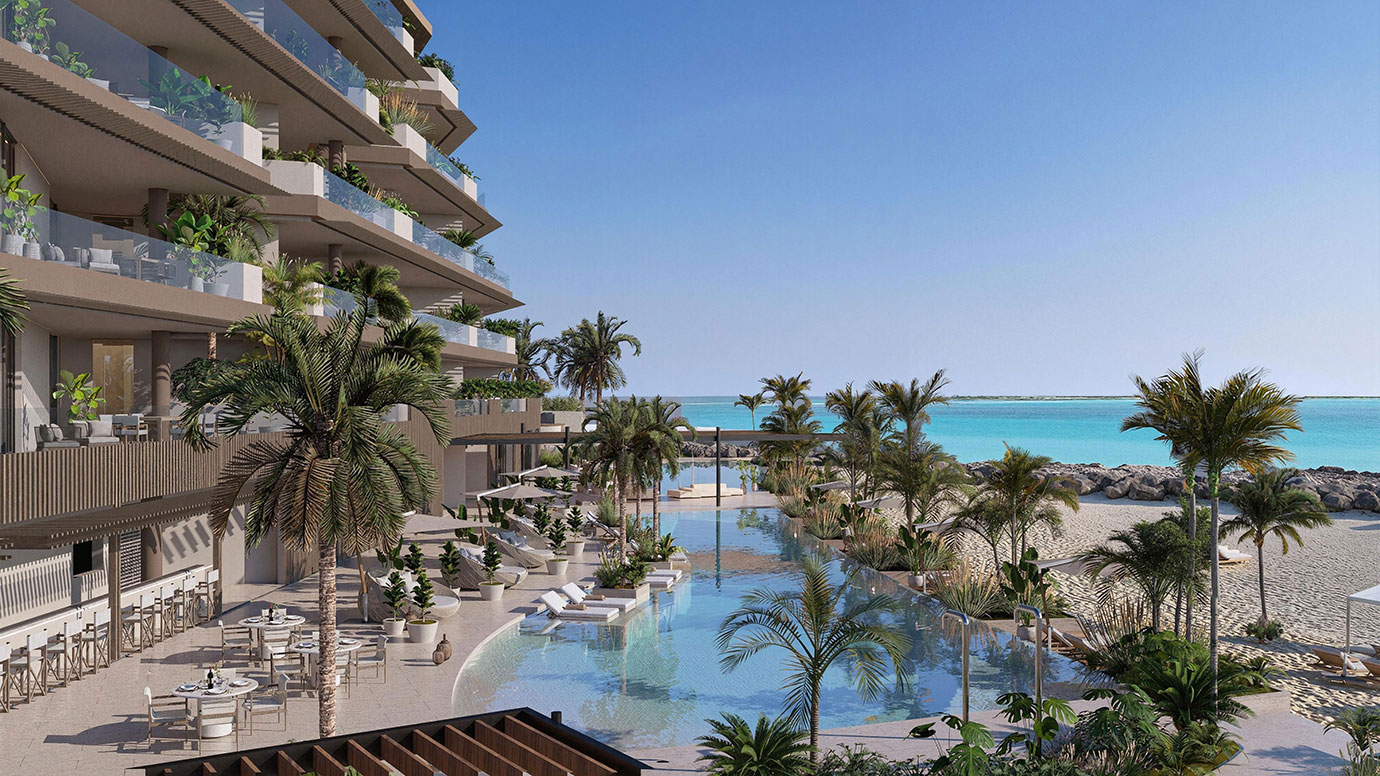
Arc is your first completed project in Turks and Caicos. What drew you to this particular site in Providenciales, and how did the island’s landscape and light inform your design language for the project? – Our encounter with Windward was, in a way, quite casual. What really struck us from the beginning was the landscape, which became a major source of inspiration. It is almost a “minimal” landscape: the sea has an extraordinary turquoise color that creates a strong contrast with the surroundings. It is a landscape made of oppositions, and this idea of contrast is something we also try to incorporate into our design approach.
The idea was precisely not to separate inside and outside, but to create a kind of single environment, one continuous space, one common matrix.
The Sky Villas blur the boundary between interior and exterior with terraces that include full kitchens, pools, and gardens on every level. Can you walk us through your approach to indoor/outdoor living here, and how it differs from similar concepts you have explored in urban contexts? – The idea was precisely not to separate inside and outside, but to create a kind of single environment, one continuous space, one common matrix. Floor-to-ceiling windows, transparency, and the idea that the garden becomes part of the architecture and vice versa were fundamental elements. The architecture is designed so that transparent barriers are used only in the more challenging months, when it might be colder or rainy. The project is built around a powerful dialogue between interior and exterior, which can be expressed both through the “artificial” nature recreated on the terraces and through the authentic nature of the sea and the light.
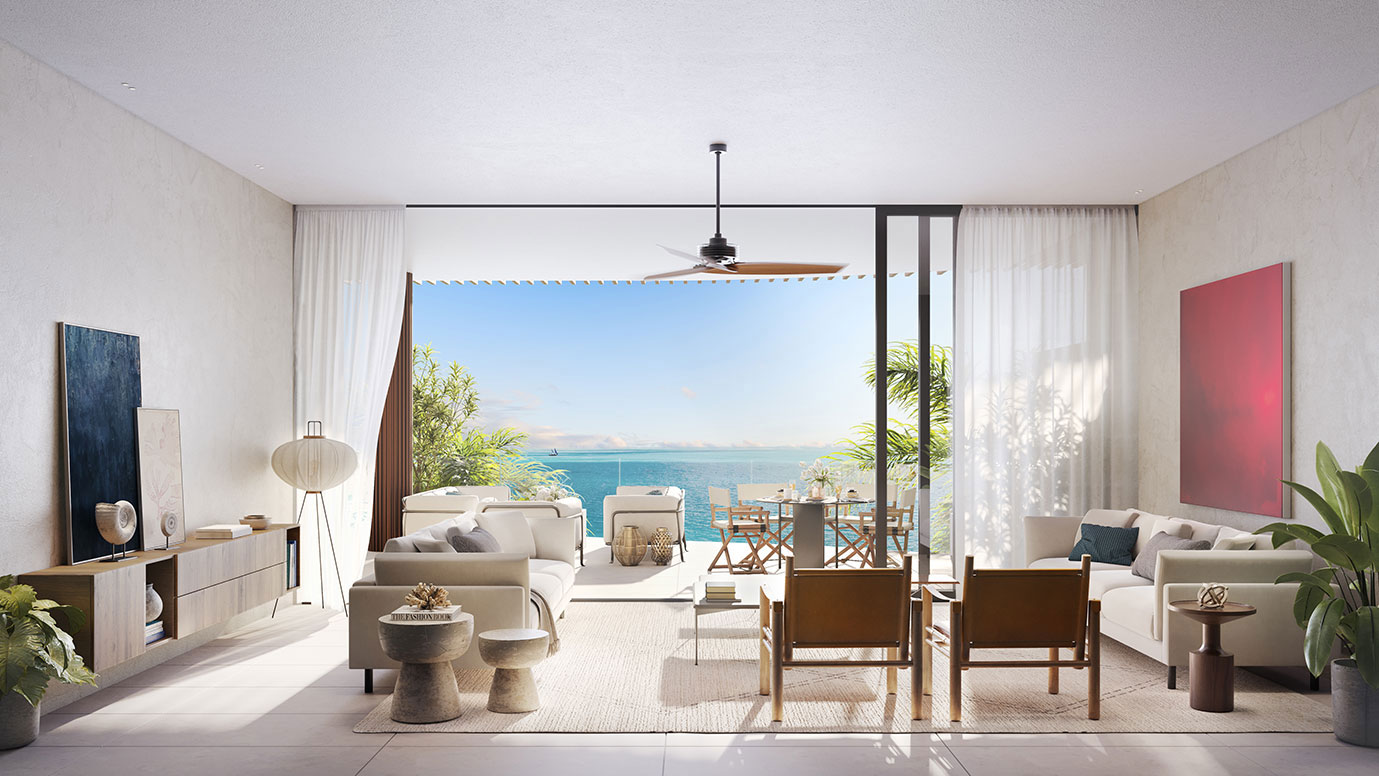
You have long championed a philosophy of design that balances restraint with warmth. With price points reaching north of $18 million and a 12,630-square-foot penthouse, how did you calibrate the material palette and spatial proportions to feel both luxurious and connected to the Caribbean environment rather than isolated from it? – The value lies in the high level of customization of the project. Materials were carefully calibrated to support the dialogue between interior and exterior. Our work focused on enhancing the specific qualities of the place, its particular light, its colors, and the atmosphere of the Caribbean environment.
It is important to build gently and with great sensitivity, always keeping in mind a strategy for developing the island in a careful and balanced way.
Working with Windward as the development partner, how did that collaboration shape the final architecture? Was there a moment during the process where the project shifted direction or a specific constraint that actually pushed the design to a better place? – Our relationship with Windward was always based on mutual respect for each other’s personalities and cultures. Windward is a knowledgeable and attentive partner who knows how to listen. We were always aligned, especially when dealing with the limitations of the site and translating our ideas into something that could actually be built locally. This was possible thanks to the mutual trust and confidence that the developer could realize the project the way we envisioned it.
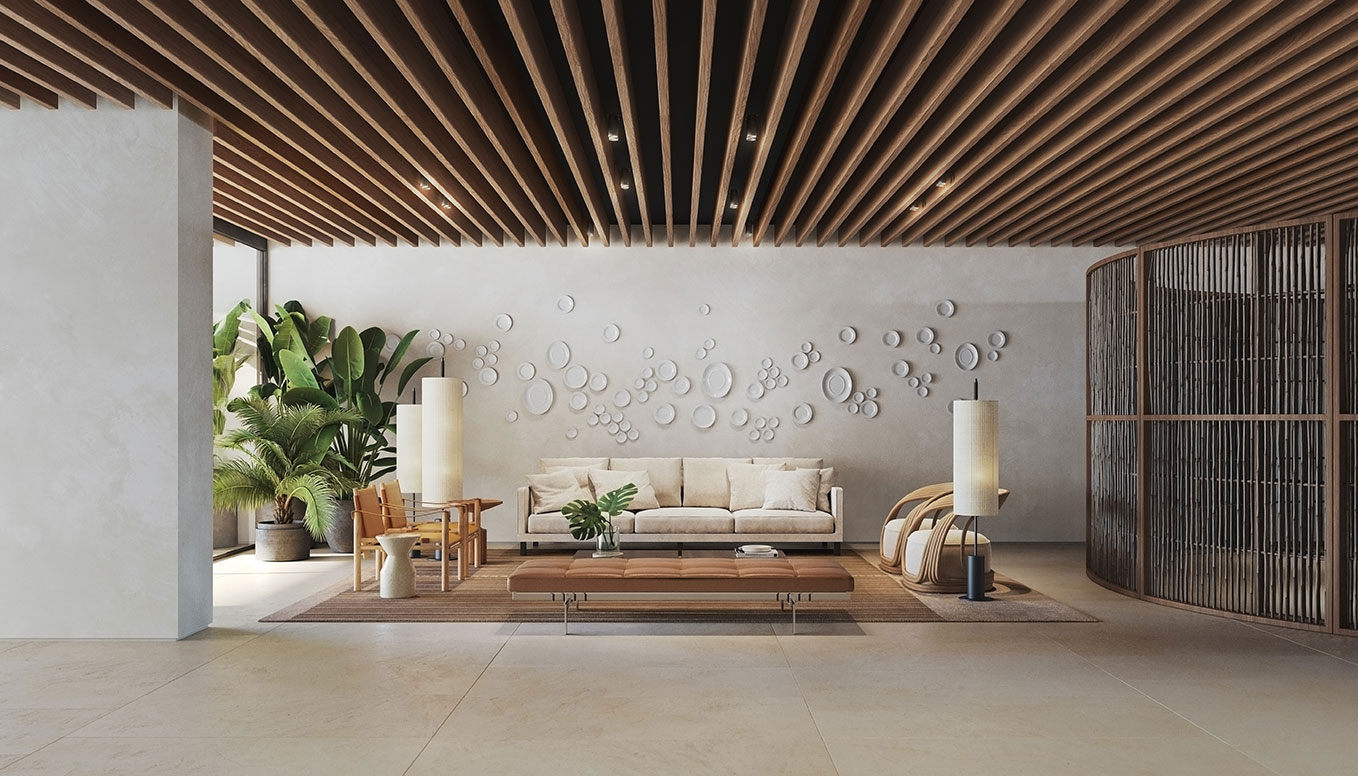
Turks and Caicos is increasingly attracting world-class architecture and design talent. As someone whose work spans furniture, interiors, and buildings on a global scale, what do you think a project like Arc signals about the future of residential design in island destinations, and is there a risk of overdevelopment erasing the very qualities that make these places desirable? – Arc is a very special project for the context in which it is located. It can be seen almost as a curated collection of “flying villas,” something quite unique. Of course, this is a delicate issue: it is important to build gently and with great sensitivity, always keeping in mind a strategy for developing the island in a careful and balanced way, preserving the qualities that make it such a desirable place.
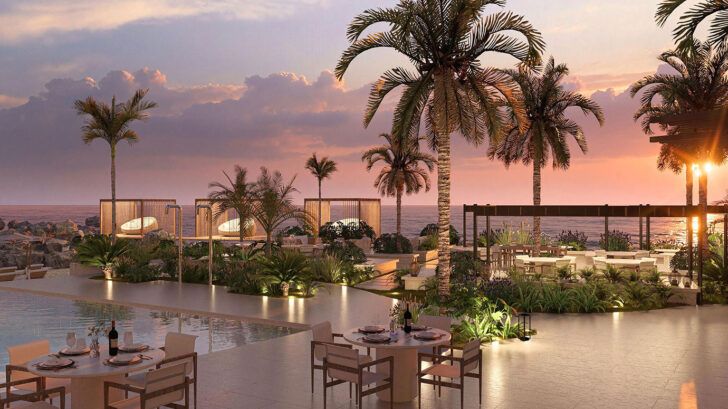
Arc at South Bank presents a clear position on how architecture can engage with its setting without excess. Piero Lissoni approaches the project through precision, allowing proportion, light, and material to guide each decision. The result holds a steady relationship with the landscape, where the sea, the horizon, and the built form remain in constant dialogue.
The conversation returns to a simple idea that runs through the project. Build with awareness, respond to context, and maintain control over scale and intent. Arc stands as a focused response to its environment, while also pointing toward a more careful direction for residential design in island locations.
Learn more about South Bank here.