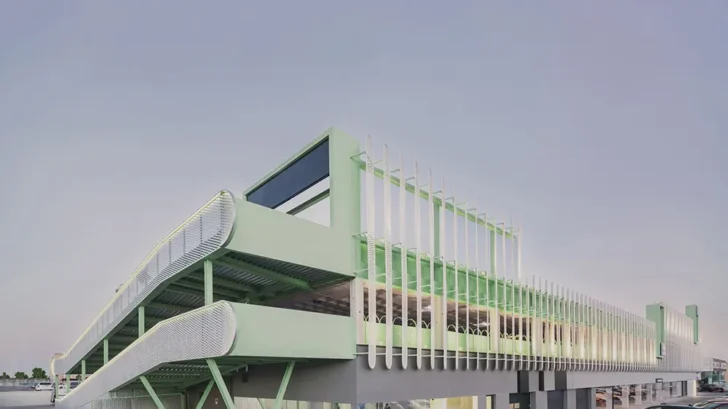

The Leganés Auto Center challenges the expectation that industrial buildings operate solely as containers for function. Located in the periphery of Madrid, within a landscape defined by repetition and neutrality, the project introduces a clear architectural position. OOIIO Architecture approaches the commission with a precise objective: retain efficiency while giving the building a visible identity. The result does not rely on gesture. It builds its presence through structure, circulation, and envelope.
INDUSTRIAL ARCHITECTURE
The decision to keep the former kitchen factory defines the project from the outset. Instead of demolition, the architects adapt and reinforce what already exists. This move reduces material waste and establishes a practical framework for expansion. The structure absorbs new loads, allowing additional storage levels to sit above the original volume. A new roof integrates photovoltaic pergolas, turning the upper layer into an active surface that supports the building’s energy demands.
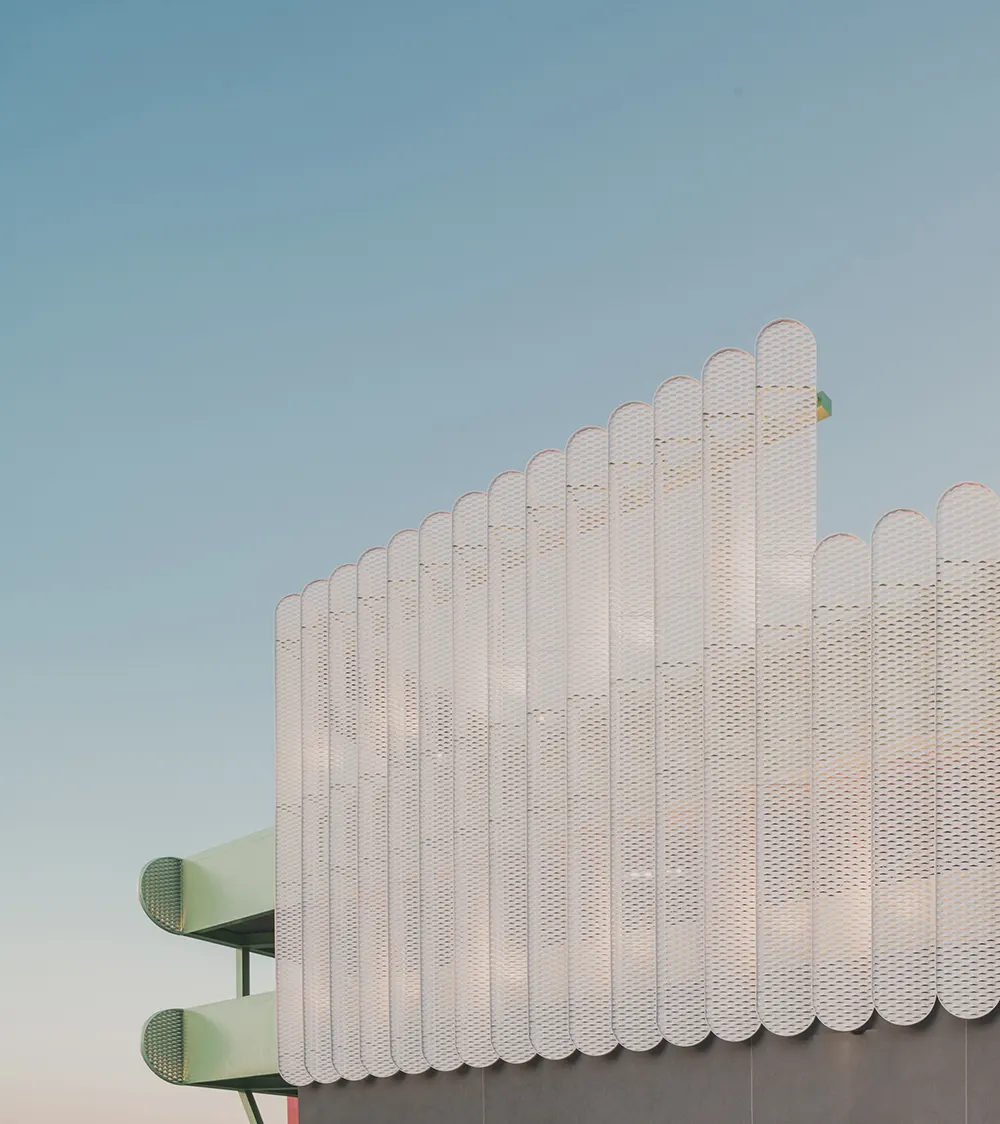
This approach reads as direct and deliberate. The project avoids unnecessary complexity and focuses on extending the life of an industrial shell that would otherwise remain obsolete.
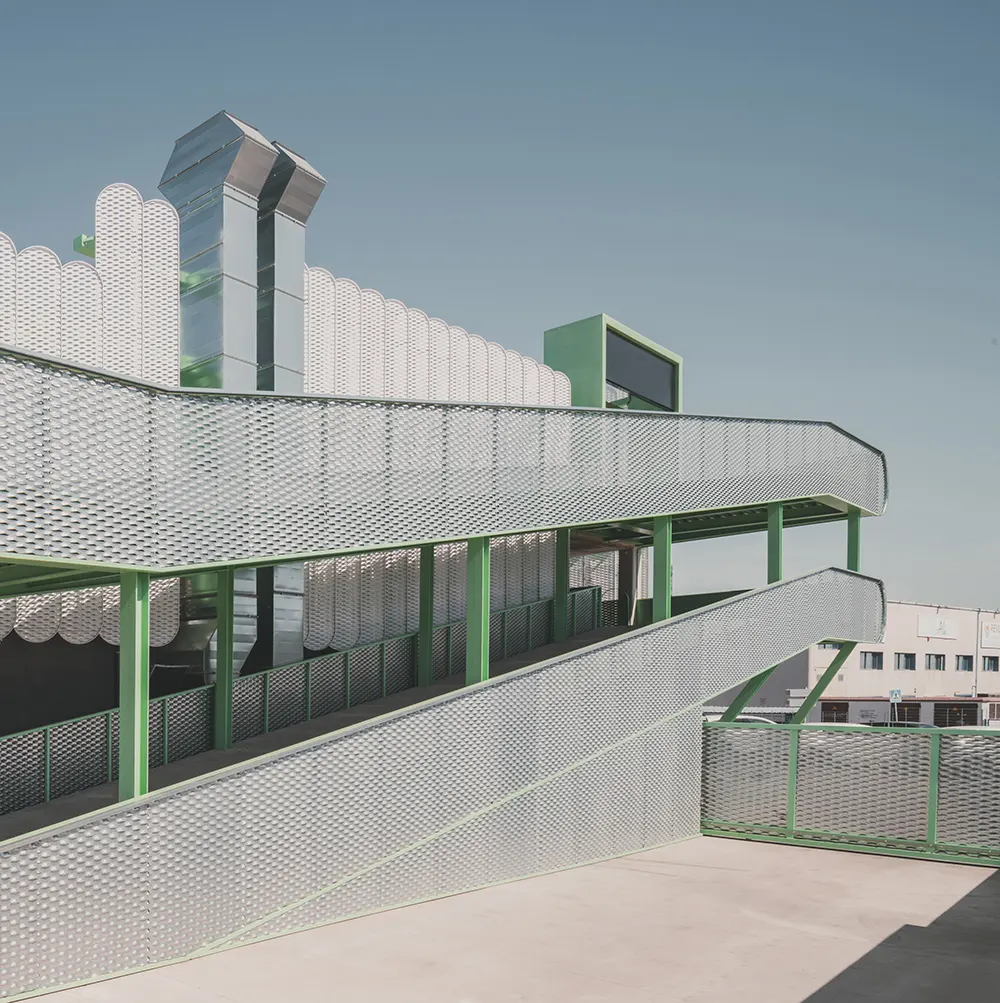
Circulation shapes the entire building. Cars move continuously through ramps positioned along both sides, creating a system that separates vehicle flow from the public-facing showroom. The ground level handles interaction, sales, and repair, while upper floors function as storage fields.
This distribution clarifies the program. Each level performs a specific role without overlap, and the ramps act as both infrastructure and visual markers. They reveal how the building operates, making movement legible from the outside.
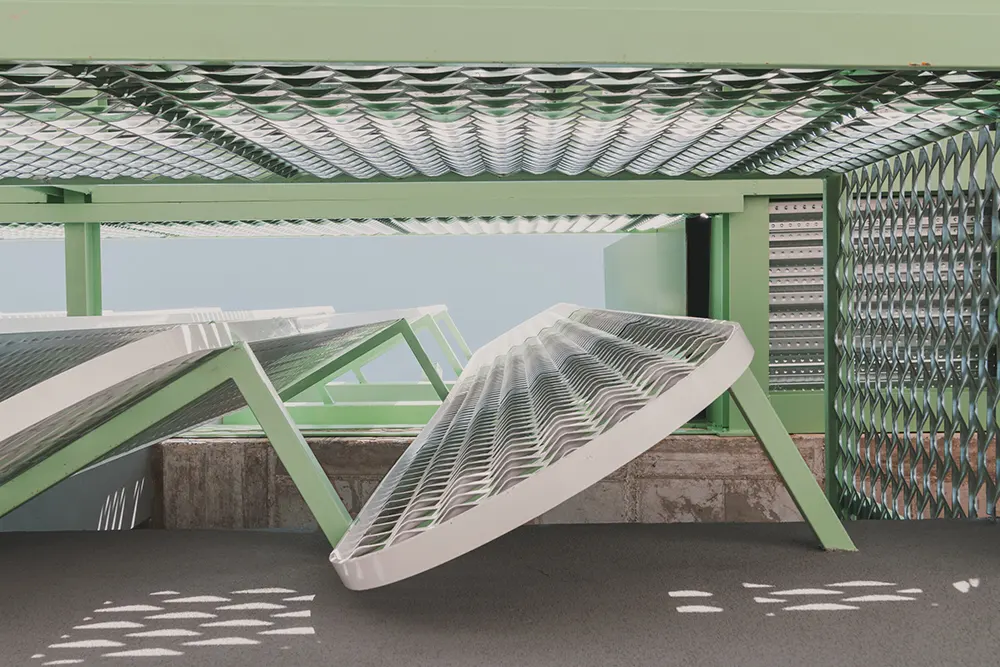
The project limits energy consumption to where it is required. The ground floor, where people work, remains conditioned. The upper storage levels rely on natural ventilation and shading. This separation reduces unnecessary energy use without compromising functionality.
Photovoltaic panels extend this logic. They generate power for the building and contribute excess energy back to the surrounding area. Rainwater collection supports operational needs such as car washing. These systems integrate without turning into visible statements. They remain part of the building’s working logic.
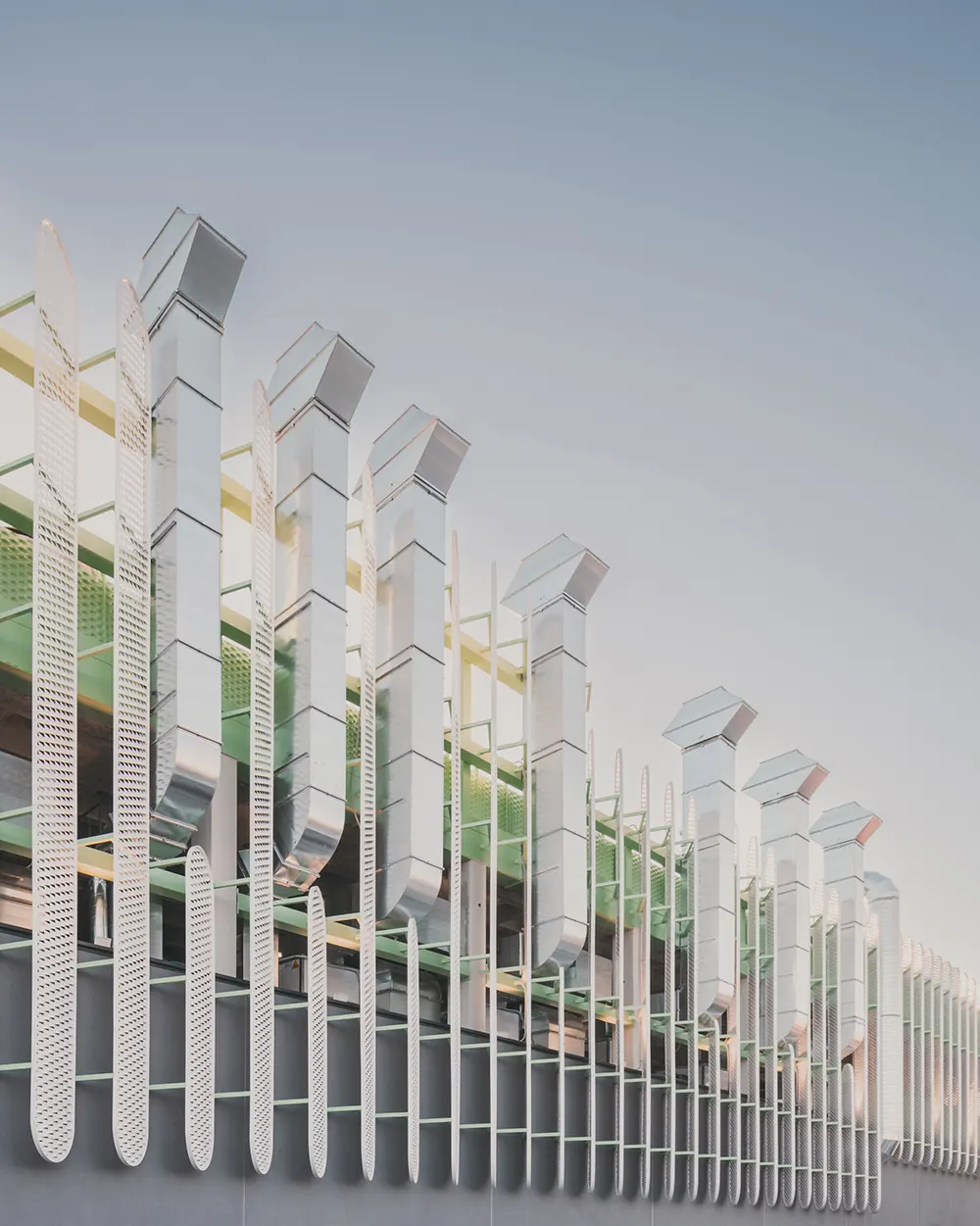
The exterior establishes the project’s strongest visual position. White metal slats, mounted on a mint-green frame, wrap the structure and regulate light, air, and temperature. Their variation introduces rhythm across the façade while maintaining a consistent system.
Technical elements remain visible. Chimneys and ventilation ducts integrate into the envelope instead of being concealed. This decision reinforces the building’s industrial nature and avoids decorative treatment. The façade operates as a filter, reducing solar gain and supporting cross-ventilation across the upper levels.
At the same time, it creates recognition. In a context where most buildings recede into anonymity, this one holds a clear outline.
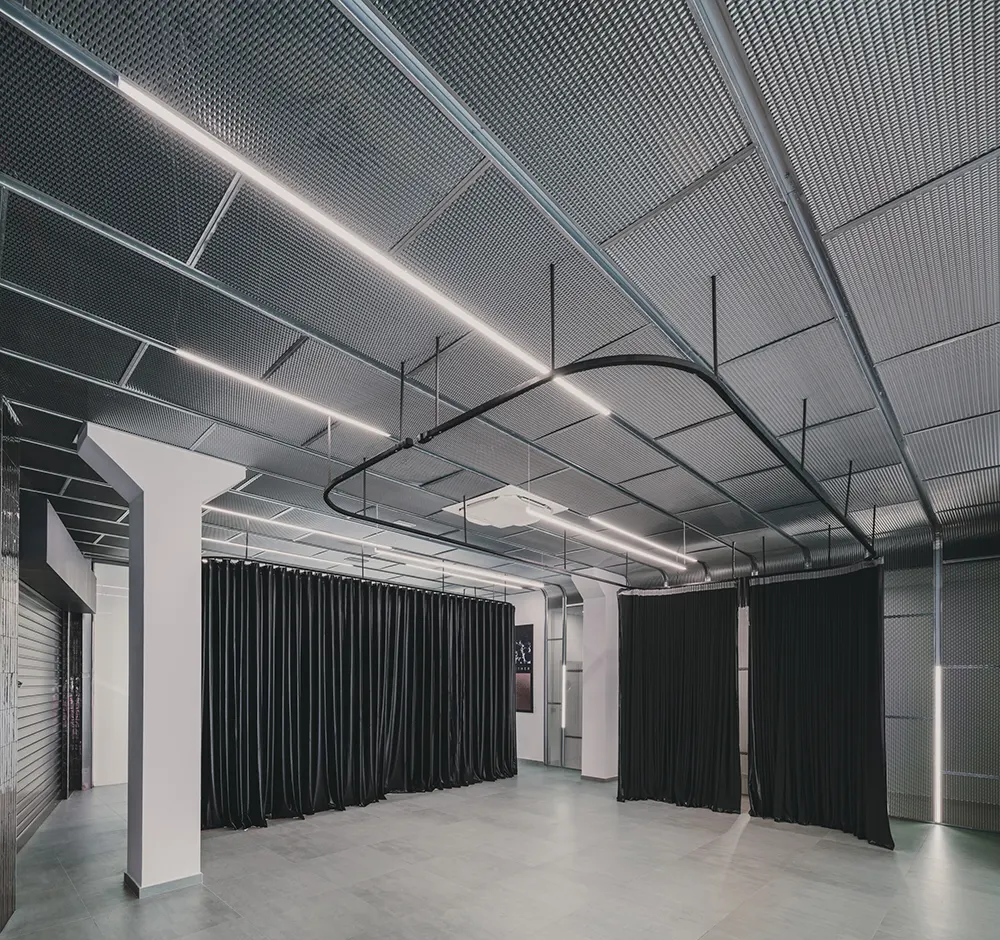
Leganés Auto Center demonstrates a controlled approach to industrial design. It addresses program, energy, and structure with clarity while maintaining a distinct architectural language. The project does not attempt to redefine the typology through excess. It works within its constraints and refines them.
The result introduces a different standard for industrial environments. It shows that efficiency and identity can coexist without compromise, and that even the most utilitarian programs can carry architectural intent.