
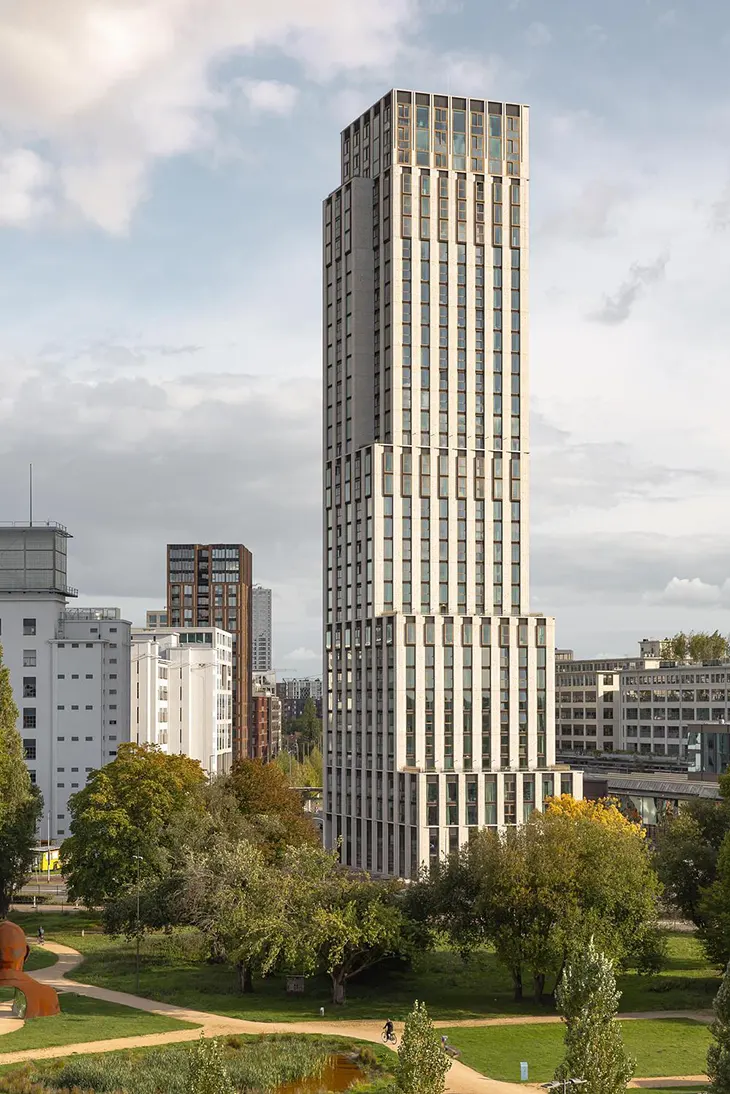
With Lighthouse, Eindhoven gains a new vertical marker that signals both arrival and continuity within the evolving Strijp-S district. Rising 109 metres, the tower is now the city’s tallest residential building, positioned strategically between the Klokgebouw and the Machinekamer to define the entrance to the neighbourhood. Designed by De Zwarte Hond, Lighthouse concludes the long-term transformation of Strijp-S from former Philips industrial grounds into a dense, mixed-use urban quarter.
SKYSCRAPERS
The tower delivers 333 rental apartments ranging from compact studios to generous family-sized units, alongside nine penthouses occupying the uppermost floors. At street level, the plinth and first two floors accommodate commercial and social programmes that activate the surrounding public realm. This layering of uses reinforces Strijp-S as a lived-in neighbourhood rather than a purely residential enclave, allowing daily activity to extend beyond the apartments themselves.
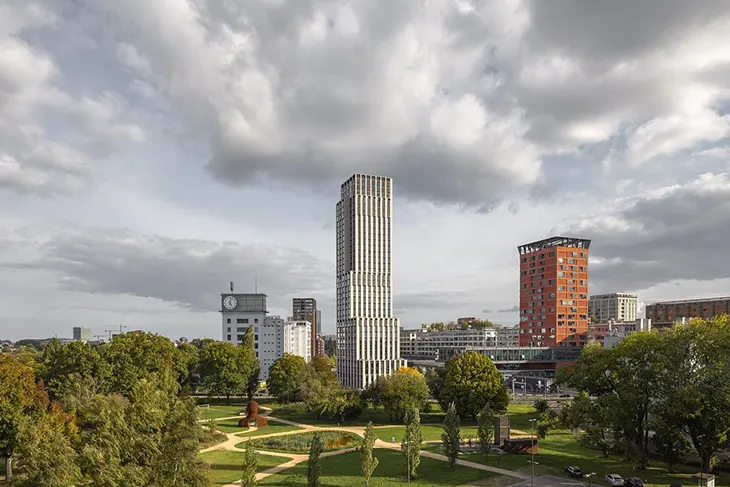
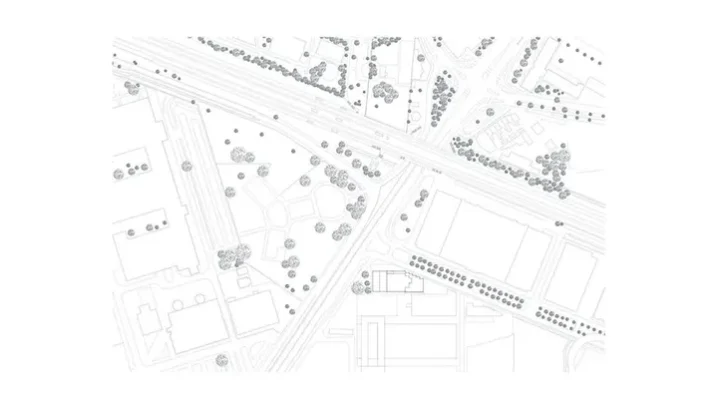
Strijp-S follows an urban development plan by West 8, which established a clear framework for density, public space, and architectural identity. Lighthouse forms the final element of this plan, located at the start of Philitelaan and directly opposite the Gloeilampplantsoen. De Zwarte Hond responded with a vertical brick composition that resonates with the industrial character of the area. The stepped massing reflects the scale shifts of neighbouring landmarks, while the illuminated crown and evening façade lighting reference Eindhoven’s history as a city shaped by light and technology.
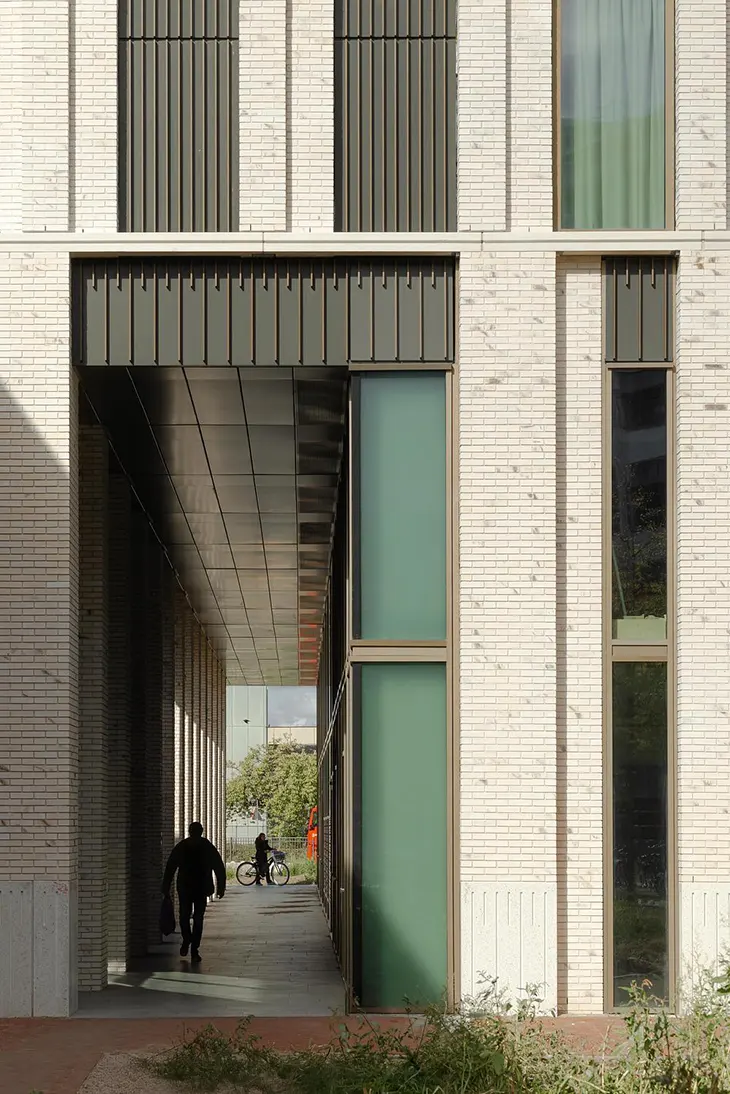
Material articulation plays a central role in the tower’s expression. Brick, concrete, aluminium, and glass are used consistently from base to top, with careful attention to detailing across the entire height. Where the building tapers, horizontal articulations introduce communal roof gardens, breaking down the scale of the tower and offering shared outdoor space at elevated levels. A pronounced diagonal serration defines the building’s profile, visually linking it to the colonnade bordering the square near the Machinekamer and guiding residents and visitors toward the main entrance.
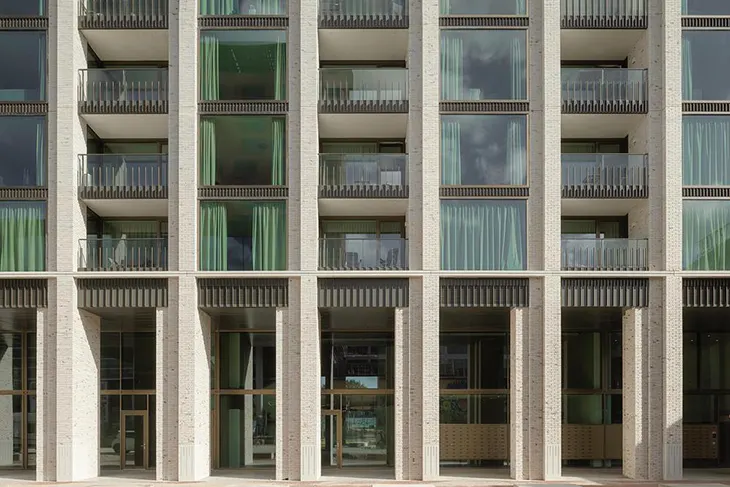
Residential comfort remains a driving force behind the architectural decisions. Every apartment includes private outdoor space that is integrated directly into the volume of the building. On the south façade, these take the form of generous indoor balconies, while on the north side, recessed loggias help buffer noise from the adjacent railway line. Floor-to-ceiling windows provide expansive views across Eindhoven and draw daylight deep into the interiors, while also creating usable alcoves within the apartments.
At ground level, the building prioritizes openness and permeability. Technical installations, storage, and bicycle parking are placed in the basement, allowing the plinth to remain transparent and accessible. Public amenities extend across two floors and contribute to the vitality of Machinekamerplein. The tower’s proximity to Eindhoven Strijp-S station supports car-free living, with vehicles accommodated in a nearby shared parking hub.
The development of Lighthouse followed a lengthy and closely coordinated process. Beginning with multiple feasibility studies, De Zwarte Hond and SDK formed an integrated project team in 2019, aligning architectural ambition, urban planning requirements, and financial parameters from the outset. This parallel approach allowed the project to maximize rentable floor area while maintaining architectural coherence, demonstrating how density and spatial quality can coexist in high-rise housing.
As the final piece of Strijp-S, Lighthouse brings vertical emphasis to a district defined by adaptive reuse and industrial memory. Its completion reinforces Eindhoven’s growing confidence in residential high-rise architecture that engages its surroundings, supports urban life at street level, and carries local history upward into the skyline.