

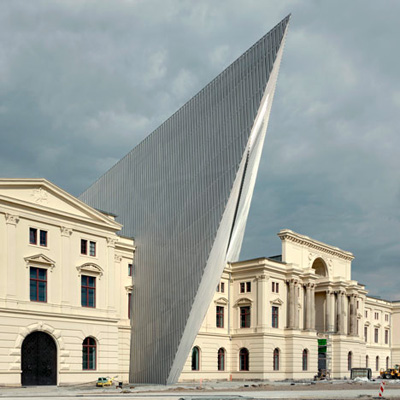
Military History Museum Dresden: Daniel Libeskind’s Bold Architectural Intervention
Studio Daniel Libeskind has transformed Dresden’s 135-year-old arsenal building into one of Germany’s most provocative architectural statements. The Military History Museum Dresden stands as a powerful meditation on conflict, memory, and the evolution of democratic society through bold contemporary design.

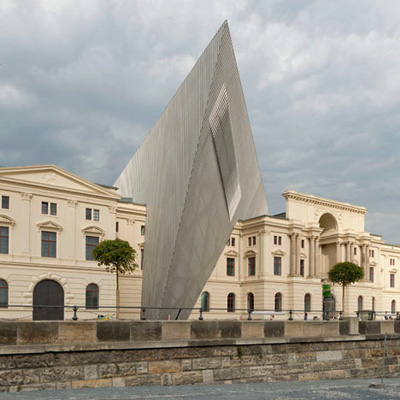
A Wedge That Disrupts History
At the heart of this transformation lies a 140-ton wedge of glass, concrete, and steel that slices dramatically through the neoclassical façade of the original 19th-century arsenal. Rising 30 meters above the historic roofline, this angular intervention creates an unmistakable silhouette against Dresden’s skyline while offering visitors panoramic views of the city from its peak observation platform.
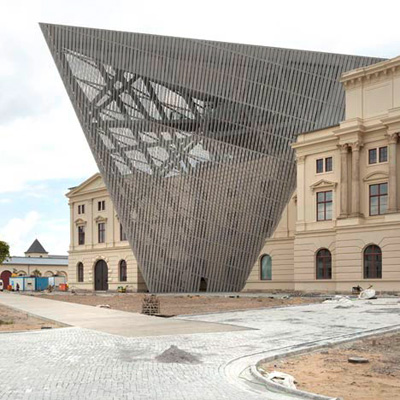
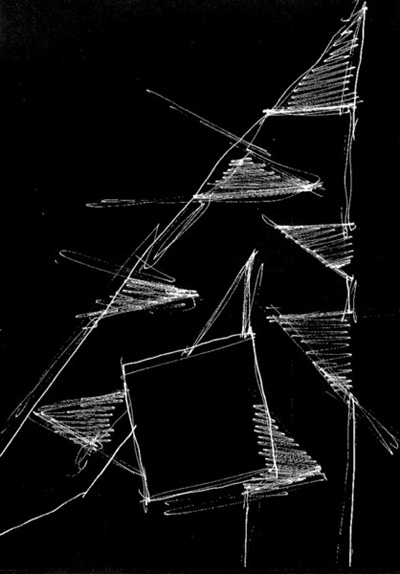
The architectural gesture is intentionally confrontational. Libeskind designed the wedge to disrupt the rigid structural order of the original military arsenal, creating what he describes as “a place for reflection about organized violence.” This bold incision through historical architecture serves as a physical metaphor for examining the continuity of military conflict and opening new perspectives on fundamental questions about human nature and warfare.
Germany’s Largest Museum: 20,000 Square Meters of Exhibition Space
The Military History Museum Dresden now serves as the official central museum of the German Armed Forces (Bundeswehr), housing approximately 20,000 square meters of exhibition space. This expansion makes it Germany’s largest museum dedicated to military history, presenting artifacts and narratives that span centuries of conflict through a distinctly humanistic lens.
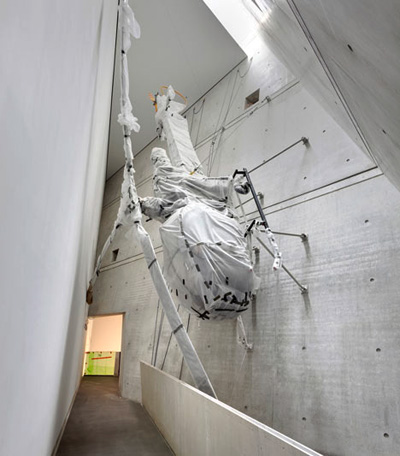
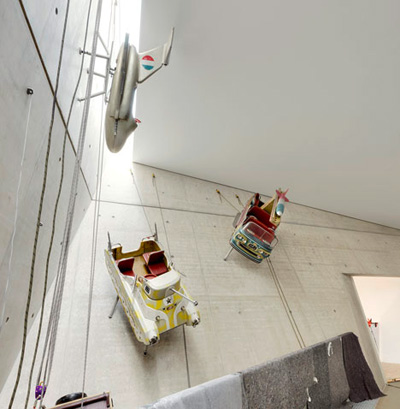
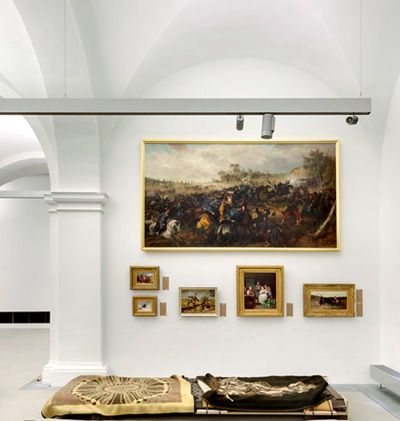
The museum’s curatorial approach places human experience at its center. Rather than glorifying military achievement, the exhibitions examine those who went to war and those who remained at home, exploring the impact of conflict across different eras and generations.
Architectural Dialogue: Old Meets New
The relationship between the historic arsenal and Libeskind’s contemporary intervention creates a compelling architectural dialogue. The transparency and openness of the new glass and steel façade stands in deliberate contrast to the opacity and solidity of the original stone structure.
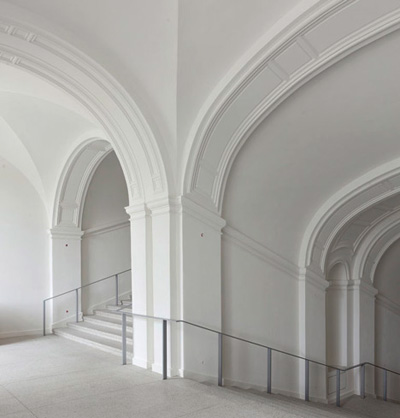
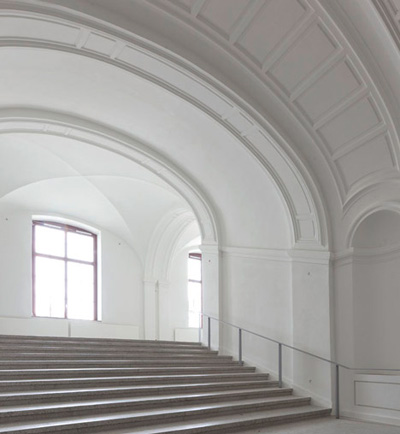
This juxtaposition carries symbolic weight. The severity of the authoritarian past, embodied in the original building’s rigid formality, meets the openness of democratic society reflected in the transparent new addition. Both architectural languages remain visible simultaneously, each informing the reading of the other.
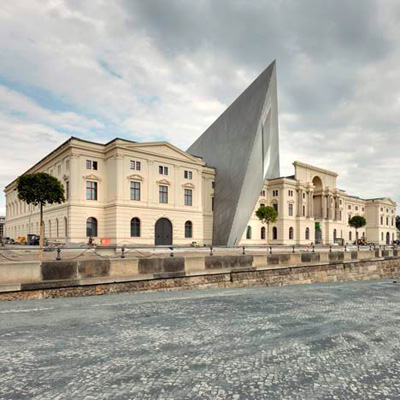
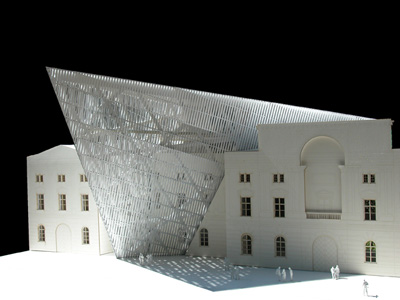
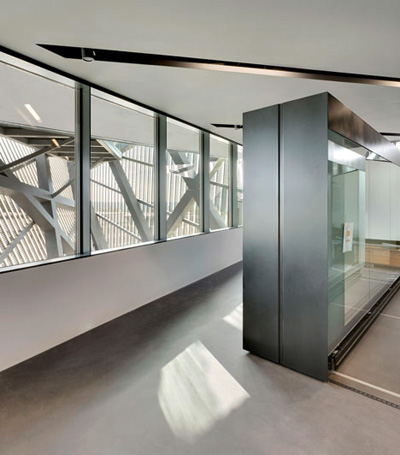
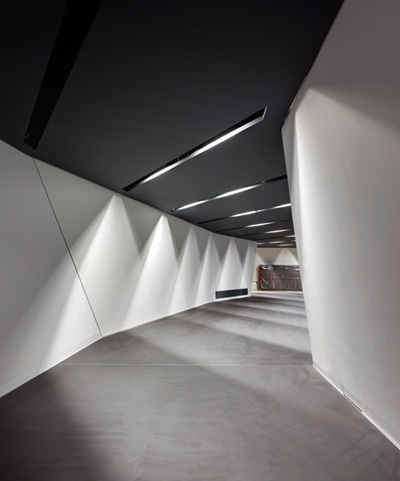
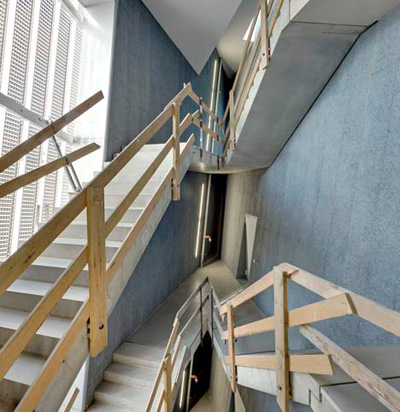
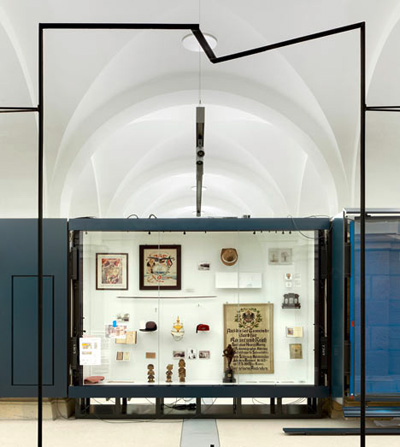
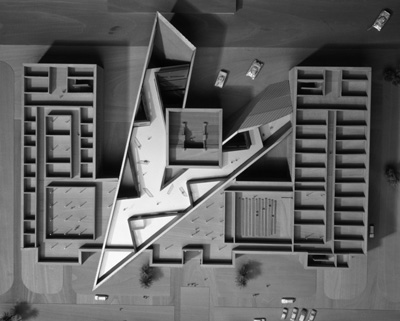
Inside, this dialogue continues. The rigid column grid of the historic arsenal contrasts with new columns of free space, creating an interplay that defines the character of the reimagined museum. The wedge opens sight lines toward Dresden’s historical center, connecting the institution to the city it serves.
Project Credits
Project: Military History Museum Dresden (Militärhistorisches Museum der Bundeswehr)
Architect: Studio Daniel Libeskind
Location: Dresden, Germany
Client: Federal Republic of Germany
Exhibition Design: Prof. HG Merz, Holzer Kobler Architekturen
Structural Engineer: GSE Ingenieur-Gesellschaft mbH
M&E: Ipro Dresden
Auditing Statics: Ing. Consult Cornelius-Schwarz-Zeitler GmbH
Landscape Architect: Dipl.-Ing. Volker von Gagern
Lighting Design: Delux AG
Façade: Josef Gartner GmbH
Website: daniel-libeskind.com

Libeskind’s feeble attempt to justify the form is weaker and more ridiculous than the design itself. Fortunately for him, Libeskind’s misplaced sense of his own importance insulates and protects him fromthe sort of self-criticism that other, better architects use to refine their ideas. So what we get here is a built manifestation of the firsh thing that popped into Libeskind’s head, the same old crystal, triangular wedge thingummyjig that he drags out for every project. It’s ridiculous.
Awful. Really awful design.
Libeskind has cornered the market on ugliness.