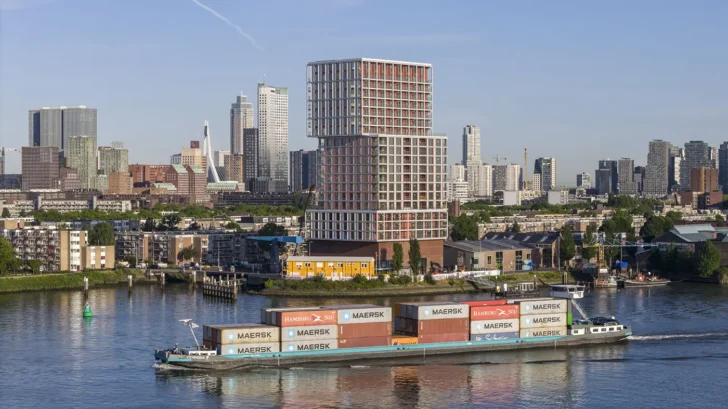

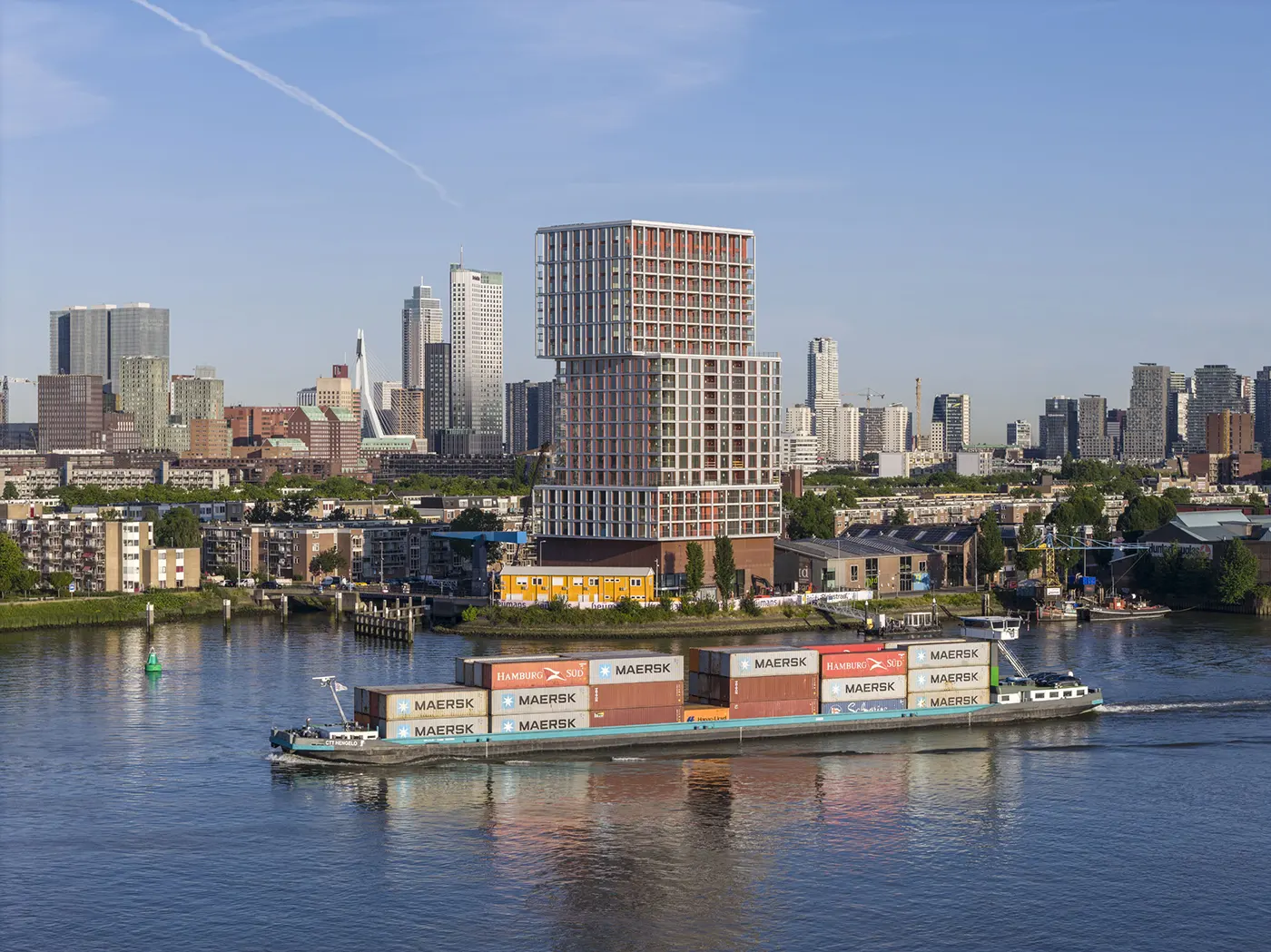
De Piek rises at the tip of Feijenoord Island with a clear role in reshaping Rotterdam-Zuid. KCAP positions the 74-metre tower as the first step in a broader transformation of the former industrial waterfront. The project replaces an overlooked edge with a defined urban presence, introducing residential life where shipyards and factories once dominated. Its placement next to the Piek bridge strengthens access and signals a shift in how this part of the city connects to the river.
RESIDENTIAL
The design draws directly from the site’s industrial past. Feijenoord Island carries a long history shaped by shipbuilding and manufacturing, and KCAP translates that legacy into a contemporary structure. The tower’s composition reads as a stack of volumes, recalling shipping containers and warehouse expansion. This reference avoids imitation and instead works as a structural logic that defines massing and proportion. The result stands as a continuation of the site’s identity while establishing a new architectural language.
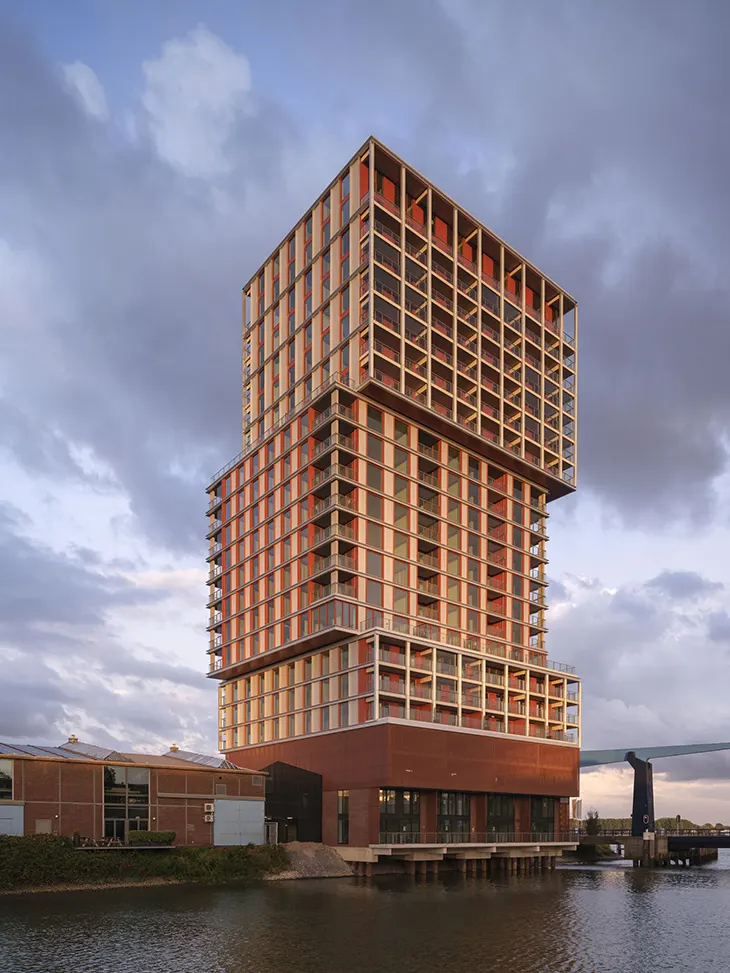
Program distribution supports a wide range of living formats. The building includes 142 units across six typologies, each responding to different ways of inhabiting the waterfront. Waterlofts connect directly to the quay with private moorings, while drive-in ateliers allow car access through a dedicated elevator system. Panoramalofts and skylofts extend vertically, offering double-height spaces and uninterrupted views across the Maas and the city skyline. This variety introduces flexibility and positions the building as a testing ground for new residential formats.
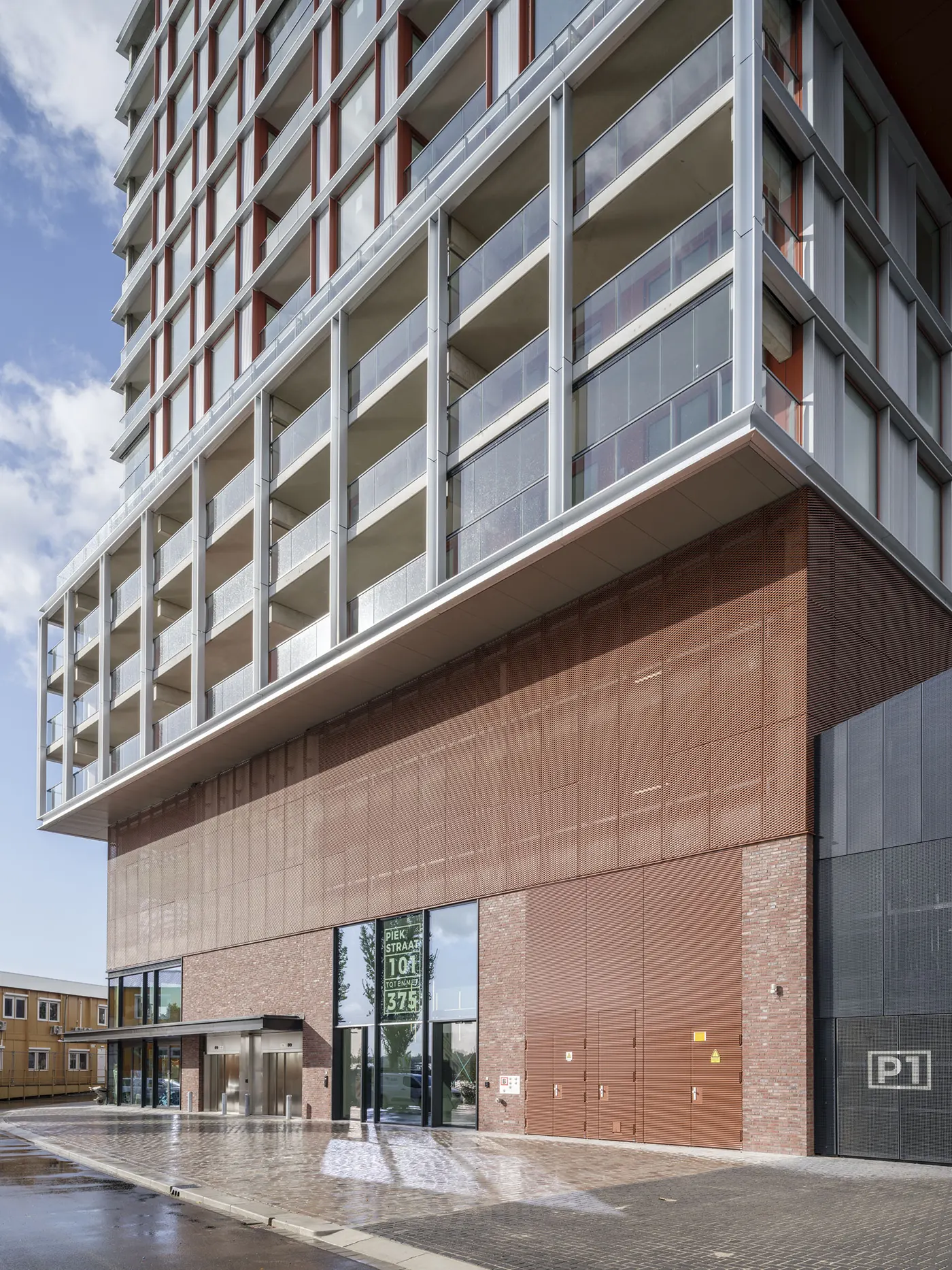
The ground level opens toward the quay with a café that invites public use, reinforcing the building’s role beyond housing. Rather than isolating residents, the project extends activity into shared space, encouraging interaction between the building and its surroundings. This approach supports the larger ambition to turn the waterfront into a mixed-use district where living, working, and public life intersect.
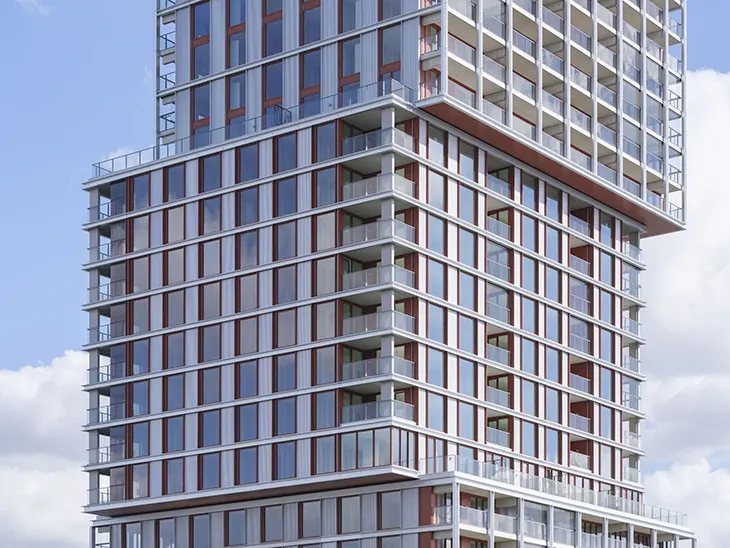
Material choices reinforce the link between past and present. The base uses brick and steel elements that match the scale and texture of existing quay structures, grounding the building within its context. Higher levels introduce lighter materials such as galvanized steel and expansive glazing, creating a gradual shift in appearance as the tower rises. Prefabricated façade panels follow a modular system designed for future disassembly and reuse, aligning construction with long-term adaptability.
Sustainability operates through both systems and spatial planning. District heating, collective cooling, and solar panels support energy performance, while triple glazing and controlled ventilation maintain indoor conditions. The design also promotes alternative mobility, with direct access to public transport, extensive bicycle storage, and limited car infrastructure. Parking areas sit within the structure and allow future conversion, extending the building’s lifespan through potential reprogramming.
De Piek positions itself as more than a residential tower. It acts as a catalyst for a wider urban shift, turning an industrial fragment into a connected, active part of Rotterdam. Through its massing, program, and material strategy, the project establishes a new relationship between city and water, grounded in memory yet oriented toward future use.