
Montoliu Hernandez reworks a 1920 apartment in Valencia’s Eixample district, addressing a plan that had grown dense and fragmented over time. Earlier renovations removed original elements, including hydraulic tile floors, yet the underlying structure remained intact. The layout relied on narrow rooms and deep partitions that limited light and ventilation. The project begins with a clear shift in how the home operates, moving from separation toward continuity.
INTERIOR DESIGN
The owner’s brief defines the direction. He cooks often and hosts regularly, so the apartment needed to support movement, conversation, and shared activity. The kitchen takes on a central role, not as a closed room, but as a space that connects. At the same time, the plan must allow the night area to remain independent. The apartment needed to stay open while offering privacy when required.
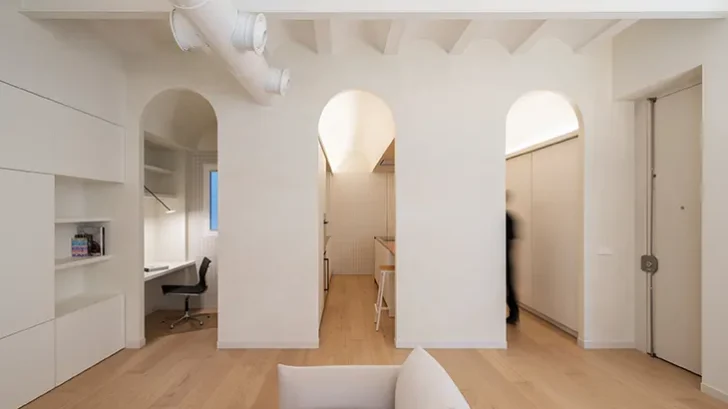
The architects approach the plan as a sequence. They reorganize the apartment into three programmatic bands, placing the kitchen at the center as the element that orders the entire layout. It works as a transitional zone, linking the living areas with the more private rooms. Access to the bedrooms concentrates at a single point, allowing the night zone to close off without interrupting the flow of the rest of the home.
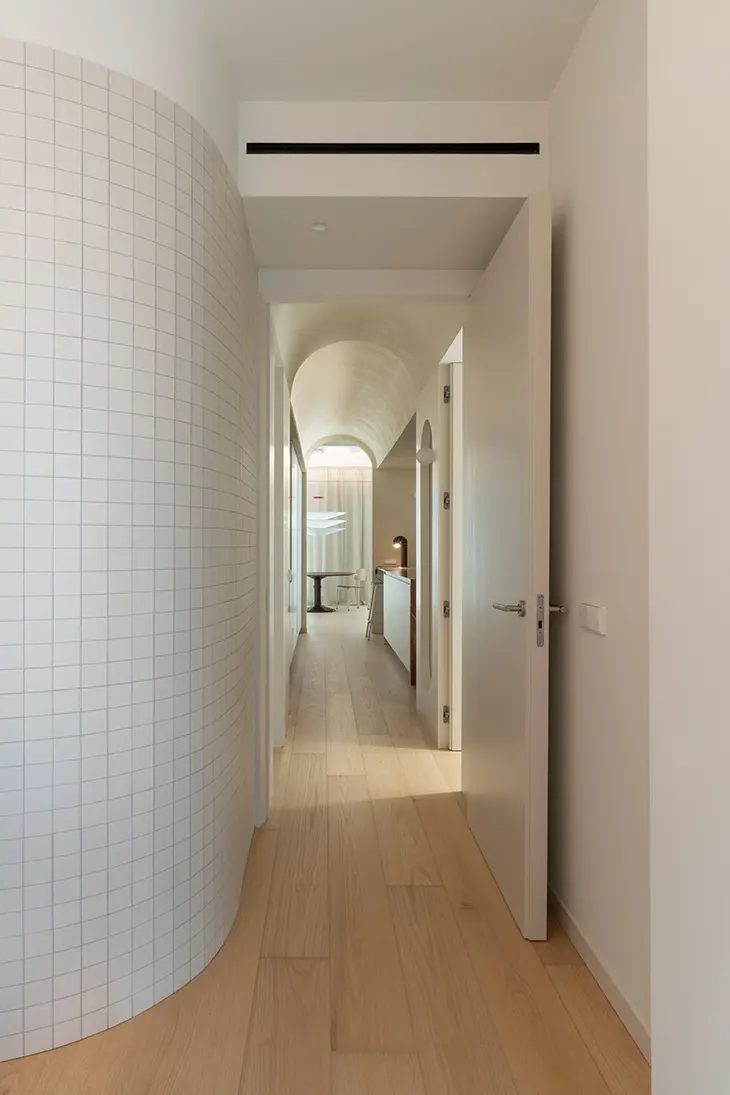
From this strategy, a series of extruded arches defines the project. Barrel vaults extend across the apartment, shaping movement and removing the need for traditional corridors. Each vault carries a specific role. The first forms a compact niche that holds a workspace and library. The second runs through the kitchen, setting its functional zone and reinforcing its presence within daily life. The third leads toward the night area, acting as a distribution axis that organizes access to the bedrooms.
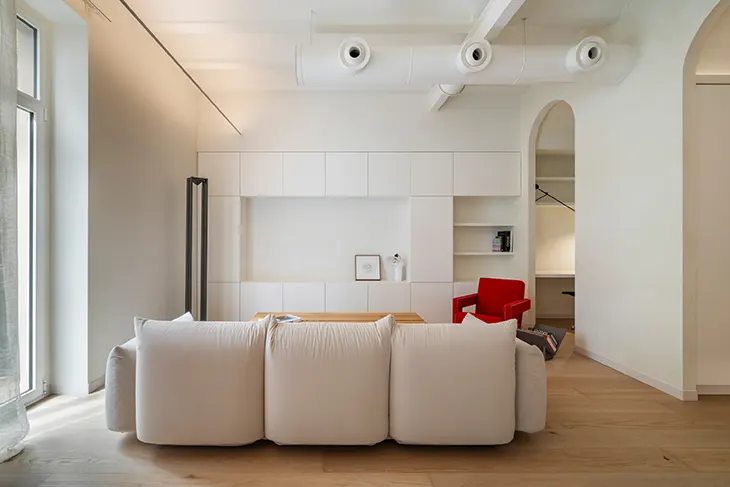
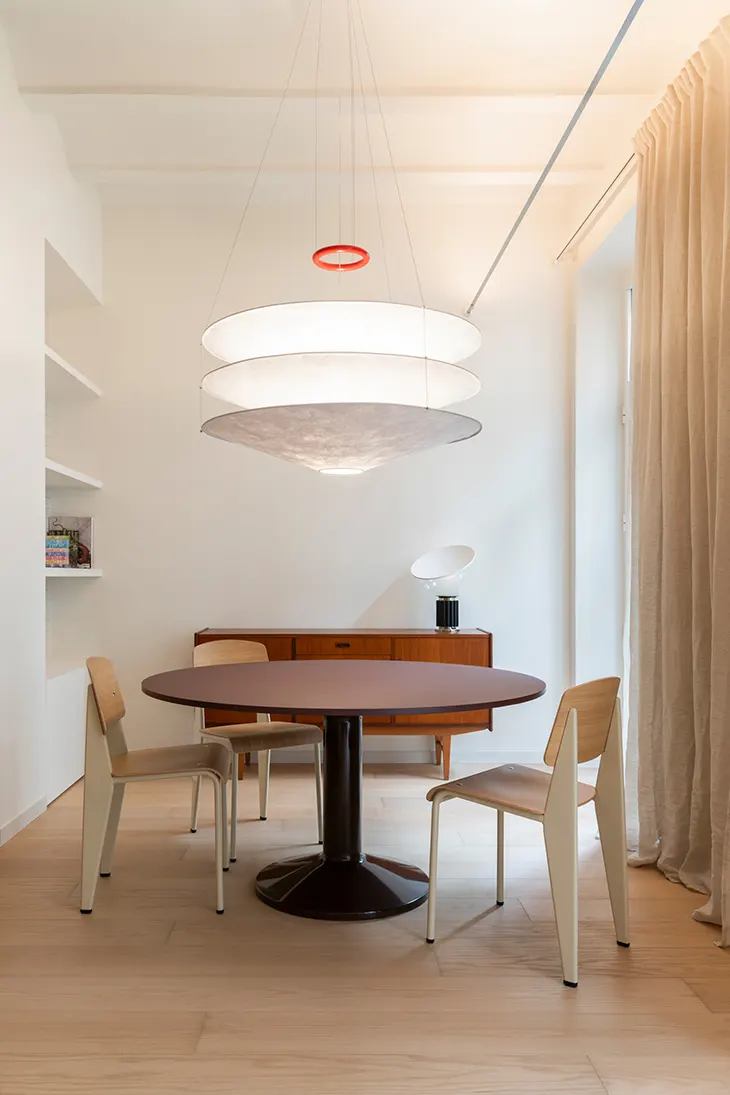
These curved elements guide the experience of the space. They compress and expand volume, drawing light deeper into the apartment while shaping acoustics and perception. The vaults also establish a dialogue with the original timber beam-and-vault structure, which remains exposed in the living and dining area. This relationship ties the intervention to the building’s existing construction, allowing both layers to coexist without conflict.
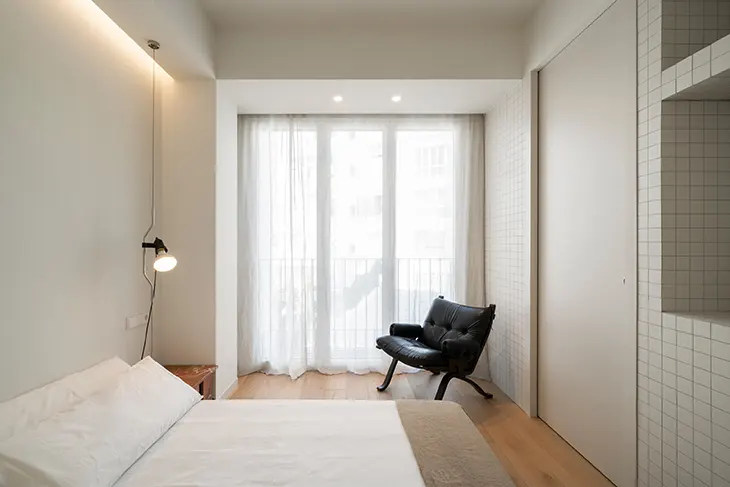
The night area follows a more restrained logic. A main bedroom with an en-suite bathroom and a guest bedroom with a separate bathroom both face the inner courtyard. The arrangement ensures quiet and separation from the main living spaces. Material continuity carries through these rooms, maintaining coherence across the apartment.
The material palette remains concise. Natural oak flooring and sand-toned finishes create a neutral base that supports the presence of Red Alicante marble. This stone defines the kitchen and appears again in the main bedroom, establishing a strong visual link between key areas.
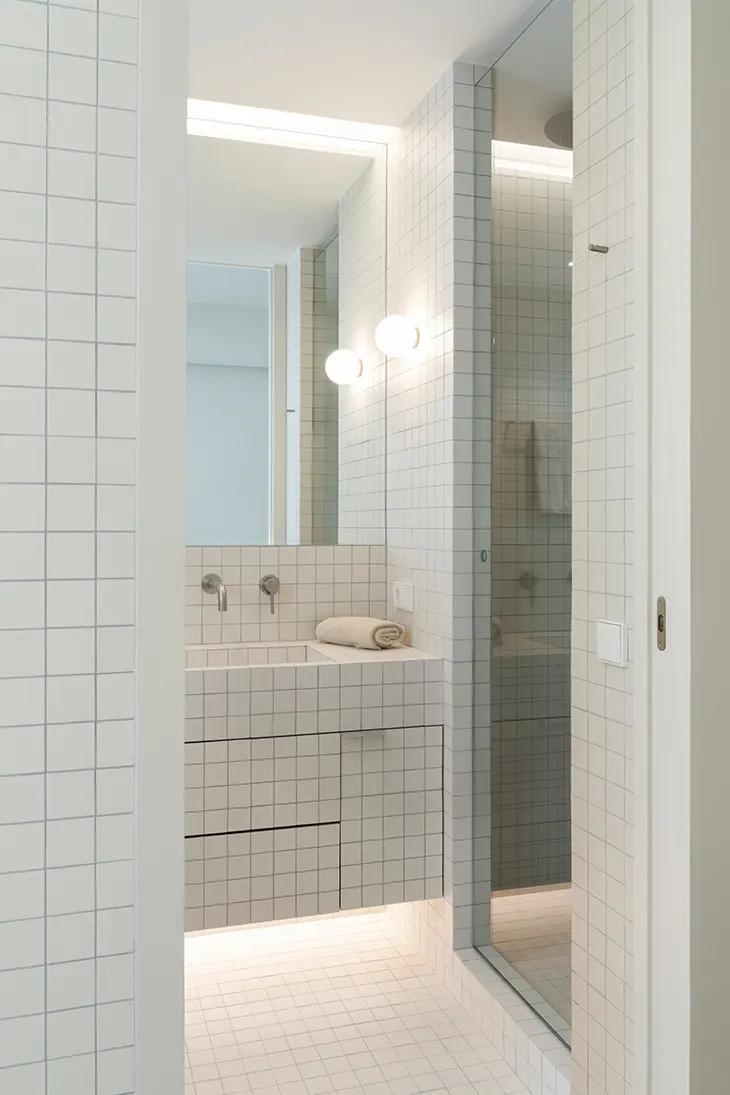
Small-format porcelain tiles, measuring 6 by 6 centimeters, organize the geometry of the project. They act as a measuring unit, guiding proportions and ensuring precise alignment across walls and ceilings. Builders used a handcrafted ruler composed of twenty tiles to maintain consistency during construction.
In the night area, these tiles extend across both interior and exterior surfaces of the bathroom volumes. They shape floors, walls, and washbasins inside, while continuing outward across wardrobes and dressing areas. This approach reinforces visual continuity and strengthens the overall identity of the apartment.
Cirilo Apartment replaces fragmentation with a clear spatial logic. The kitchen anchors the plan, while arches guide movement and materials establish coherence. The project creates a continuous environment that supports both social activity and privacy, reshaping how the apartment functions day to day.