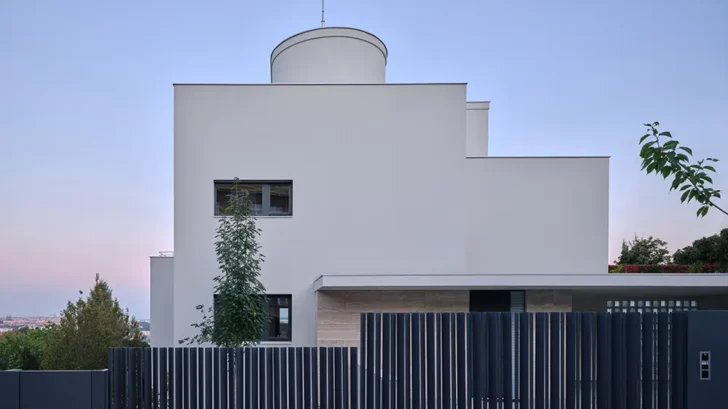

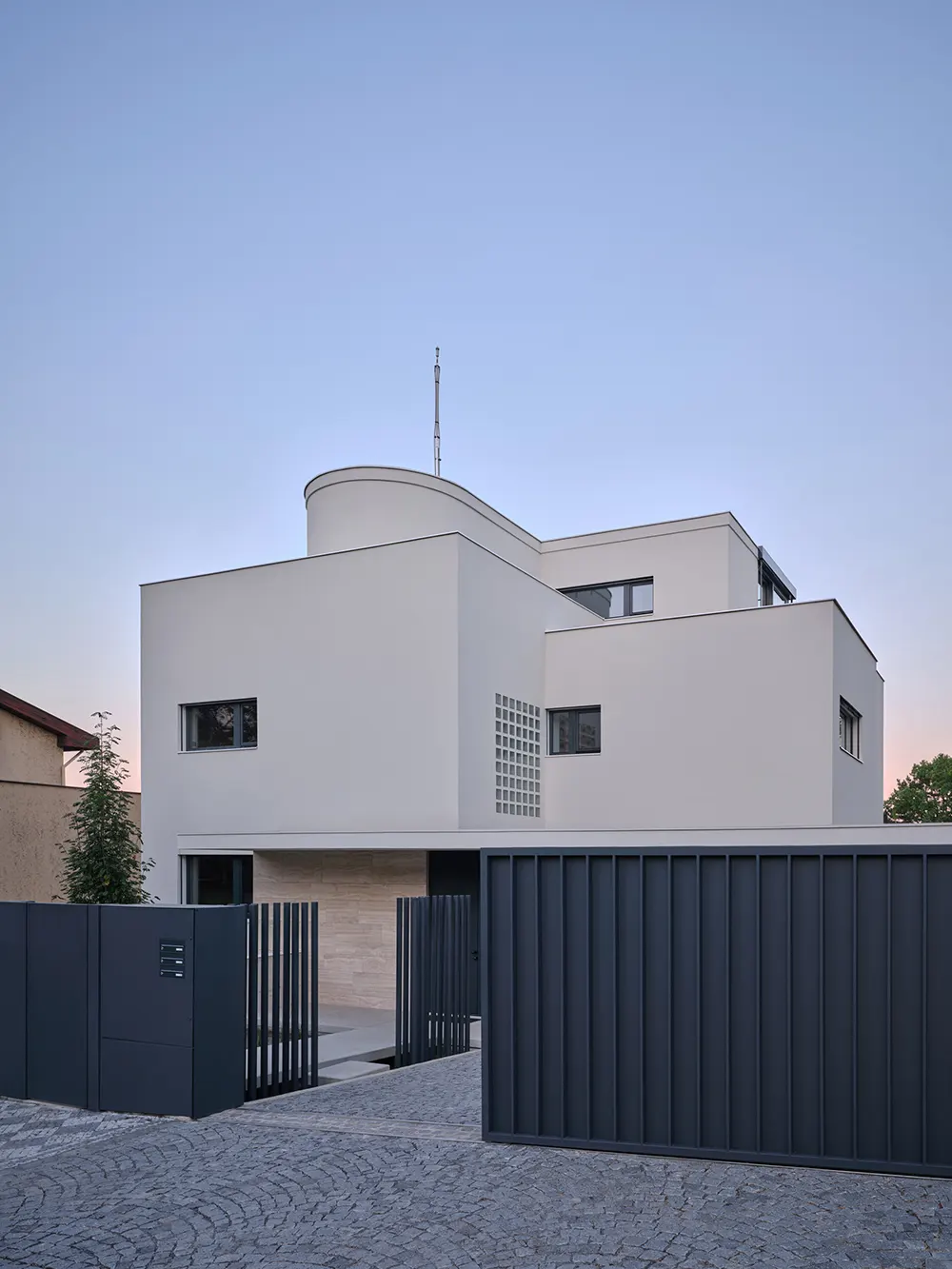
Villa M by Tunicate approaches reconstruction through continuity, precision, and restraint. The project reworks a Functionalist villa built in 1937–1938 by architects Arnošt Mühlstein and Victor Fürth, giving the damaged residence a new domestic life while keeping its architectural identity intact. Located in Prague, the house had survived almost in its original state until 1994, when it underwent partial renovation. After 2000, a fire severely damaged the building, leaving it abandoned for several years before its latest conversion began.
HOUSING
The client came to Tunicate with a partially developed reconstruction concept. The exterior already had its basic volumetric direction, which allowed the studio to focus on the interior and the daily experience of the house. Jan Roučka and Dana Szabó, with Martina Homolková during the concept phase, approached the villa as a living structure, capable of supporting contemporary habits while carrying the memory of its original Functionalist design. Their work avoids museum-like preservation and instead builds a dialogue between the existing architecture, new spatial needs, and a restrained material language.
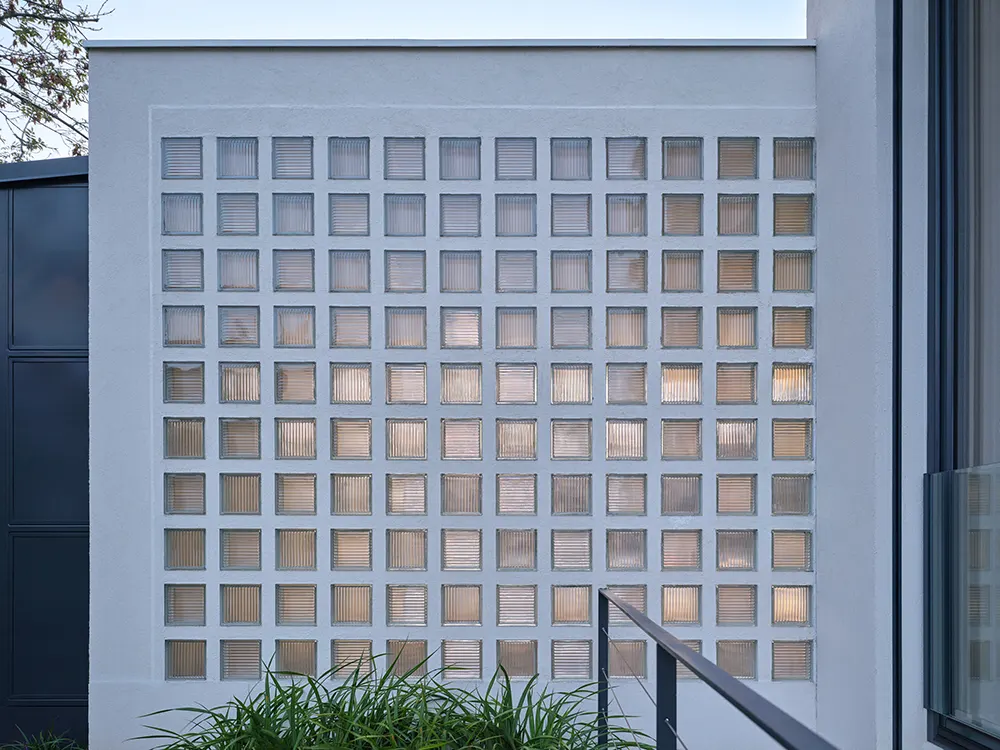
The house creates a clear contrast between privacy and openness. Toward the street, the entrance façade remains relatively closed, with smaller windows that protect the interior from the surrounding activity. This reserved exterior sharpens the experience of arrival. Once inside, the vestibule leads into an entrance hall that opens visually toward the living area. A newly created horizontal strip window in the dining and living room frames a wide view of Prague, pulling light and perspective deep into the ground floor.
Tunicate strengthens this relationship between the closed street side and the open garden side through the interior layout. The studio wanted the hall to connect with the view, while still giving the residents the option to separate the living area from direct sightlines. A sliding partition made of slender wooden slats solves this with a light architectural gesture. It filters visibility, adds texture, and gives the residents control over openness without interrupting the spatial flow.
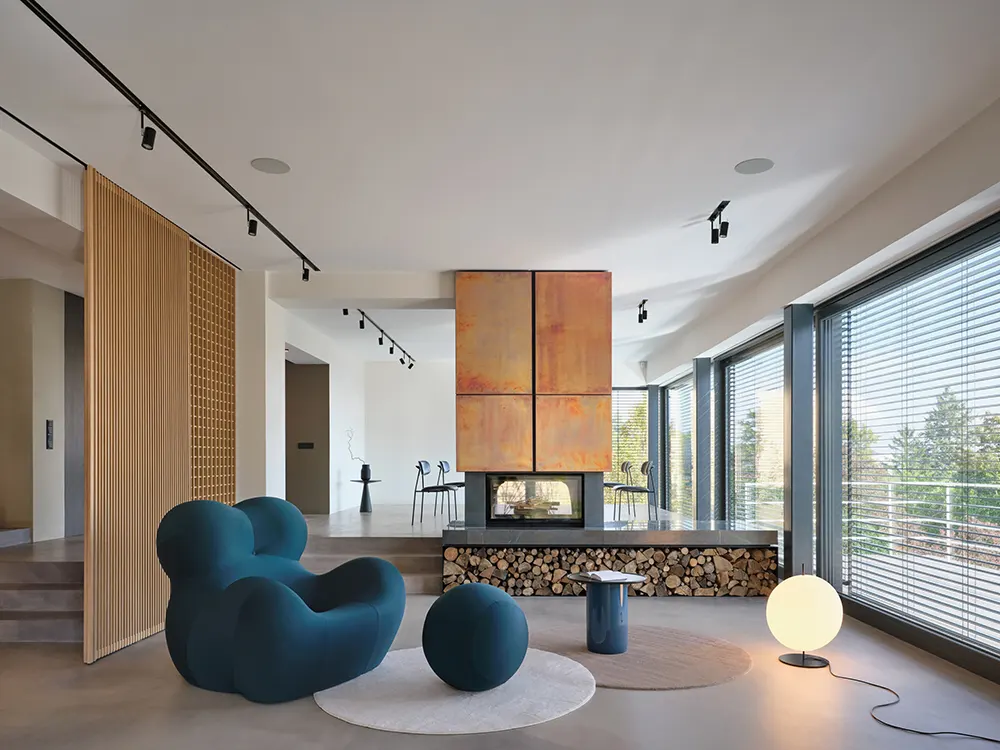
The plan follows the original logic of the villa. The ground floor functions as the social level, with living, dining, and shared spaces arranged as a connected sequence. The upper floor forms a more private residential area, while the basement combines technical rooms with habitable functions. Across all levels, Tunicate connects rooms into larger functional units, allowing the house to feel generous without losing the disciplined order of its Functionalist base.
The reconstruction also responds to fixed structural conditions. Different floor levels and existing articulations shaped the design instead of limiting it. The studio used these moments to create continuity between old and new. The staircase offers the clearest example. Tunicate unified the original articulated stair with newly added structural interventions through form and material, allowing the new elements to grow from the character of the existing house.
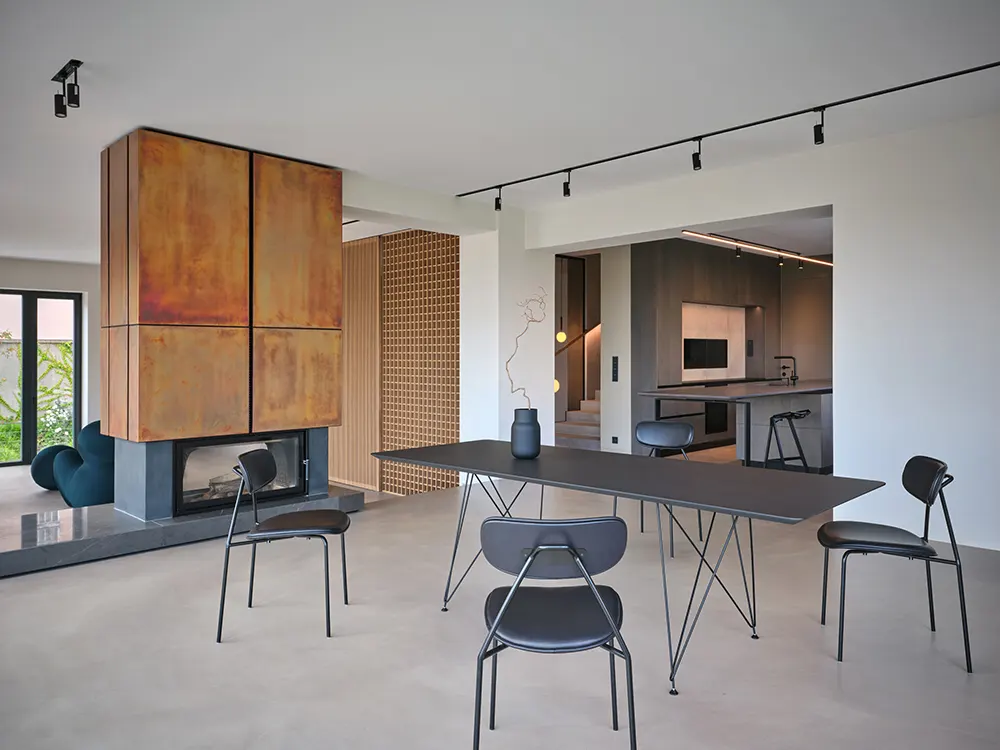
Materials play a central role in the project’s atmosphere. The interior builds on the rational quality of the original building through exposed concrete elements, mineral finishes, and a calm, controlled palette. Oak floors soften the living levels, bringing warmth into spaces defined by structural clarity. The result feels quiet and cohesive, with each material serving the architecture instead of competing with it.
Two fireplaces introduce the strongest interior accents. One sits on the ground floor, shaping the relationship between the living room and dining area. The second occupies the top floor. Both use slender metal structures that respond to the proportions of their rooms, while patinated copper cladding by DURO DESIGN gives them a sculptural presence. These fireplaces bring depth and weight into the restrained interior, adding expressive moments without disturbing the overall discipline of the project.
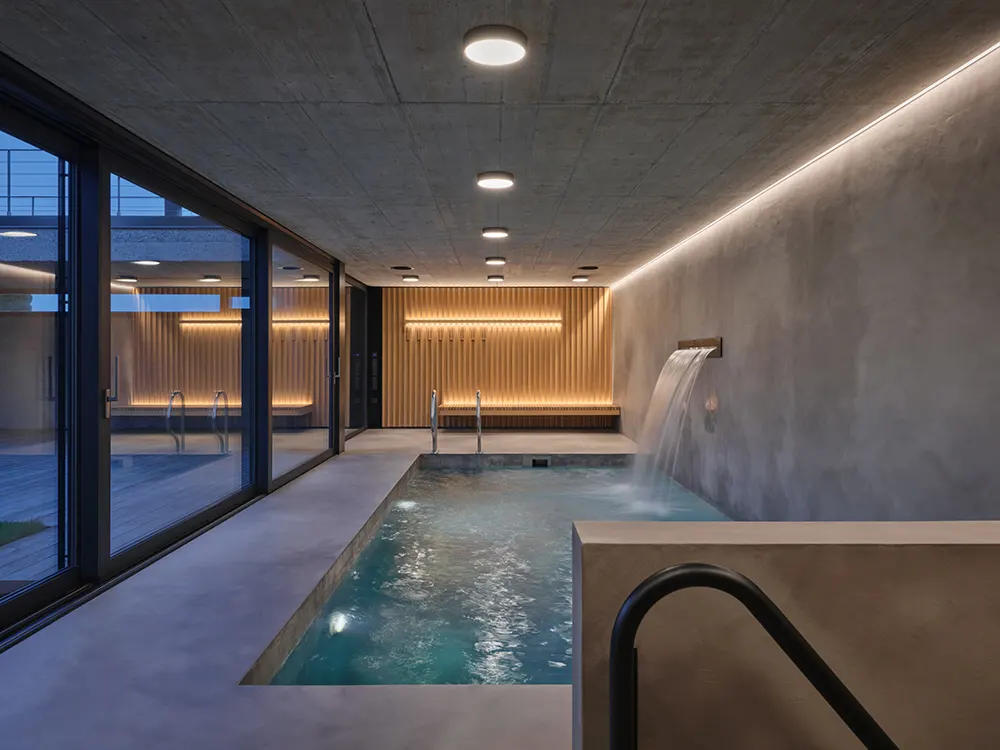
Completed in 2025, Villa M spans 433 square meters of built-up area, with a gross floor area of 851 square meters and 655 square meters of usable floor area. BoysPlayNice photographed the project, capturing the controlled atmosphere of the renewed villa and its balance between protection, openness, structure, and domestic calm. Through Villa M, Tunicate shows how a heavily damaged historic residence can return to use through careful interpretation, exact material decisions, and respect for the spatial intelligence already present in the original architecture.