
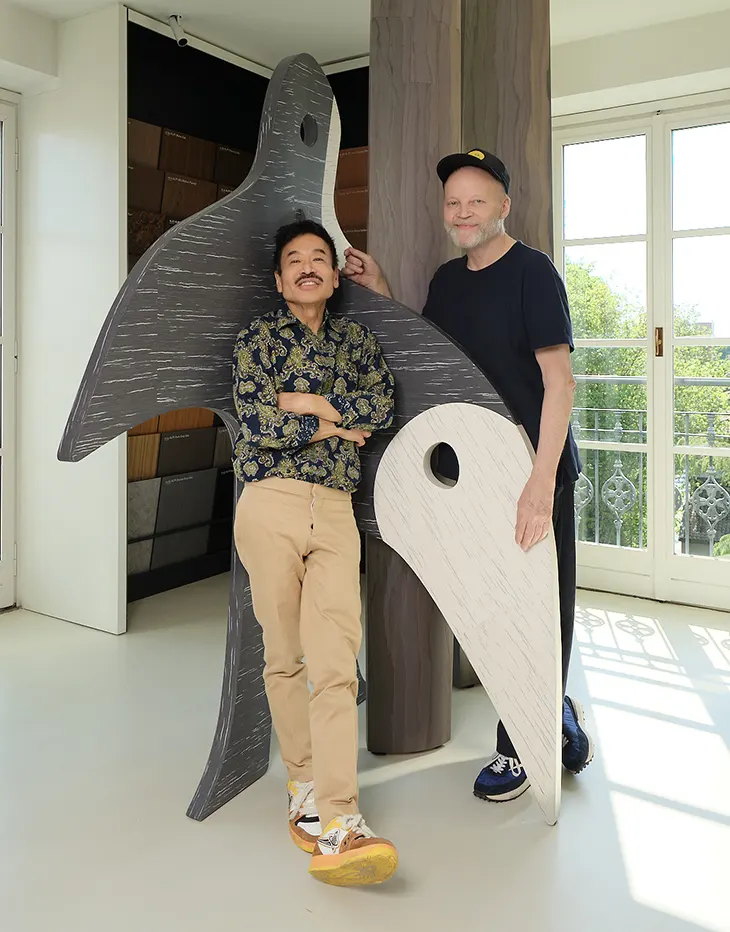
United by a shared commitment to craft and intent, Yabu Pushelberg, the internationally acclaimed multidisciplinary design studio, unveiled new furniture, lighting, and product collections with heritage and emerging brands during Milan Design Week. Founded 45 years ago by George Yabu and Glenn Pushelberg, the studio’s approach remains rooted in a fundamental belief: in a world already full of objects, anything new should earn its place, standing the test of time while serving a clear and considered purpose.
Speaking with DSCENE and ARCHISCENE Editor-in-Chief Zarko Davinic from the ALPI office in Milan, the co-founders discussed their philosophy during a season marked by 11 presentations. Much of their work originates through hospitality partnerships, where hotels and resorts approach them with specific needs. “A lot of our work comes through hospitality partnerships,” they explain. “Hotels and resorts see our work and ask if we can create something. Many of our partners are makers we’ve connected with. That’s how collaborations start.“
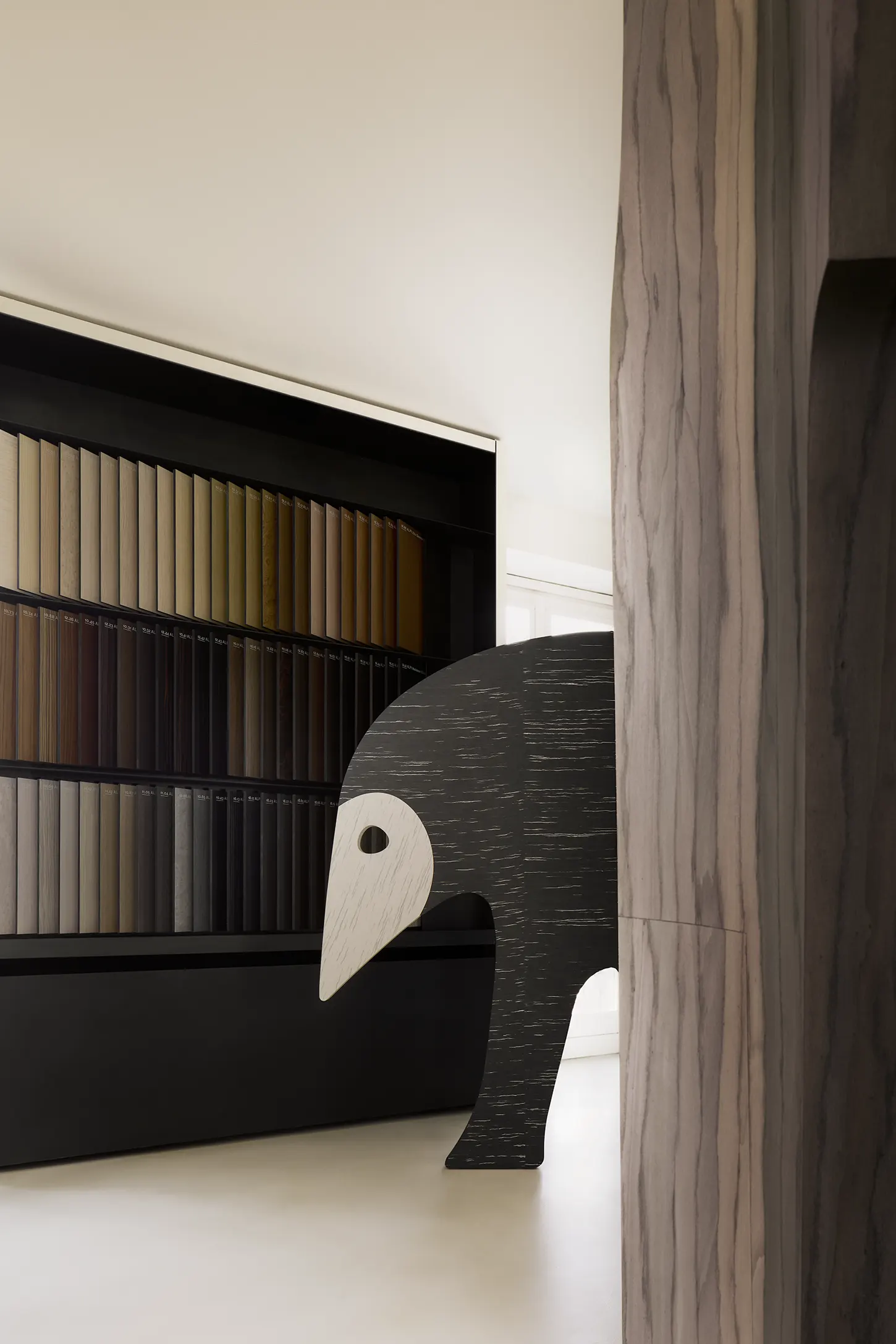
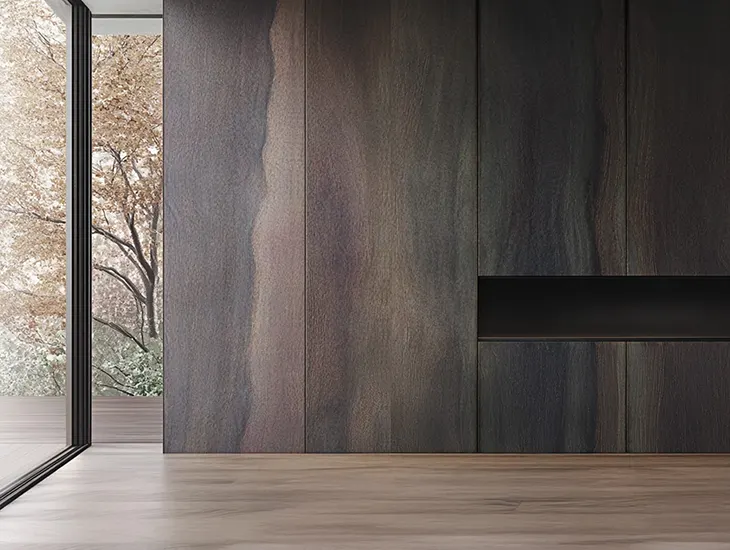
The ALPI partnership exemplifies this approach. When the heritage Italian veneer company approached them, Yabu Pushelberg sought to create something with emotional depth rooted in their Canadian identity. “We have a heritage in Canada, an Italian heritage, and the largest Italian population outside Italy is in Toronto,” they note. “There’s a strong heritage of cabinet making from post-war, and we wanted to show that we can make beautiful cabinets with real emotional depth.” The resulting Birch and Aurora veneers draw inspiration from Group of Seven landscape painters and indigenous identity, creating designs that are both conceptually grounded and materially responsible, using off-cuts rather than virgin timber.
This commitment to longevity shapes all their work. Rather than feeding fast furniture cycles, they prioritize lasting design. In retail, furniture changes every five years; in hospitality, renovation cycles have compressed from 25 years to 10-15 years, sometimes less. “If you can make things beautiful that last, and you just have to change finishes, fabrics, carpets, not the structure, it’s so much better,” they explain. “That is an objective in our work: lasting design is also sustainable design.”
When selecting collaborators, selectivity is paramount. “What’s important is to work with beautiful new companies and those that want to experiment,” they say. “New companies have raw energy we thrive on. But you have to be selective.” Whether partnering with established family businesses like ALPI, Poliform, Molteni&C, Porro or emerging brands experimenting with new collections, the studio applies the same principle: solve a clear problem with conviction and restraint. “When it comes to our industry, it’s applied art, not fine art. There’s a problem to solve, and that’s what drives us and gives focus.”
Continue reading for the full interview by Zarko Davinic – with both George Yabu and Glenn Pushelberg answering our questions:
How do you feel about Design Week? Do you do it every year? – We do. We have 11 presentations this year. But it’s always exciting to see your creations realized. Of course it’s exhausting, but exhilarating.
Do you align launches toward Design Week or it is more partnership driven? – A lot of our work comes through hospitality partnerships. Hotels and resorts see our work and ask if we can create something. Many of our partners are makers we’ve connected with. That’s how collaborations start.
How did the collaboration with Alpi come about? – We always work with ALPI a lot, they came to us. There was an introduction, then they checked us out, asked neighbors [laughs], checked references. They’re very clear about ideology and who they are.
We wanted to do something more soulful with emotional depth. It comes from our roots as Canadians. We have a heritage in Canada, an Italian heritage. The largest Italian population outside Italy is in Toronto, and there’s a strong heritage of cabinet making from post-war. We wanted to show that we can make beautiful cabinets with real emotional depth, not just functional pieces with superior quality.
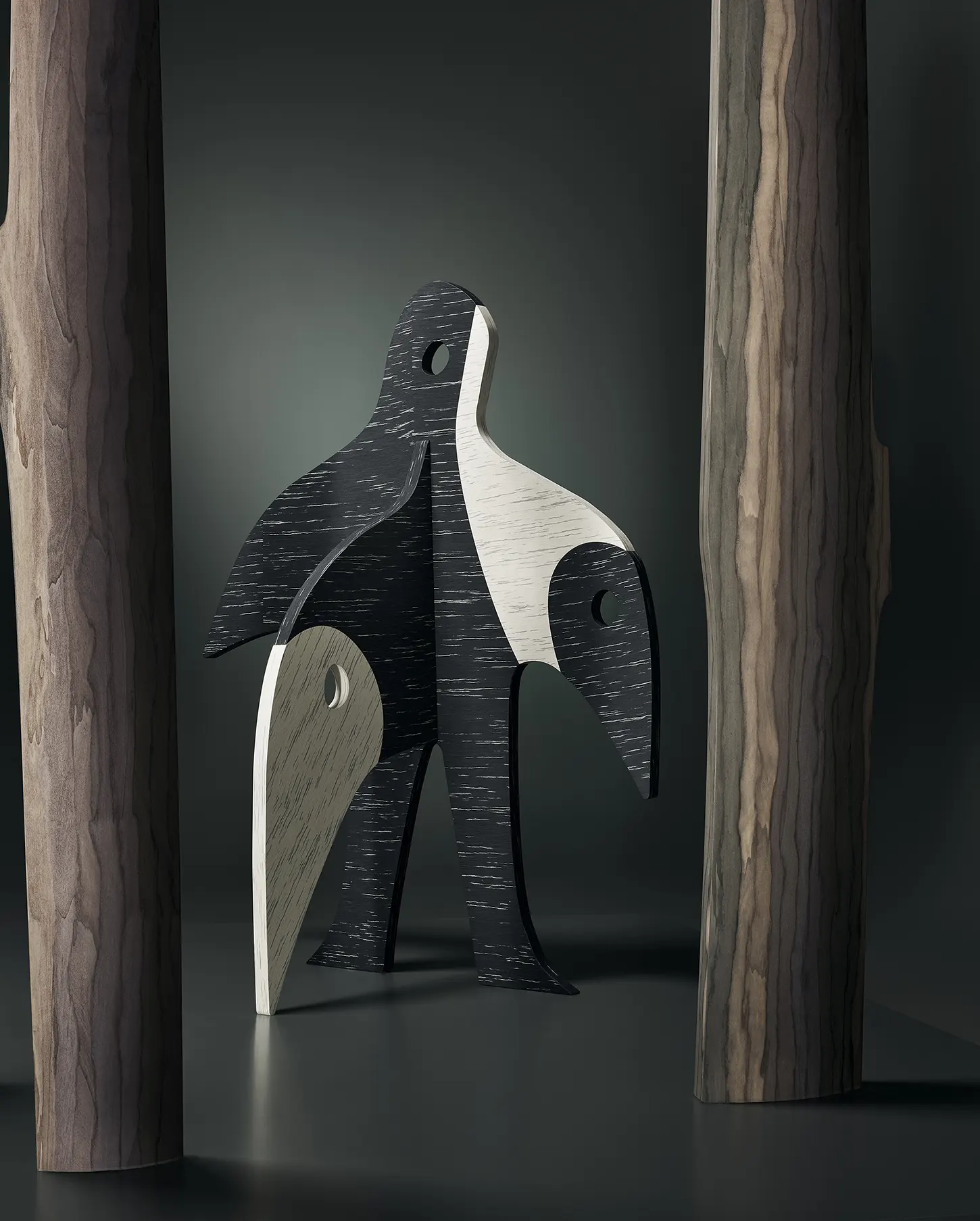
That’s a beautiful inspiration. – We started by channelling Birch Park, that white creamy aesthetic, then we flipped the colors and brought in identity from indigenous groups. We also drew from landscape painters of the Group of Seven from the 1920s-30s. The beauty is that it comes from our own approach, horizontal and vertical perspectives.
Could you tell us more about the material itself? – The wood is off-cuts, not virgin timber. We didn’t take a tree down. That’s responsible design.
How much did you think about sustainability with Alpi and in general with your projects? – Clients often say it’s expensive, but we avoid greenwashing. Even if you come from a land with many trees, and it’s still important not to take them down.
The trend toward environmentalism has been on the wane politically, which is problematic. But there’s real importance to it. We may do a bigger sustainability project around saline and oxygen. We were in Bali six months ago, and there’s a company taking ocean materials and making them into beautiful materials. Our notion is: can we use recycled fabrics, recycled wood, recycled plastic to make beautiful objects?
What’s important is to work with beautiful new companies and those that want to experiment. Alpi is about experimenting.
Do you see any difference in the way design industry is approaching sustainability now compared to let’s stay 10 or more years ago? – Back in 2008, we designed a model room for a green hotel using all high-listed green materials. The hotel owner rejected it because it didn’t look “green enough”, not because it wasn’t. But you can make beautiful objects from recycled materials.
We’re also collaborating with Foster + Partners on a Toronto project. They invited us to their London offices where they have a research center and department of sustainability. They lead rather than follow, so that was inspiring for us.
But reality on the ground is often much more different, Nothing is 100% sustainable. – Making a EV takes enormous energy, but over time it’s greener than a conventional car. People twist the arguments, which is disturbing. Everybody has to get on a path.
Today we are facing fast furniture trend, what concerns you about the design and furniture industry? – We’re seeing fast furniture, just like fast fashion. The cycles are too fast which is a problem. There’s too much product being made just to see what works. Why not have conviction and make fewer things?
Related: Yabu Pushelberg and UNAIDS Open Don’t Stop. Stand Up! in Tribeca
Do you think the problem also comes with business as clients, both retail and hospitality treat furniture differently. – In retail, the cycle is five years with another five-year lease. It’s too fast. In hospitality, you have 12-15 years to refresh. We don’t have to change everything, soft upgrades work. But even that’s shortening. Hotels now renovate every 10-15 years instead of 25. Ten years is horrible.
If you can make things beautiful that last, and you just have to change finishes, fabrics, carpets, not the structure, it’s so much better. That is an objective in our work: lasting design is also sustainable design.
We are also seeing now styling within interior design, changing the trends and demand for new furniture pieces. – How many chairs are designed a year? One thousands, ten thousand? There’s so much that’s styled, trend-driven, without deep thinking. If a chair has an idea, is well-executed, and thoughtful, it has longevity. You see Memphis design from 45 years ago still circulating. If it’s relevant and interesting, you can circle again, you can keep going and you don’t have to stretch.
The trend toward environmentalism has been on the wane politically, which is problematic. But there’s real importance to it
Do you have your own personal favorites when it comes to furniture pieces? – When we started 45 years ago, we had no money but were in love with Joe Colombo. We bought three Joe Colombo bar stools at $600 each in 1980, a fortune for us then. We still have them. Now they’re in our kitchen. That’s responsible design. They are the worst drafting chairs, but the most beautiful [laughs].
We are in Italy and some of the best companies are family businesses, just like Alpi still is. What is your experience working with Family Businesses? – We love working with Alpi. Some family businesses are dysfunctional, some very focused. Some larger conglomerates are unfocused, others very focused. It really depends on leadership.
We’re seeing the next generation come up, sometimes not as focused but wanting to keep it in the family, which can be problematic. But Alpi is very clear about who they are and where they’re going. They are familiar about who they are, the kind of broke our theory of a family business.
What do you think it matters today when choosing who to work with as an architect and a designer? – What’s important is to work with beautiful new companies and those that want to experiment. Alpi is about experimenting. New companies have raw energy we thrive on. But it’s hard when you get so many opportunities. You have to be selective.
How do you stay away from chasing trends and preserving your creative energy – When it comes to our industry, it’s applied art, not fine art. There’s a problem to solve, and that’s what drives us and gives focus.
Discover more of the ALPI Yabu Pushelberg collection in our gallery:
Keep up with Yabu Pushelberg on social media @yabupushelberg