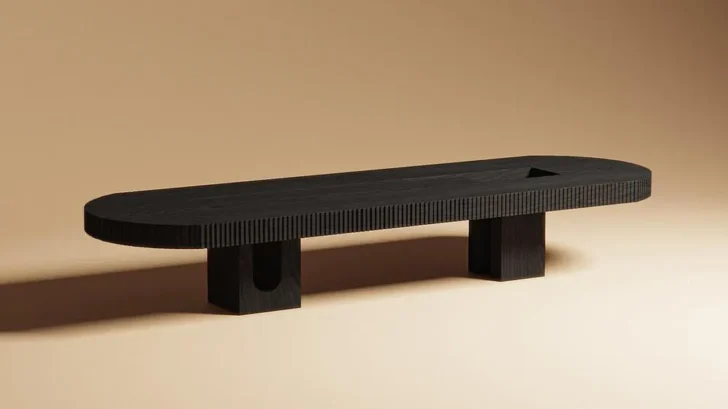

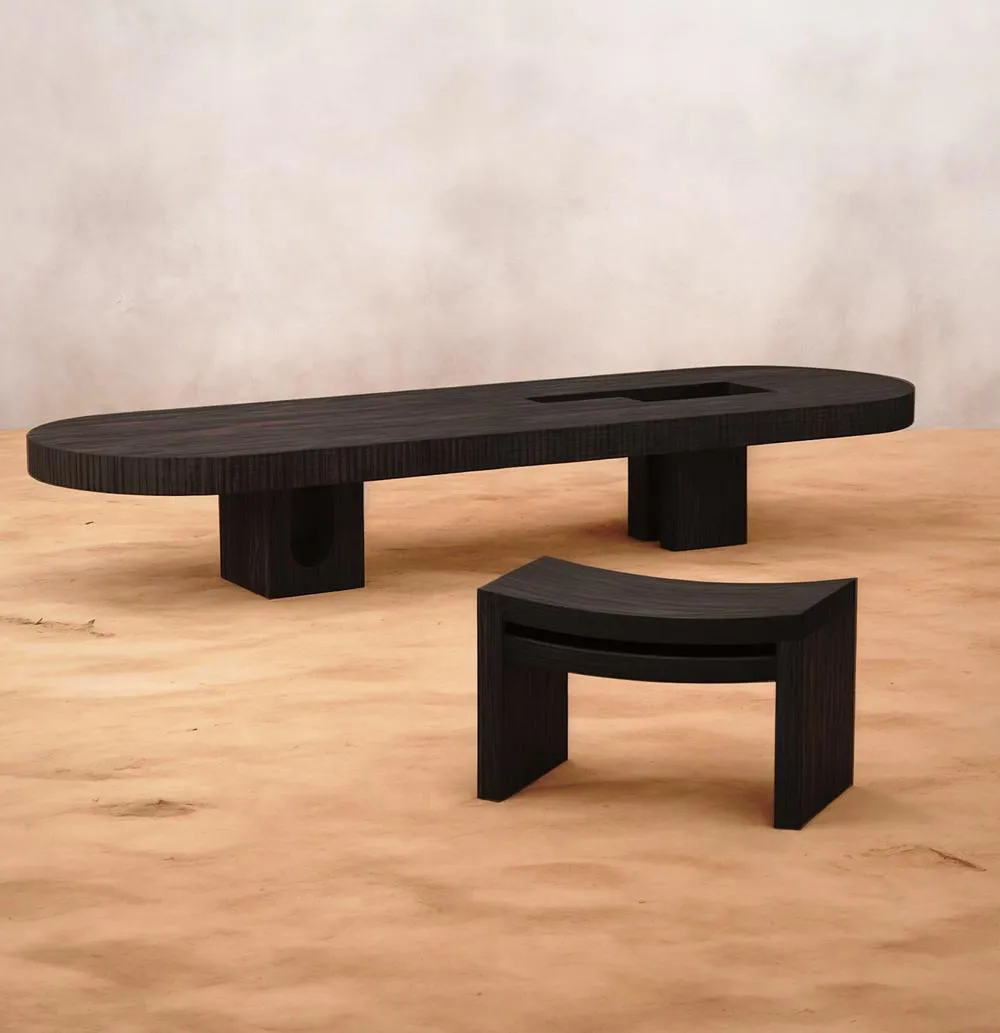
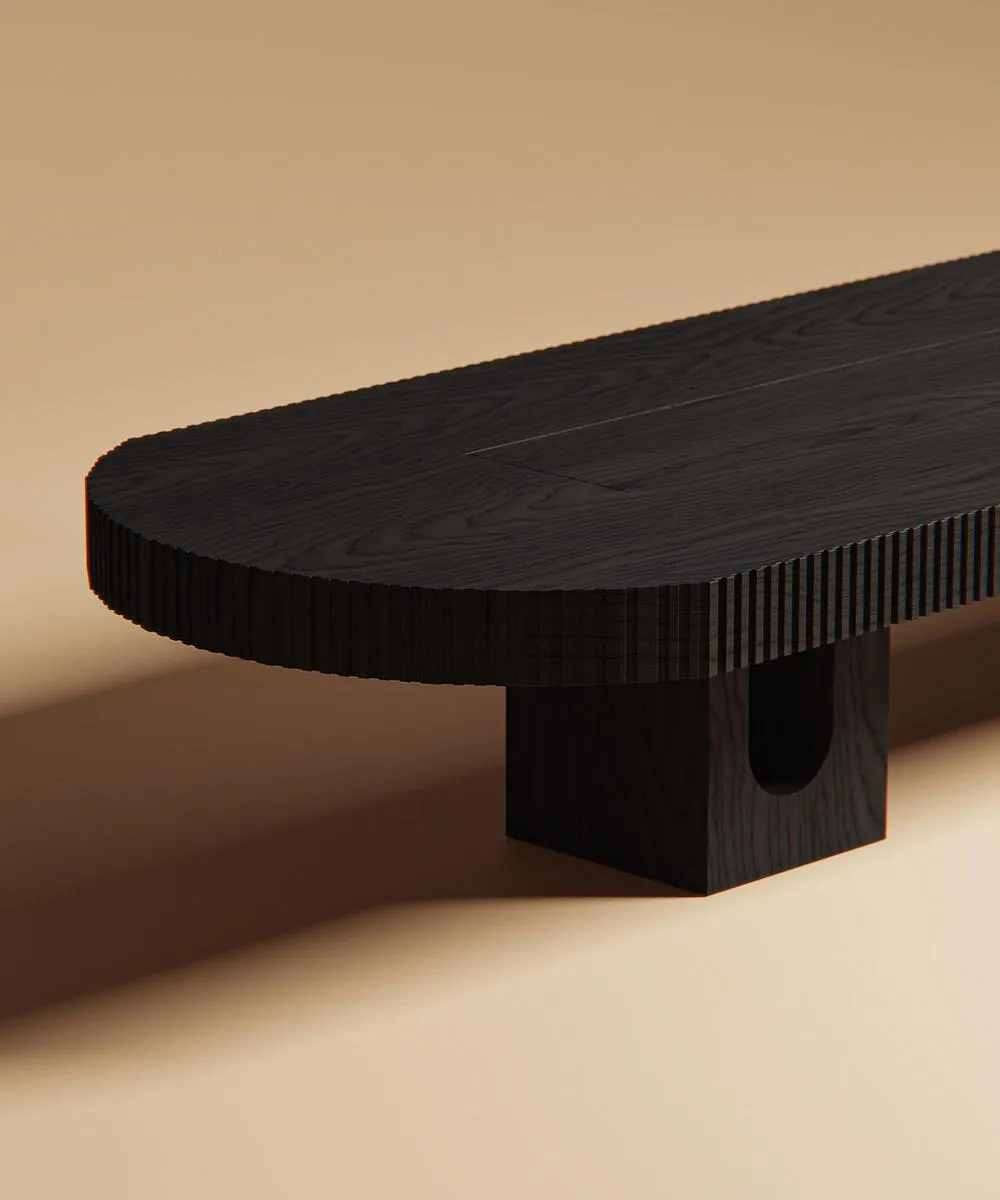
Terry Aidoo’s Kabila Collection begins with the courtyard as a social structure. Presented in Milan, the collection draws from the traditional African courtyard and its role as a place of gathering, storytelling, celebration and exchange. Through a coffee table and accompanying stool, Aidoo translates this architectural and cultural setting into furniture, creating objects that invite people to sit, gather and participate.
FURNITURE
The name Kabila, meaning clan or tribe in both Swahili and Arabic, gives the collection its central idea. Aidoo approaches identity as something shaped through shared experience, tradition and collective memory. Rather than treating furniture as isolated objects, he considers how a table and stool can hold social meaning. The pieces become tools for connection, shaped by rituals and spatial relationships that have long organized communal life.
Across many African cultures, the courtyard sits between private and public space. It supports daily life, family exchange and intergenerational memory. Aidoo uses this idea as the foundation for the collection. The coffee table becomes the communal center, while the stools act as surrounding elements. Together, they form a small landscape for conversation and shared presence, echoing the spatial logic of people gathering around a courtyard.
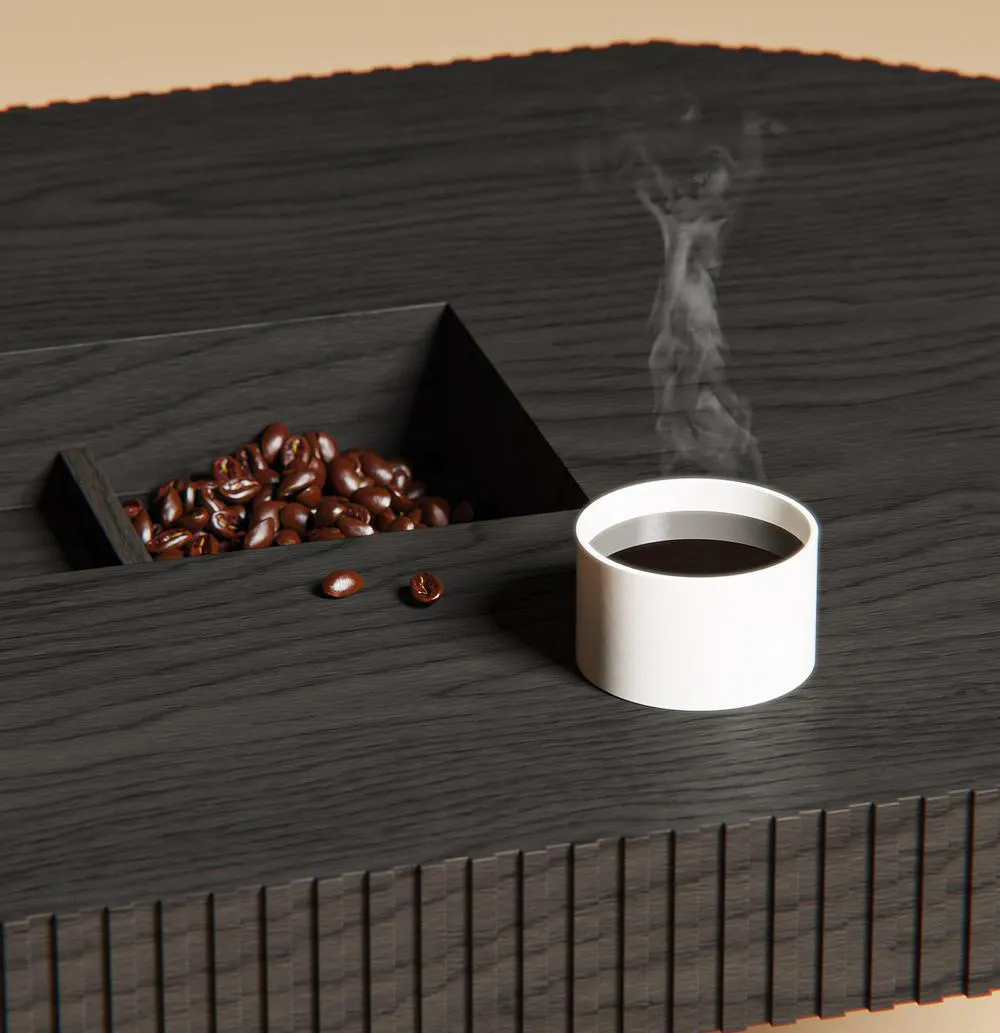
The coffee table carries the collection’s most direct symbolic gestures. A recessed circular detail references the Eritrean coffee ceremony, a ritual built around hospitality, conversation and togetherness. This element gives the surface a clear social charge, turning the table into a place for encounter rather than a purely functional object.
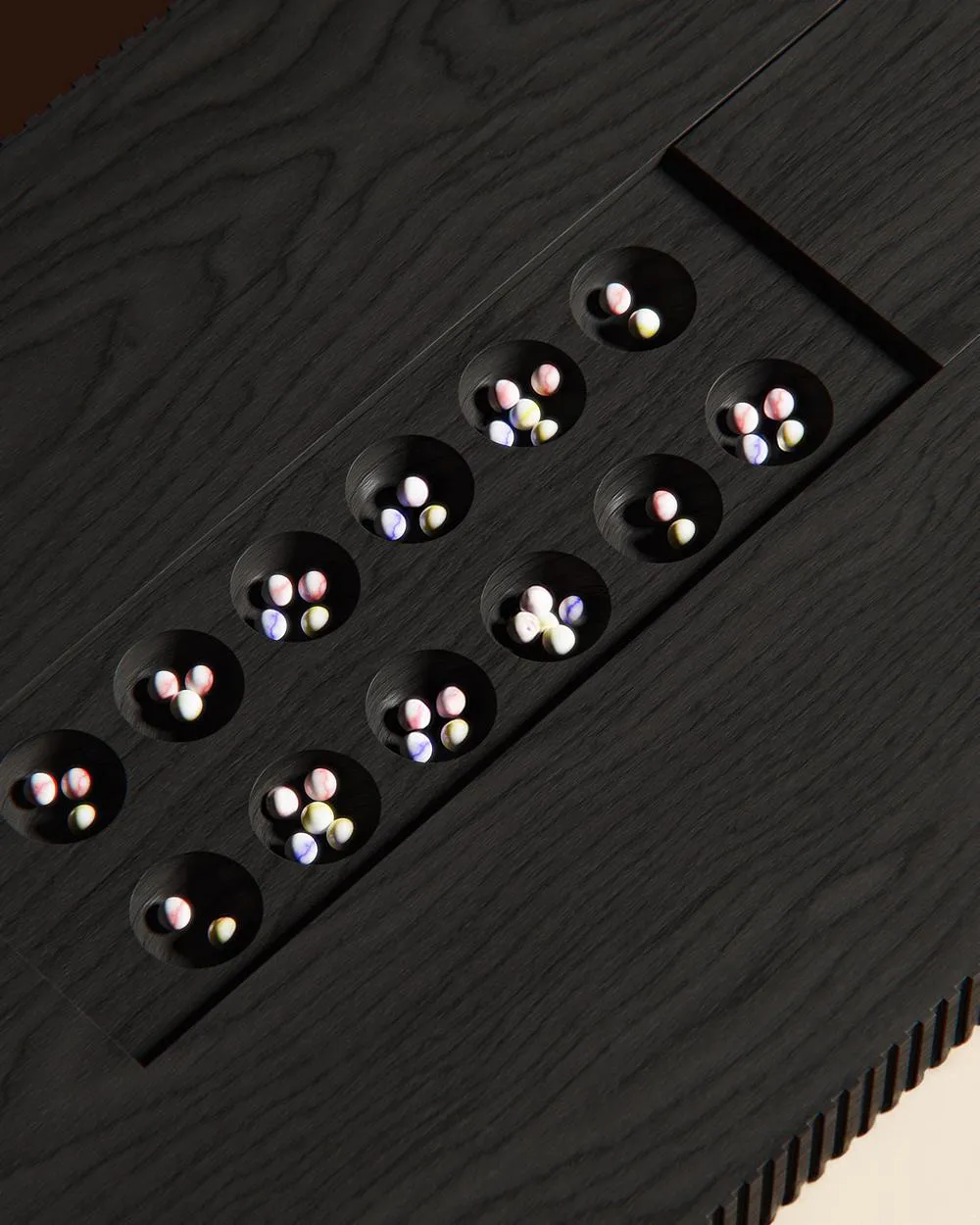
Aidoo also incorporates a carved interpretation of Oware, one of the oldest and most widely played board games in West Africa. Traditionally played across generations, Oware carries lessons in strategy, storytelling and social interaction. Its presence within the table extends the collection’s idea of furniture as a vessel for learning, memory and exchange.
The accompanying stool takes inspiration from traditional seating forms of the Benin Kingdom in present-day Nigeria. Historically, Edo stools held practical and symbolic roles, often connected to status and identity. Aidoo does not copy these forms directly. He reworks their logic through a contemporary design language, allowing the stool to carry reference without becoming reproduction.
Material choice strengthens the collection’s physical and emotional character. Kabila is handcrafted from solid sapele wood, selected for its durability, rich grain and natural warmth. The material gives the pieces a grounded presence, while the combination of traditional woodworking and contemporary fabrication brings precision to their sculptural form.
Aidoo’s wider practice spans furniture, interiors, installations and research, with a focus on culture, community and belonging. Kabila reflects that direction clearly. The collection uses design to preserve memory without freezing it, turning ritual and cultural reference into objects made for present use.
Winner of Product Designer of the Year at the AIDA Awards 2026, Kabila shows how furniture can move beyond function without losing it. Aidoo creates pieces that carry story, material depth and social purpose, offering a contemporary interpretation of the courtyard as a place where identity is formed through gathering.