
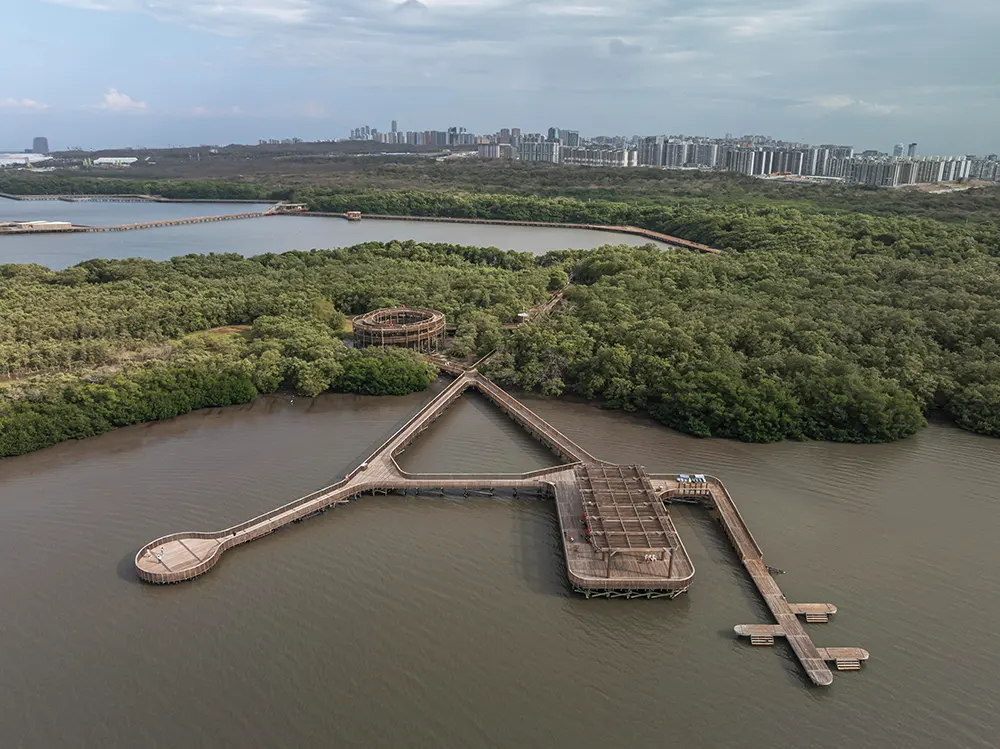
DEB Architecture and El Equipo Mazzanti transform Ciénaga de Mallorquín Ecopark in Barranquilla, Colombia, through an environmental regeneration and public space project at the meeting point of the Atlantic Ocean and the Magdalena River. The intervention reconnects the city with one of the Colombian Caribbean’s most important lagoon systems, turning the wetland into accessible ecological infrastructure for conservation, education and public use.
LANDSCAPE
Ciénaga de Mallorquín holds major environmental and cultural value. Its mangrove network supports more than 200 resident and migratory bird species, giving the area a vital role in regional biodiversity. Over the last century, territorial changes linked to the construction of Bocas de Ceniza and urban growth altered its natural dynamics. These shifts caused environmental degradation and weakened the connection between the wetland and the city.
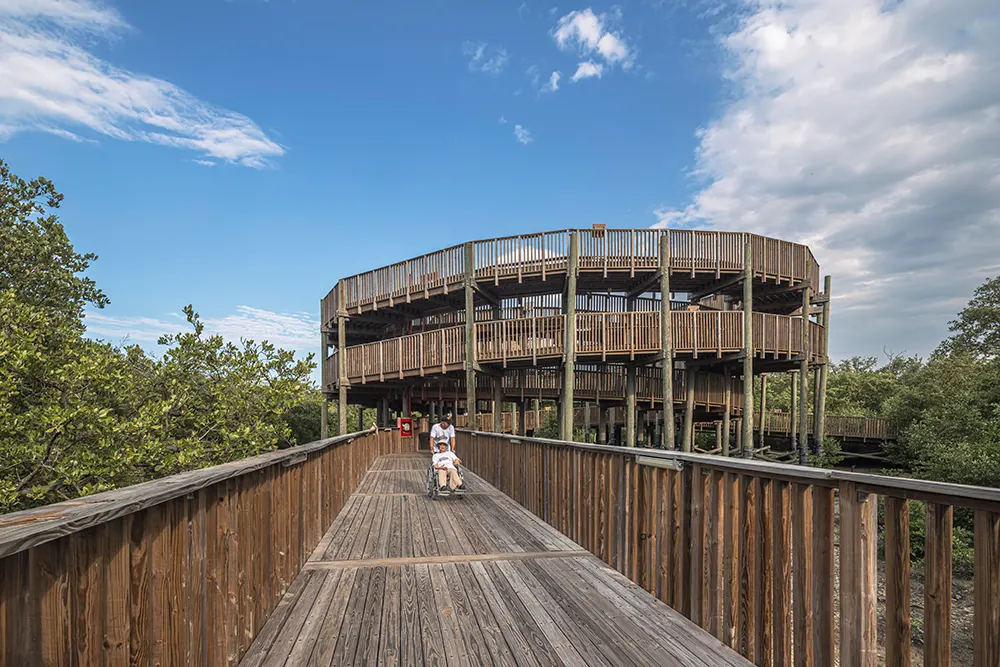
The ecopark responds to that condition with a territorial strategy that mediates between urban expansion and ecological preservation. The design creates a “living edge,” an active band that protects the ecosystem and gives the public controlled access. It treats the wetland as a sensitive system and uses minimal intervention to support its natural processes.
The project covers 61,834 square meters and uses a network of elevated walkways, observation platforms, resting areas and gathering spaces. These elements allow visitors to enter the wetland without disrupting its biological and hydrological cycles. By lifting circulation above the ground, the design reduces direct occupation and keeps natural continuity across the site.
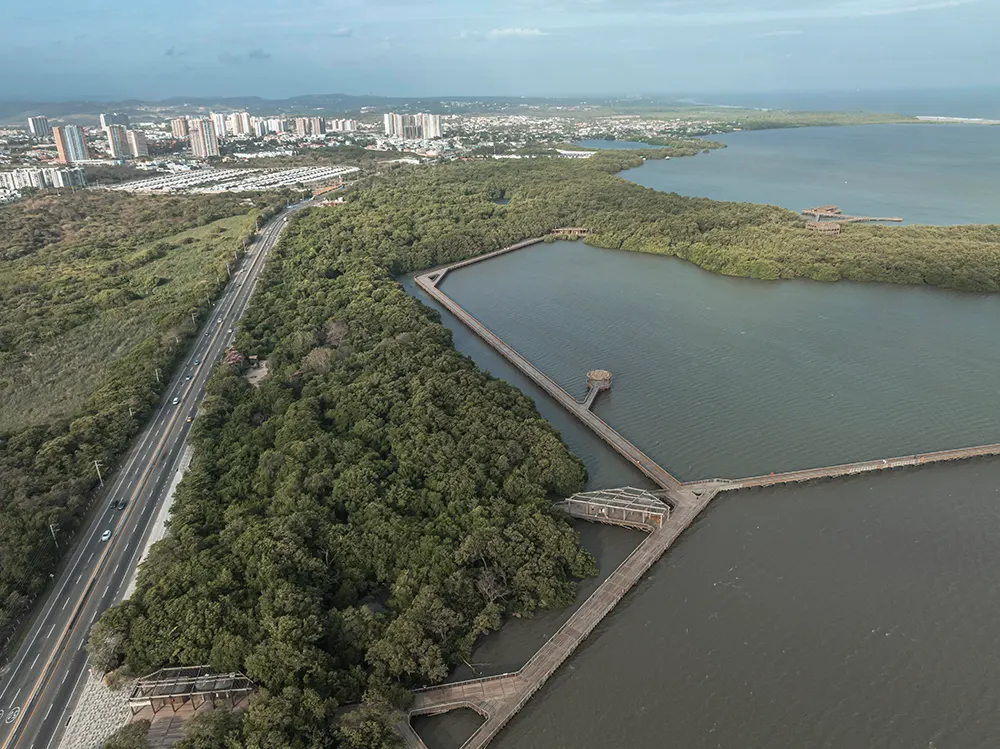
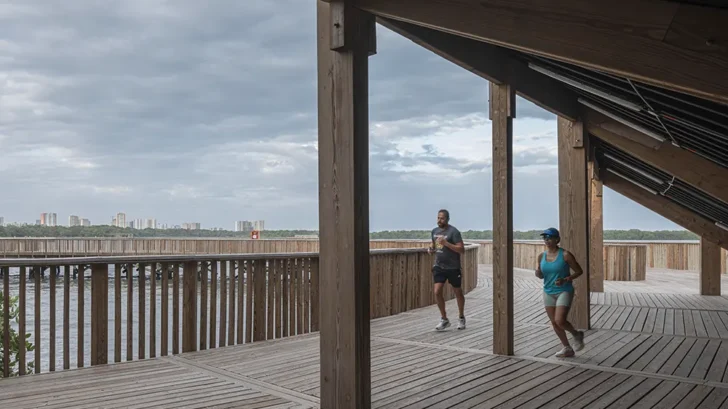
The elevated routes open areas that many visitors could not access before. They turn the mangrove into a place for learning, observation and environmental awareness. Observation platforms create points for ecosystem interpretation and support scientific, educational and recreational activities. Visitors move through the wetland with a clearer understanding of its value and fragility.
The project organizes use through different districts. Its first phase develops two main areas: the Contemplation District and the Family District. The Contemplation District focuses on biodiversity observation and environmental education. The Family District supports recreation and social gathering, helping local communities build a stronger connection with the wetland.
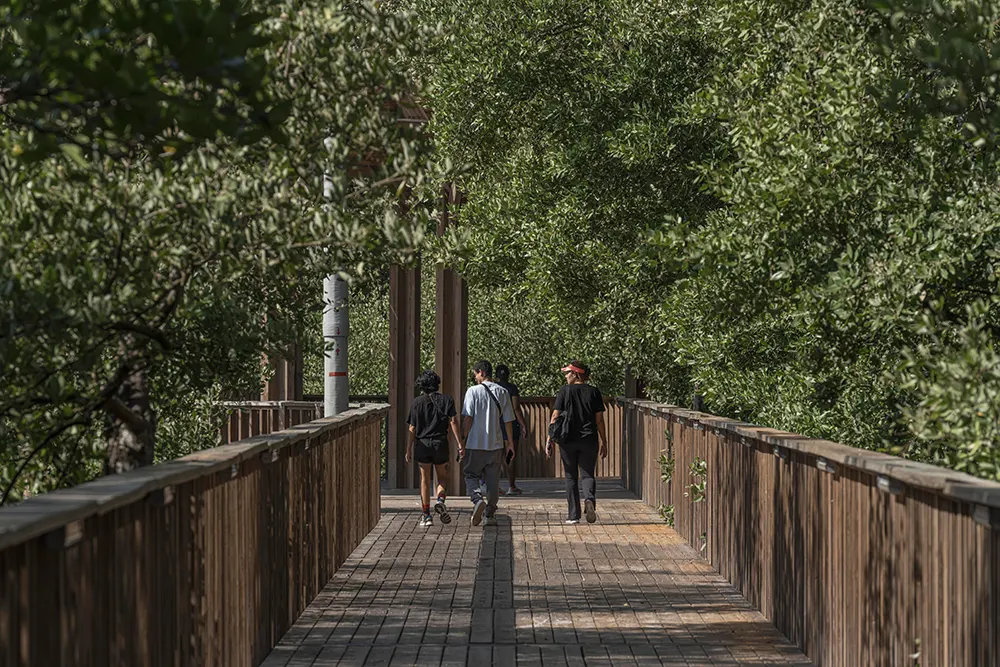
The ecopark also recognizes existing local practices, including artisanal fishing. This traditional activity forms part of the wetland’s cultural identity, and the project incorporates it into the spatial structure. The design supports coexistence between conservation, community use and local development.
Vegetation, public space and ecological restoration strategies shape the transition between city and ecosystem. These elements connect urban experience with environmental resilience and soften the boundary between built areas and natural systems. The project works as an open and flexible system that can evolve over time.
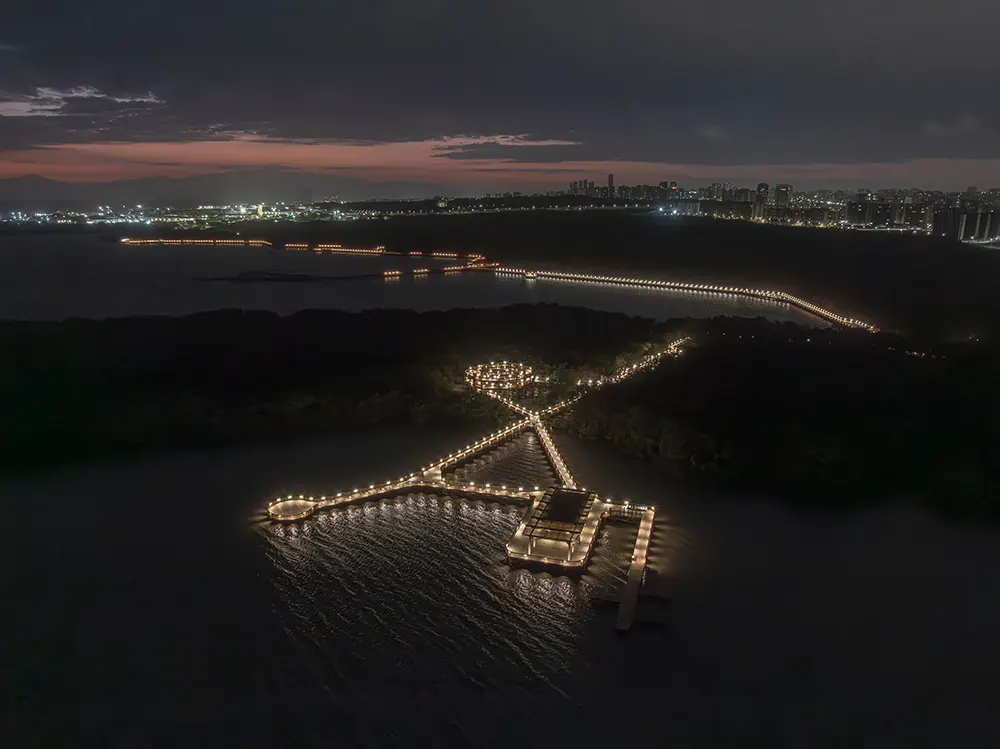
Ciénaga de Mallorquín Ecopark proposes a model for vulnerable coastal territories. It uses public space as a mediator between urban and ecological systems and shows how architecture, urbanism and ecology can support strategic ecosystem recovery.
The project received major international recognition, including the 2025 AIA International Honor Award for Urban Design, the 2025 AIA International Sustainable Future Award for Urban Design, the 2025 Dedalo Minosse OCCAM Under 40 Award and the Architizer A+ Awards 2026 Winner distinction.
Location: Barranquilla, Colombia
Area: 61,834 m²
Year: 2022
Design: DEB ARCHITECTURE and EL EQUIPO MAZZANTI
Project Director: Francisco Ricardo Marino
Client: Puerta de Oro Barranquilla
President and Project Structurer: Ricardo Vives
Team: Luis Guillermo Barrera, Jorge Robledo Manco, Natalia Gamez, Jose Daniel Rosado, Juan Sebastian Perez