
Set within a low-rise residential neighbourhood in Toronto, Montrose Sixplex by Gabriel Fain Architects examines how increased density can operate within an existing urban fabric without disruption. The project spans two lots and introduces six rental units through a carefully structured composition of semi-detached buildings. Two multiplexes face the street, while two laneway houses extend the development toward Bickford Park, establishing a continuous relationship between built form and surrounding landscape.
RESIDENTIAL
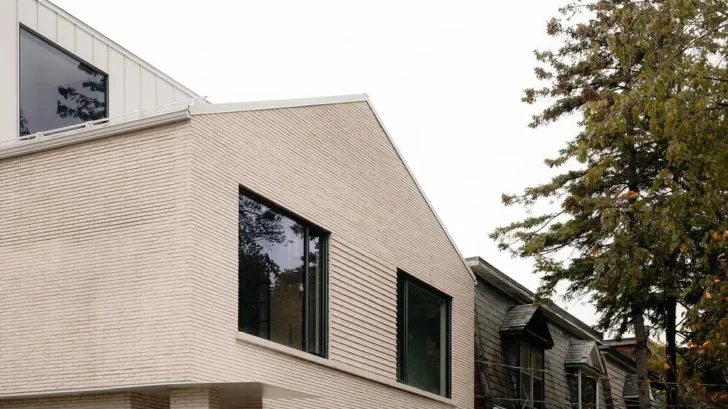
The street-facing buildings adopt a single gabled volume, aligning with the scale and rhythm of adjacent houses. This gesture anchors the project within its context while allowing the roof form to absorb additional program. The pitched profile works as a spatial device, balancing familiar proportions with a more complex internal organization. Through this approach, density becomes embedded within a recognizable silhouette, avoiding visual excess or fragmentation.
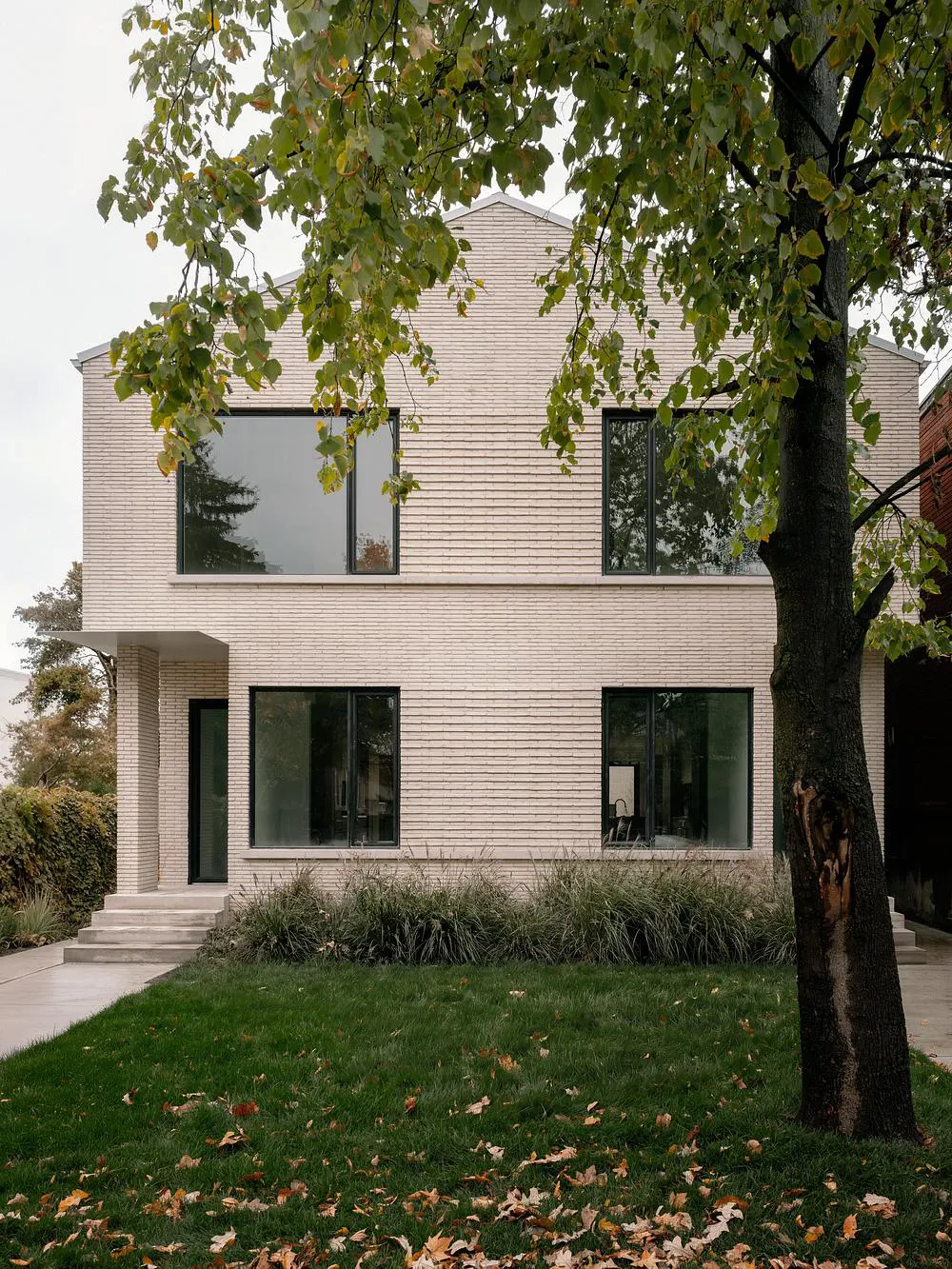
Material choices reinforce this sense of continuity. Belgian buff brick defines the primary elevations, giving the façades weight and consistency across the site. Window openings follow a strict proportional logic, detailed with limestone sills that introduce precision at key junctions. Between these openings, patterned brickwork creates a controlled variation of depth and shadow. Entrances remain legible without exaggeration, supporting a quiet, residential presence along the street.
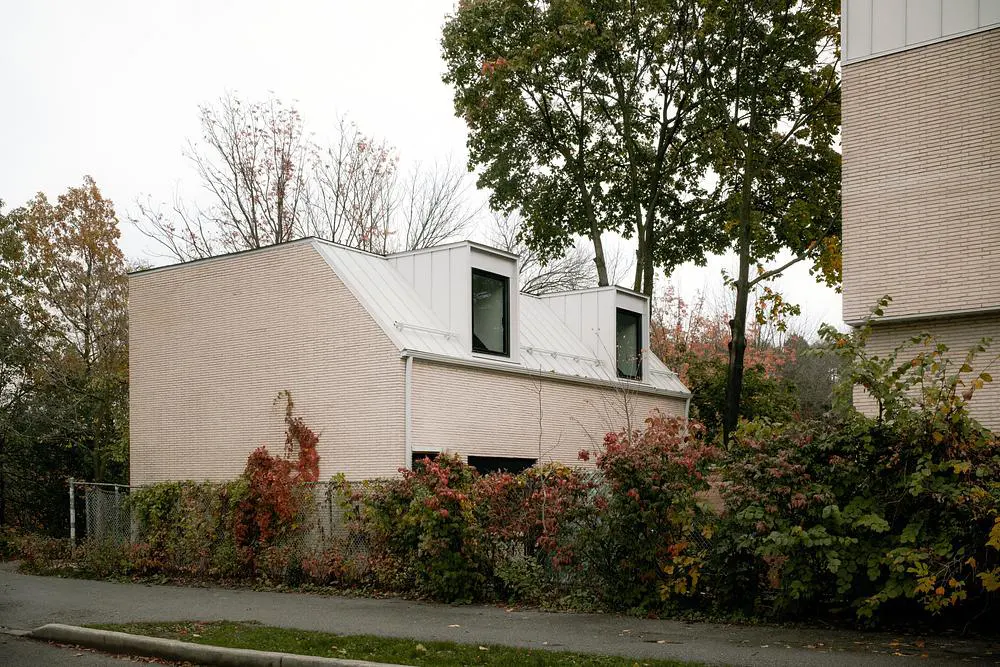
At the rear, the laneway houses extend the architectural language without reducing it to a secondary condition. Their scale adjusts to the constraints of the site, yet their proportions and massing align with the front buildings. This decision allows the entire project to read as a unified ensemble. Orientation toward the laneway shifts its role from service corridor to shared frontage, connecting directly to the park and encouraging a different spatial hierarchy within the block.
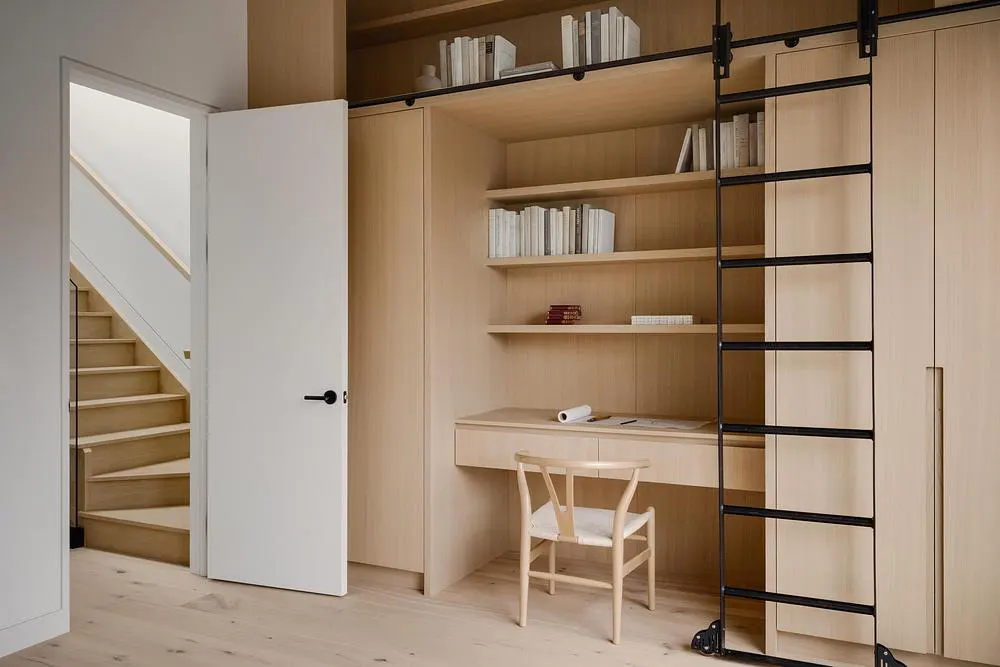
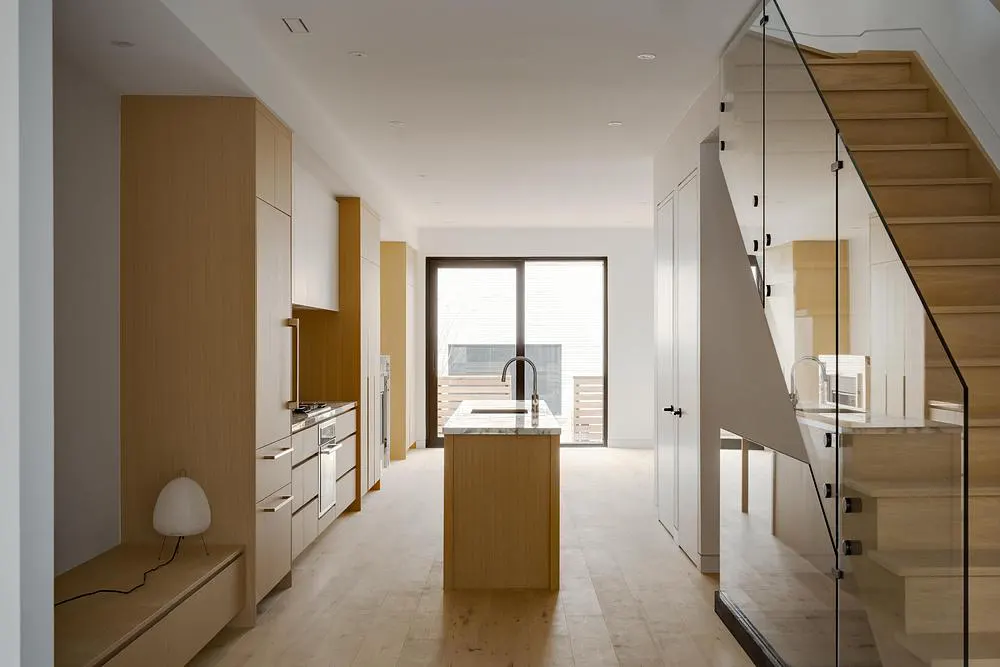
Inside, the collaboration with Unison Group introduces a restrained material palette centered on light oak flooring and full-height millwork. The interiors rely on proportion, light, and continuity to define space. Floor-to-ceiling sliding doors open the main living areas toward outdoor terraces, extending the interior without interruption. A central staircase enclosed in glass establishes a vertical axis, maintaining visual connection across levels.
The second floor takes full advantage of the gabled volume. Here, the roof form translates into a double-height library that anchors the interior with a clear spatial identity. Custom shelving rises along the walls, accessed by a rolling ladder, while an integrated desk positions the room as both workspace and retreat. This space transforms the exterior profile into a lived experience, where form directly shapes daily use.
Montrose Sixplex operates within Toronto’s evolving zoning framework, which now allows greater density in low-rise neighbourhoods. The project treats these regulatory shifts as an opportunity to test architectural precision. It demonstrates how incremental density can emerge through alignment, proportion, and material continuity, offering a model that expands housing capacity while maintaining the coherence of the residential street.