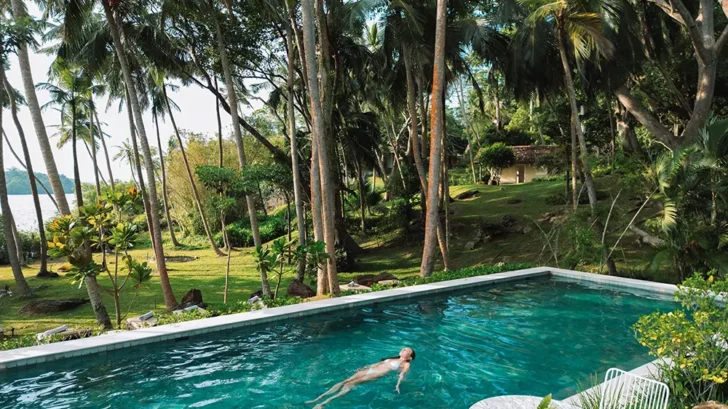

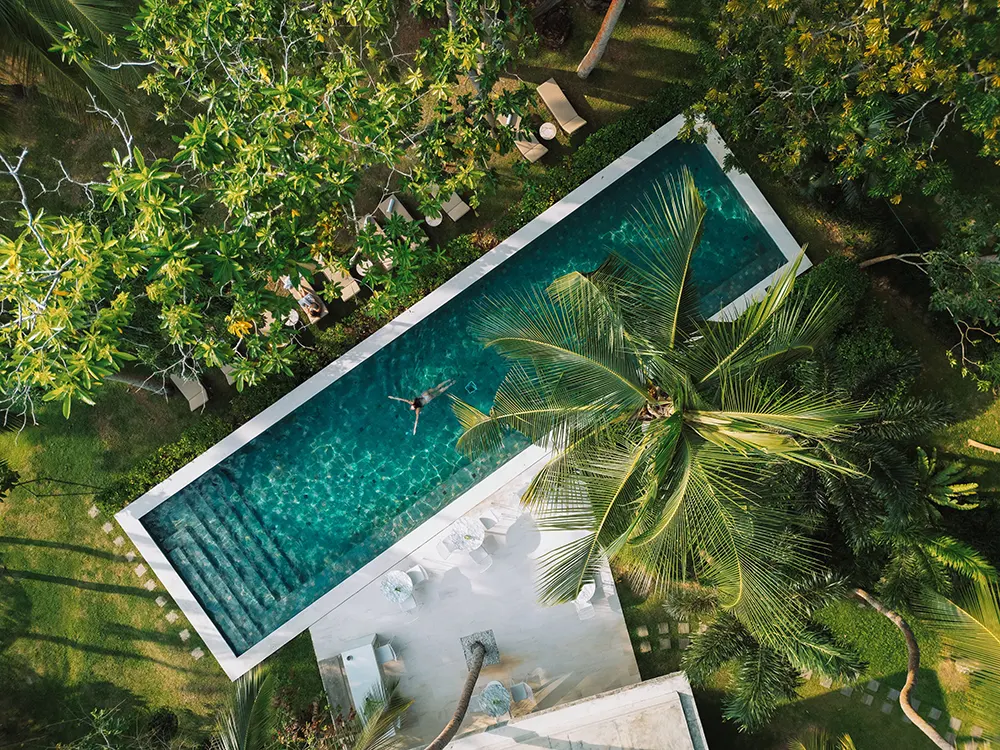
Kurulu Bay sits on a 3.5-acre site beside Koggala Lake in Sri Lanka, where A00 Architecture shapes a boutique resort around vegetation, airflow, filtered daylight, and layered views. The One Michelin Key property approaches architecture with restraint, allowing the site’s trees, slope, and climate to guide the placement and scale of each building.
HOTELS
The triangular terrain descends gradually from its inland point toward the lake, with mature trees defining much of the site. An existing villa and two guest rooms already occupied the middle of the terrain, giving the architects a set of fixed points to work around. A00 Architecture avoided a single dominant gesture and instead placed new structures between these existing anchors. Buildings follow the slope, circulation traces the natural descent, and sightlines open through foliage, creating a resort that expands the site’s existing spatial order.
Kurulu Bay uses three building typologies, each shaped by a different condition. The Tree Houses occupy the steepest parts of the site and rise lightly above the ground to reduce contact with the terrain. Their interiors align with the tree canopy, creating privacy through distance, height, and vegetation. The forest acts as both edge and filter, placing guests close to the surrounding ecology while keeping each unit protected.
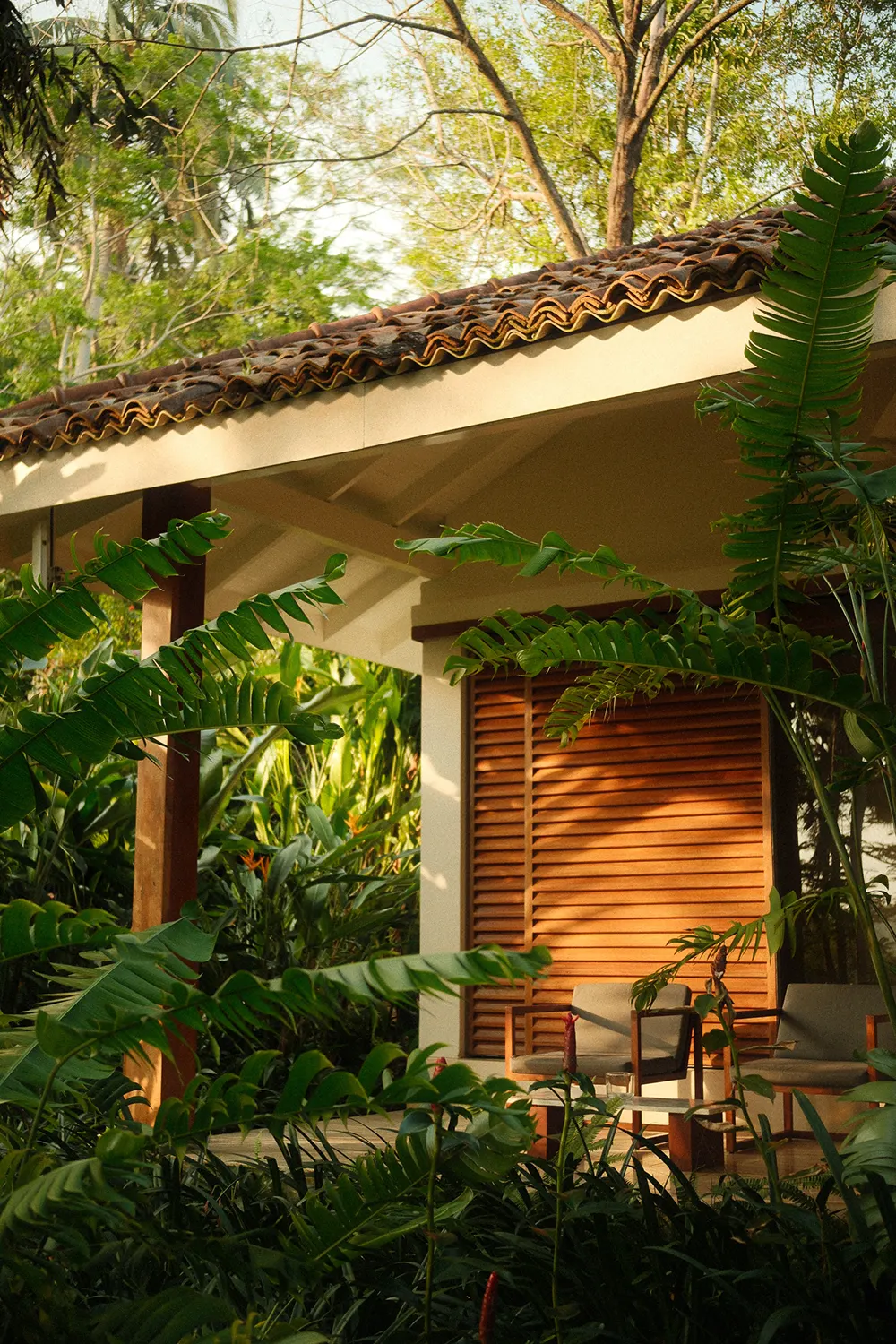
The Cottages take cues from the original buildings on the property, using familiar proportions, sloped roofs, and verandas to support a slower rhythm of daily life. Their architecture draws from local climatic traditions, connecting shaded interiors with open-air spaces. The Garden Suites offer the most articulated architectural response. A series of stepped volumes follows the slope, while courtyards, voids, and planted gaps reduce visual mass. These suites read as a sequence of spaces embedded in the terrain, shaped through movement, light, and vegetation.
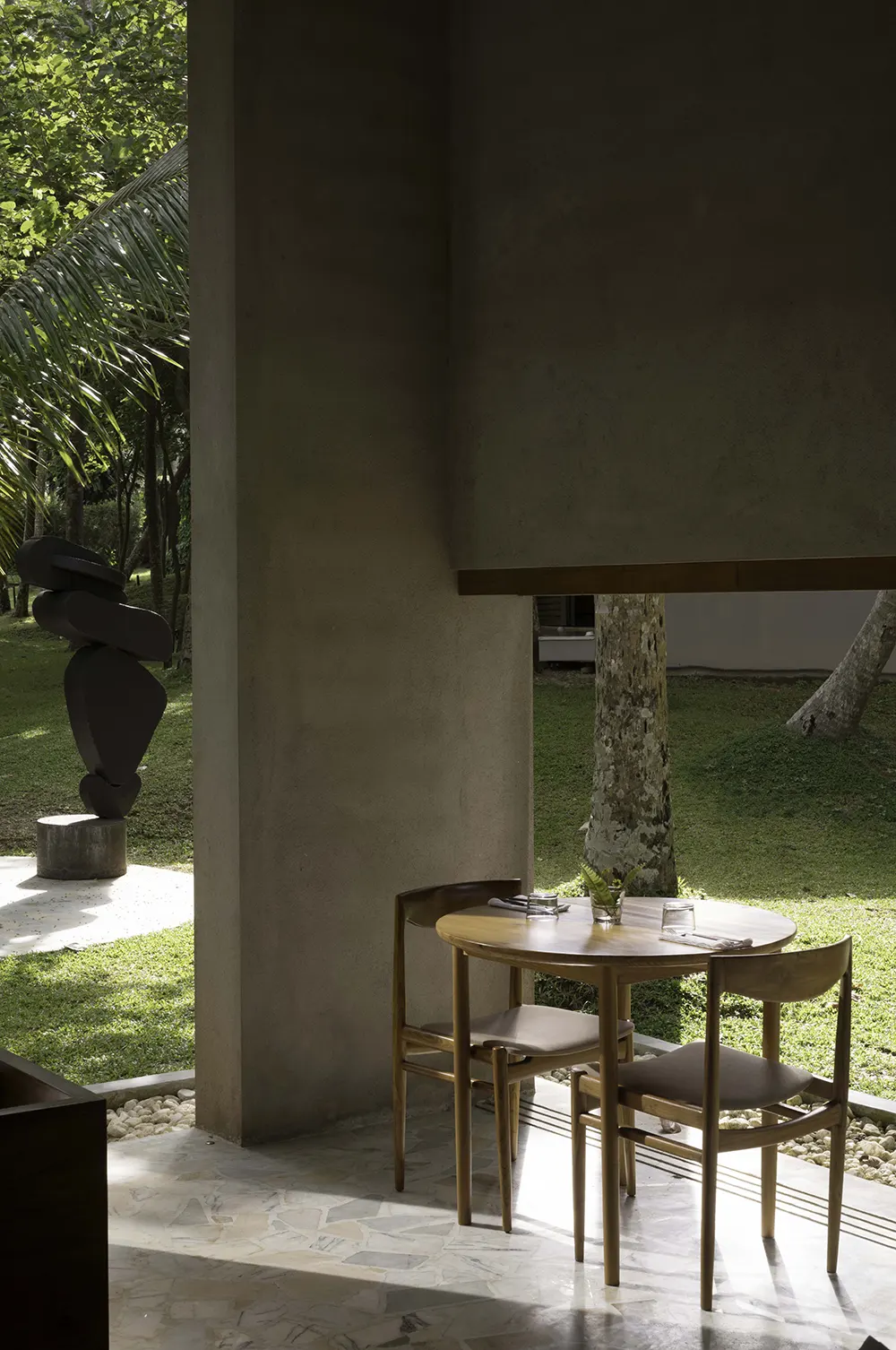
The resort places its restaurant and swimming pool closest to Koggala Lake. Their position follows environmental logic, taking advantage of breezes, sunlight, and proximity to water. These shared areas become social anchors without creating a rigid hierarchy across the site. The masterplan keeps the resort dispersed, allowing collective spaces and private retreats to exist with equal importance. Guests move between openness and seclusion through a plan built around choice.
A00 Architecture treats nature at Kurulu Bay as something carefully framed. Sliding timber louvre systems allow rooms to shift between enclosure and openness throughout the day. When closed, the buildings offer shade, privacy, and shelter. When opened, they extend views through layers of trees toward the lake. The architecture creates adjustable conditions, allowing guests to respond to light, air, and weather directly.
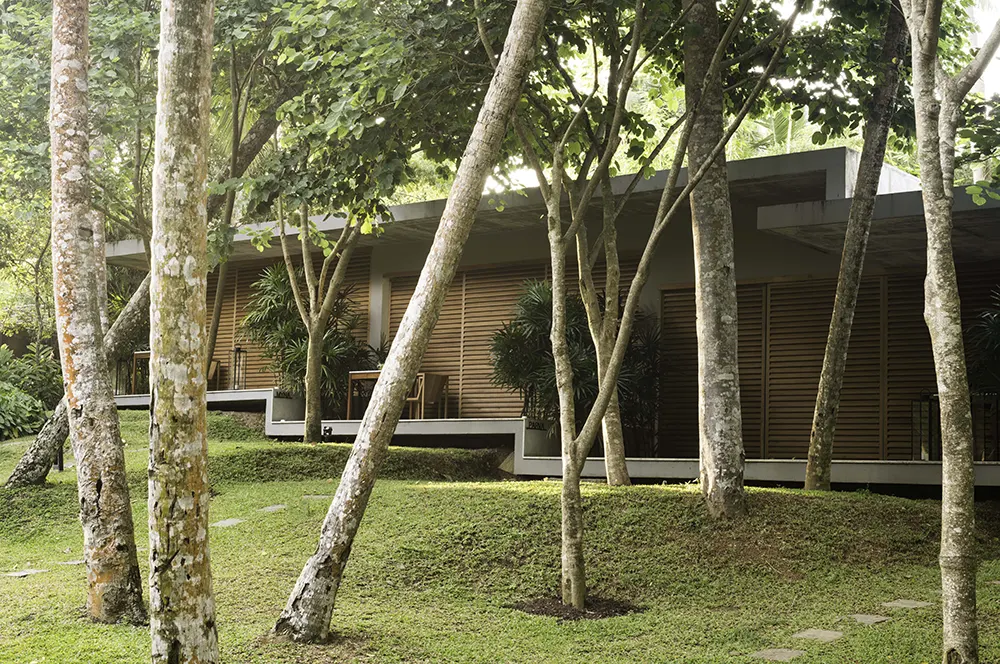
Material choices support this quiet approach. Natural timber, exposed structures, and a muted palette define the resort’s atmosphere, while decorative excess gives way to texture and touch. Materials carry the possibility of weathering, adding depth as the buildings age. Local craftsmen produced all custom furniture, strengthening the connection between construction, use, and regional skill. The Durian wood louvre system brings this approach into focus, pairing traditional woodworking with contemporary steel structures.
Kurulu Bay avoids spectacle in favor of precision. A00 Architecture creates a resort where buildings support occupation without overpowering the site. Architecture works as a framework for climate, vegetation, and time, allowing the experience of the place to lead.