
tissellistudioarchitetti transforms an abandoned ruin into Casa nel Borgo, a second home for a family of art collectors in one of Italy’s most beautiful villages. Set on a hill with the sea visible on the horizon, the house occupies a place where rural quiet meets the character of a historic village. The project starts from a precise domestic desire: to create a place of return, rest, and inspiration, shaped by art, family life, and the surrounding landscape.
HOUSING
The clients bring different cultural references into the project. She comes from New York, with a sensitivity for contemporary lines and a cosmopolitan outlook. He has a strong connection to Italian culture and wanted the house to retain a relationship with its past. Their daughter, a young classical dancer studying at the Ballet School of Teatro alla Scala in Milan, also sits at the emotional center of the project. The house needed to work as a second home, yet the design avoids the usual idea of a countryside retreat. Instead, tissellistudioarchitetti creates a space that feels calm, open, and prepared to receive daily life, objects, and art with equal attention.
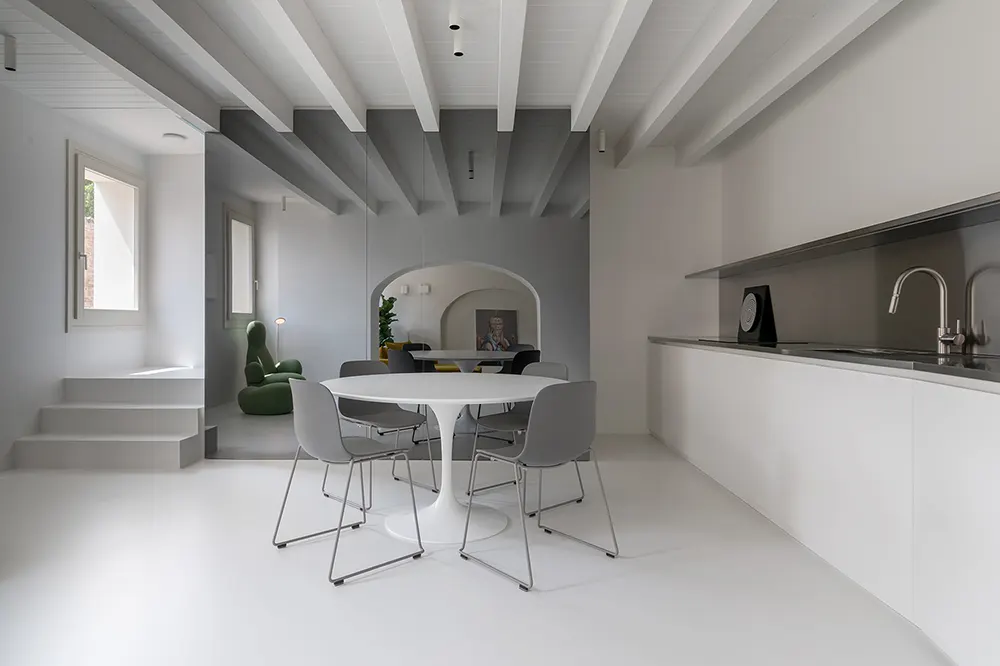
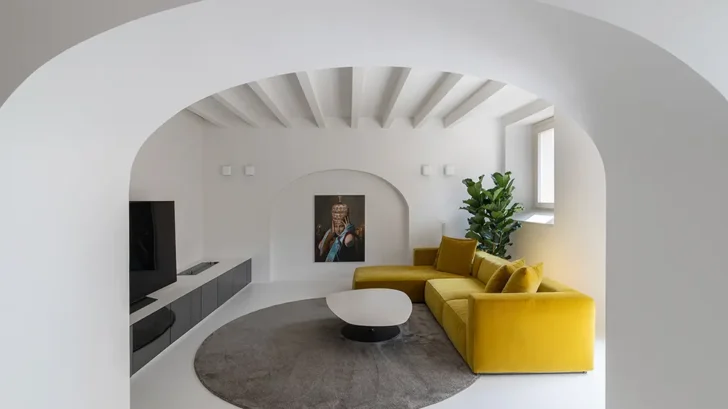
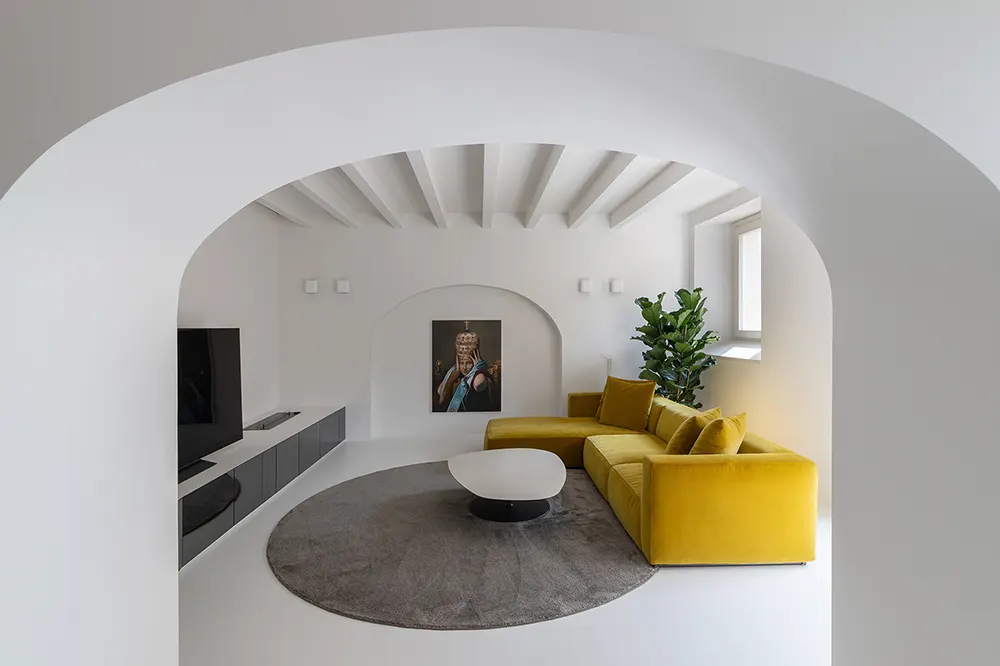
The main architectural gesture comes through the treatment of surfaces. White resin covers floors, walls, and ceilings, turning the entire house into a continuous visual field. This decision gives the interiors a strong sense of unity, while enhancing the natural light that enters the rooms. The resin also introduces an important point about material choice. It offers accessibility without reducing the project’s spatial quality, showing how a precise design decision can create impact through control, proportion, and consistency. The house becomes a kind of canvas, where architecture steps back enough to let furniture, artworks, and family rituals take their place.
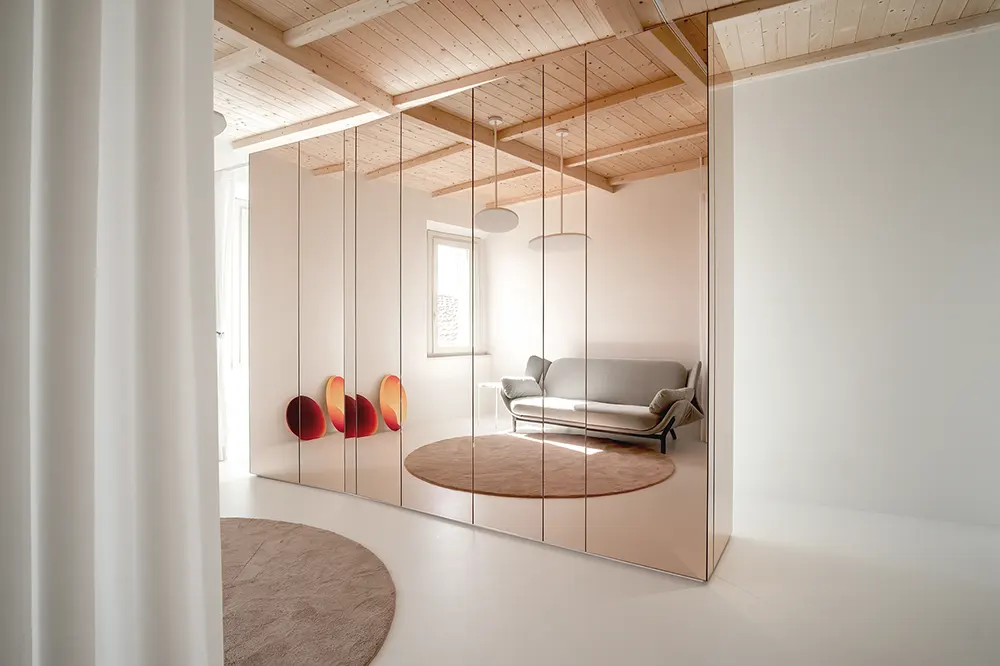
Against this white field, the custom-made furniture introduces color and reflection. tissellistudioarchitetti designs these elements as active parts of the interior composition, with many pieces featuring colored mirror surfaces. Their reflective quality shifts the perception of each room, bringing movement, depth, and changing tones into the restrained architecture. Tables and chairs follow the same careful approach, selected to match the character of the house and the personality of the owners. The result gives the interiors a refined rhythm, where each object has a role without overwhelming the spatial clarity.
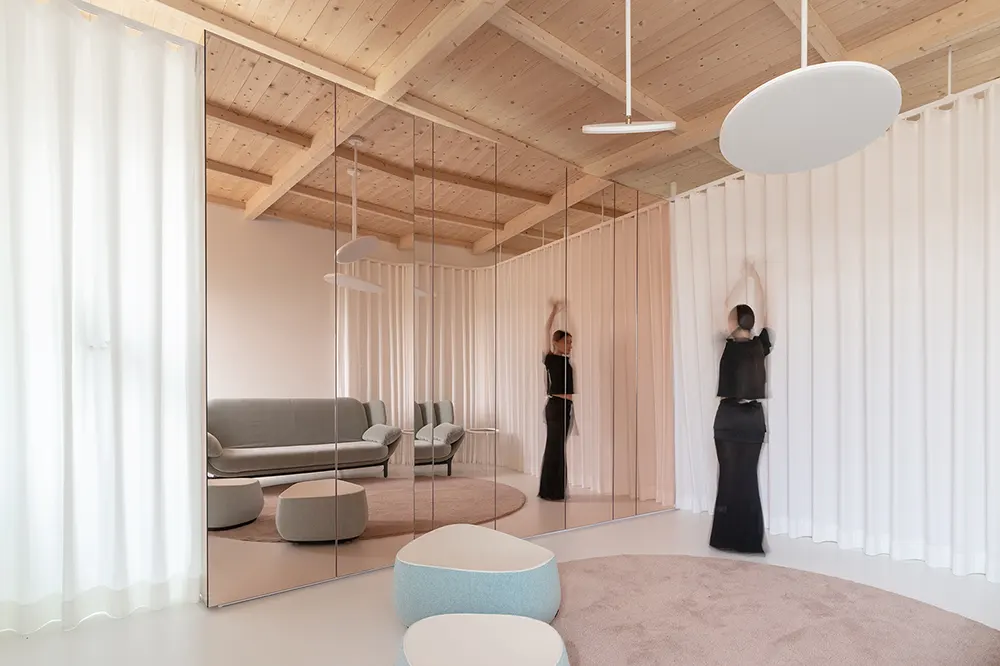
The house develops across two floors, each with direct access. Four volumes organize the plan, with two volumes on each level. The ground floor holds the living area, conceived as an open and social space for family time, guests, conversation, and relaxation. The upper floor contains the sleeping area, where the daughter’s room receives a flexible design. A gathered curtain can separate it from the corridor, allowing the room to shift between openness and privacy depending on use. This small gesture gives the project a human scale, showing how domestic architecture can respond to changing needs without heavy interventions.
Casa nel Borgo also works through contrast. The original ruin carries memory, while the new interiors bring precision and lightness. The historic setting gives the house its sense of place, while the white resin and colored mirror surfaces introduce a contemporary language. Art plays an important role, though the project treats it as part of daily life instead of an untouchable display. The owners’ collection enters the rooms naturally, supported by surfaces that frame the works and by furniture that adds its own visual force.
Through this restoration, tissellistudioarchitetti creates a house that preserves the emotional value of its setting while giving the family a clear and flexible interior life. Casa nel Borgo respects the traces of the past, yet it avoids nostalgia. Its strength lies in the way it holds landscape, art, memory, and family within one coherent spatial idea. What began as an abandoned ruin now functions as a bright domestic retreat, shaped by sensitive restoration and a direct understanding of how people live with beauty every day.