
Ramsgate House by Common Office responds to Bondi Beach with a precise architectural idea: a private family home that still belongs to one of Sydney’s most public coastal settings. Located on Ramsgate Avenue, the four-storey residence sits close to one of Australia’s most visited beaches, where the pressure of tourism, street life, climate, and domestic privacy all meet. The brief called for a permanent home for a young family, rooted in Bondi while offering retreat from its constant movement.
HOUSING
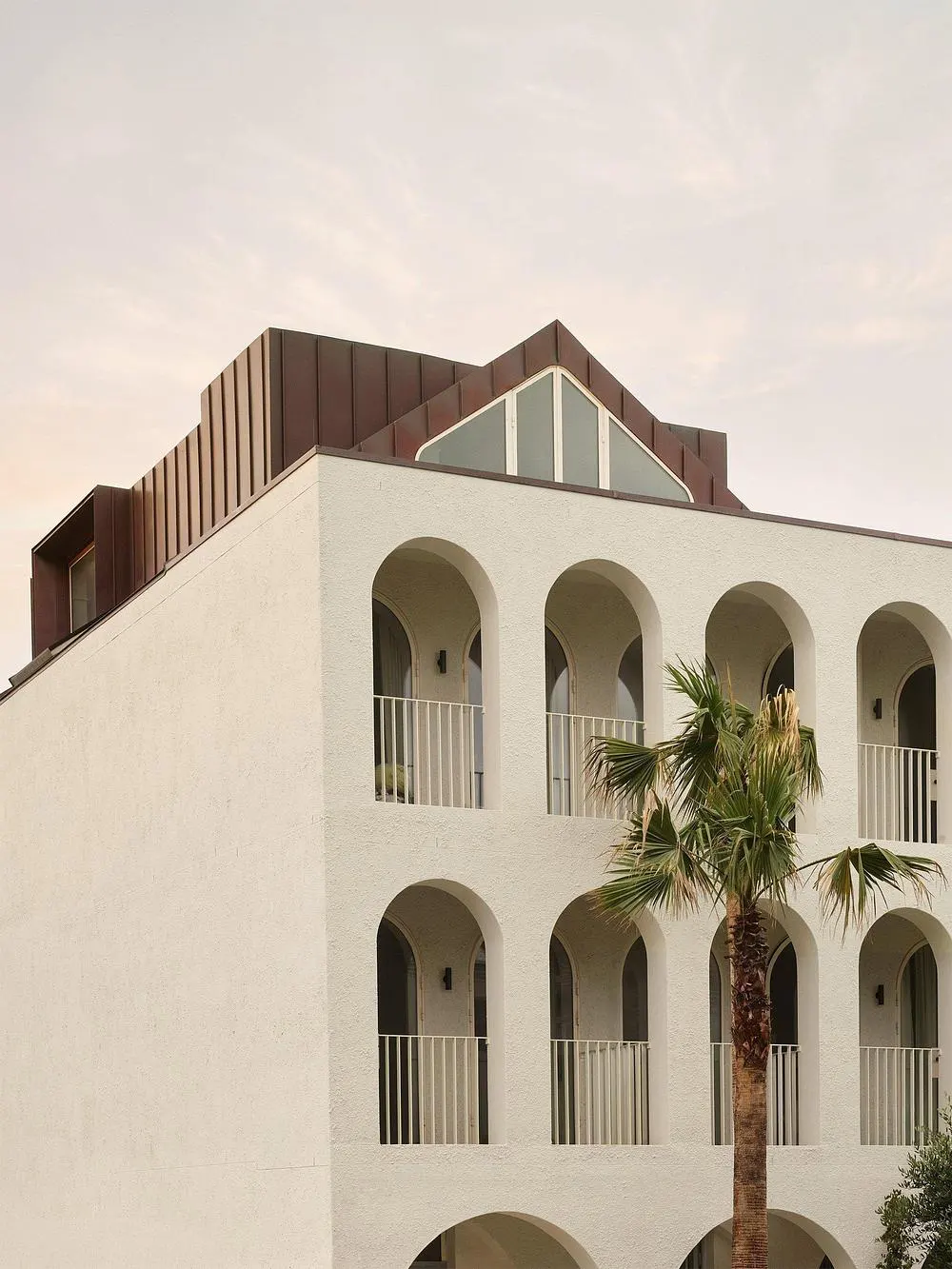
Common Office approaches that tension through the loggia, treating it as both a formal reference and a spatial tool. The project draws from the long architectural history of the loggia, from classical antiquity to modernism, while also looking toward the Palazzo della Civiltà Italiana. Across the primary facade, a series of arches creates a thickened threshold between the street and the rooms within. This move gives the house its public face, yet it also protects the life inside.
The facade carries the strongest architectural argument. Built from traditional double brick, and in some areas triple-skin brick, the arches operate as load-bearing masonry elements. They do more than decorate the elevation. They hold structure, shape shadow, filter views, and give the house depth at the edge of the street. Common Office worked through a complex approval process with council, including detailed discussions around the number and rhythm of the arches, since the facade had to contribute clearly to the local streetscape.
The practice describes the house as sitting “somewhere between Bondi and Miami,” with street-facing ornament pared back into an Art Deco language. That position gives the project its character. Ramsgate House feels coastal, yet it avoids the easy cues often attached to beach houses. It uses mass, shade, and proportion to create a cooler form of luxury, one grounded in material presence and spatial control.
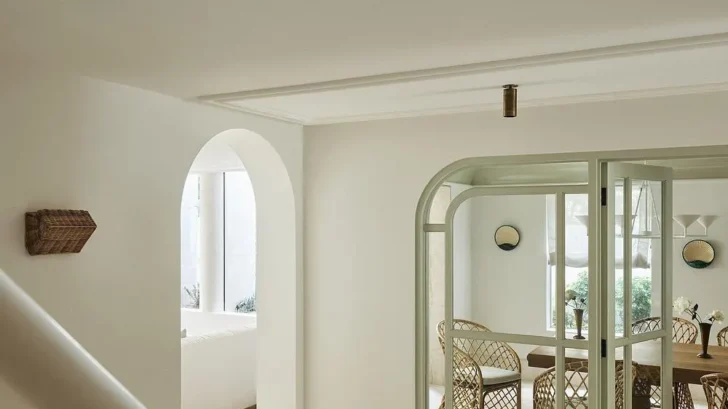
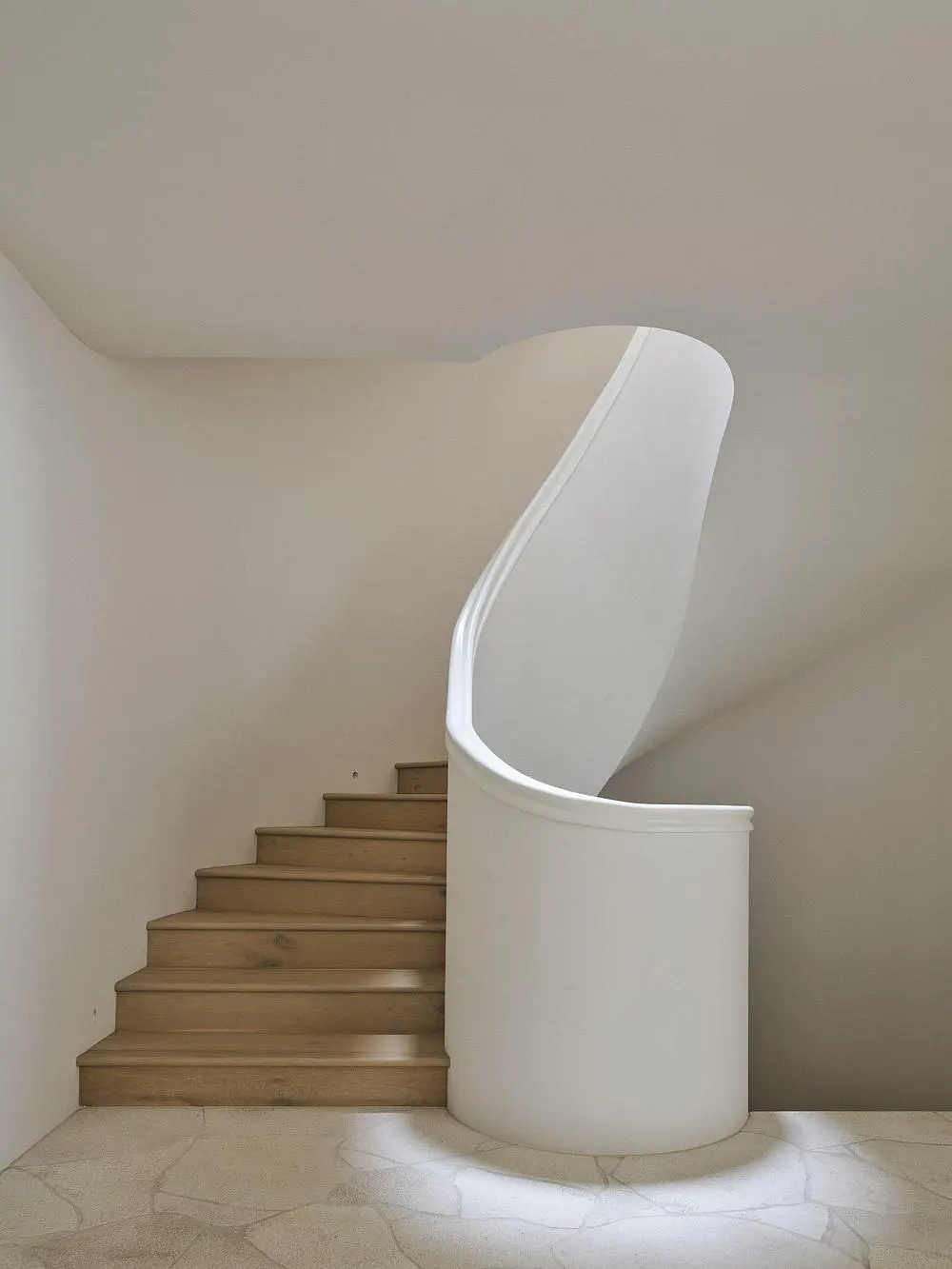
Inside, the arch becomes movement. Its curved geometry continues through a sinuous four-storey stairwell that pulls natural light deep into the plan. This vertical sequence gives the house a strong internal rhythm, connecting levels through light, curvature, and changing views. At the upper level, the stair culminates in a copper-clad pavilion designed for gathering and entertaining. From there, the house opens toward elevated eastern views of the beach and ocean, while the copper surface will shift in tone and texture over time.
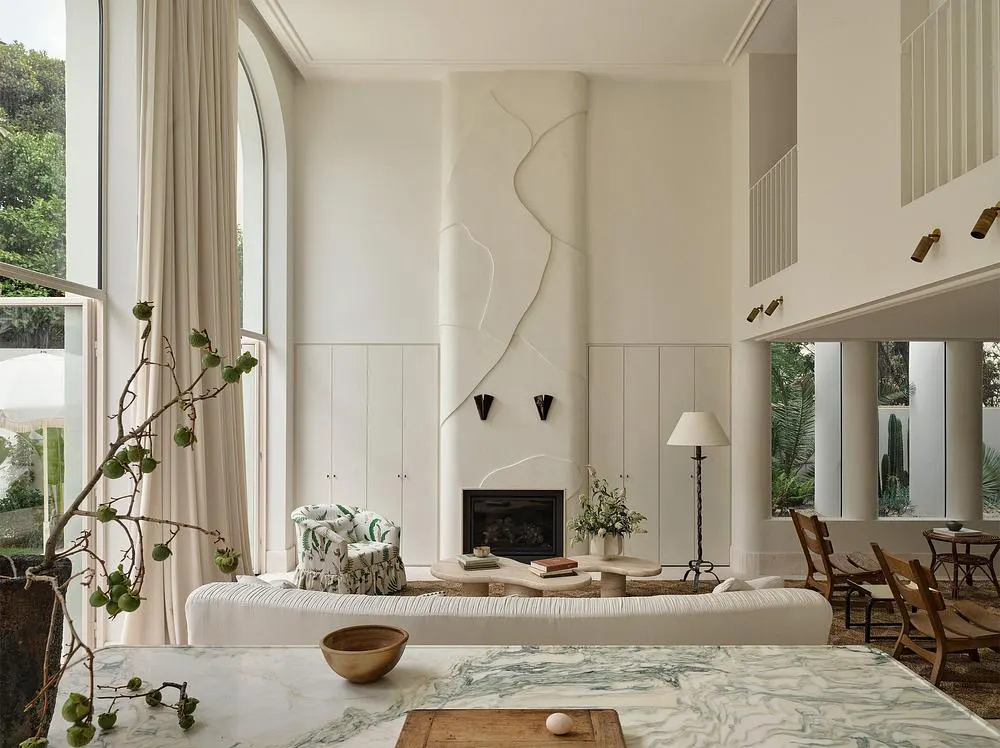
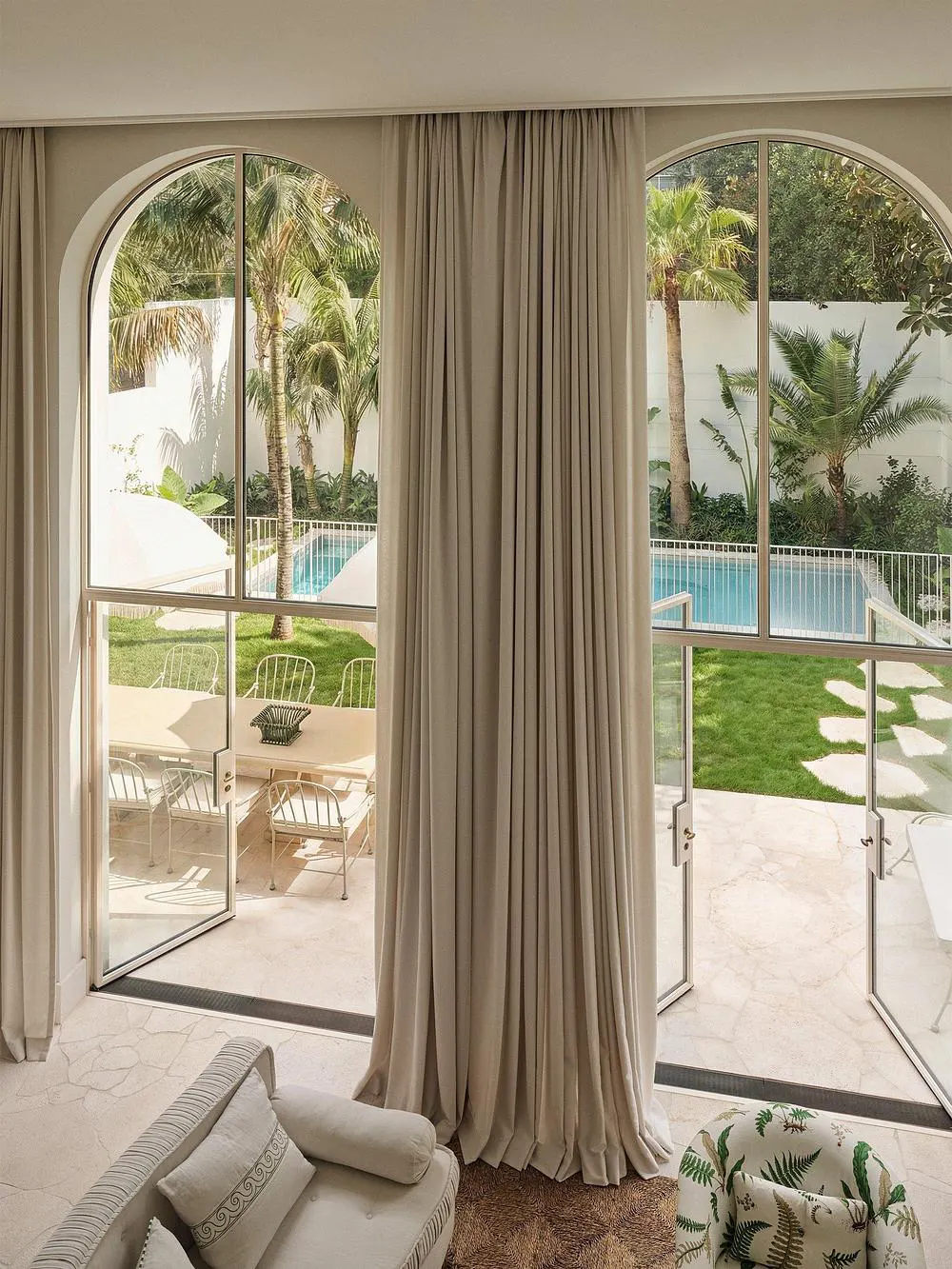
At the rear, the arched language returns through a stucco facade framing articulated steel windows. This side of the house opens toward a pool and garden, with northern light entering a double-height living area. Native planting by Myles Baldwin Design supports the local ecological context and gives the garden a quieter relationship to the coastal site. The rear sequence softens the mass of the house while keeping the same architectural vocabulary intact.
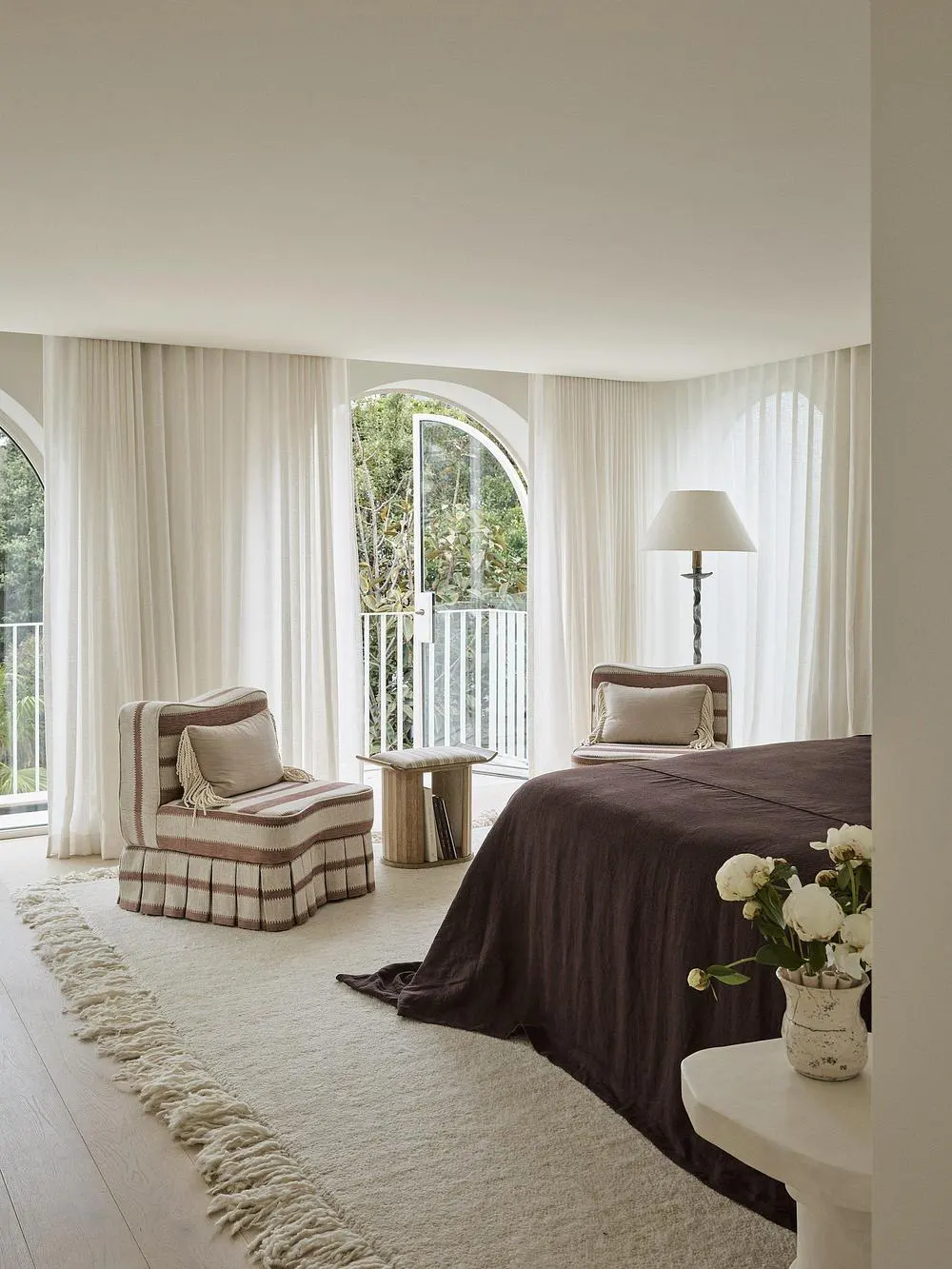
The interiors, developed with Handelsman + Khaw, extend the architecture’s atmospheric qualities through muted, sun-washed finishes. The palette responds to the coastal climate with surfaces selected for durability and calm. Instead of competing with the arches, the interior work amplifies the sense of shade, light, and material depth. Kitchen, bathroom, living, and terrace spaces all follow the same logic of restraint, allowing the house to feel composed across its four levels.
Ramsgate House also works through passive environmental strategies. Deep reveals and thickened thresholds reduce solar gain, while the spatial arrangement encourages natural light and ventilation. These strategies appear through the architecture itself, not as separate gestures. The loggia offers shade, privacy, and climatic performance in one move, giving the project a clear relationship between form and use.
Completed in December 2025, Ramsgate House shows how a coastal residence can engage a highly visible site without surrendering its intimacy. Common Office creates a home that uses masonry, arches, and light to negotiate between street and retreat. In Bondi, where public energy defines daily life, the project finds its strength in thickness, shadow, and carefully controlled openness.