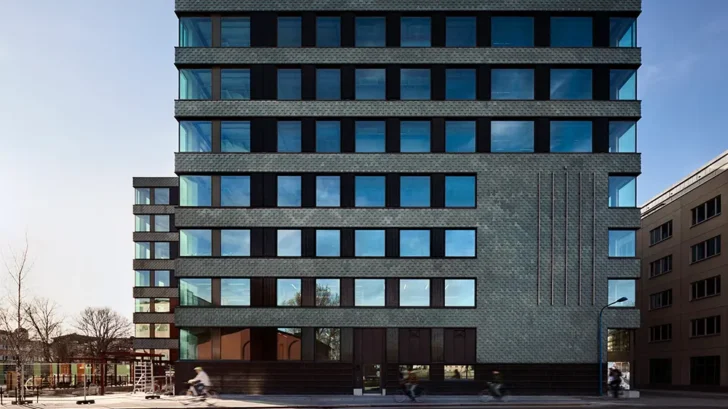

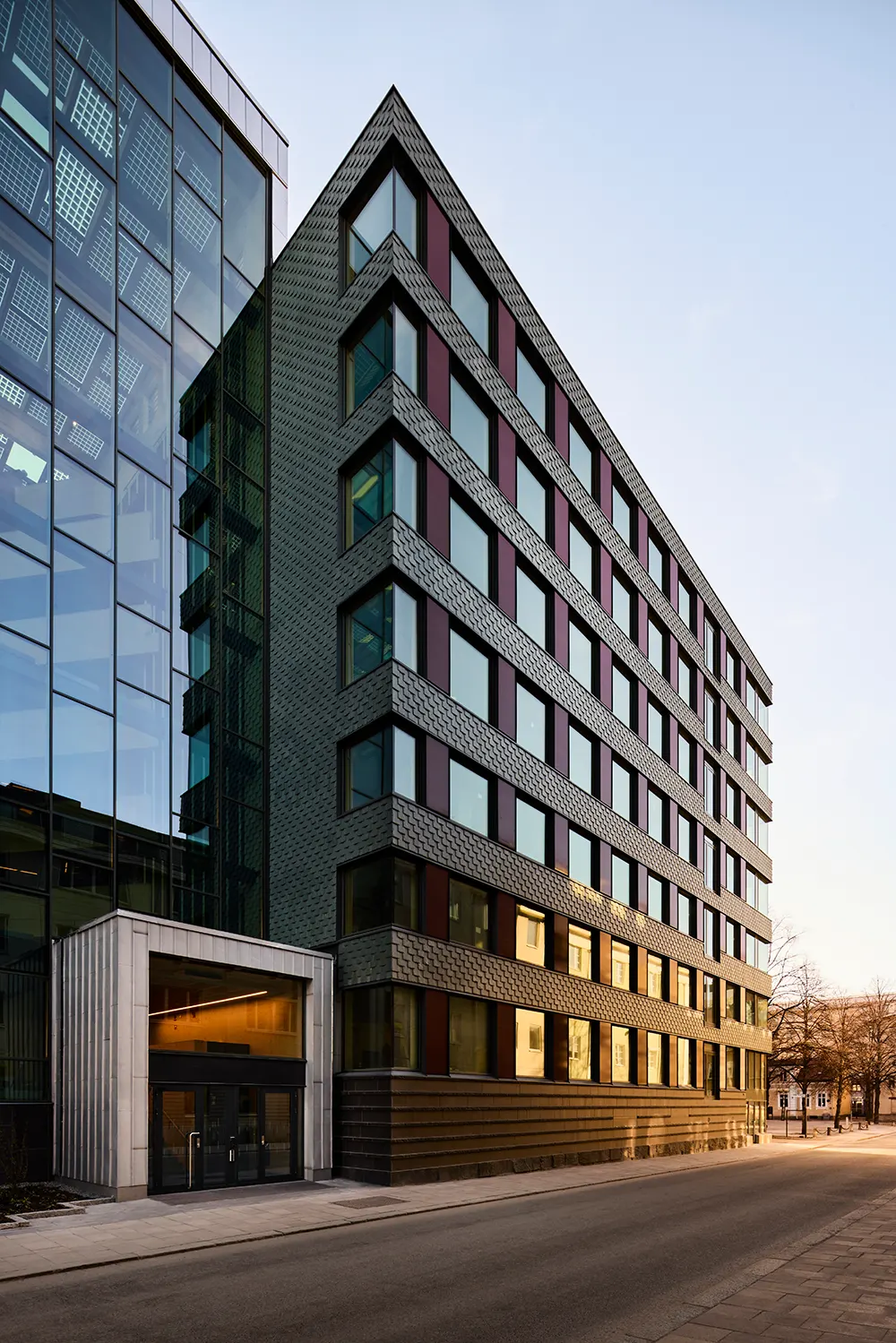
White Arkitekter presents Lumi, a 22,000 sqm life sciences building that sets a new benchmark for circular design in Sweden. The project transforms the former headquarters of the Swedish Food Agency in Uppsala into a contemporary workplace with offices, laboratories, and restaurants. Designed for Vasakronan, Lumi stands as the world’s highest-rated LEED office building, achieving 99 out of 110 points under LEED v4 BD+C Core and Shell. The project cuts climate impact to nearly half that of a comparable timber-frame building, showing the potential of large-scale reuse in meeting both environmental goals and market needs.
OFFICES
The building originally faced demolition. White Arkitekter took a different direction and preserved 80 percent of the existing concrete structure and foundation. This approach avoided the heavy emissions typically associated with new construction while supporting the addition of three new floors above the original frame. The project aligns with the studio’s target of carbon neutrality by 2030 and demonstrates how architectural strategies can significantly reduce material consumption.
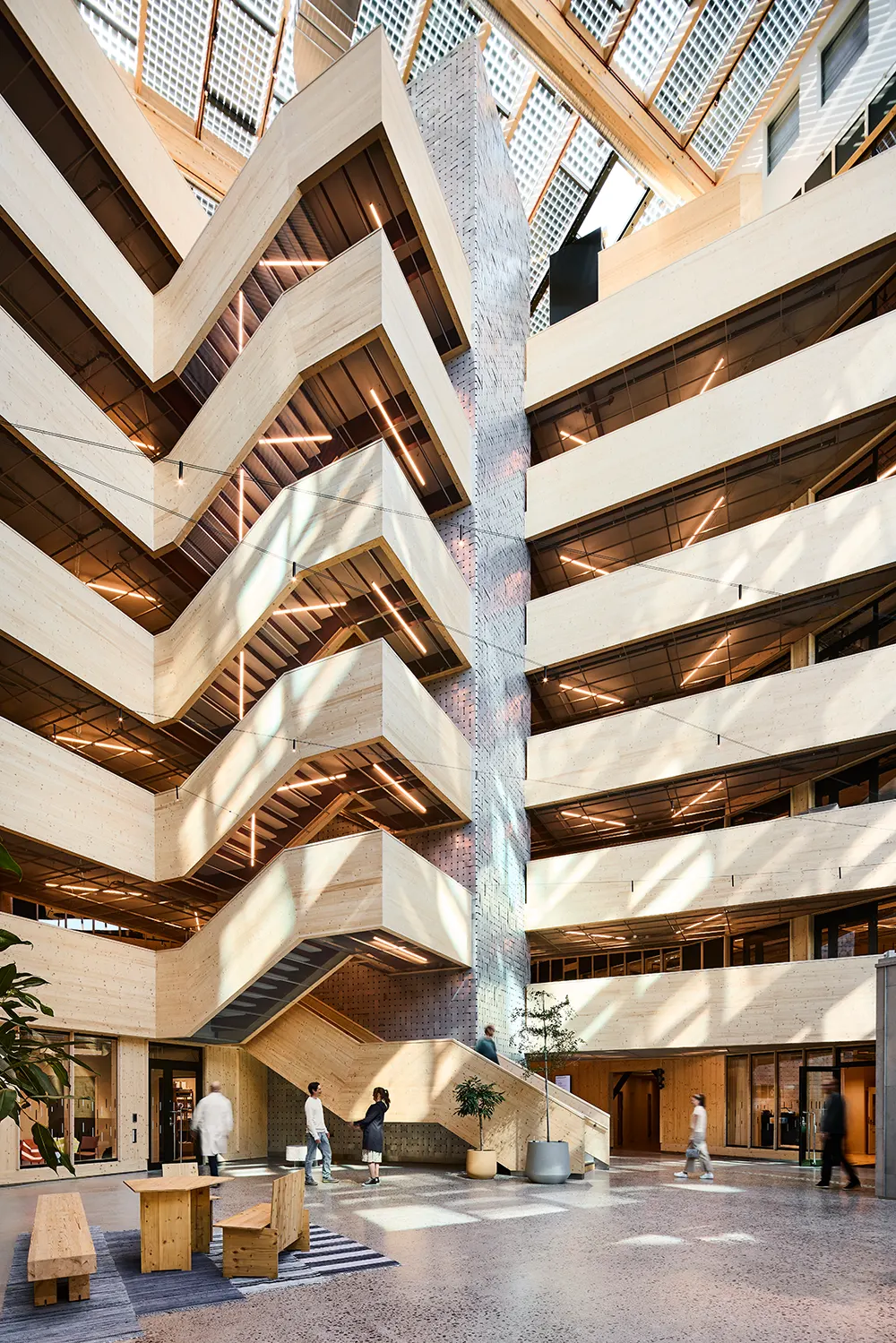
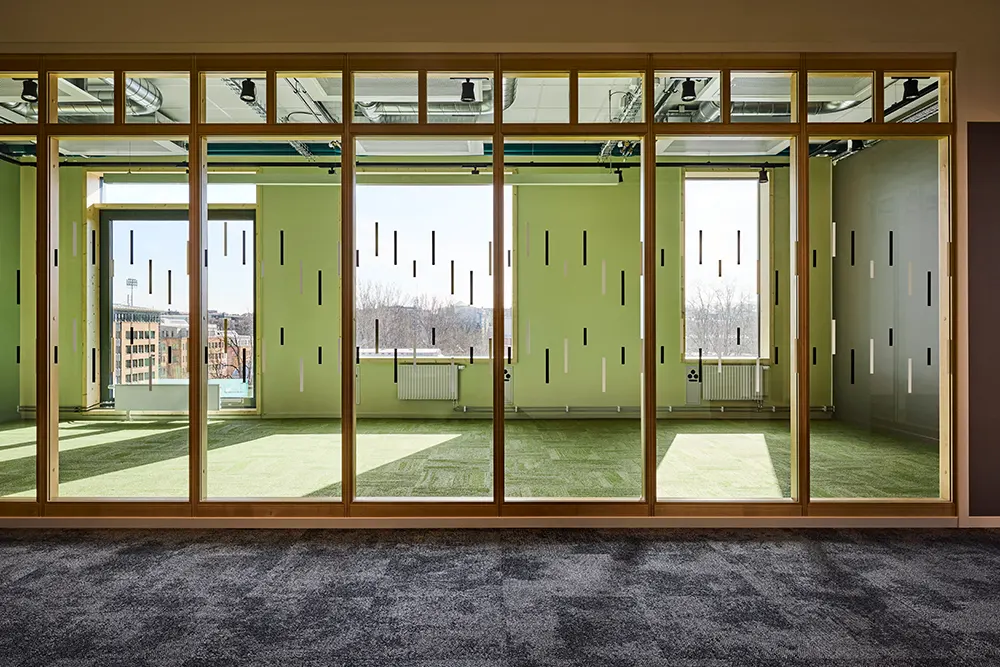
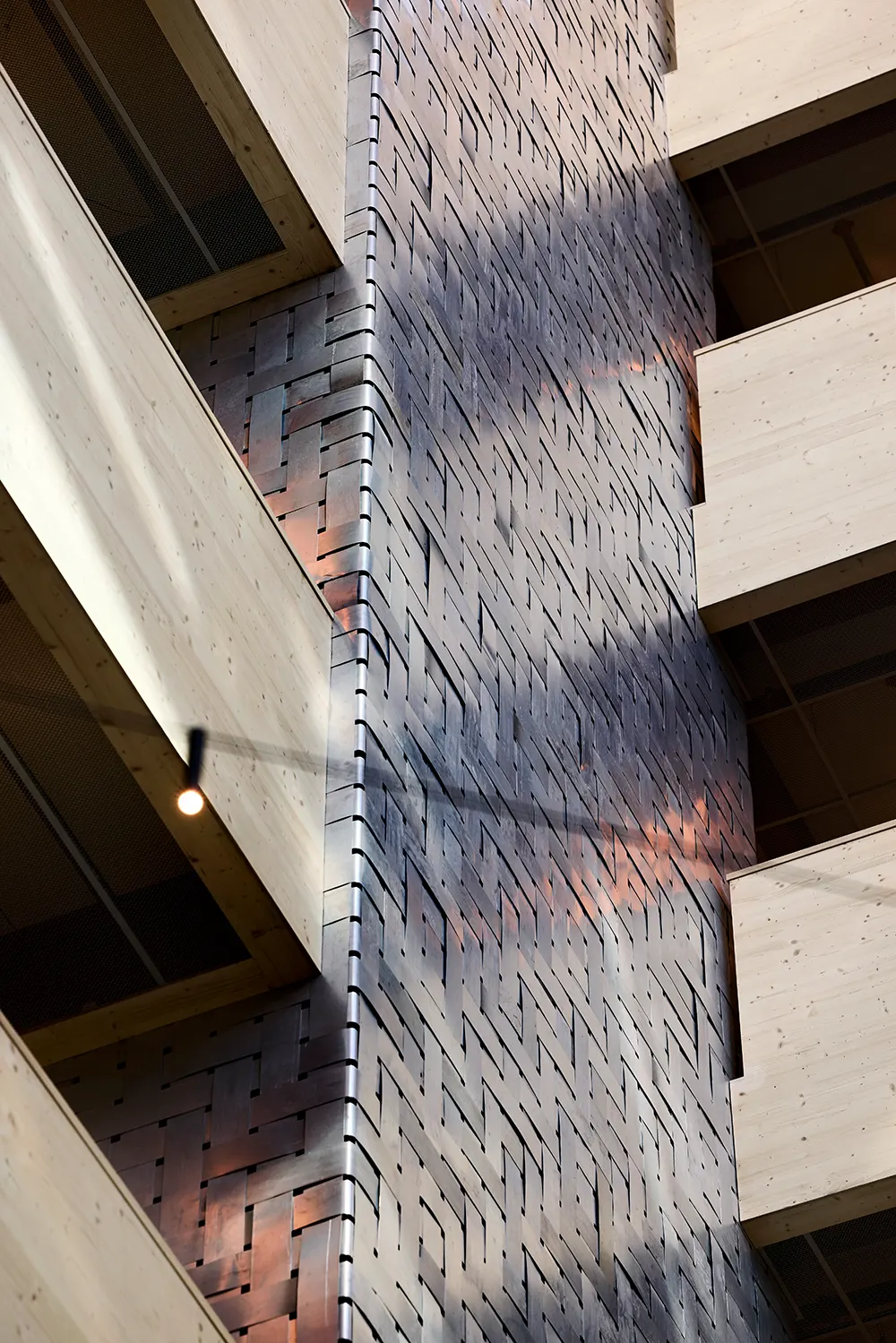
Circular design shaped every stage of development. The team reused 70 percent of all existing doors and repurposed 70 percent of the aluminum sheets from the original roof as decorative elements. They dismantled and reassembled 105 tones of plasterboard and introduced a slate facade selected for its durability and low climate impact. Integrated solar panels and improved insulation support energy performance while supplying generous daylight to the interior.
White Arkitekter also relied on digital precision. The team catalogued every component of the existing building in a detailed database, enabling an accurate understanding of reuse potential. The new structure was modelled at a level that replaced the need for traditional drawings, allowing efficient coordination and clear execution. Digital tools guided decisions that balanced climate savings, feasibility, and construction cost.
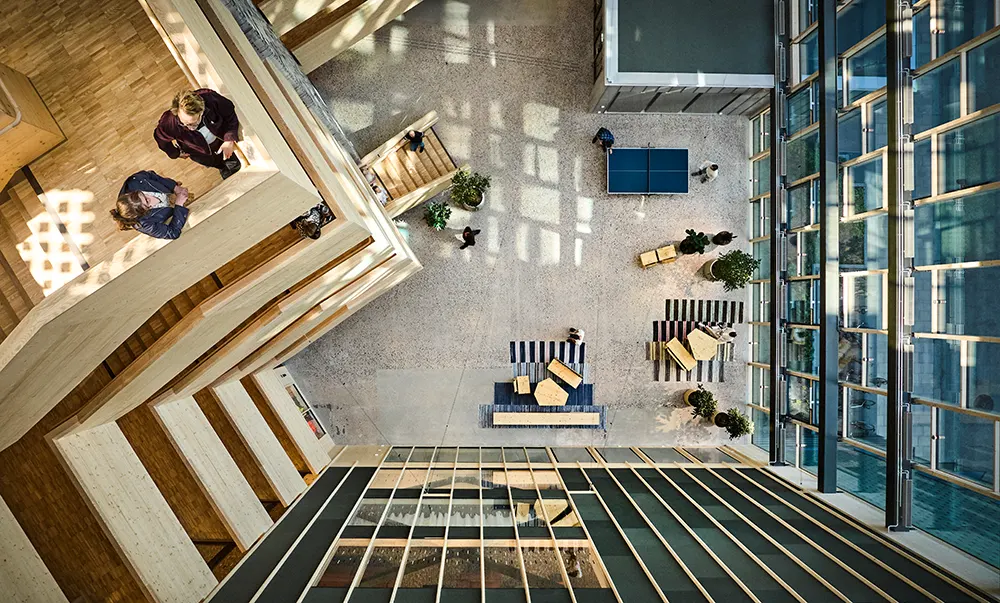
The redesign responds to user needs as much as environmental ones. The original building lacked flexibility, had limited street contact, and relied on a facade with small windows. White Arkitekter reoriented the structure by opening it toward the street and creating a common courtyard that now serves as the main entrance. The addition of three floors increased capacity, enabling up to six organizations per level. This arrangement supports improved logistics, optimizes occupancy, and strengthens workplace wellbeing.
Lumi also revitalizes its surroundings in Southern Uppsala. The project replaces a previously closed and rigid building with a site that contributes to daily activity in the district. By improving accessibility, increasing visibility, and expanding interior function, the building now supports a broader community role. The result aligns sustainable development with practical use.
Anders Tväråna, Architect at White Arkitekter, said: “Lumi is a powerful demonstration of how architecture can lead the way in climate action. By committing to reuse at every level – from structure to finishes – we’ve shown that circular design isn’t just possible, it’s desirable. This project proves that the life of a building can continue much longer than previously considered, and that what was once a barrier in Southern Uppsala now brings life and movement to the area.”
Jonas Wahlström, Project Manager at Vasakronan, said: “By prioritising large scale reuse and circular design, we’ve not only dramatically reduced the building’s climate impact – we’ve created a modern, flexible space that meets the needs of the tenants and has a positive impact on the local community.”
Lumi stands as a clear example of how adaptive reuse, digital accuracy, and material retention can advance large-scale development while addressing climate considerations.