
In Montreal’s Villeray neighbourhood, The Lilac House marks the launch of assemblage studio through a project rooted in personal experience. Architect Claudia Campeau began her practice by transforming her own 1924 duplex into a single-family home. The renovation moves beyond aesthetic update. It tests a position on how existing housing stock can support contemporary family life while reducing the environmental costs associated with new construction.
INTERIOR DESIGN
Campeau and her family lived in the duplex for nearly three years before beginning work. This period of immersion shaped every decision. She studied how light entered the narrow structure, how circulation functioned, and how the spaces responded to daily routines. She designed the renovation with long-term adaptability in mind. Rooms can shift function over time, accommodating children as they grow and household needs evolve. Guest room, office, and workshop exist as flexible possibilities rather than fixed programs. The project treats domestic architecture as an evolving framework.
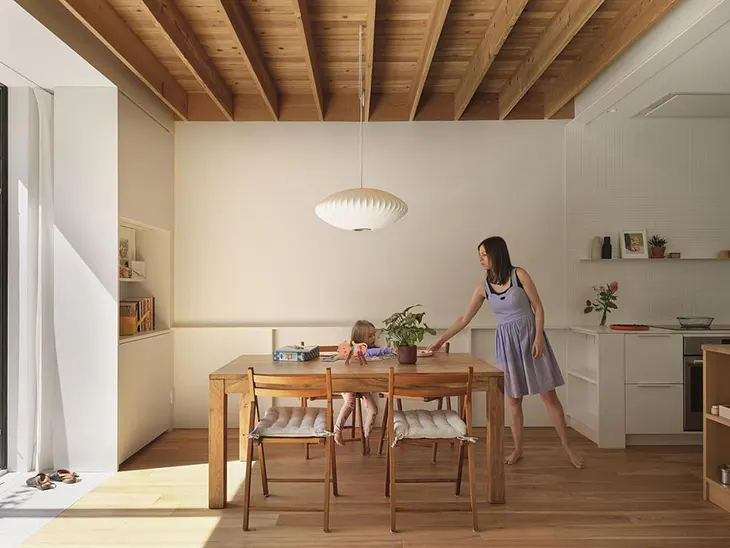
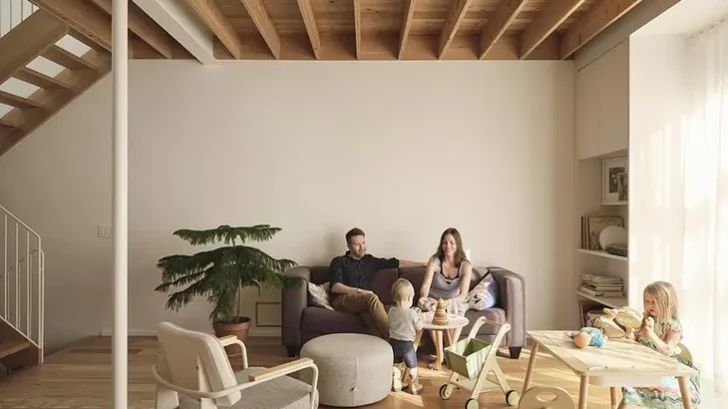
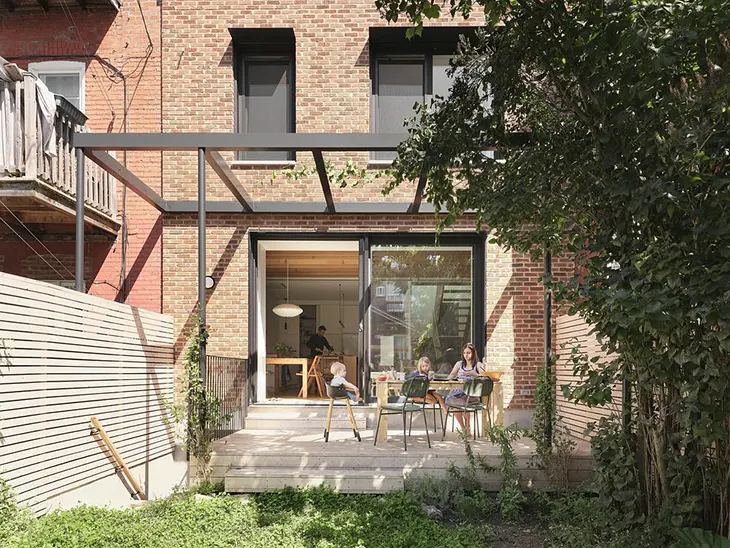
The original building presented clear constraints. With a façade just 21 feet wide and party walls on both sides, the duplex offered limited access to natural light. Poor insulation and layers of previous alterations added complexity. Campeau responded with targeted spatial interventions. On the ground floor, she organized the plan into three zones. At the front, a compact sequence houses the entry, a closed office, and a powder room. The center introduces a restrained kitchen conceived as a white volume. A large white oak island anchors the space, paired with a staircase crafted from the same material. At the rear, the living and dining areas open to the courtyard through an expansive glazed opening beneath exposed cedar joists and decking.
The courtyard, oriented southwest and defined by a mature lilac tree, operates as an extension of the interior. A terrace topped with a pergola references vine supports typical of the neighbourhood’s Portuguese roots. In summer, greenery filters sunlight. In winter, low sun penetrates deeply into the living spaces. This seasonal responsiveness reinforces the connection between interior life and outdoor cycles.
Mechanical and structural coordination preserves openness. Ventilation ducts and the kitchen hood fit within the depth of the ceiling joists, maintaining the original ceiling height. Steel beams redistribute structural loads and free circulation paths. These technical decisions remain discreet yet fundamental to the spatial clarity of the ground floor.
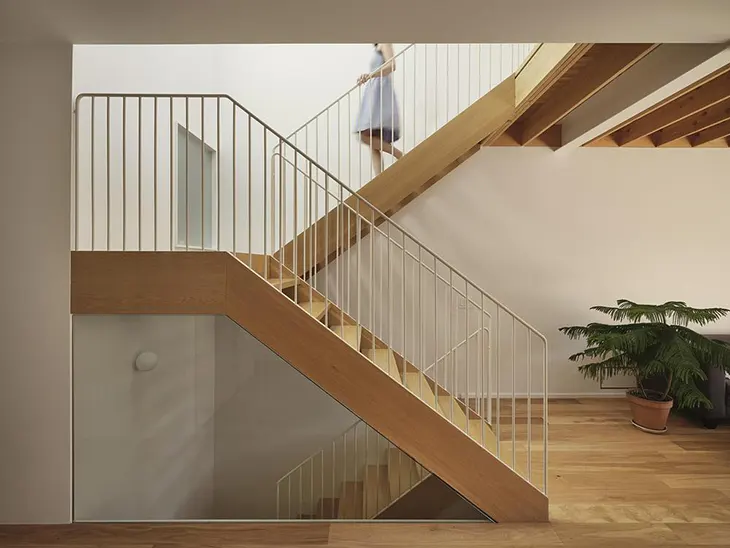
At the center of the house, a sculptural staircase draws daylight downward from a skylight framed by a curved opening. The curve softens the vertical shaft and diffuses light into the basement. Even the ground-floor powder room receives natural illumination through a frosted window overlooking the stairwell. Upstairs, a bathroom skylight echoes the same curvature, reinforcing visual continuity while introducing gentle daylight.
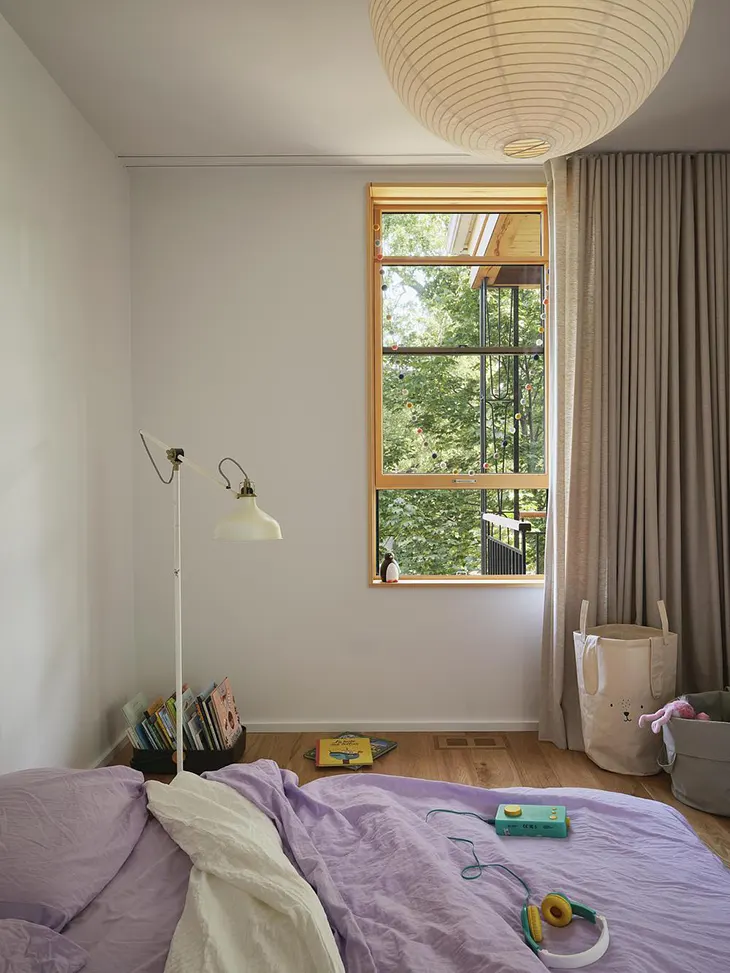
Sustainability guides material choices and construction methods. The team restored the front balconies in white cedar and introduced new ornamental steel columns inspired by local typologies. Workers dismantled, cleaned, and reinstalled brick from the rear façade. Portions of existing timber became shelving in the ground-floor office. The sole original interior door found new placement in a child’s bedroom. New floors, staircase elements, and millwork rely on local materials and regional artisans. Fixtures from Lambert & Fils and Luminaires Authentik integrate within this material palette.
The Lilac House demonstrates how careful renovation can extend the life of an aging structure while adapting it to present-day needs. Through measured interventions and precise detailing, assemblage studio positions the project as a model for sustainable urban transformation grounded in lived experience and long-term thinking.