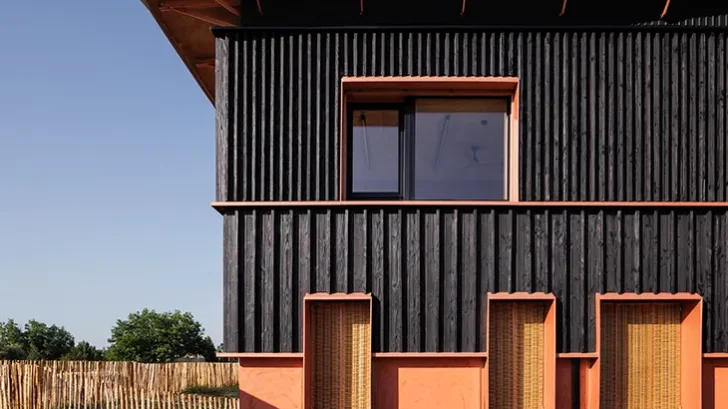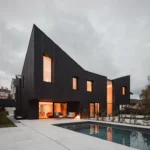

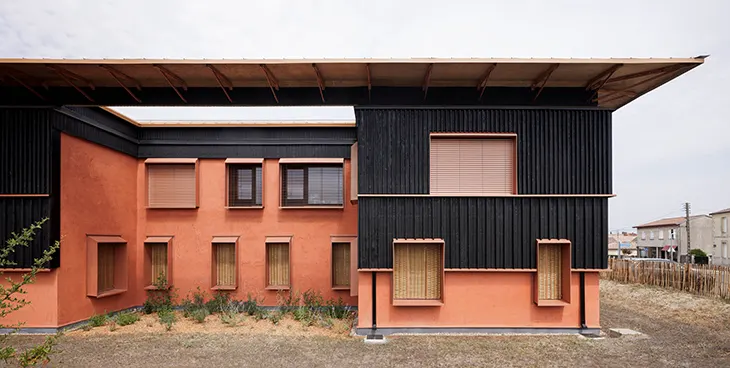
ABF-LAB has completed the Maison des solidarités du Département in Langon, Gironde, introducing a social services facility defined by bioclimatic design and bio-sourced construction. Built on the site of a former gendarmerie, the project replaces conventional institutional architecture with a structure shaped by environmental responsibility and spatial clarity. The architects used wood, earth, lime plaster, and straw as the primary construction materials, establishing a low-carbon building that responds directly to climate, health, and resource use. This approach positions the building as both civic infrastructure and environmental prototype.
INSTITUTIONAL ARCHITECTURE
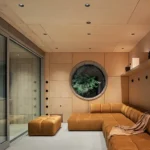
The program consolidates multiple public services within a single structure, including maternal and child protection, youth support, autonomy assistance, and integration programs. ABF-LAB organized these functions around a central luminous core that distributes light and circulation throughout the building. This internal arrangement creates visual continuity between departments while maintaining privacy where required. The spatial sequence prioritizes orientation and clarity, allowing visitors to navigate the facility easily. Natural materials remain visible across interior surfaces, reinforcing a sense of warmth appropriate for a social services environment.
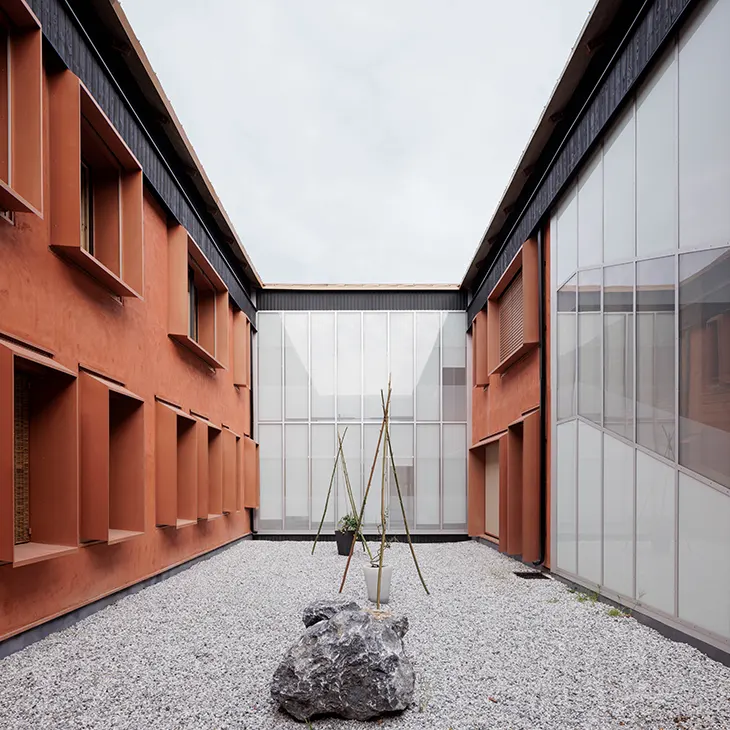
Material selection shaped the project’s environmental performance. The structure incorporates more than one thousand straw bales alongside timber framing and earth-based finishes. These renewable materials reduce embodied carbon while providing strong thermal insulation. The architects excluded petrochemical-based products, volatile organic compound emitters, and disposable construction elements. Reused doors and radiators from the former police station extend the lifecycle of existing components, integrating circular construction principles into the building’s assembly.
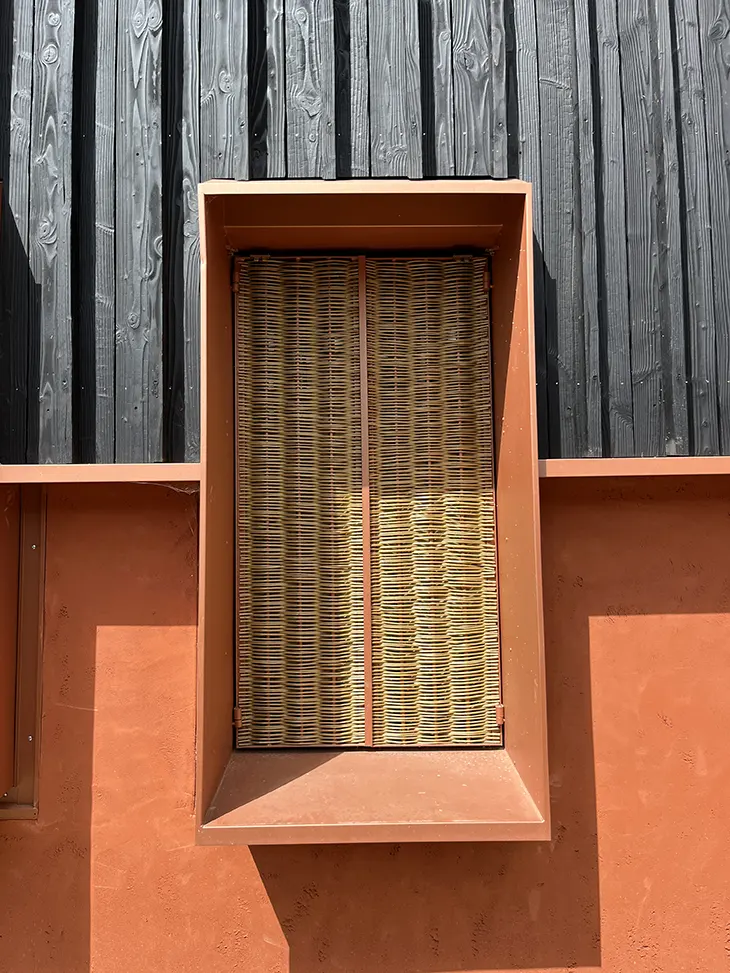
Passive environmental systems eliminate the need for mechanical cooling. Skylights and vertical air movement create natural ventilation, allowing warm air to escape while maintaining comfortable indoor temperatures. Earthen plasters introduce thermal inertia, stabilizing internal conditions across seasonal changes. A mud brick mashrabiya contributes to shading and airflow, reinforcing microclimatic control within the building envelope. External awnings, Venetian blinds, and woven wicker shutters protect interior spaces from excessive solar gain while preserving daylight access.
Energy production and heating rely on renewable sources. A biomass furnace provides primary heating, while photovoltaic systems generate more than half of the building’s operational energy demand. This integrated strategy aligns architectural form, material selection, and mechanical systems into a unified environmental framework. Users received guidance on operating the building’s passive features, reinforcing the relationship between architectural performance and human interaction.
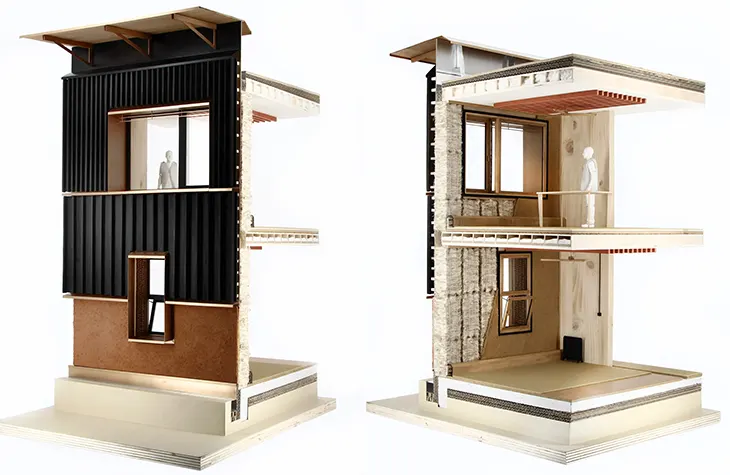
Maison des solidarités demonstrates how social infrastructure can operate through natural material systems and climate-responsive design. ABF-LAB has created a civic building where environmental performance, spatial clarity, and public service converge, establishing a model for future public architecture grounded in renewable resources and passive environmental control.