
Brach Madrid positions itself as an interior-led architectural project rather than a conventional hotel. Philippe Starck approaches the space with a clear structural logic, building a sequence of environments that rely on proportion, material, and density. The project does not depend on grand gestures or monumental interventions. Instead, it constructs atmosphere through accumulation, layering surfaces, objects, and textures into a coherent spatial system that feels deliberate from every angle.
HOTELS
The architecture operates within an existing urban framework, yet the interior establishes its own order. Circulation unfolds naturally, without rigid separations. Spaces connect through shifts in light, material, and scale rather than through defined thresholds. This approach allows the hotel to function as a continuous environment, where each area transitions into the next without disruption. The result feels controlled and composed, avoiding fragmentation.
Spatial Strategy
Starck organizes the hotel through a sequence of compressed and expanded spaces. Entry points remain tight and contained, guiding movement inward before opening into broader areas. This manipulation of scale creates a rhythm that carries throughout the building. It directs how the body moves and how each space is experienced over time.
At Brach Madrid, I’ve created a world of riches that people will be happy to revisit time and time again, with new details that reflect the attentions and whispers of buried memories. – Philippe Starck.
The absence of visual noise strengthens this strategy. Rather than relying on empty minimalism, the project introduces density through carefully placed elements. Furniture, objects, and surfaces build the space while maintaining clarity. Each component contributes to the overall structure instead of competing for attention.
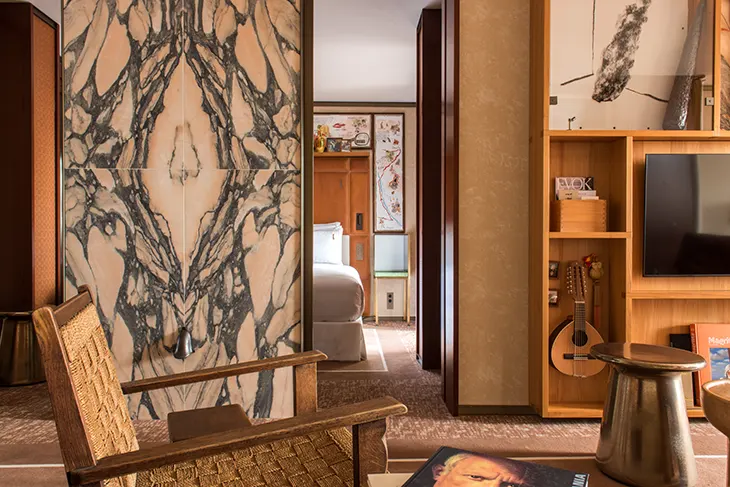
Material Language
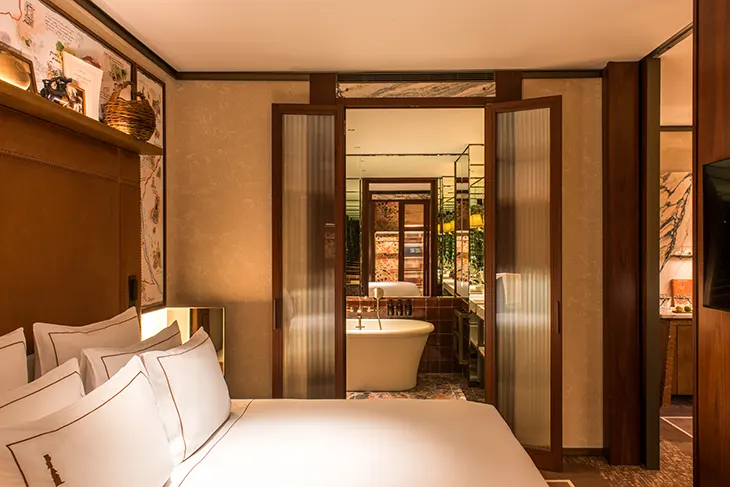
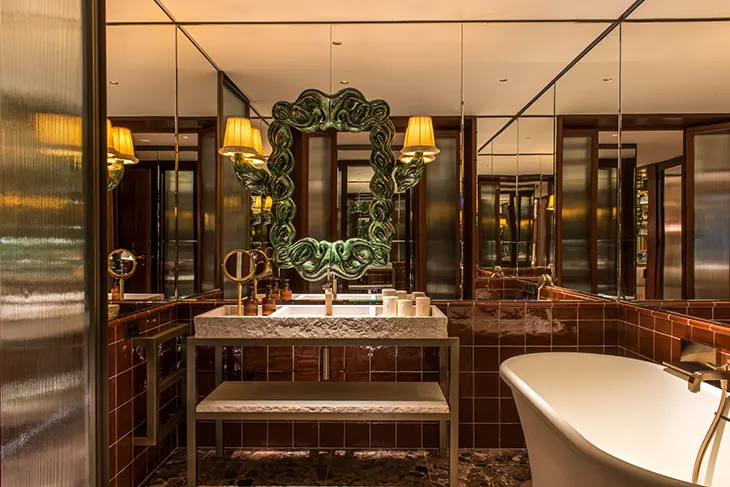
Material defines the project. Starck relies on a palette that includes dark woods, leather, metal, and layered textiles, each selected for its tactile presence. Surfaces carry weight. Finishes remain raw or minimally treated, allowing texture and variation to remain visible.
This approach creates depth without excess. Light interacts with these materials in a controlled way, emphasizing their character while maintaining a subdued atmosphere. The design avoids polished uniformity, instead allowing irregularities and natural variations to define the surfaces.
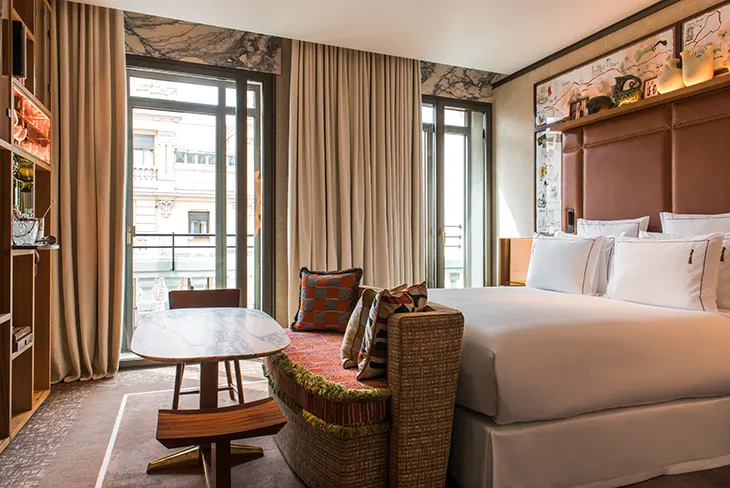
Rooms as Micro-Architectures
Each room functions as a self-contained spatial composition. Layouts remain precise, with a focus on proportion and alignment. Furniture integrates directly into the architecture, reducing the distinction between object and structure.
The room is sentimental. The walls are not made of shagreen, but of history, little scars, little details. You’re completely in the realm of the emotional. – Philippe Starck.
Openings and light sources are positioned to reinforce privacy. Views remain selective, framing the city without exposing the interior fully. This creates a contained environment that operates independently from the surrounding urban intensity. The rooms do not expand outward. They hold inward.
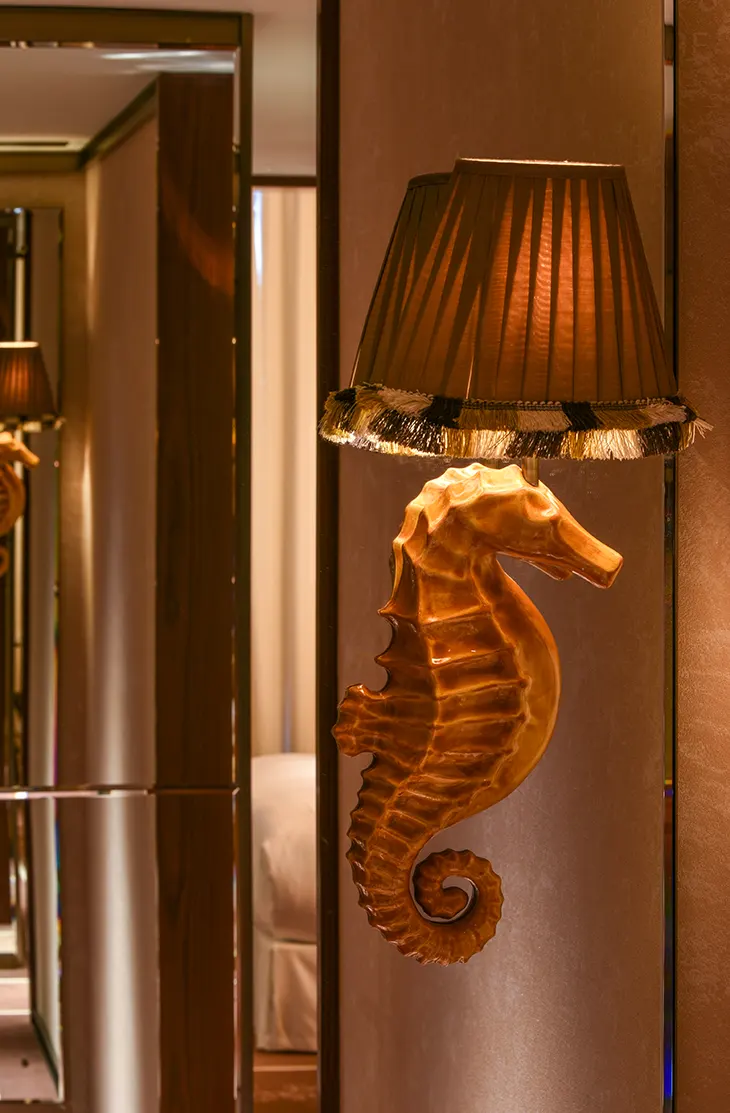
Atmosphere and Control
Lighting plays a critical role in shaping the experience. Starck avoids uniform illumination, instead working with layered, directional light that defines zones within each space. Shadows become part of the composition, adding depth and reinforcing the material palette.
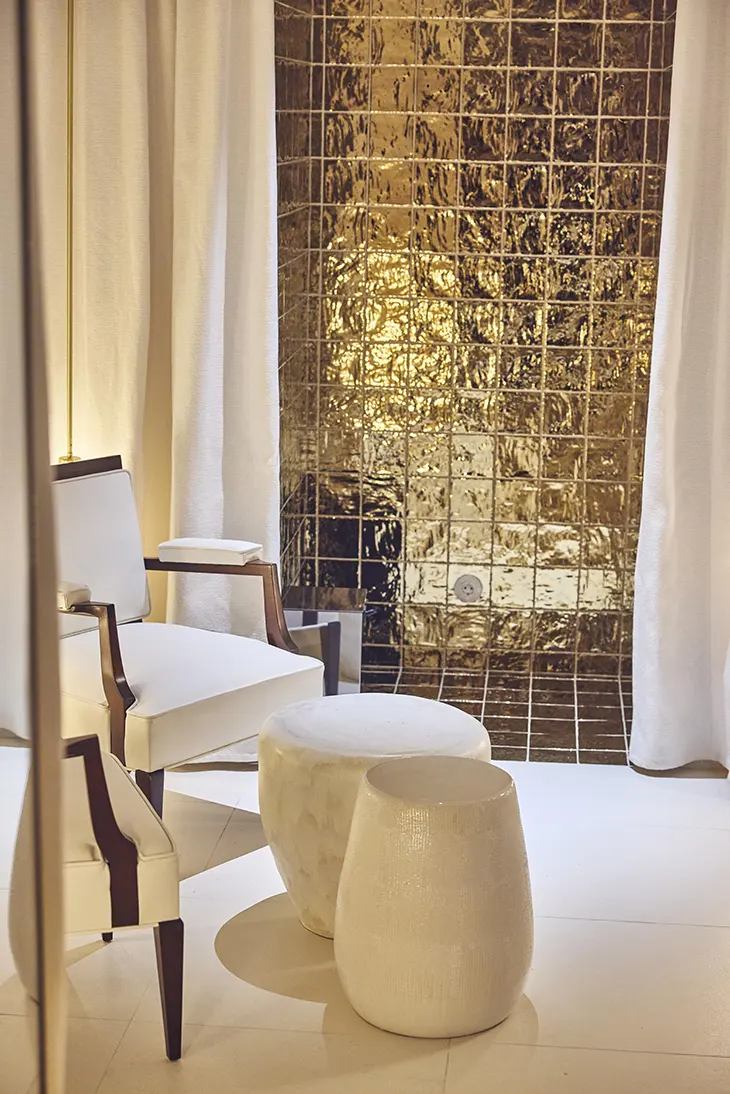
This control extends to every aspect of the design. Nothing feels accidental. The project maintains a consistent language from public areas to private rooms, ensuring continuity throughout the building. The atmosphere remains stable, grounded, and fully resolved.
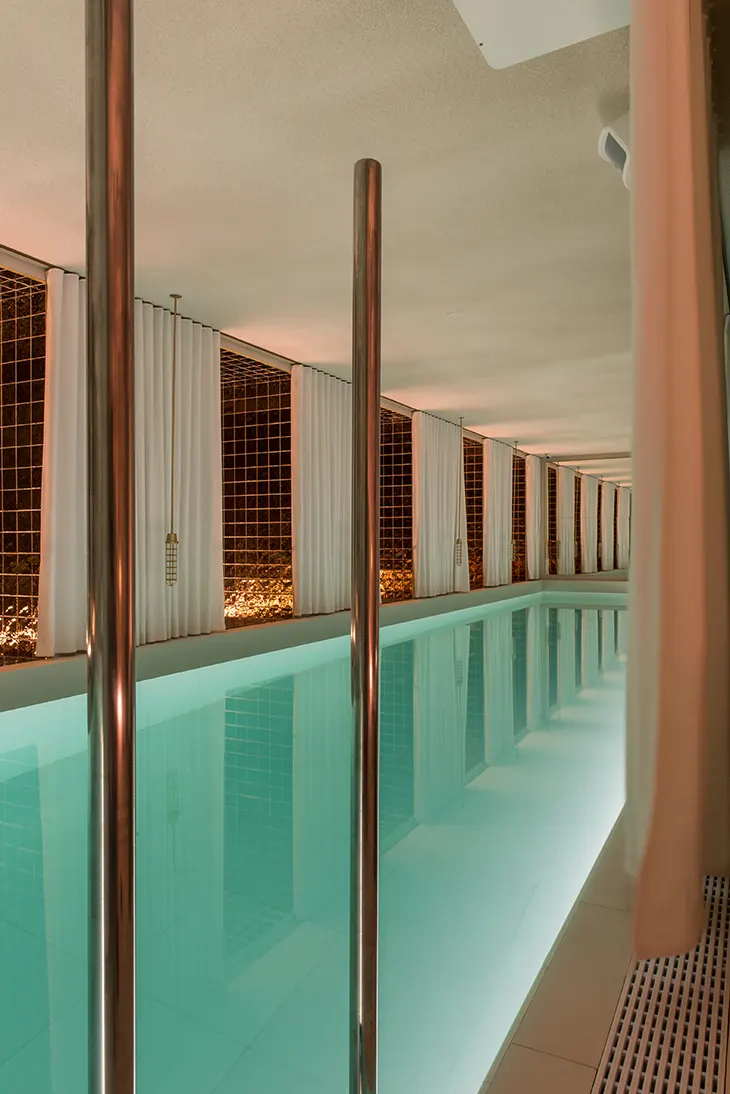
Brach Madrid presents a clear architectural position. It builds its identity through structure, material, and spatial sequencing, offering an interior that operates with precision and intent.
Read the hotel review on our DSCENE.