
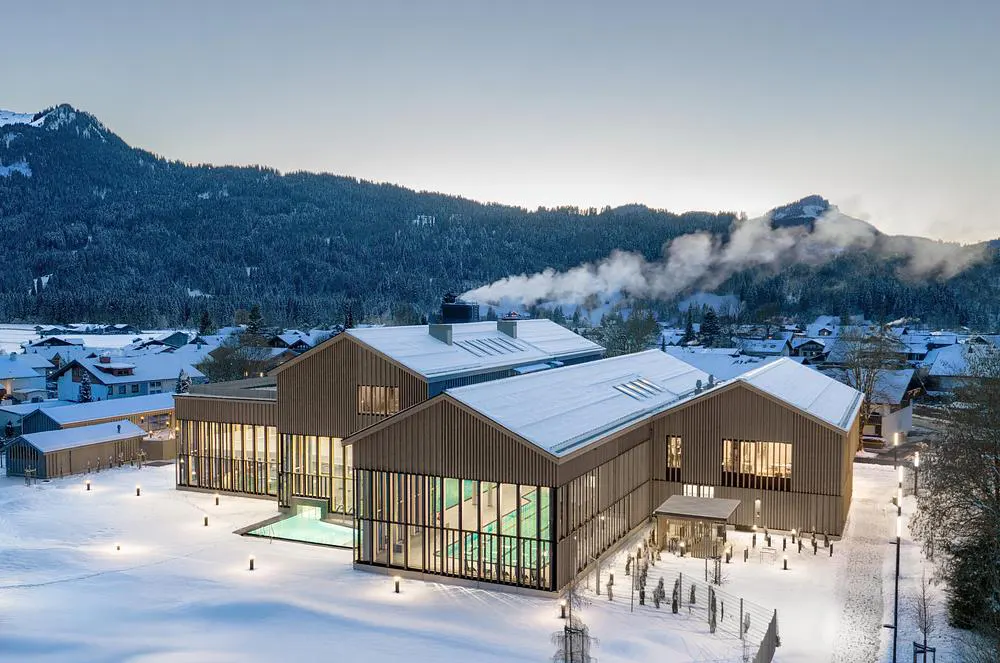
Set in the Allgäu region, Therme Oberstdorf introduces a new thermal complex that positions architecture in direct relation to the surrounding Alpine terrain. Designed by Auer Weber Architekten, the project replaces the existing baths with a structure that operates through clarity of form and a measured response to landscape. Pitched roofs, staggered volumes, and a vertically articulated timber façade establish a language that draws from regional references while maintaining a contemporary presence.
COMMERCIAL
The building extends across approximately 9,400 square meters, organizing wellness, sport, and relaxation into a sequence of interconnected spaces. Large glazed openings define the central bathing hall, directing views outward toward the Allgäu Alps and reinforcing a constant visual link between interior activity and exterior environment. This spatial approach avoids enclosure, instead creating continuity through transparency and controlled framing.
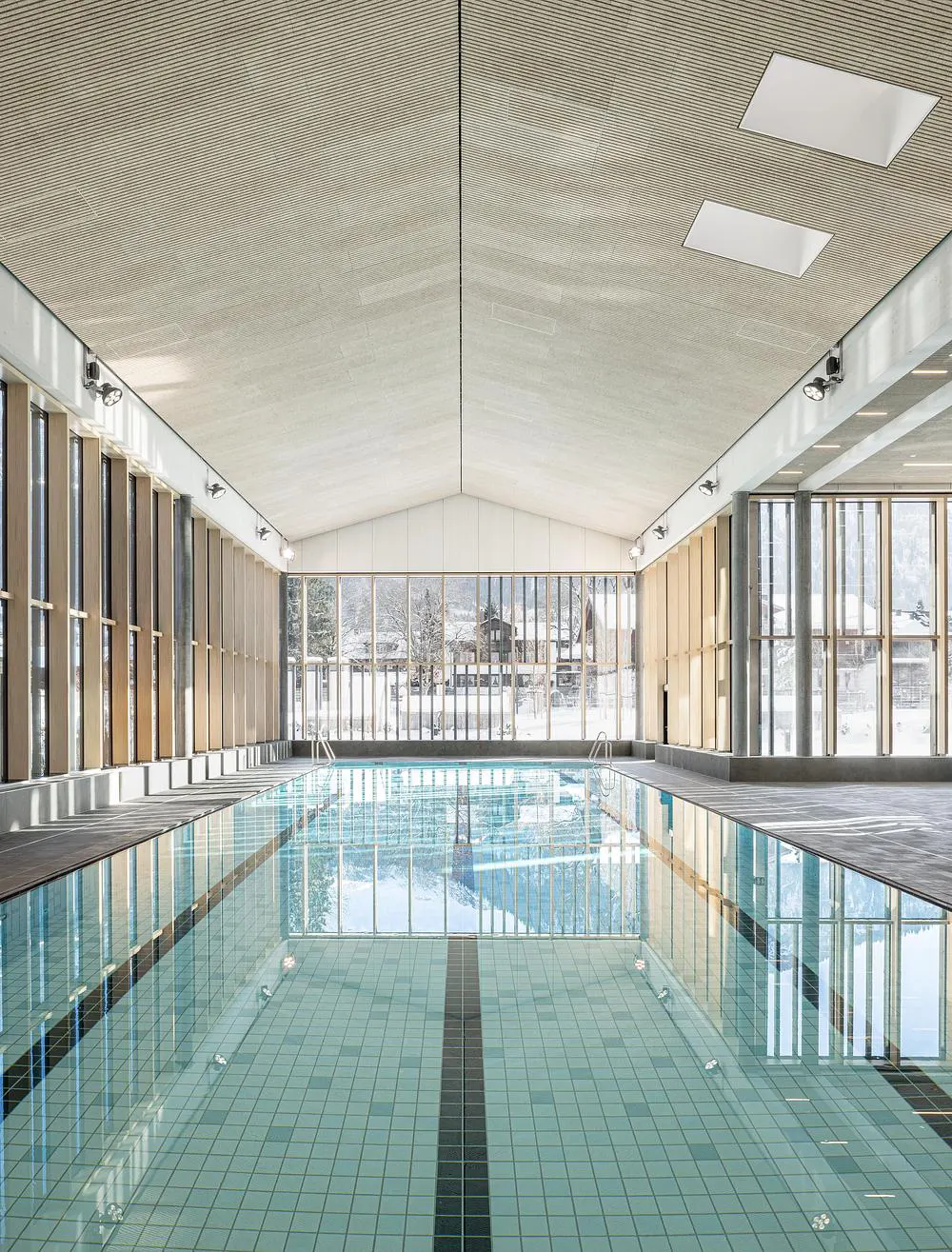
Auer Weber structures the complex as a series of volumes that shift in height and length, responding to both topography and surrounding development. The result reads as an ensemble rather than a singular object. Each section holds a distinct function, yet the transitions remain deliberate, allowing movement between pools, sauna areas, and relaxation zones without disruption. The central hall anchors the composition, where wood, concrete, and glass form a restrained material palette that emphasizes proportion and light.
Material strategy drives the interior experience. Ceramic surfaces by Agrob Buchtal define both aesthetic direction and functional performance. The Nova series in anthracite establishes a consistent base across floors, walls, and seating elements, referencing the mineral tone of the surrounding mountains. This continuity creates a stable visual ground, allowing other elements to operate with precision against it.
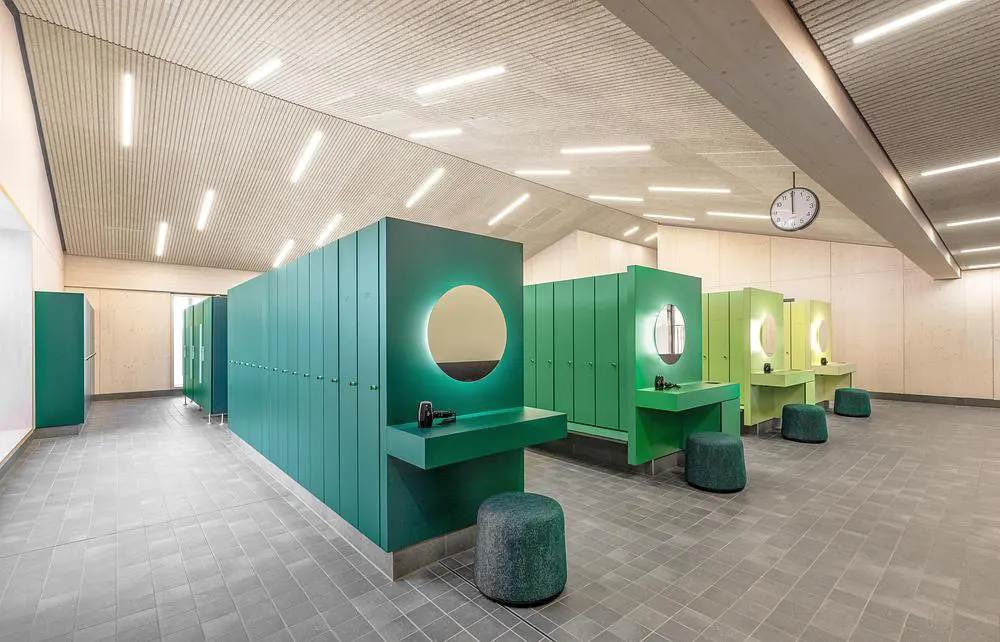
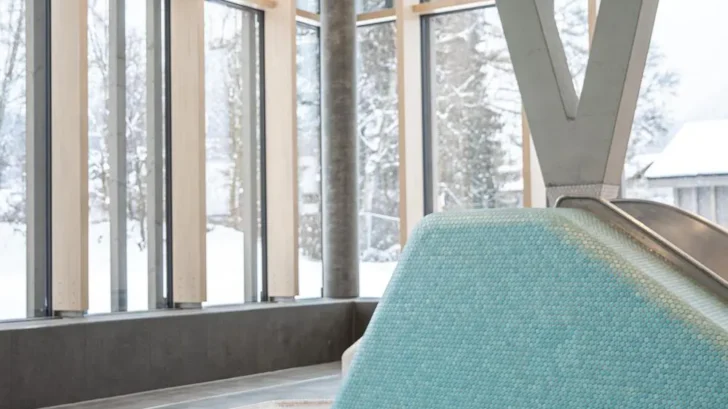
Water areas introduce a more nuanced chromatic range. Tiles from the Chroma series shift between light and dark turquoise, translating the depth and movement of alpine lakes into a controlled gradient. The effect remains subtle, avoiding visual excess while reinforcing the relationship between material and context. Technical components, including pool edges and overflow systems, integrate within this language, ensuring that performance requirements align with the overall design.
The children’s pool and relaxation zones extend this logic through variation in tone and texture. Mosaic surfaces in aqua and sea green introduce a lighter register, while ivory seating elements reference glacial formations. In the sauna’s cooling area, the palette shifts again. Darker ceramic tones draw from the atmosphere of the Breitach Gorge, where reduced light and dense materiality define the spatial experience. These transitions operate with control, allowing each zone to maintain identity within a cohesive framework.
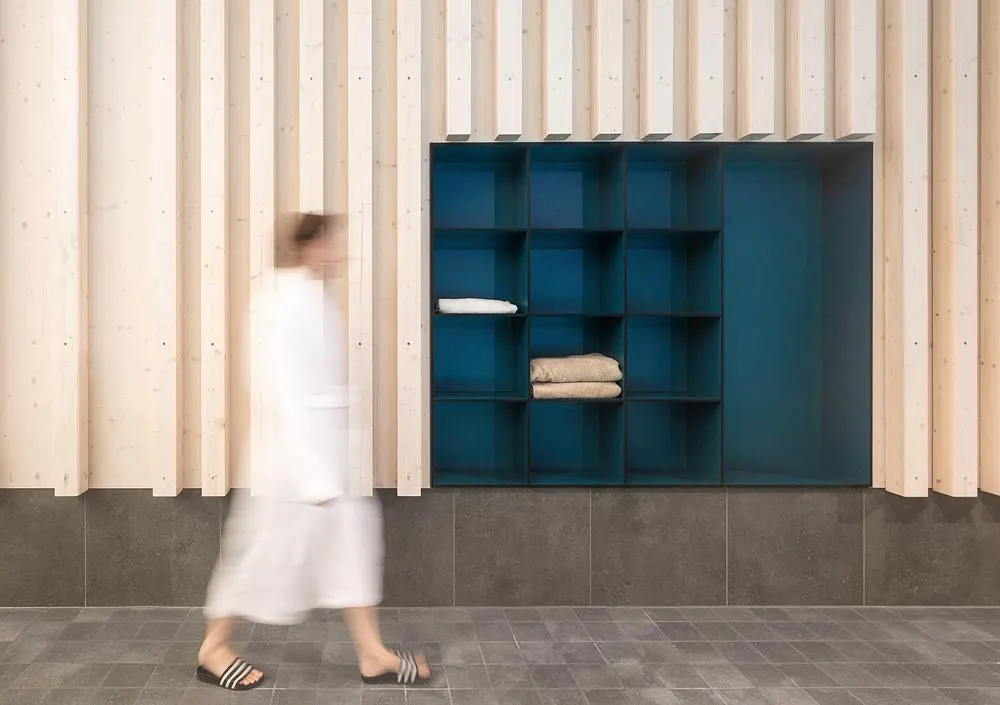
Sustainability forms a central layer of the project’s development. A roof-integrated photovoltaic system, combined with energy-efficient building services and heat recovery strategies, reduces operational demand. The ceramic materials contribute through durability and low-maintenance performance, supported by surface technologies that enhance hygiene and ease of cleaning.
Therme Oberstdorf positions itself as both regional infrastructure and architectural statement. The project aligns material, landscape, and program through a controlled system where each element serves a defined role. Within this structure, the relationship between architecture and environment remains direct, allowing the building to operate as an extension of its Alpine context.