
Dubai’s skyline continues to expand, yet few projects attempt to recalibrate how a high-rise operates within climate, infrastructure, and daily life. Wasl Tower, designed by UNStudio in collaboration with Werner Sobek, positions itself within that conversation. Completed in 2025, the 302-metre structure sits along Sheikh Zayed Road, directly engaging the density and speed of its surroundings while proposing a more responsive architectural model.
TOWERS
The project does not rely on height alone to define its presence. Instead, it focuses on performance, material logic, and programmatic layering. The tower brings together hospitality, residential, office, and public functions within a single vertical system, forming what reads as a compact urban environment rather than a singular object. Its proximity to major infrastructure and pedestrian routes informs the design from the outset, shaping how the building connects rather than how it isolates itself.
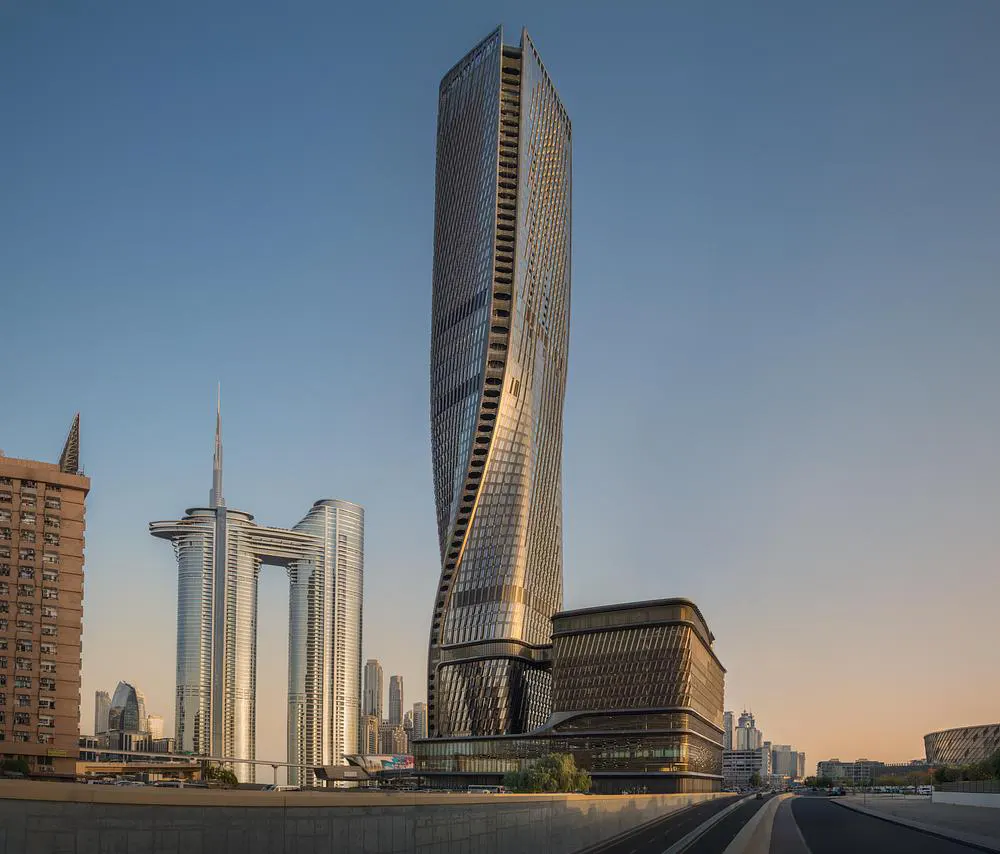
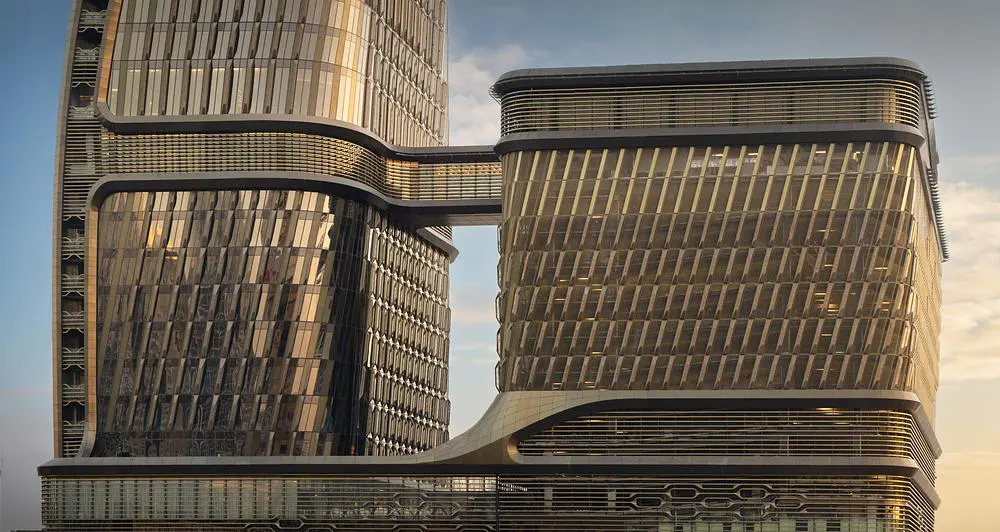
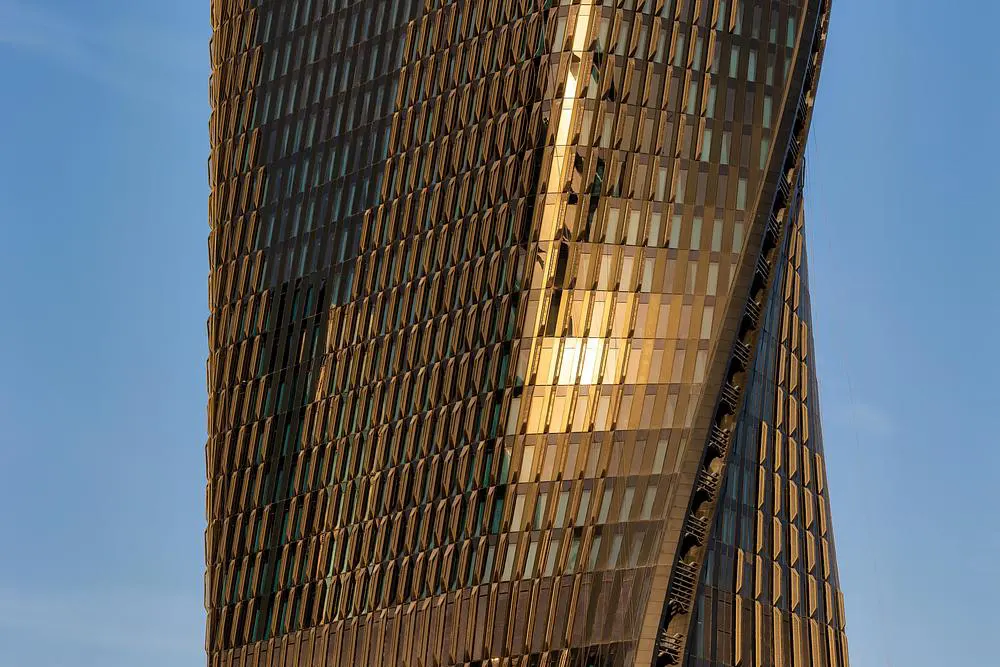
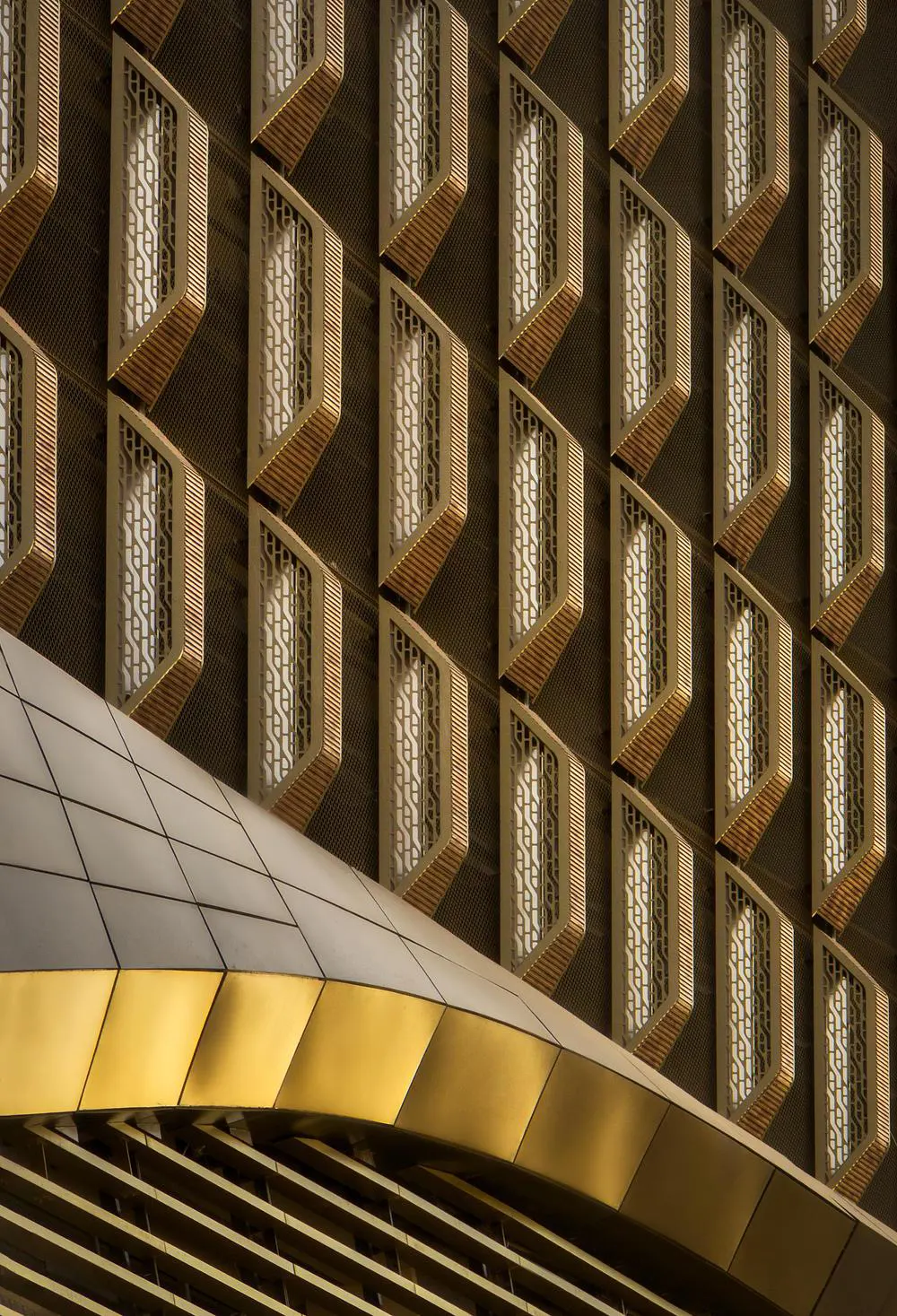
At the center of the project stands its ceramic facade, one of the tallest of its kind globally. Thousands of terracotta fins wrap the tower, creating a continuous outer layer that responds directly to solar exposure and wind conditions. This system reduces heat gain while allowing daylight to penetrate the interior, balancing environmental performance with spatial quality. The facade operates as a passive filter, minimizing reliance on mechanical cooling systems in a region where such demands remain high.
The design introduces a controlled variation in form. Through a subtle twisting motion, the tower adjusts its orientation across different elevations, reducing direct solar impact while offering changing views across the city. This movement, described as a contrapposto strategy, allows the building to engage multiple directions at once, avoiding a fixed frontal identity. The result is a structure that shifts visually depending on its position within the skyline, reinforcing its role as an active urban element.
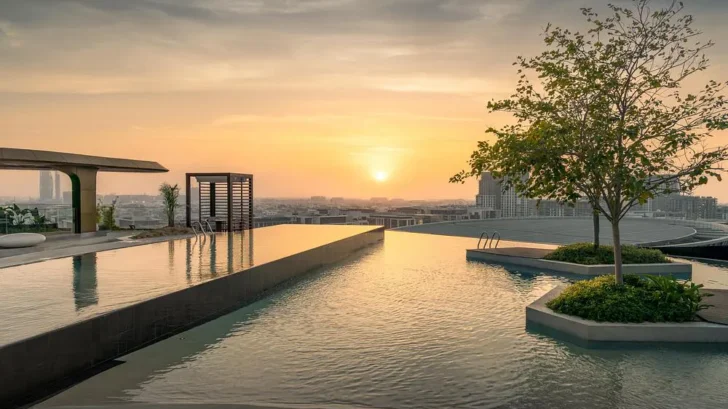
Internally, Wasl Tower operates through a layered vertical organization. The program includes the Mandarin Oriental Downtown hotel, residential units, offices, and a series of shared amenities distributed across different levels. Rather than isolating these functions, the design integrates them through a network of circulation routes and semi-public spaces. Elevated areas for dining, wellness, and social interaction extend the experience beyond ground level, encouraging movement throughout the building.
The circulation system plays a critical role in maintaining clarity within this complexity. Multiple lift cores separate flows between residents, hotel guests, office users, and service operations, ensuring efficiency while preserving privacy. Express lifts connect key nodes such as the ground lobby, wellness areas, and upper-level amenities, creating a clear vertical sequence. This approach supports the building’s ambition to function as a cohesive environment rather than a stack of independent programs.
Sustainability strategies extend beyond the facade. Solar thermal panels, reflective glazing, and daylight-responsive lighting systems reduce energy consumption, while district cooling and integrated heat pumps further limit environmental impact. Material selection follows the same logic, with regionally sourced granite, recycled acoustic panels, and low-emission finishes contributing to overall performance. Structural efficiency also plays a role, with post-tensioned slabs and hybrid systems reducing concrete use without compromising stability.
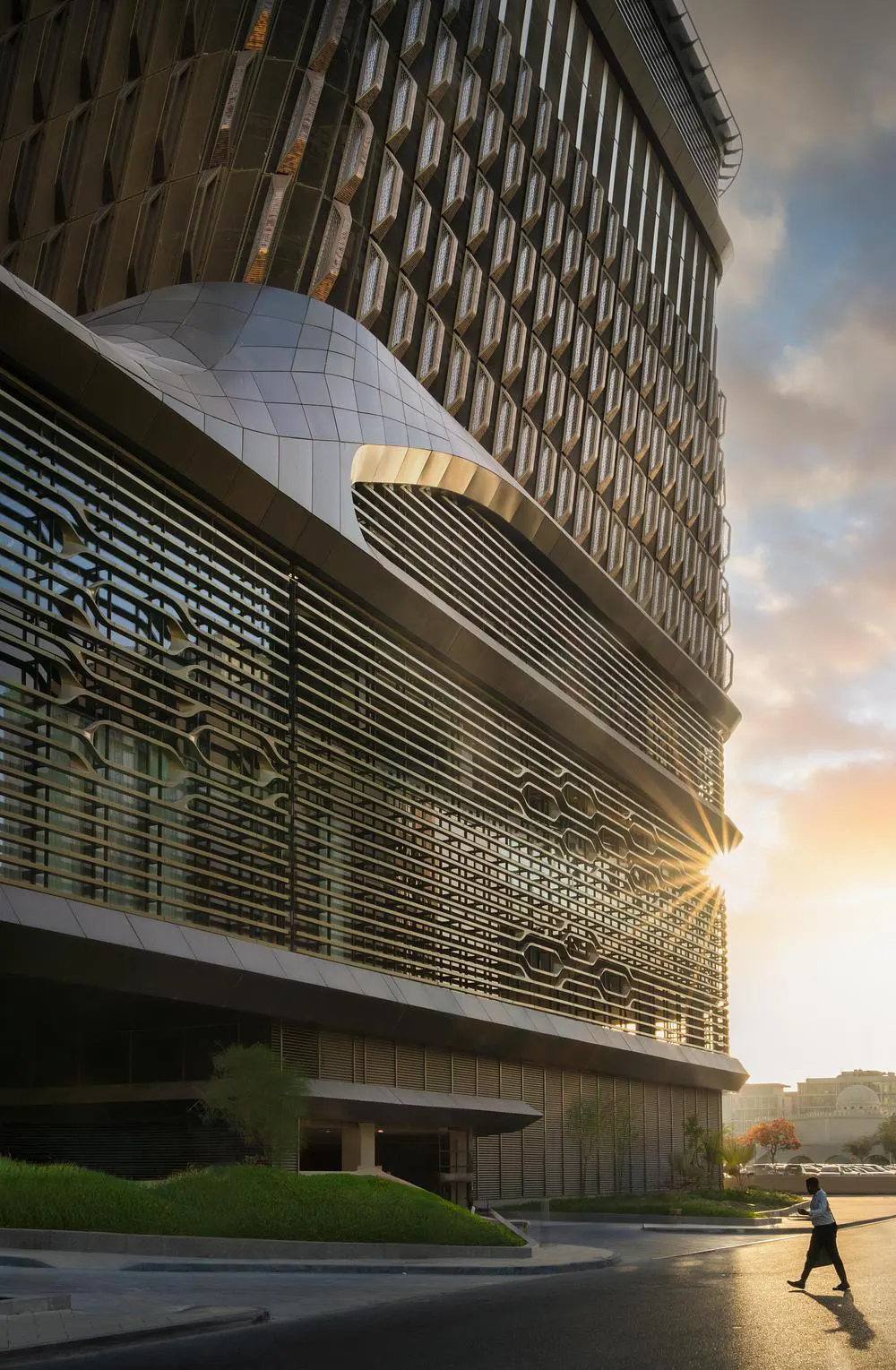
The project also addresses ground-level interaction, an area often overlooked in high-rise development. Wasl Tower connects two distinct urban zones, linking the commercial density around Burj Khalifa with the more pedestrian-oriented City Walk. Semi-public areas, restaurants, and event spaces remain accessible beyond the building’s core users, allowing the tower to participate in the city’s daily rhythm.
Within the hospitality component, the Mandarin Oriental Downtown introduces a vertical interpretation of hotel design. Public areas, wellness facilities, and private rooms distribute across multiple levels, creating a sequence of experiences rather than a single concentrated zone. The lobby, positioned high above ground, reframes arrival as a spatial transition, while upper-level venues extend the building’s engagement with the city skyline.
Wasl Tower does not attempt to redefine the skyscraper through form alone. Its contribution lies in how it integrates material performance, environmental strategy, and programmatic diversity into a single system. In a city defined by rapid construction and visual competition, the project introduces a more measured approach, where innovation operates through detail, coordination, and long-term adaptability.