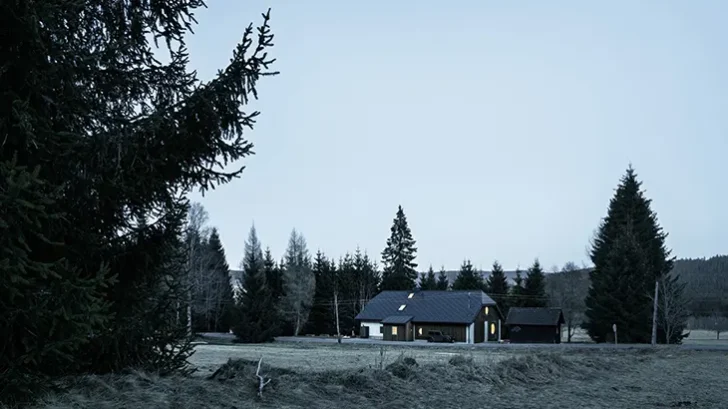

Studio Plyš has completed the renovation of Borová Lada Cottage, a late 19th-century house located along a quiet road in the Bohemian Forest. The project approaches the historic structure with restraint, maintaining its familiar silhouette while introducing structural reinforcements and contemporary living spaces. The architects treated the cottage as an evolving structure shaped by successive generations, focusing on preservation, repair, and selective intervention. Their approach allows the house to continue functioning within its rural landscape while accommodating modern patterns of inhabitation.
HOUSING
The renovation began by removing inappropriate alterations introduced during the late 20th century that compromised the building’s stability. These interventions had weakened the barn foundations and roof structure, requiring new structural support. Studio Plyš inserted three reinforced concrete columns that now anchor the roof, casting them together with new foundations beneath the former barn. Exposed steel beams strengthen sections of the salvaged roof truss, while lightweight aluminium tiles replace heavy concrete roofing. These changes reduced structural load and created space for insulation, improving the building’s thermal performance while preserving its original framework.
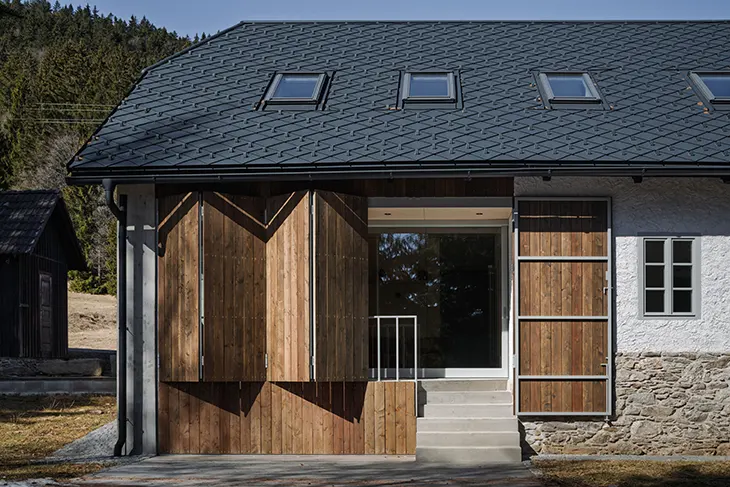
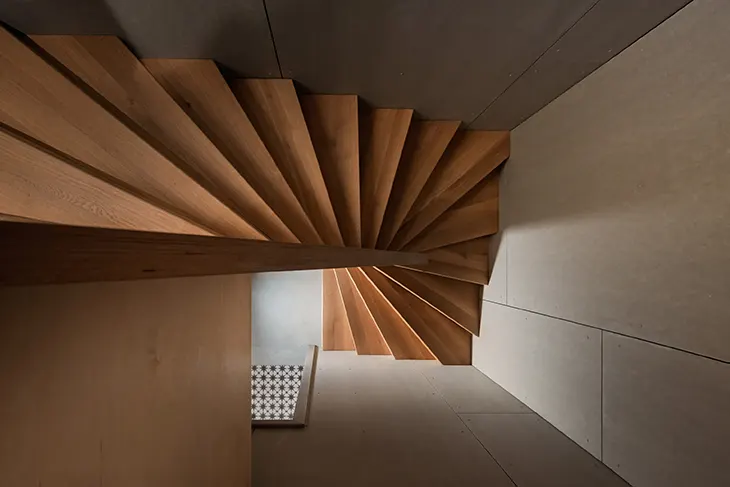
Spatial reorganization focused on establishing continuity between interior rooms and the surrounding landscape. The former damaged section of the house now functions as the central living area, connecting directly to the garden and adjacent kitchen. The barn rises vertically and serves as a flexible space that accommodates daily use or seasonal gatherings. A central staircase links separate residential units, allowing the house to support multigenerational living while maintaining shared communal areas.
Studio Plyš introduced new glazing to bring daylight into the interior and frame views of the forest. Large shutters provide protection from harsh weather and maintain privacy when closed. The architects left structural elements such as shutter rails and exposed concrete visible, allowing the renovation to remain legible. This strategy acknowledges the presence of new construction while maintaining continuity with the building’s historical character.
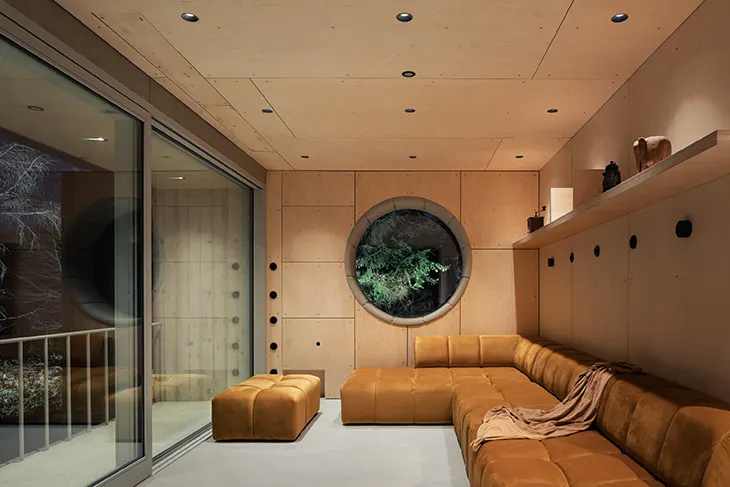
A contemporary timber volume inserted within the attic and former stalls houses sanitary and technical facilities. This independent structure uses plywood and fibre-cement panels made from recycled and natural materials. The volume remains separated from the original envelope to protect against moisture while preserving the vapor-open performance of the historic walls. This layered construction allows modern infrastructure to coexist with the preserved fabric of the cottage.
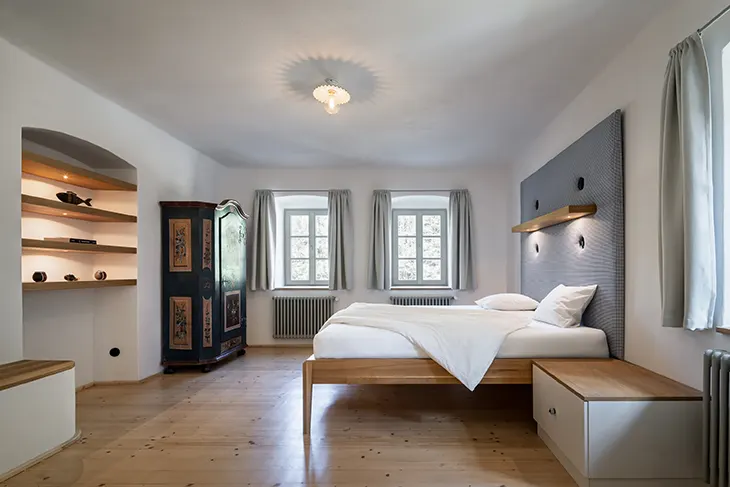
Original interior elements continue to define the atmosphere of the house. Studio Plyš restored sections of wooden flooring and retained the tiled stove, which remains operational. A heat pump system now provides daily heating, supported by automated controls that manage shutters and electrical systems. Custom oak furniture designed specifically for the project reinforces continuity between old and new. Borová Lada Cottage demonstrates how careful structural repair and precise contemporary additions can extend the life of rural architecture while preserving its cultural and spatial identity.