
Highbury Flat in Islington introduces a clear spatial order into an interior that previously lacked direction. Architecture for London approaches the refurbishment through structure, material, and circulation, using a central spine wall to organize the entire plan. This decision defines how each space connects, creating a sequence that feels direct and considered from the moment of entry.
RESIDENTIAL
The concept emerged early in the design process and remains the defining element of the project. Rooms extend from this central line, allowing movement to unfold naturally across the apartment. The plan improves circulation without relying on excess partitioning, instead using alignment and proportion to guide transitions between spaces. Each area connects with clarity, while still maintaining a sense of privacy where required.
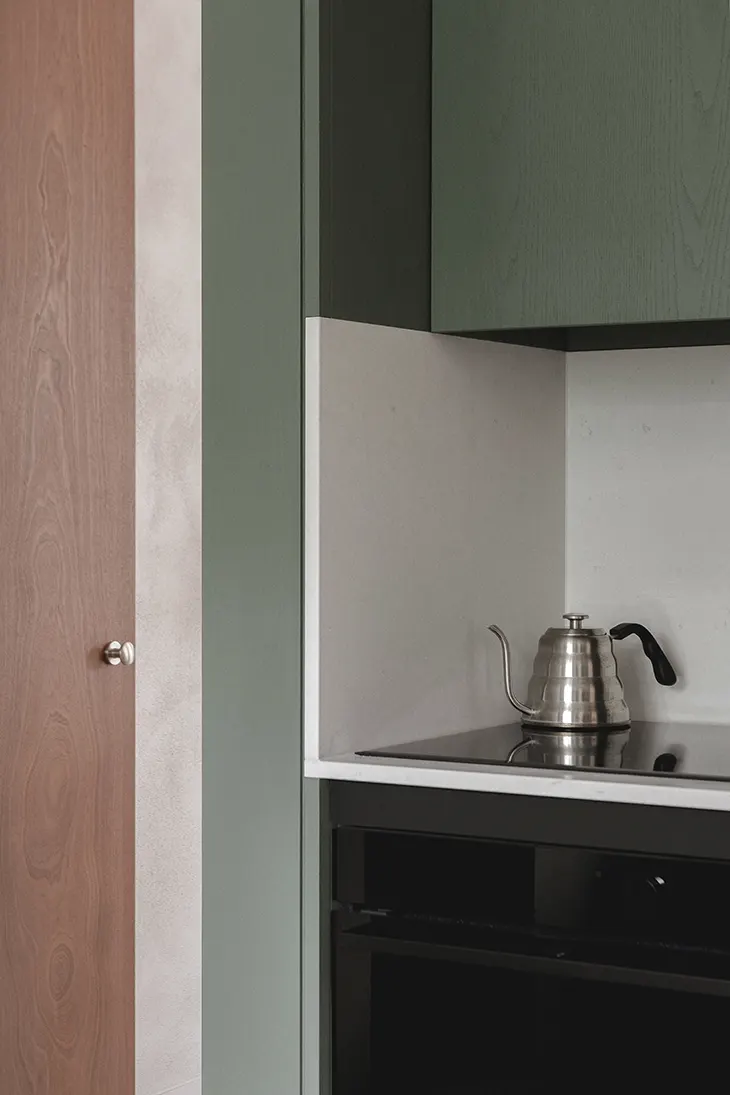
Material choices reinforce this spatial discipline. The brief called for a muted palette and refined finishes, which the architects deliver through a consistent use of natural surfaces. Stone, timber, and lime plaster establish a calm interior language, where texture carries more weight than color contrast. Lime Green Solo plaster covers the walls, introducing a soft surface that interacts with light throughout the day.
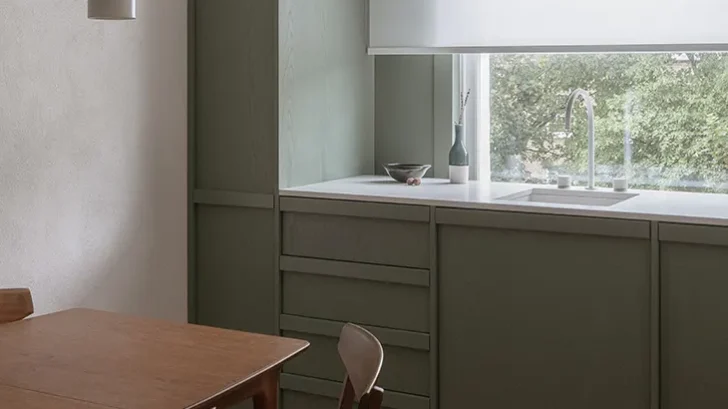
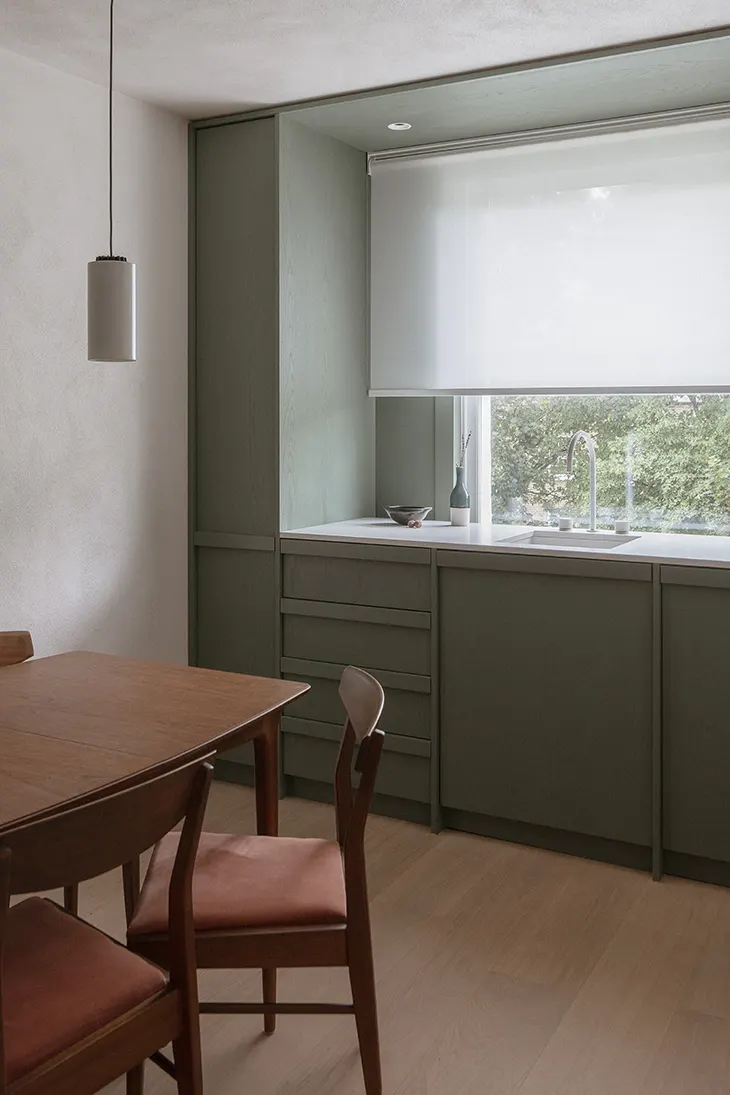
The kitchen anchors one side of the plan with a bespoke composition. Cabinetry in marine plywood with an ash veneer receives a green Rubio WoodCream finish, bringing depth without disrupting the restrained palette. A honed Grigio Perla stone step marks the transition toward the terrace, creating a subtle threshold that draws attention to the exterior connection.
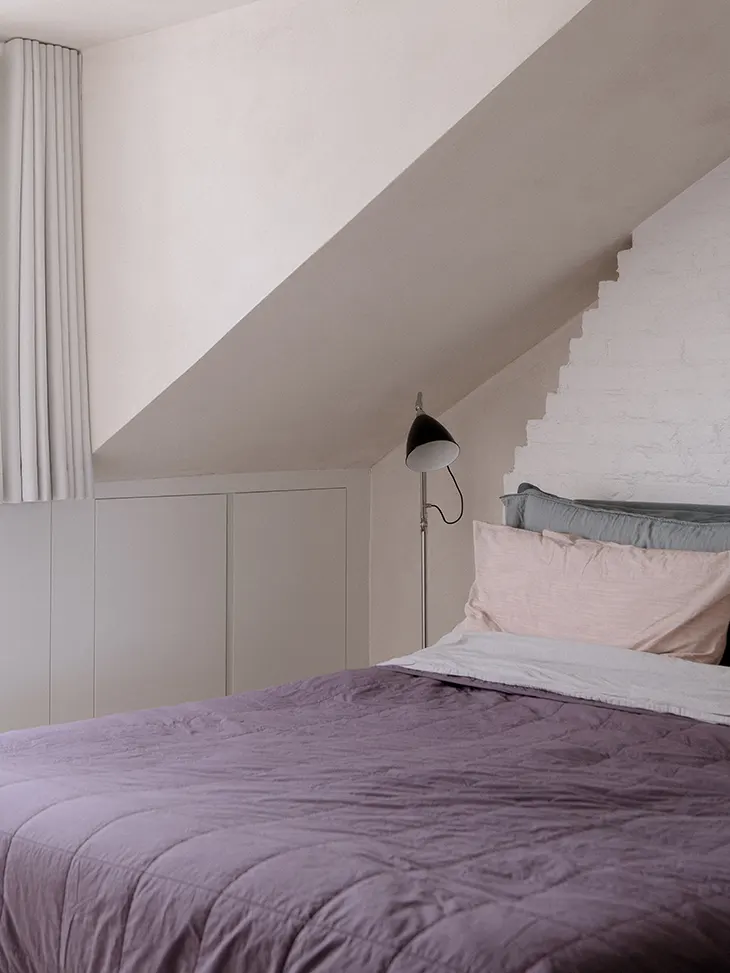
The living area benefits from a larger opening onto the terrace, allowing daylight to reach deeper into the apartment. This adjustment shifts the atmosphere of the space, making it brighter and more connected to the outside. A solid oak door and frame, painted internally to match the surrounding walls, integrates into the overall composition without visual interruption.
Joinery and detailing carry the same level of precision. Internal pivot doors use oiled sapele veneer on solid core timber, introducing a warmer tone within the otherwise restrained palette. Handles alternate between pieces by Izé and custom-made solid sapele elements, maintaining consistency across tactile points. Lighting selections remain understated, with satin nickel fittings in the living room and simpler fixtures elsewhere.
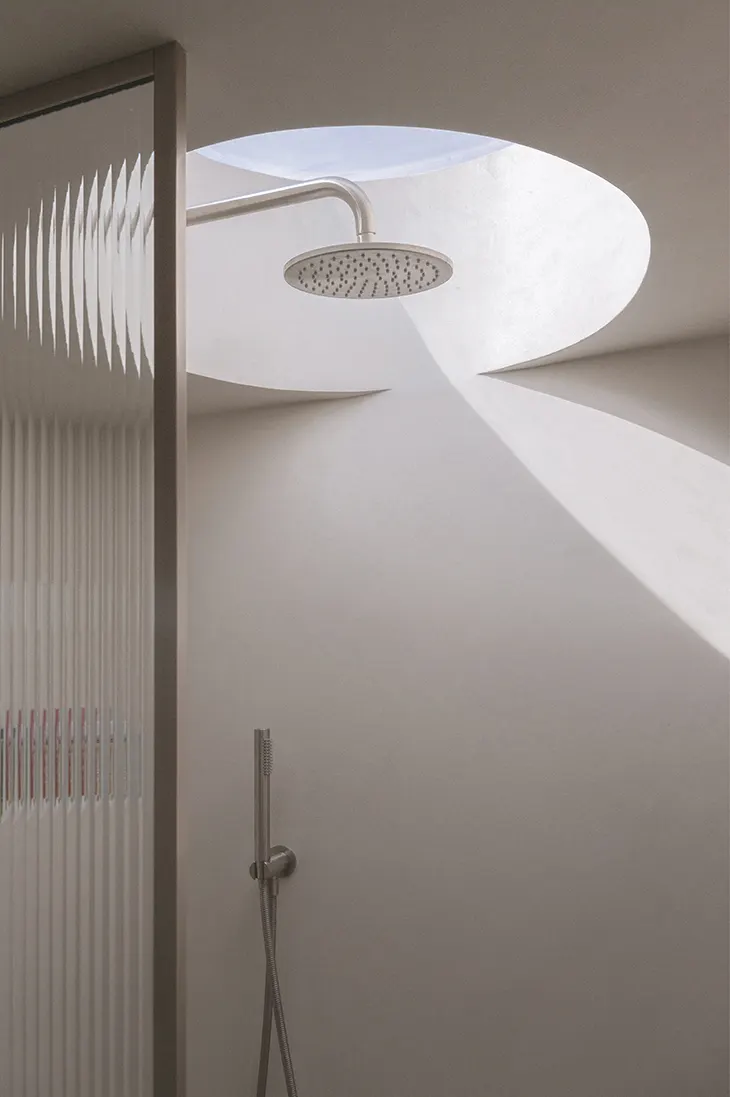
The bathroom introduces a more expressive material combination while staying aligned with the overall approach. Tadelakt covers both walls and ceiling, creating a continuous surface that responds to light and moisture. A Rosso Asiago marble floor and bath add contrast, grounding the space with a richer tone and heavier material presence.
Performance upgrades play a key role in the project. The architects introduce breathable wood fibre insulation across most walls, with aerogel applied to the north-facing wall and dormers. Triple-glazed sash windows improve thermal performance while maintaining a traditional appearance. An MVHR system supports air quality and energy efficiency, ensuring that the apartment performs to a high standard in daily use.
Highbury Flat demonstrates how a clear structural idea can guide every aspect of a refurbishment. The central spine establishes order, while material restraint and technical upgrades ensure that the apartment functions with precision, comfort, and clarity.