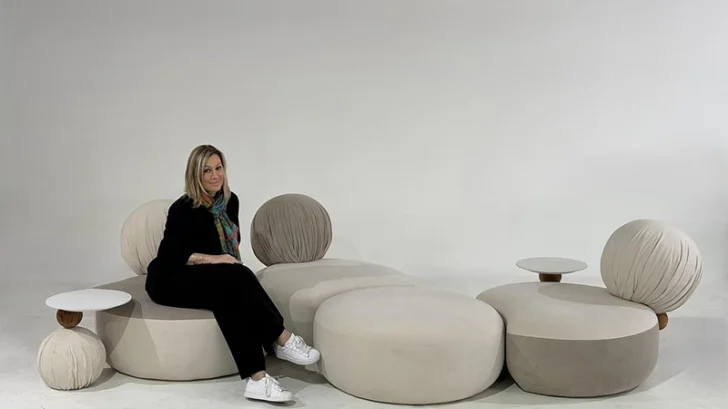

Anna Maya approaches furniture as a study of movement with Ginga, a modular sofa presented at Salone del Mobile.Milano within the Brazilian Furniture space promoted by Abimóvel and ApexBrasil. The project takes its name from the continuous swaying motion that forms the basis of capoeira, turning a physical rhythm into a system of seating that changes according to space, use, and arrangement.
FURNITURE
In capoeira, ginga keeps the body active and alert. It maintains balance through constant adjustment, allowing movement to shift between defence, attack, and improvisation. Maya uses this principle as the conceptual structure of the sofa. Instead of fixing the object into one final composition, she creates a group of elements that users can rotate, combine, or reposition over time.
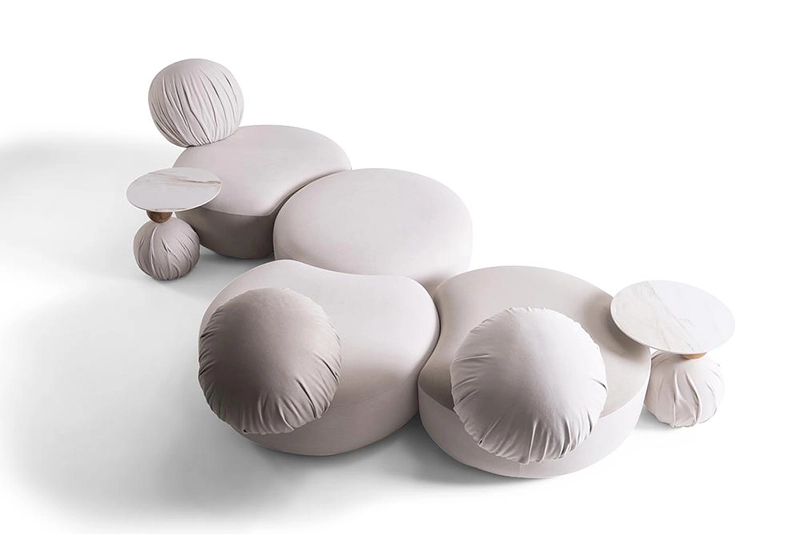
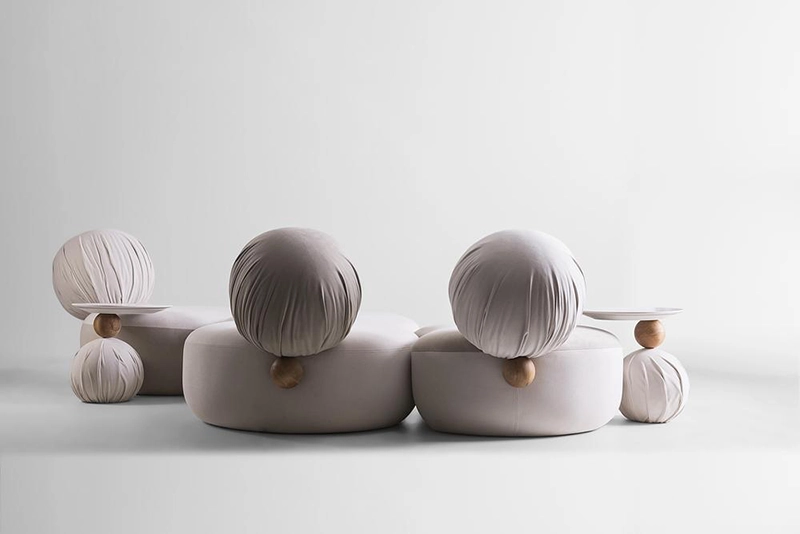
This flexibility gives Ginga its strongest quality. The sofa does not depend on a single room layout or prescribed way of sitting. Its modules support several configurations, allowing the object to expand, contract, separate, or reconnect. The system responds to changing domestic habits while preserving a clear visual identity across every arrangement.
Maya avoids literal references to capoeira. She does not reproduce gestures or turn Brazilian culture into surface decoration. Instead, she studies the logic behind the movement: balance without stillness, structure without rigidity, and repetition that remains open to change. This approach gives the project cultural specificity without reducing it to symbolism.
The seating modules develop from low linear bases divided by horizontal seams. These lines bring order to the volumes and establish a measured rhythm across the upholstery. They also create opportunities to combine contrasting fabrics, textures, and colors without disturbing the overall composition. Each seam contributes to the sofa’s geometry while helping the modules read as connected parts of a larger system.
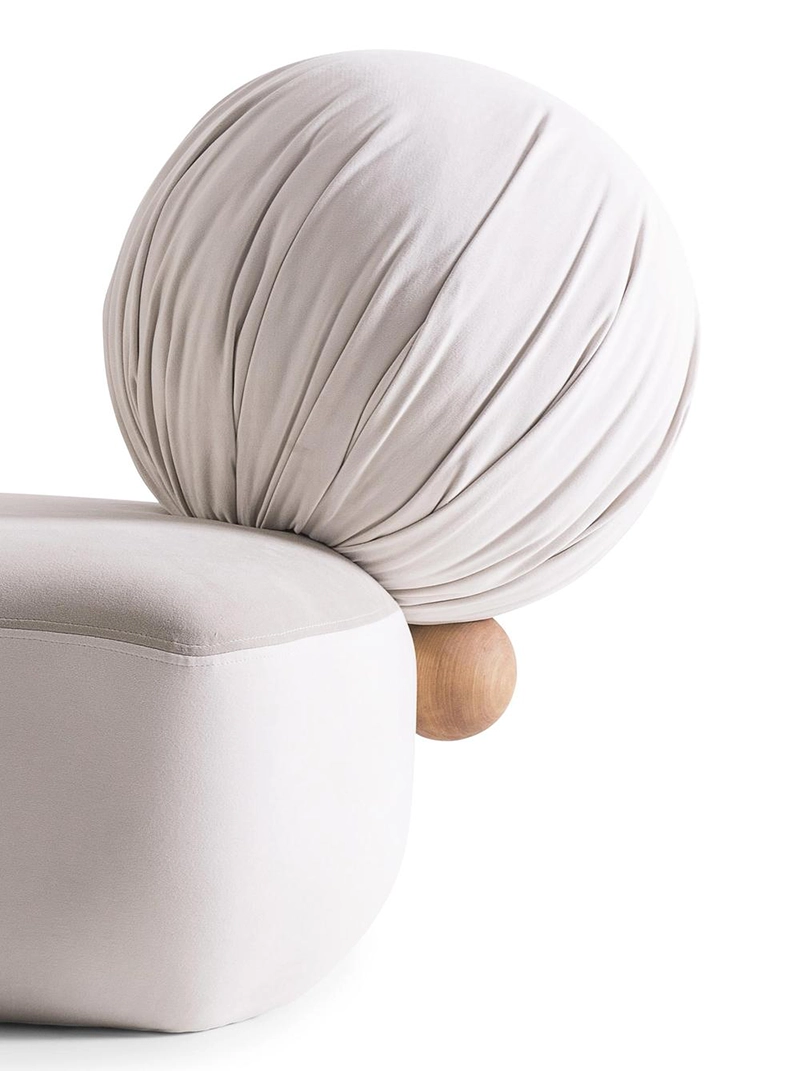
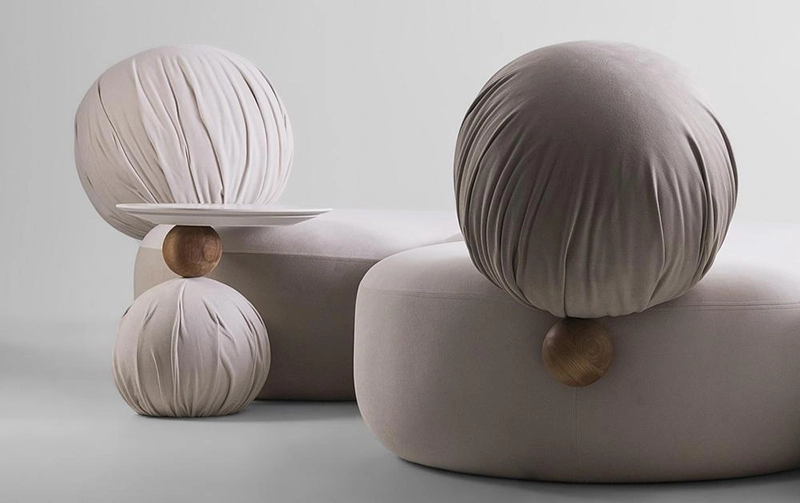
Rounded backrests interrupt the horizontal structure. Their gathered surfaces introduce softness and physical depth, shifting the object away from a purely architectural form. The tension between straight bases and circular supports becomes the defining visual relationship within the project.
A wooden sphere appears at the rear of the backrest, positioned at the end of a vertical seam. The element functions almost like punctuation, completing the composition while connecting Ginga to Maya’s broader design research. The sphere frequently appears in her work as a tool for examining balance, perception, and spatial relationships.
Here, the form carries more than decorative value. It creates a recognizable detail from several viewpoints and links the sofa’s construction to its central idea of circular movement. The sphere also provides a visual counterweight to the broad upholstered surfaces, concentrating attention at the point where line and volume meet.
Ginga draws a productive connection with Brazilian modernism, particularly its use of elementary geometry to create expressive and sculptural objects. Maya carries that interest into a contemporary domestic context, where modularity and adaptability matter as much as formal clarity. Her sofa recognizes that interiors now support several functions and social patterns, from private rest to conversation and collective use.
The project also addresses material responsibility through certified wood, renewable upholstery, and production methods intended to reduce textile waste. Its modular construction allows users to reorganize components instead of replacing the entire sofa when spatial needs change. Durability becomes part of the design system, supported by the possibility of continued use across different settings.
Ginga’s concept remains present at every level. Movement shapes the modules, seams, proportions, and relationship between geometric forms. The cultural reference guides the design without controlling it. Maya translates an idea through construction and use, giving the sofa meaning beyond its name.
With Ginga, Anna Maya presents a confident vision of contemporary Brazilian design. The project moves away from familiar visual clichés and focuses instead on a deeper cultural principle. It treats rhythm as structure, flexibility as function, and identity as something expressed through the way an object behaves.