
The Valkhof Museum in Nijmegen reopened on June 6, 2026, following a renovation by UNS. The Dutch architecture firm first designed the building in 1995 and completed it in 1998. Nearly three decades later, the studio returned to update the museum as a cultural destination and public meeting place while preserving the central ideas of its original design.
MUSEUMS
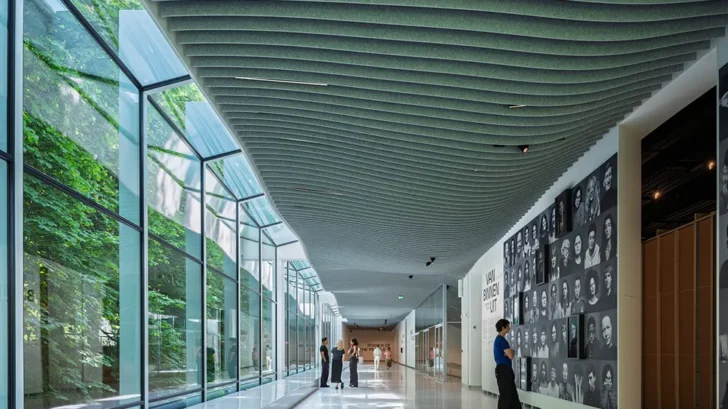
UNS focused on the building’s defining elements, including the sweeping central staircase, undulating ceiling, and network of 88 routes through the galleries. The renovation retained these features and clarified their role within the visitor experience. The team also created more space for temporary exhibitions, improved circulation and sightlines, upgraded the interior climate, and gave public facilities greater prominence.
The central staircase continues to organize the building. Colorful risers now give it a stronger visual presence, while color applied to the inside of the existing wooden balustrades connects the entire structure. The added contrast also improves visibility and supports safer movement. At the entrance, a revolving door replaces the former airlock, creating a larger and brighter arrival area.
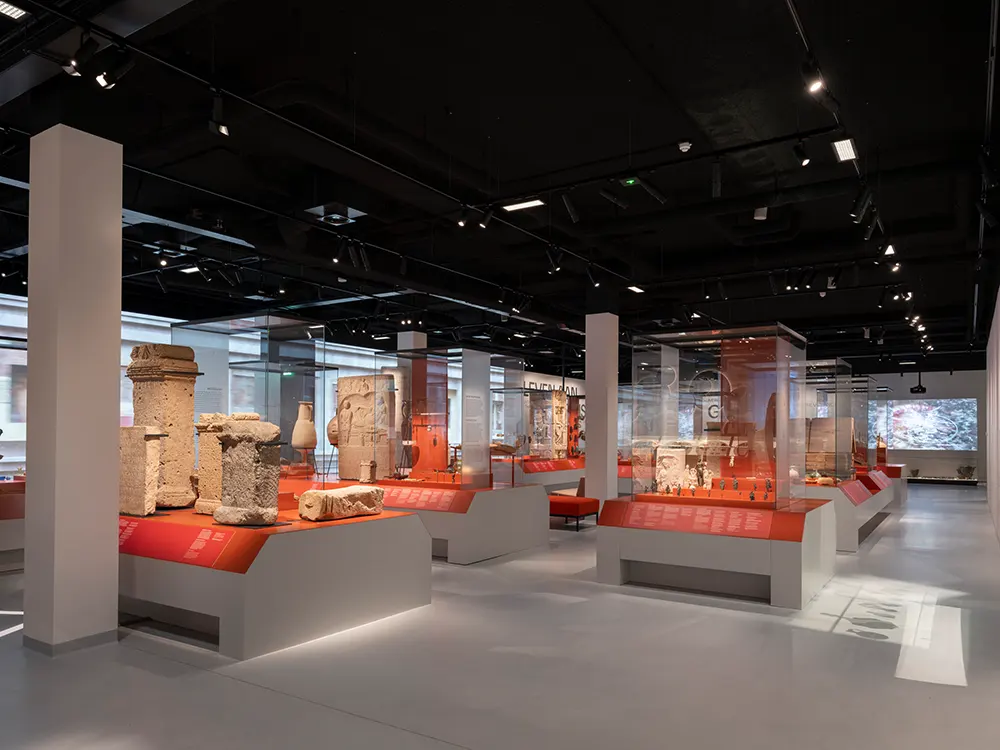
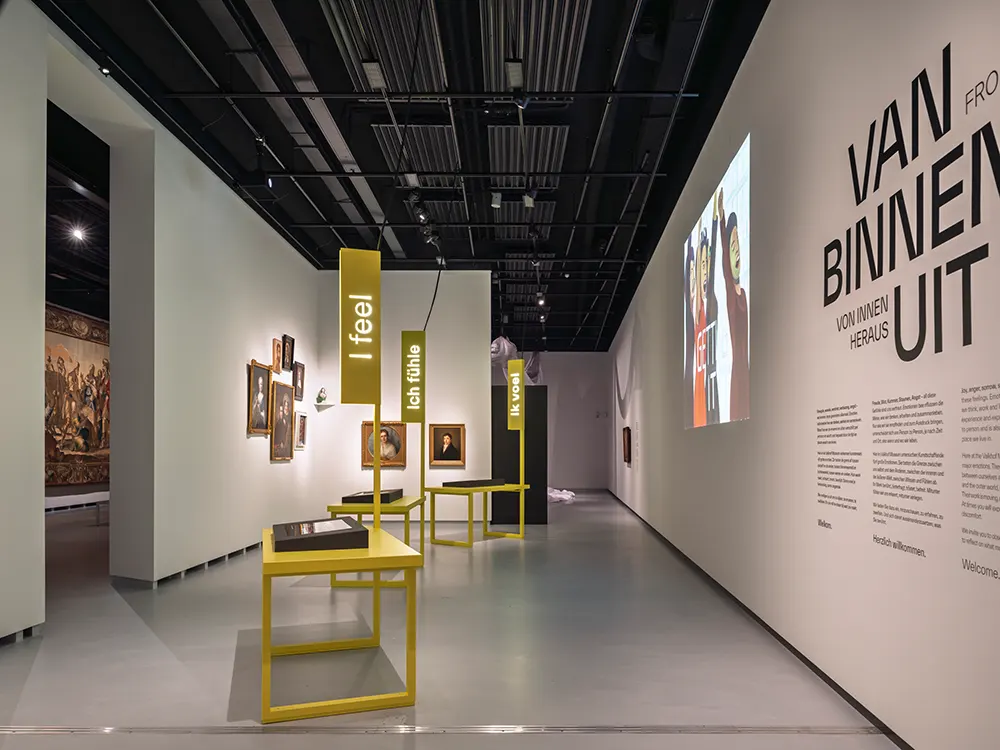
The museum now places its permanent collection in the basement and temporary exhibitions on the upper floor. This arrangement creates a continuous route through the building. Views into the depot allow visitors to see another part of the museum’s work and extend the experience beyond the exhibition rooms.
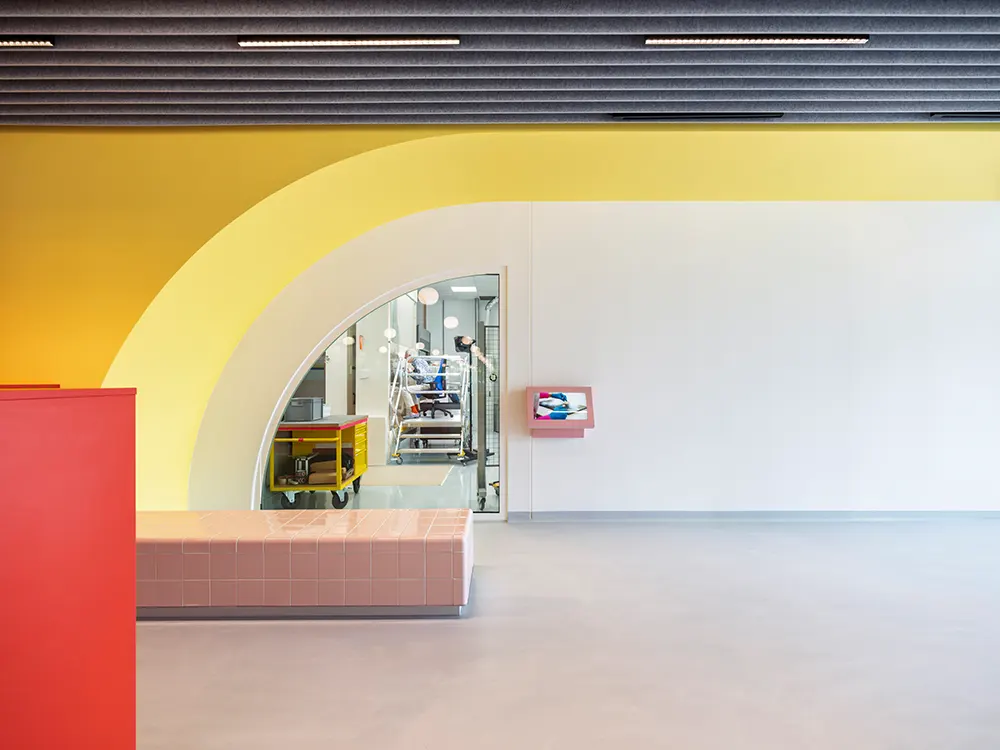
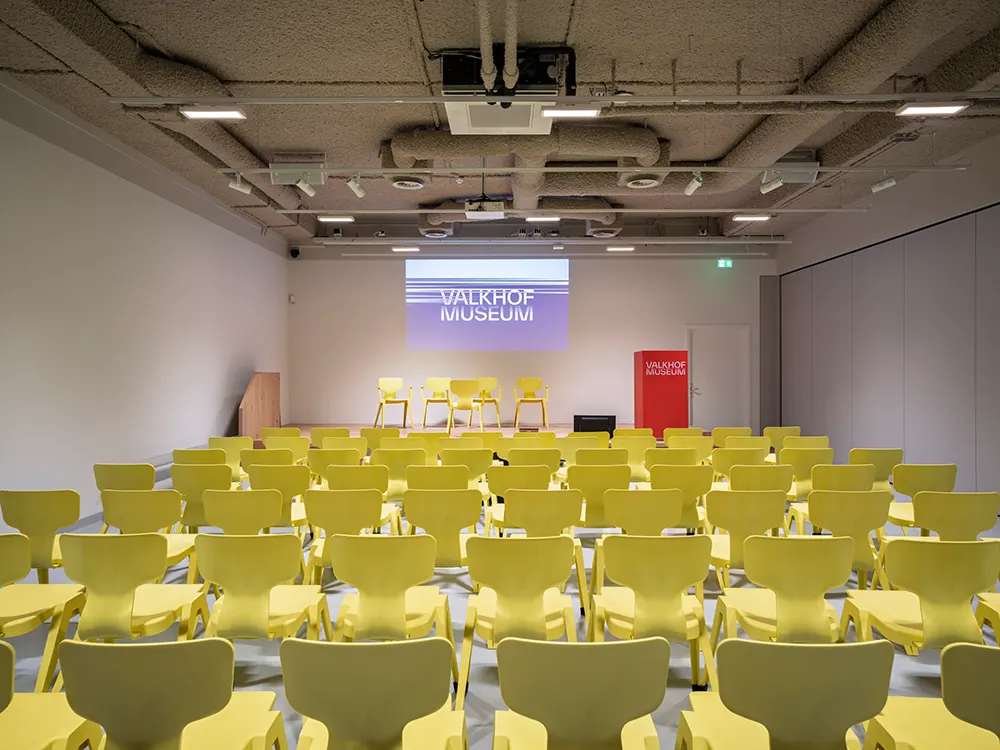
UNS also reorganized the ground floor. The café moved from the rear to the front, where it faces the square and opens onto a new outdoor terrace. Educational rooms and a new auditorium occupy the back of the building. These spaces can open into one another, supporting shared programs and creating a clearer sequence from the café to the learning areas.
Two new openings improve orientation and visibility. One connects the ground floor with the basement and brings daylight into the lower level. The second sits between the restoration workshop and museum shop, allowing visitors to observe the study and restoration of artefacts. A fully glazed facade replaces the partly closed exterior, bringing more natural light inside and creating direct views between the square and the displays.
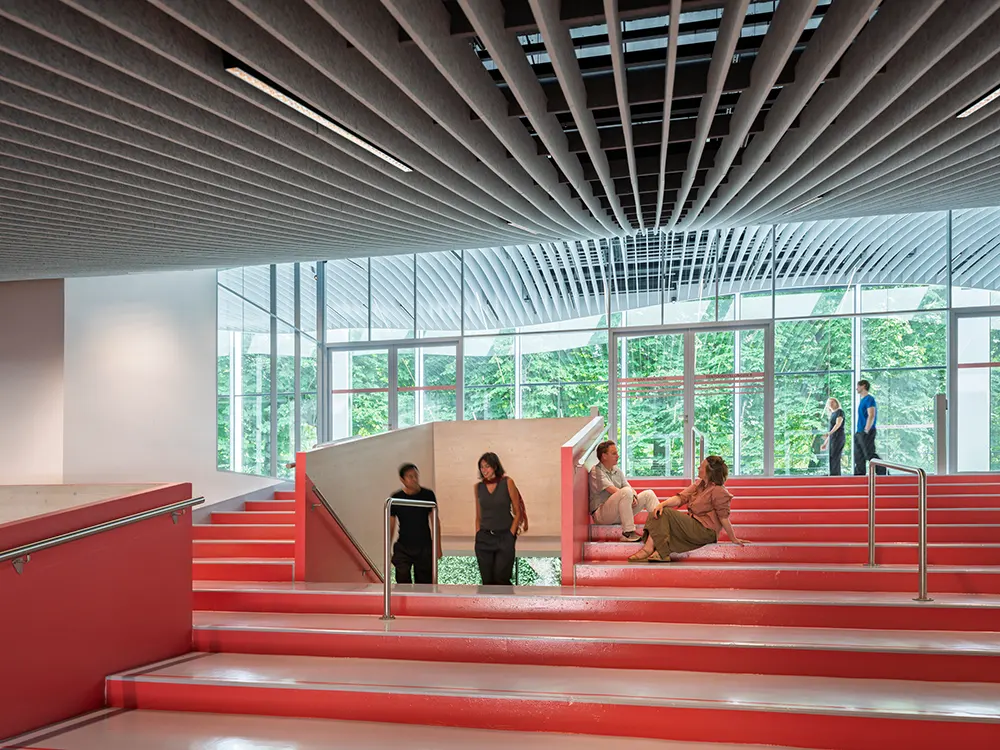
The project prioritized retention and selected upgrades. The team dismantled the 30-year-old facade, replaced its insulation with a higher-performing material, cleaned the original glass panels, and installed them again. PET felt lamellas replace the rippling suspended ceiling in the main public spaces, improving acoustics and simplifying maintenance. UNS removed suspended ceilings from the galleries, reducing material use and increasing the sense of space.
A shared framework connected the architecture, interiors, and graphic identity. UNS introduced a vivid color palette and circular forms. Ineke Hans used this vocabulary for the café and shop interiors, while Thonik drew from the facade and staircase when developing the museum’s new logo and visual system.
Queen Máxima formally opened the renovated museum on June 4. The reopened institution presents the permanent exhibition Mens op de grens, which traces stories from prehistory to the present through Nijmegen’s location on the former northern border of the Roman Empire. The opening program also includes Making a Museum, Museum in de klas, and Power of the People. Artist Fernando Sánchez Castillo, who created Power of the People, will contribute bespoke artworks to the redesigned Kelfkensbos public square.
The Valkhof Museum brings archaeology, cultural history, and contemporary art together, using connections across periods and cultures to link historical material with the present.
Client: The municipality of Nijmegen
Location: Kelfkensbos 59, 6511 TB, Nijmegen, Netherlands
Building floor area: Gross: 7,637 m2 / Net: 7,179 m2
Building volume: 39,582 m3
Building site: 3,023 m2
Building Height: 10.5 m
Commercial Space: 380 m2
Status: Completed
UNS: Ben van Berkel with Tina Kortmann, Jaap Baselmans and Cristina Bolis, Kasia Ephraim, Hans Kooij, Machiel Wafelbakker, Shan Qi, Nawid Piracha, Juan Pablo Fuentes Rojas, Verena Lihl, Ka Shin Liu, Zhongming Fang and Tjaša Barič
Advisors
Structure, Fire safety and Acoustics: ABT
Programme Coordination: Atelier Alkema
Climate and Installation Advisor: Nelissen
Contractor Building Team: Berghege
Interior and Furniture Design: Ineke Hans
Exhibition Design: Opera
Branding and Graphic Design: Thonik
Wayfinding: Mijksenaar
Light Design: Studio Warmerdam
Photography: Ossip van Duivenbode