
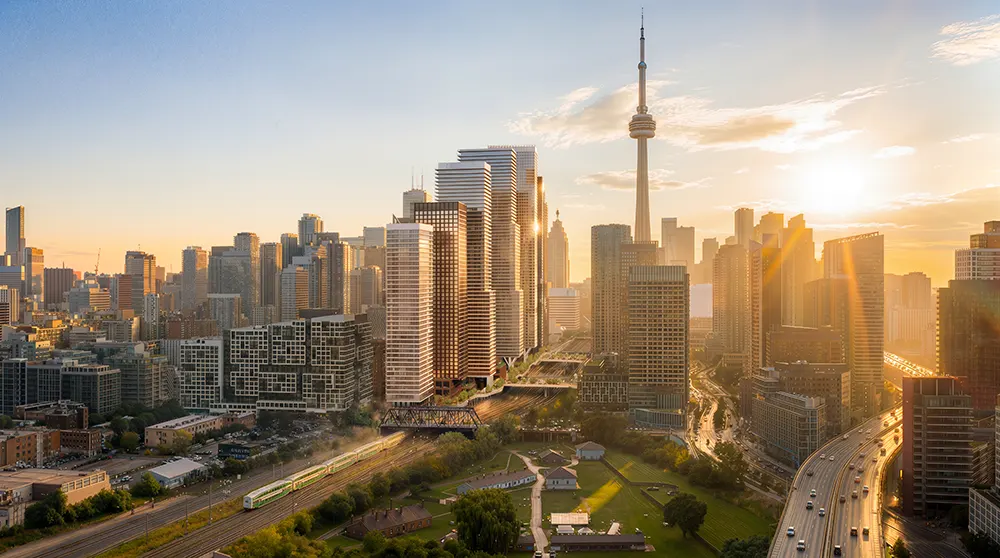
LiUNA Pension Fund of Central and Eastern Canada and Fengate Asset Management have announced Toronto Rail Yards, a 14-acre mixed-use community designed by Henning Larsen above the active rail corridor between Bathurst Street and Spadina Avenue. The downtown Toronto project will create new land over existing railway infrastructure, connecting housing, offices, retail, child care and public space with the city’s transit network.
RESIDENTIAL
Toronto Rail Yards will occupy air rights above the rail corridor and establish one of the city’s most transit-connected neighborhoods. The future Spadina-Front GO Station will provide access to higher-order transit one stop from Union Station. A network of pedestrian routes and cycling paths will link the development with nearby districts.
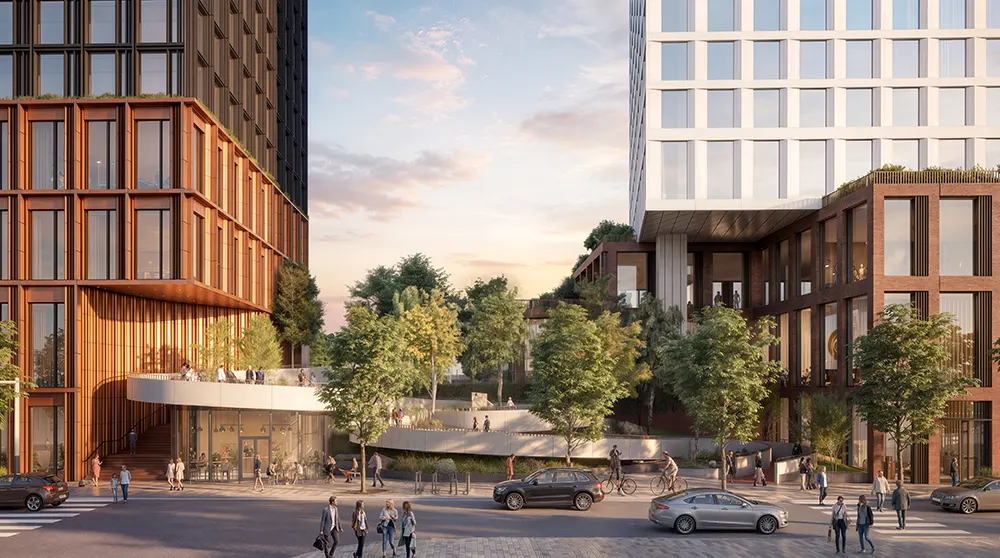
The completed project will deliver nearly 4,000 homes in several sizes and formats, including family-sized residences. Plans also include more than two acres of urban park space, 85,000 square metres of offices, two child-care centres and approximately 4,700 square metres of retail.
Construction will begin with a six-acre deck built above the active railway. The platform will support buildings, parks and public routes while trains continue to operate below. According to the project team, construction of the deck should create more than 4,600 jobs and generate over nine million hours of union labor.
Henning Larsen has shaped the plan around daily movement and community use. The public areas will include parks, play spaces, walking routes and active building frontages. These elements will create places for residents, workers and visitors to meet, spend time outdoors and move between the neighborhood and its transit connections.
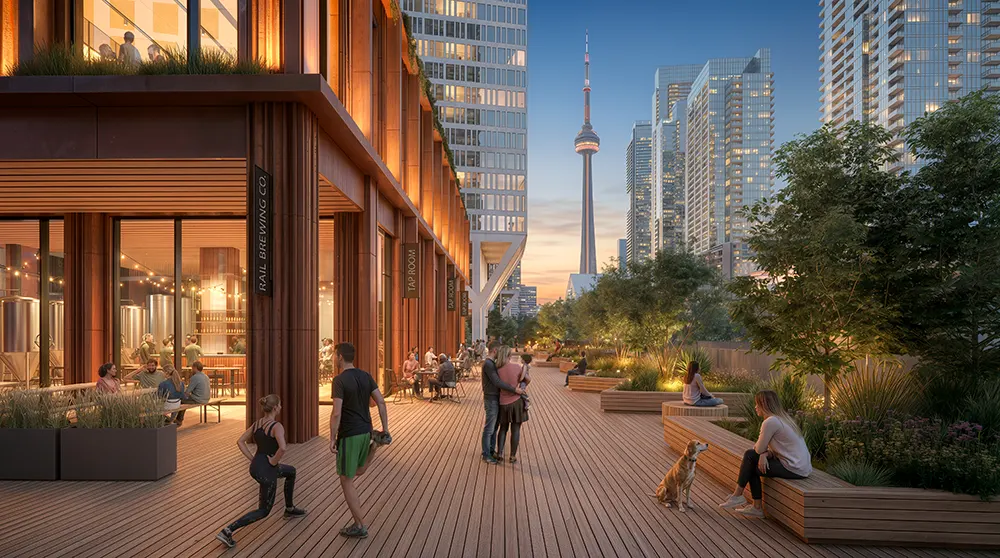
The design team will consider scale, materials and microclimate when developing the outdoor spaces. This approach will address Toronto’s changing seasonal conditions and support regular use throughout the year.
The project responds to Toronto’s demand for housing by placing thousands of new residences close to employment, services and transit. Its mix of uses will support activity throughout the day and reduce dependence on private vehicles. The development also aims to contribute to the City of Toronto’s goal of reaching net-zero emissions by 2040.
Henning Larsen leads a multidisciplinary group that includes Hines, PCL, WW+P Architects and RJC Engineers. The team combines international design experience with local knowledge of Toronto’s planning, construction and infrastructure conditions. Building above an operating rail corridor will require close coordination between architecture, engineering, transit operations and phased construction.
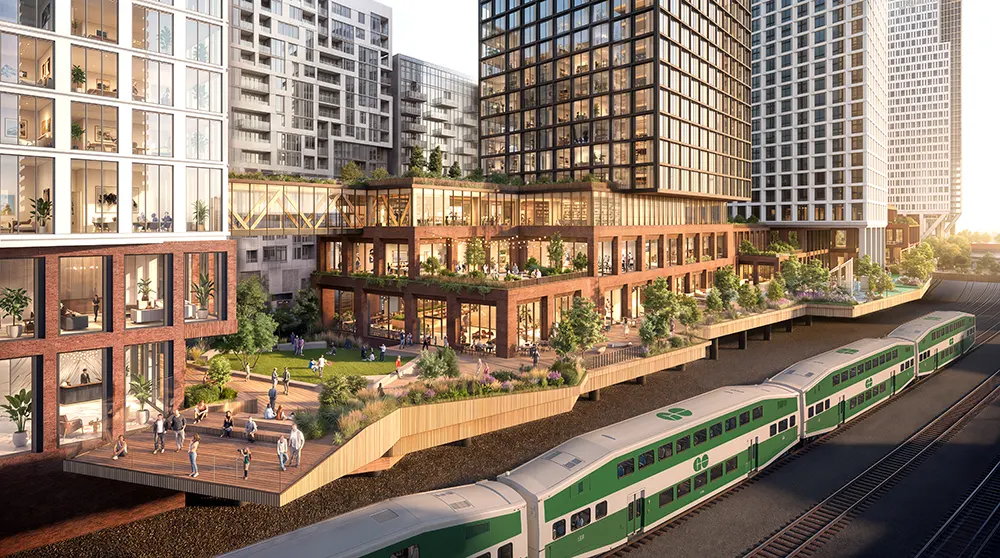
LiUNA and Fengate developed the proposal through discussions with community members, City stakeholders and Metrolinx. The planning process addressed rail operations, public access, infrastructure and the technical requirements of creating a large district above an active transportation corridor.
Joseph Mancinelli, Chair of LPFCEC, described Toronto Rail Yards as an investment in housing, employment and the city’s future. Fengate Real Estate President Jaime McKenna pointed to the scale and technical demands of delivering a complete community above functioning railway lines.
The partners plan to construct Toronto Rail Yards in phases to reduce disruption and maintain progress across the site. Site preparation should begin in 2028, with construction of the deck scheduled to start later that year. Once complete, the project will convert unused air space into a dense urban district shaped around housing, transit and public life.