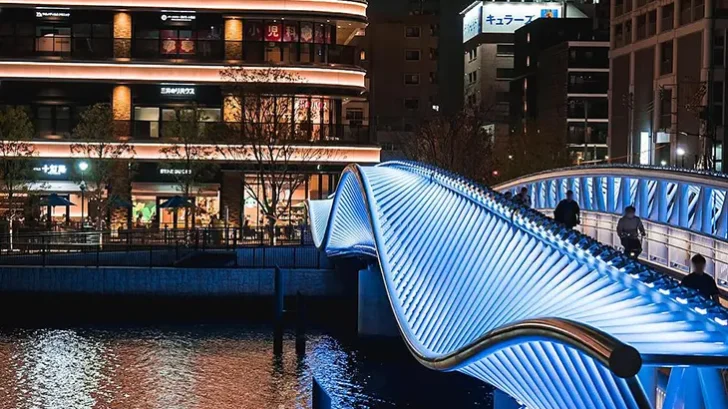

Reimei Kobashi, a pedestrian bridge spanning the Asashio Canal in Tokyo’s Chuo City, has been named a Winner in the “Architectural Design Infrastructure” category at the Architecture MasterPrize 2025. Designed by Hoshino Architects Inc. as Master Design Architect, the project has been recognized for its synthesis of infrastructure, landscape, and urban experience within a rapidly evolving waterfront district.
BRIDGES
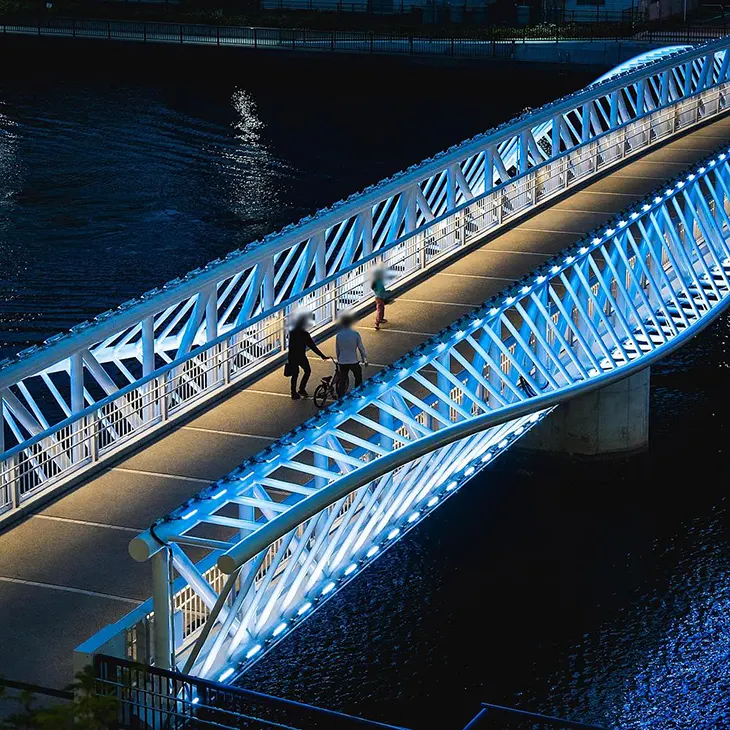
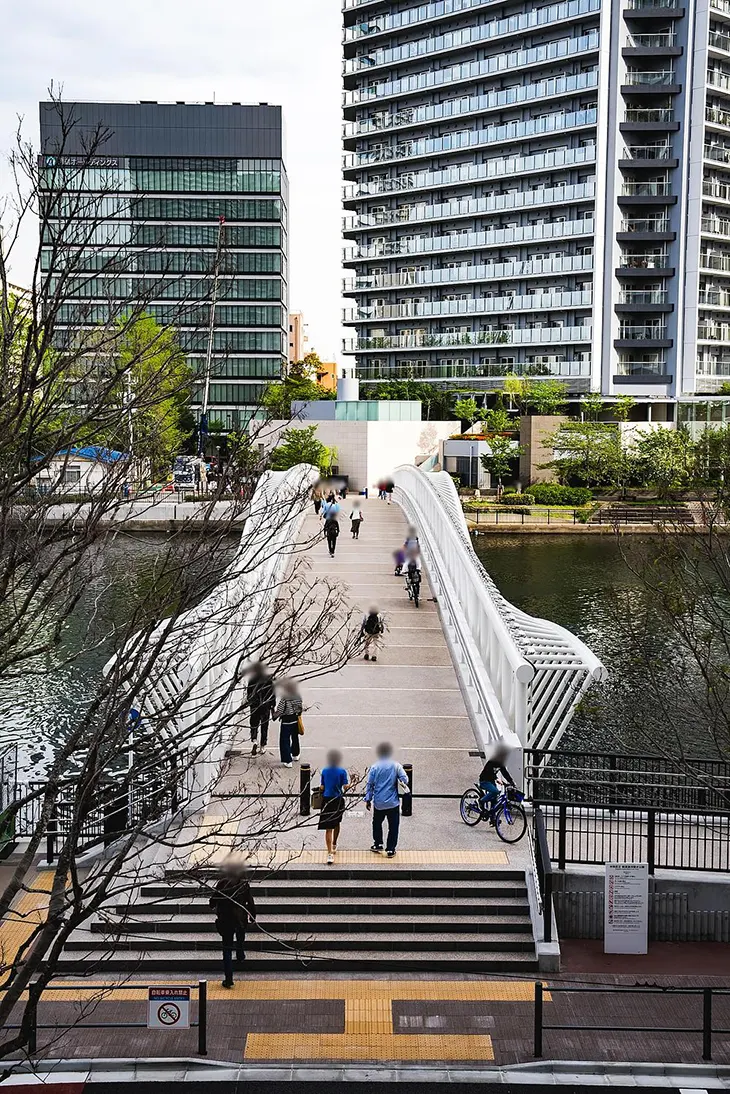
Opened to the public on March 25, 2024, Reimei Kobashi connects Kachidoki Station with Harumi 3-chome, providing a new pedestrian link to the Grand Marina Tokyo area. The bridge’s soft arching form draws directly from the movement of water below, translating the rhythm of the canal into a continuous, flowing structure. Rather than asserting itself as a rigid object, the bridge appears to hover lightly above the surface, defined by a gentle undulation that echoes waves rolling across the water.
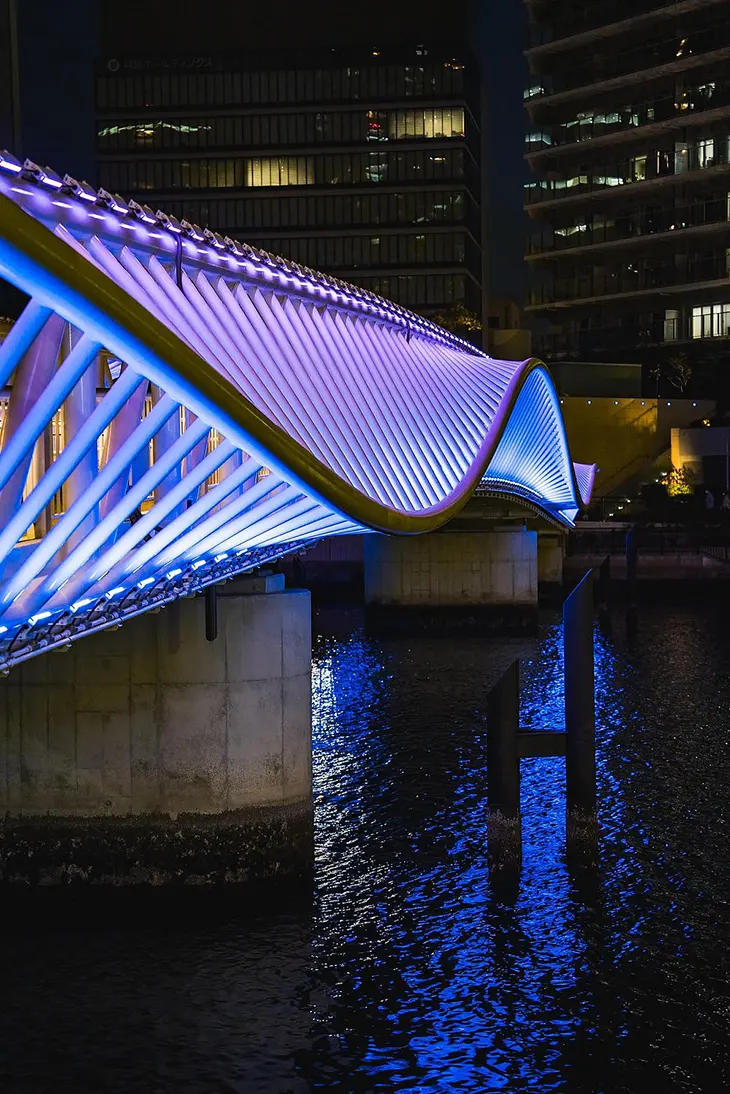
The bridge’s white, sculptural profile reinforces this sense of motion. Its three-dimensional geometry shifts subtly along the span, creating a single, fluid gesture that pedestrians experience as they move across it. This gradual transformation lends a bodily awareness to the act of crossing, where walking becomes synchronized with the bridge’s changing form. The structure reads differently depending on vantage point, inviting both passage and observation.
Equally central to the project is the relationship between the bridge and its reflection. As daylight changes, the shadow cast onto the canal intensifies the visual dialogue between structure and water, producing layered wave-like patterns that extend the bridge’s presence beyond its physical limits. This interplay enhances the sense of immersion, allowing the surrounding environment to actively participate in the design.
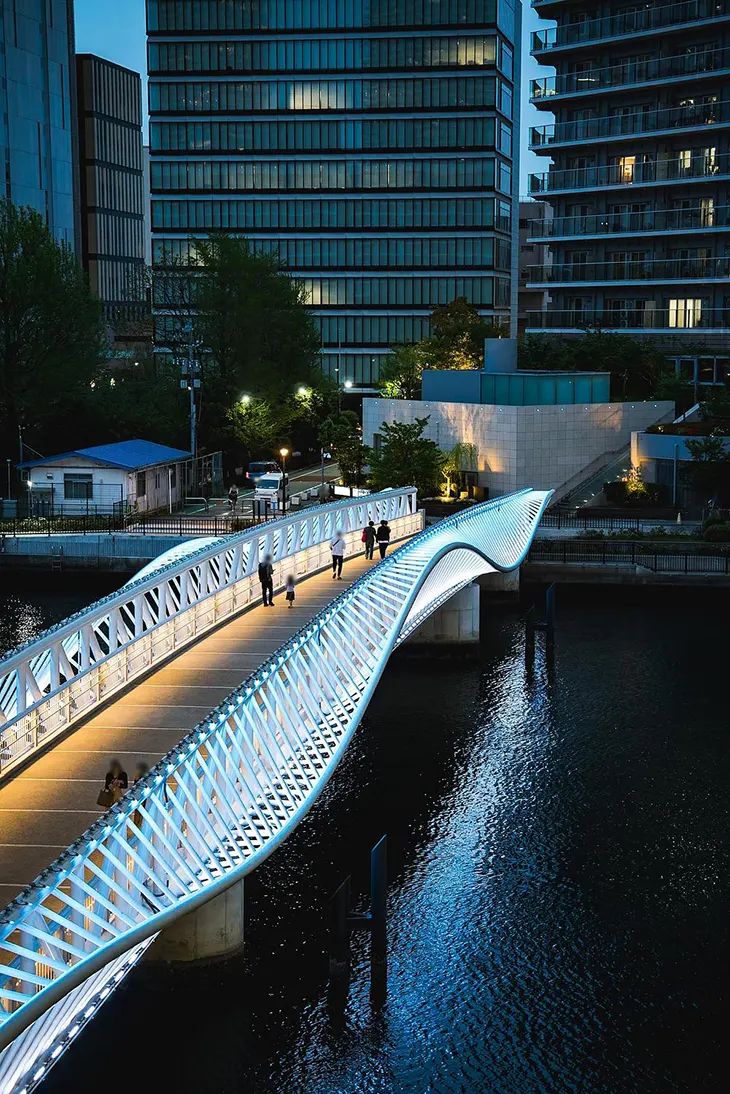
At night, lighting becomes the project’s defining atmospheric element. A programmable lighting system allows colors to shift gradually according to season and day of the week. By independently adjusting the rhythm of illumination along the upper and lower portions of the rippled form, the lighting design generates a wide range of visual effects. These subtle variations introduce a daily sense of change, transforming the bridge into a dynamic component of the area’s nightscape rather than a static piece of infrastructure.
The project holds particular significance within its urban context. Located in a district experiencing steady residential growth, Reimei Kobashi contributes a civic presence that supports everyday movement while enriching the public realm. Its combination of infrastructure and visual expression reflects a broader approach to urban design that values experiential quality alongside functional necessity.
The Architecture MasterPrize recognition marks Hoshino Architects’ second consecutive year as a Winner, following the firm’s 2024 award in the High Rise Buildings category. In 2025, the program received submissions from 72 countries, underscoring the international scope of the award and the project’s standing within a global architectural field.
Reimei Kobashi demonstrates how pedestrian infrastructure can operate as a site of spatial poetry, where movement, light, and context converge. Through careful attention to form and atmosphere, Hoshino Architects delivers a bridge that serves the city while offering a quietly transformative experience for those who cross it.