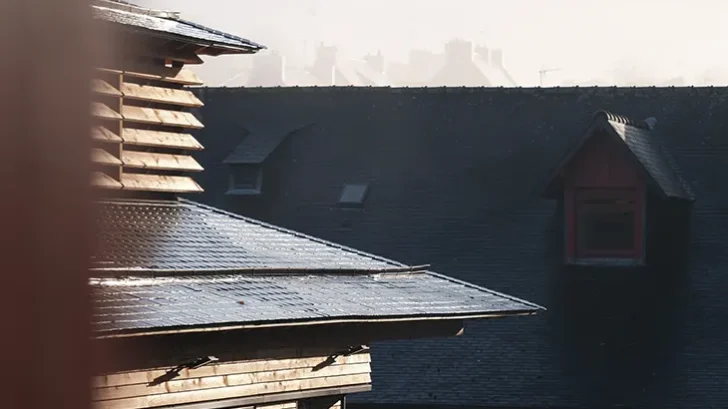

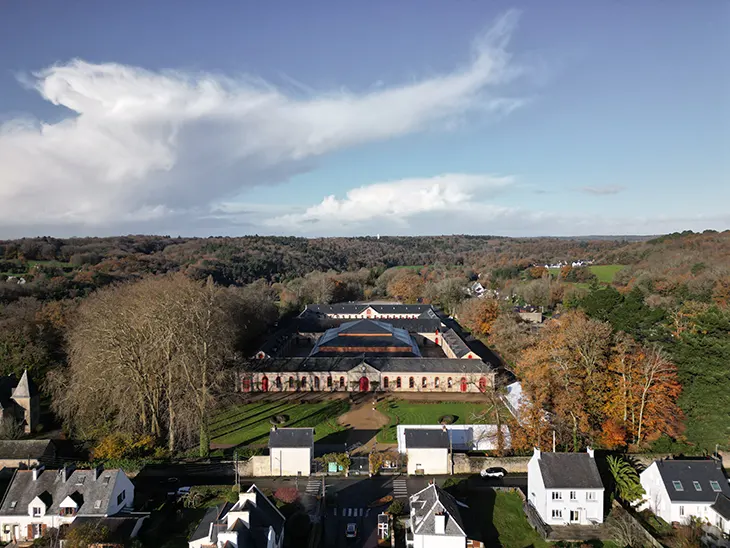
K ARCHITECTURES introduces a new equestrian performance hall within the historic grounds of the Hennebont National Stud Farm, positioning the project directly inside the Cour du Puits. The building rises seventeen meters above the courtyard, establishing a strong vertical presence that reshapes the existing skyline while maintaining a clear relationship with the surrounding Napoleonic stables. Its form references the scale and silhouette of the long slate roofs already present on site, allowing the new structure to align with the existing architectural language instead of competing with it.
SPORTS ARCHITECTURE
The project builds its identity through a deliberate engagement with historical typologies. K ARCHITECTURES draws from early sedentary circuses and regional market halls, with a clear influence from Victor Baltard guiding the overall direction. This reference appears in the layered roof structure and the use of clerestories, which introduce natural light and ventilation into the volume. The roofline breaks down the mass of the building, creating a sequence of articulated forms that reduce its visual impact while maintaining its scale within the courtyard.
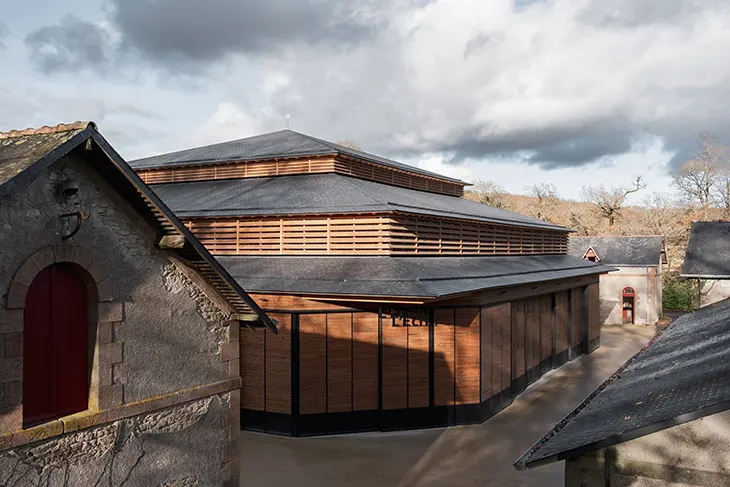
Material choices play a central role in defining the project. The roof combines rectangular slates associated with Napoleonic architecture and rounded slates that introduce a more contemporary reading. This combination produces a subtle shift in texture across the surface, allowing the building to sit between past and present without forcing contrast. The geometry of the roof slopes follows a controlled graphic logic, introducing variation through form rather than decoration.
The timber envelope reinforces this approach. The facades use a grid of horizontally crenelated wood panels, establishing a consistent rhythm around the courtyard. This outer layer frames the interior as a contained volume, while also interacting with the upper tiers of adjustable wooden louvers. These elements regulate daylight and airflow, allowing light to enter the arena in a controlled manner. During the day, the structure becomes fully legible from within, as light reaches the timber arches and exposes the construction system in detail.
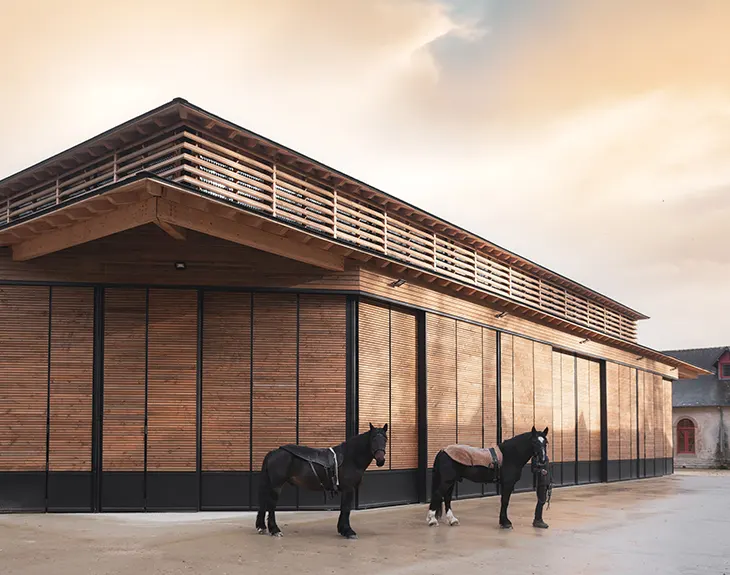
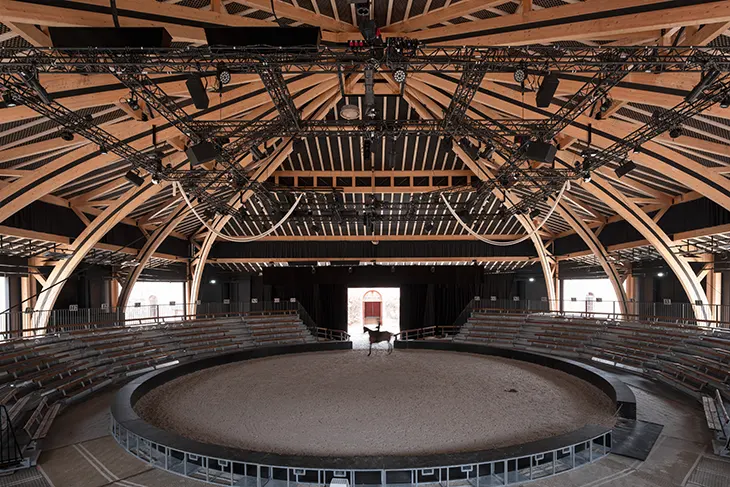
Inside, the hall operates as a clear, unobstructed volume designed for equestrian performance. The structural system removes intermediate supports, allowing the arena to open fully across its span. This decision strengthens the visual connection between the performance space and the surrounding heritage buildings. Sightlines extend across the courtyard, positioning the activity inside the hall within the broader context of the stud farm.
The project maintains a consistent focus on construction logic and environmental response. Timber forms the primary structural material, supported by concrete foundations and a secondary metal framework. The use of bio-sourced and geo-sourced materials reflects a direct approach to sustainability, while the passive ventilation strategy supports stable internal conditions. The hall accommodates a flexible arena format and seating for 700 spectators, ensuring that the space adapts to different types of events without altering its spatial clarity.
K ARCHITECTURES delivers a project that operates through precision rather than excess. The building establishes continuity with its context through proportion, material, and form, while introducing a new program that expands the function of the site. The result presents a controlled architectural response that respects the existing environment and redefines its use through a clear and focused intervention.