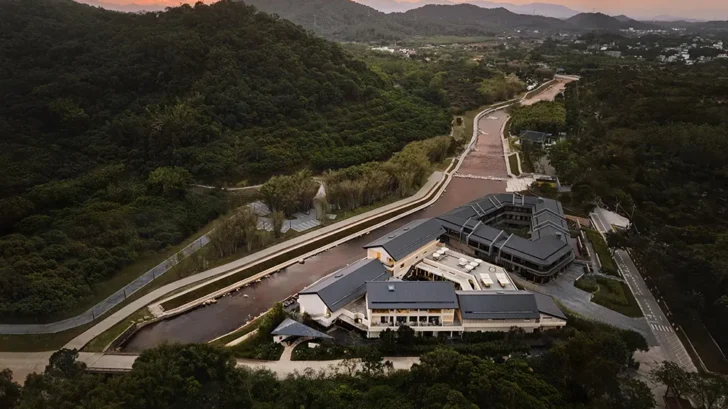

Studio InTo completes Sanshan Laichi Xialang Valley Retreat in Xialang Village, Huizhou, Guangdong Province, China, at the foot of Mount Luofu and southeast of Fayun Temple. Surrounded by bamboo groves, streams, and gently changing terrain, the guesthouse responds to the humid, rainy climate of the Lingnan mountain region through a spatial system built around courtyards, semi-outdoor passages, natural ventilation, and layered views. The project covers 3,900 square meters, with architecture, interior, landscape, and FF&E design led by Studio InTo.
HOTELS
The site carries a quiet literary reference through Su Dongpo, who wrote during his exile in Huizhou about the simple pleasure of cooling one’s feet by a stream on the summer solstice. Studio InTo uses this atmosphere as a point of departure, placing the building to one side of the site and allowing the retreat to settle into the existing landscape. The design avoids an isolated resort language, instead creating a sequence of spaces where mountains, water, vegetation, light, and shadow enter daily life gradually.
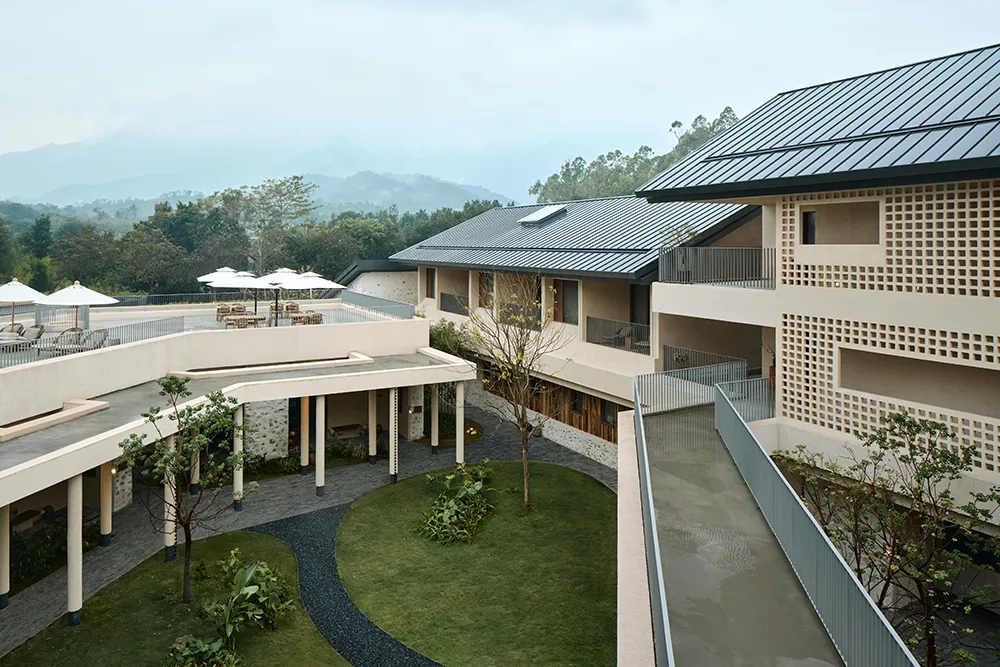
The building volumes enclose a central courtyard from three sides, while an opening between the two taller masses extends the courtyard toward the southwest and frames Mount Luofu. The volumes never fully close in on themselves. Semi-outdoor spaces, corridors, and transitional interfaces connect them, creating gaps that support circulation, pause, daylight, ventilation, and framed views. These openings allow the project to work almost like a garden, where scenery changes as the visitor moves through the building.
The entrance sequence reinforces this slower rhythm. Set away from the main road, the approach leads visitors through a bamboo path before reaching a triangular entrance pavilion. From there, the foyer sits at the junction of two raised volumes and marks the endpoint of the triangular inner courtyard. The space then unfolds through three courtyards, each visually connected through the foyer and surrounding corridors. This structure gives the retreat a calm sense of movement, with interior and exterior areas constantly shifting into one another.
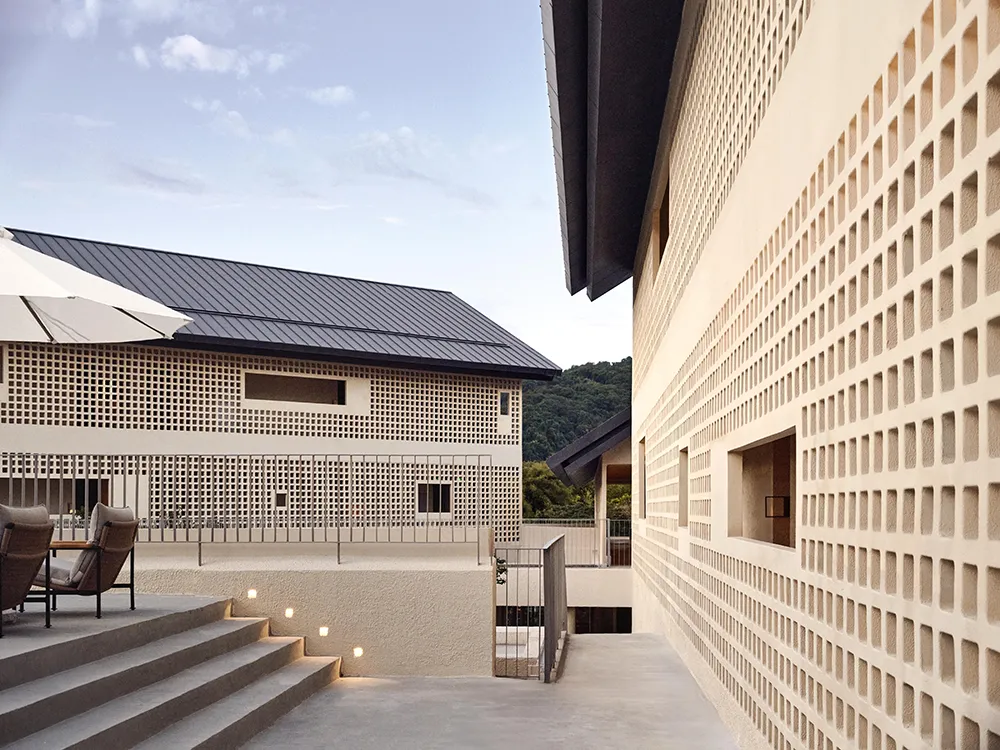
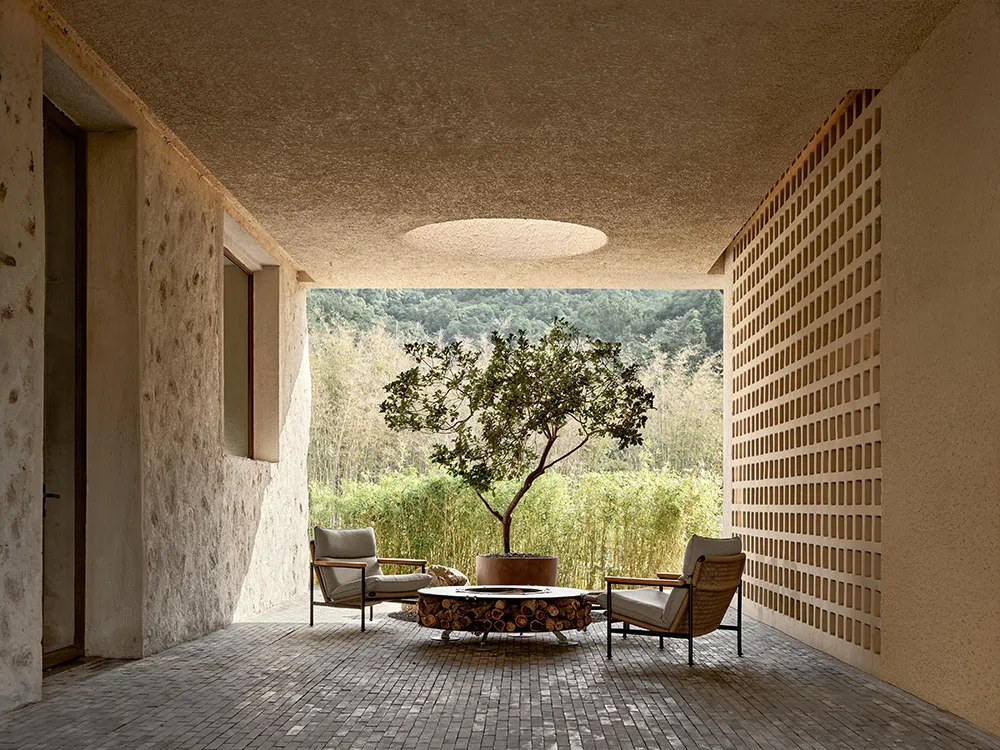
Studio InTo draws from Lingnan architectural traditions through open, permeable spatial forms suited to heat and rain. The semi-outdoor ground level connects the different functional areas around the courtyard, while pitched roofs echo the distant mountain profile and answer the local climate. These roofs also give the building a clear architectural character, tying the separate volumes together without making the composition feel rigid.
Materials play a central role in grounding the project. Rubble stone walls extend from the exterior into the interior, creating a continuous material base across different spatial layers. Their rough texture catches changing light throughout the day, while perforated brick walls facing the inner courtyard provide shade, ventilation, and visual permeability. These brick surfaces filter strong sunlight and create mottled patterns in the semi-outdoor areas outside the guest rooms.
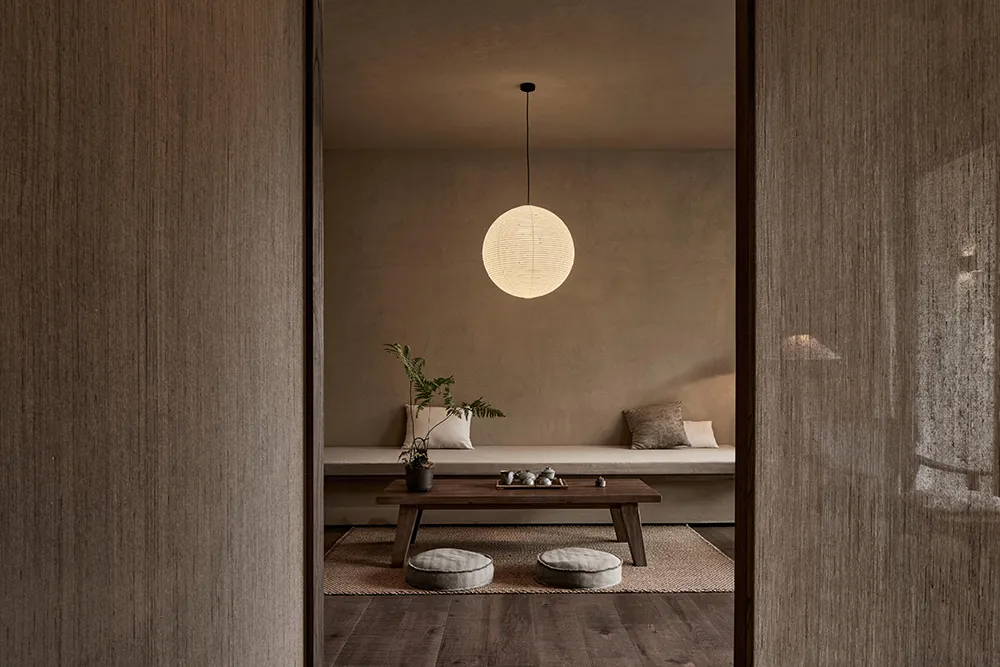
The public interiors continue the same restrained language. Oriented toward bamboo groves and streams, the shared spaces use framing and borrowed views to draw the landscape inward. Stone walls, solid wood elements, and furniture with a natural character create a grounded atmosphere without separating the interior from its surroundings. Interfaces opening toward the river further soften the building’s physical boundary, allowing the guesthouse to stay closely connected to water, vegetation, and mountain air.
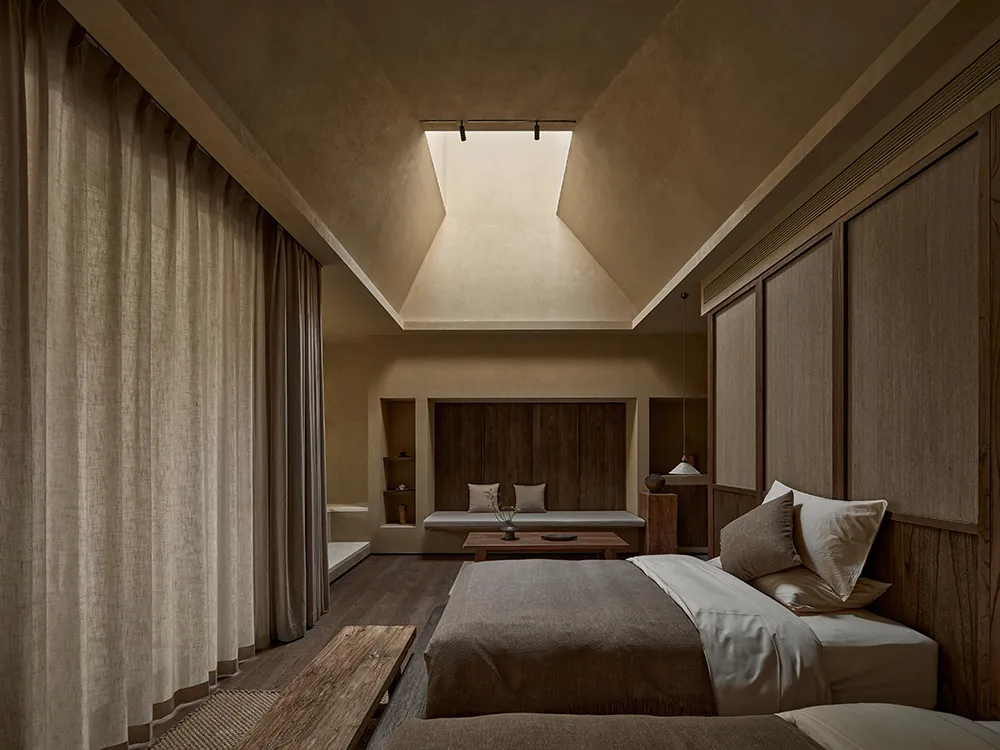
The guest accommodation divides into six suites and twenty-one standard rooms. The suites sit deep within the ground floor, away from the road and close to the riverbank, creating a quieter and more private experience. Standard rooms occupy the second and third floors, opening toward the mountains and river. A wide-bay, shallow-depth layout allows each room to receive wider views and even natural light, while ceilings beneath the pitched roofs follow the roofline and guide light softly into the interior.
Inside the rooms, Studio InTo uses warm-toned textured paint, dark solid wood furniture, warm white stone, and semi-transparent ramie partitions. These materials create privacy while allowing light, silhouettes, and partial views to pass through. Some rooms introduce skylights, giving daylight a vertical presence and allowing light and shadow to change over time. The design makes even modest spatial dimensions feel connected to the passing hours and the surrounding terrain.
Sanshan Laichi Xialang Valley Retreat succeeds through balance. Studio InTo uses low-tech, locally grounded construction methods to respond to climate, site, and program, bringing together stone, brick, reclaimed elm wood, slate roof tiles, textured coatings, and metal roof panels within a coherent architectural language. The project frames retreat as an everyday relationship between architecture and environment, where courtyards, corridors, air, water, bamboo, and mountain views form one continuous spatial experience.