
Anna and Sergii Baierzdorf, co-founders of Furn Object, introduce Portals Collection through a simple but charged idea: the need for a place, object, or moment that lets the mind step away from the weight of everyday reality. The collection turns metal and art glass into forms that suggest entry points, pauses, and private shifts in perception. Across the pieces, contrast becomes central: density and softness, surface and depth, function and atmosphere. Light and reflective material create objects that feel grounded in the interior while opening toward something more private and slightly unreal.
INTERVIEWS
Across The Island Table, The Gate Mirror, and The Glimpse Floor Lamp, Furn Object explores how furniture can carry emotional charge while remaining part of daily life. Metal appears softened, opened, or interrupted, while glass brings moments of light, reflection, and visual depth into each form. In this interview for ARCHISCENE Magazine, Anna and Sergii Baierzdorf discuss the thinking behind Portals, their approach to existential design, the transformation of metal and glass, and the way a single object can alter the mood of a room.
Portals Collection begins with the idea of “materialized escapism.” What exactly are you hoping people escape from through these portals, and what do you want them to return to?
Each person has their own thoughts and challenges they sometimes want to step away from. This doesn’t necessarily require physically escaping in real life. Sometimes, we simply need to return for a moment to the safe space that exists within our consciousness.
I can give a personal example: my home in Ukraine has been under occupation for more than nine years, and I often return there in my dreams before coming back to reality.
It’s precisely this contrast, this transition between worlds, that we aimed to express in our collection. The main goal of Portals is to allow a person to experience this state not only mentally, but also through real physical sensations while interacting with our objects.
For us, design is not cold calculation, but the recording of a moment.
You describe your work as “existential design,” yet Portals is about exhaling, recharging, and stepping outside reality for a moment. How do you turn heavy questions into metal, glass, shape, and light that evoke lightness and joy?
We don’t have a precise formula. It’s a purely intuitive, internal process.
We observe the world around us. Objectively, it is harsh, full of challenges and difficult moments. And we work with equally uncompromising materials.
But through all of this, we also see how beautiful reality can be. Our design is a projection of that perspective.
We take this heaviness and rigidity and use them to show that even within them, you can still find lightness, the ability to exhale, and the capacity to see beauty.
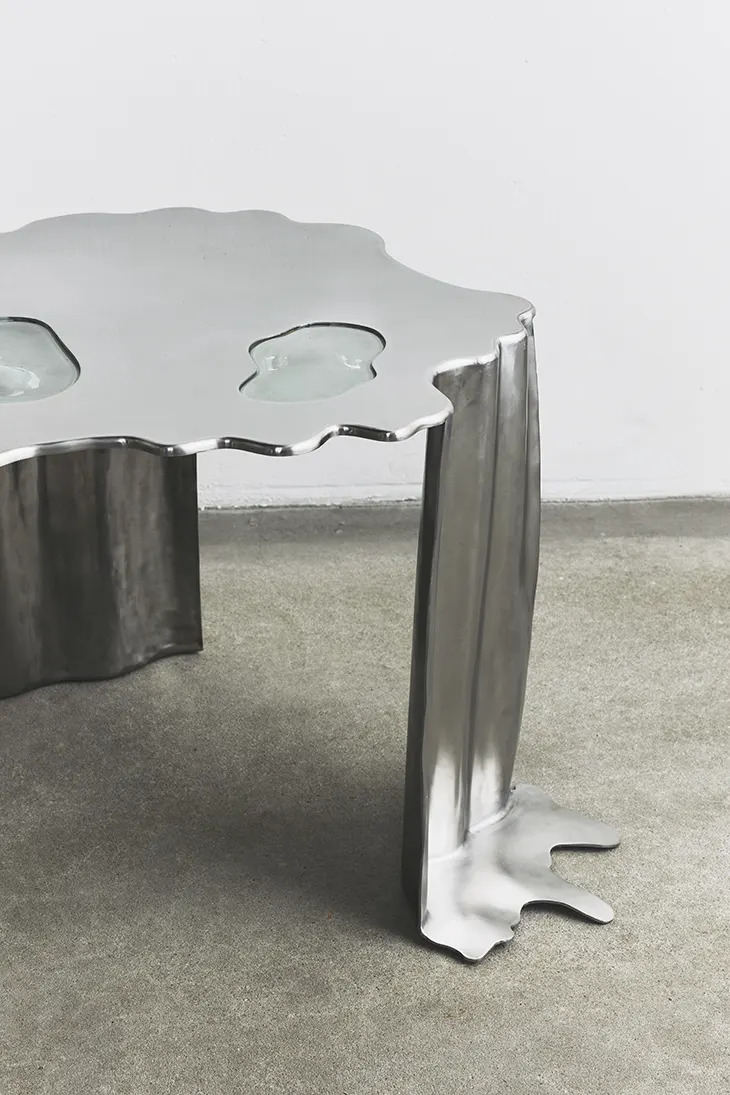
In this collection, metal seems to melt, split, and lose its harshness. What drew you to this transformation, and how do you persuade such a stubborn material to look so vulnerable?
Metal is one of our primary materials, and we work with it constantly. But we’re not interested in using it in the same way every time, so for each new piece we try to reinvent the material anew.
In the Portals Collection, we wanted to show how light can completely transform the nature of things.
To make stubborn metal appear vulnerable, we combined concept with craft. We developed a special finishing technique that visually and tactilely emphasizes the softness of the material. And when the right light falls on such a prepared surface, what is hard and rigid stops appearing that way.
We don’t fight the metal, we simply prepare it so that light can dissolve its hardness.
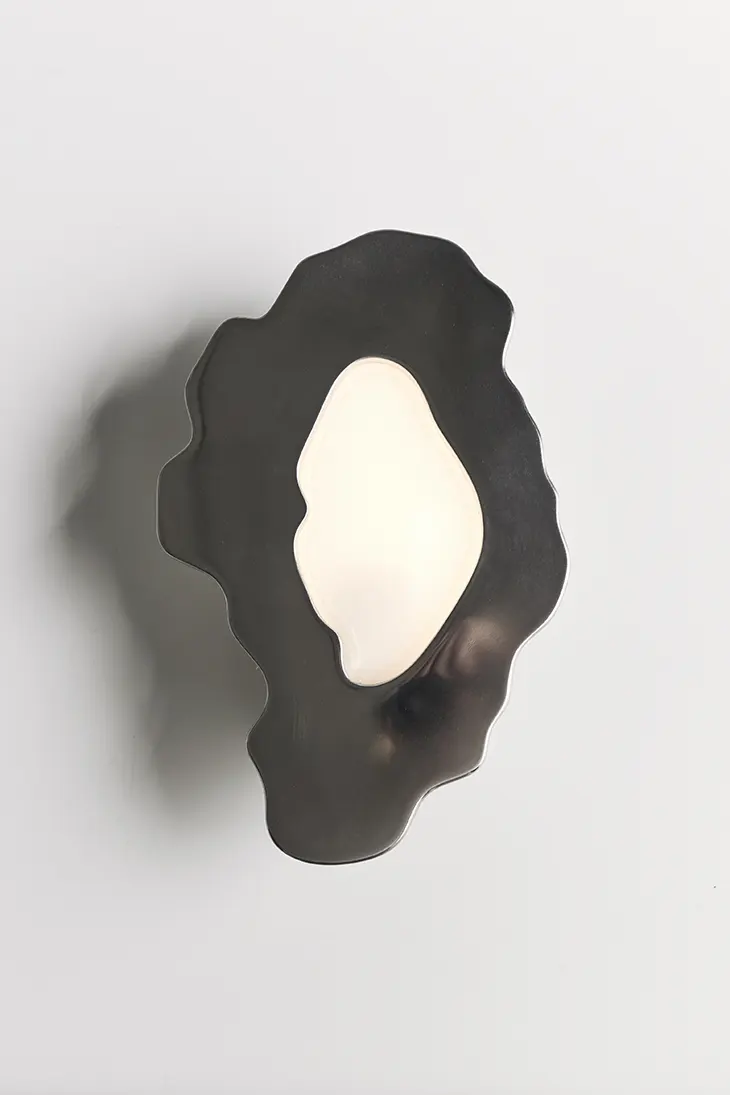
The art glass inserts feel like openings inside the objects. What role does glass play for you here?
We have long wanted to integrate glass into our metal objects. We are deeply drawn to how these materials contrast with and simultaneously complement each other.
Glass has a fascinating paradox: visually it is extremely light and airy, yet in practice it requires tremendous effort and uncompromising craftsmanship. This duality perfectly aligns with our concept.
In the finished objects, metal holds the structure together, as it’s material, grounded, and heavy. Glass plays the role of a delicate substance through which it becomes possible to “break through” into another state.
It’s like dreams: fluid and alive with pulsating energy. It functions as a window that disrupts the solid wall of reality and gives a person the opportunity to look beyond it.
We use contrasting materials to make them vulnerable and alive, and it’s this interplay that creates a true emotional connection.
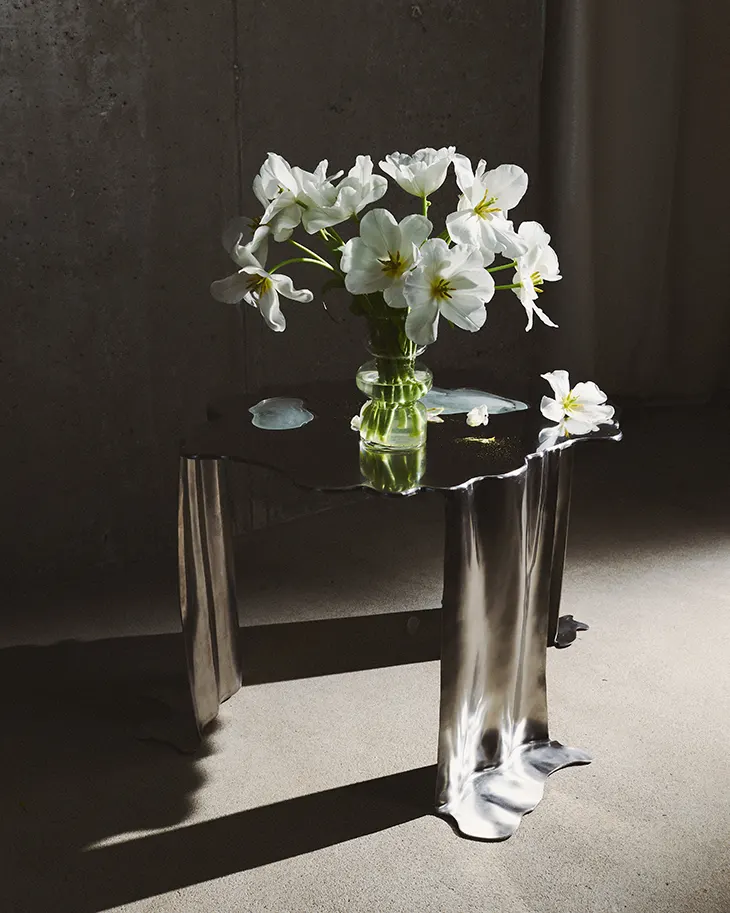
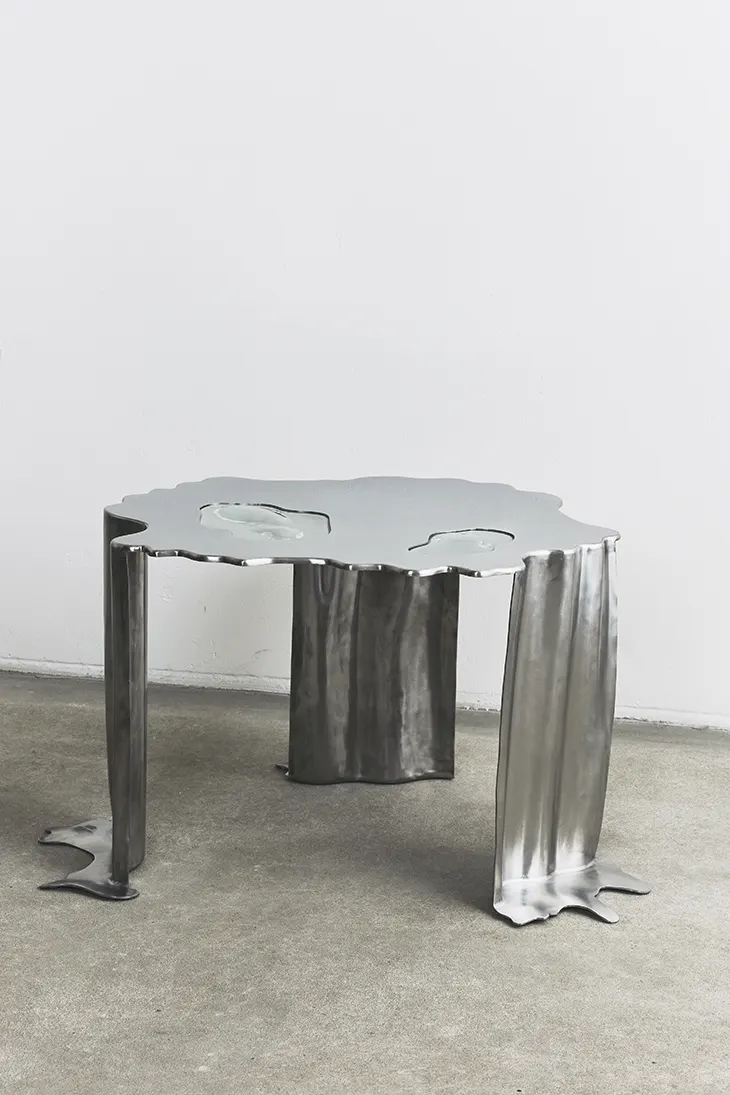
The Island Table is described as the energy center of the space. How did you approach designing an object that feels functional, sculptural, and almost symbolic at the same time?
We didn’t want to create just a functional surface on supports. The sculptural quality of the table lies in its posture. For example, the legs are turned outward, giving it a distinct character.
The table feels as if it expands from the center, flowing out from a single source and cascading downward. It doesn’t stand like an ordinary piece of furniture, but rather like a living being or a monument that gently transitions from one space into another.
The Portals Collection is fundamentally about movement in different forms, and here the table literally “flows” and expands. This fluid form makes it a visual anchor in the space while fully preserving its functionality.
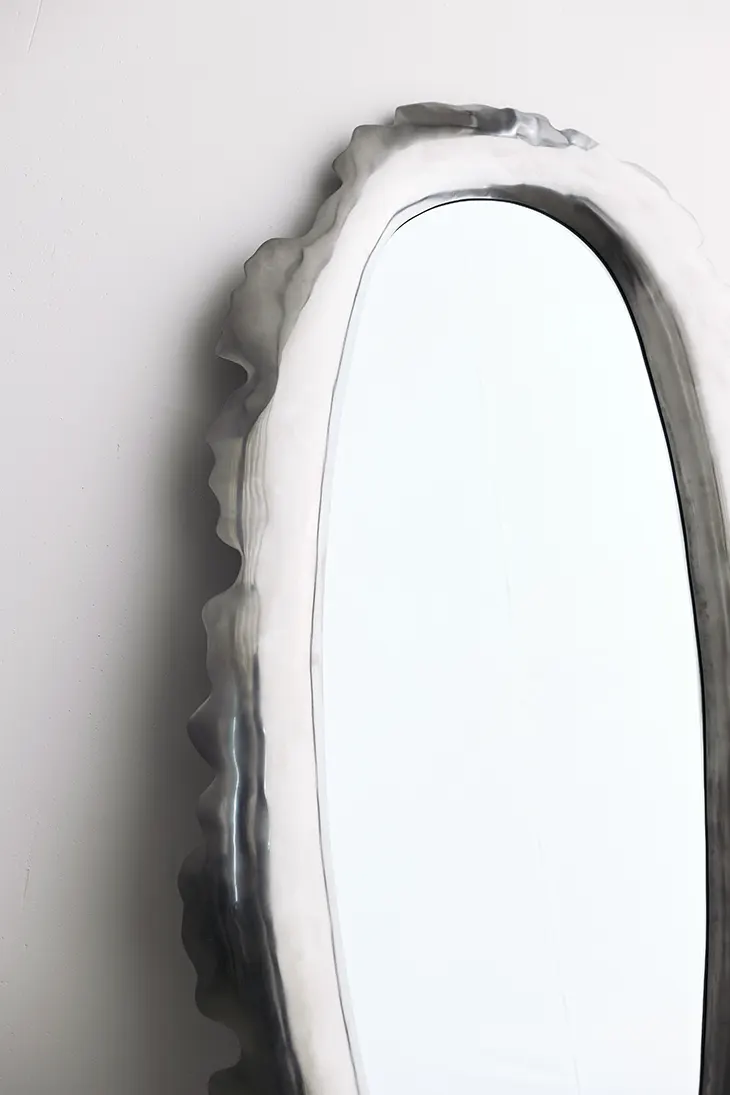
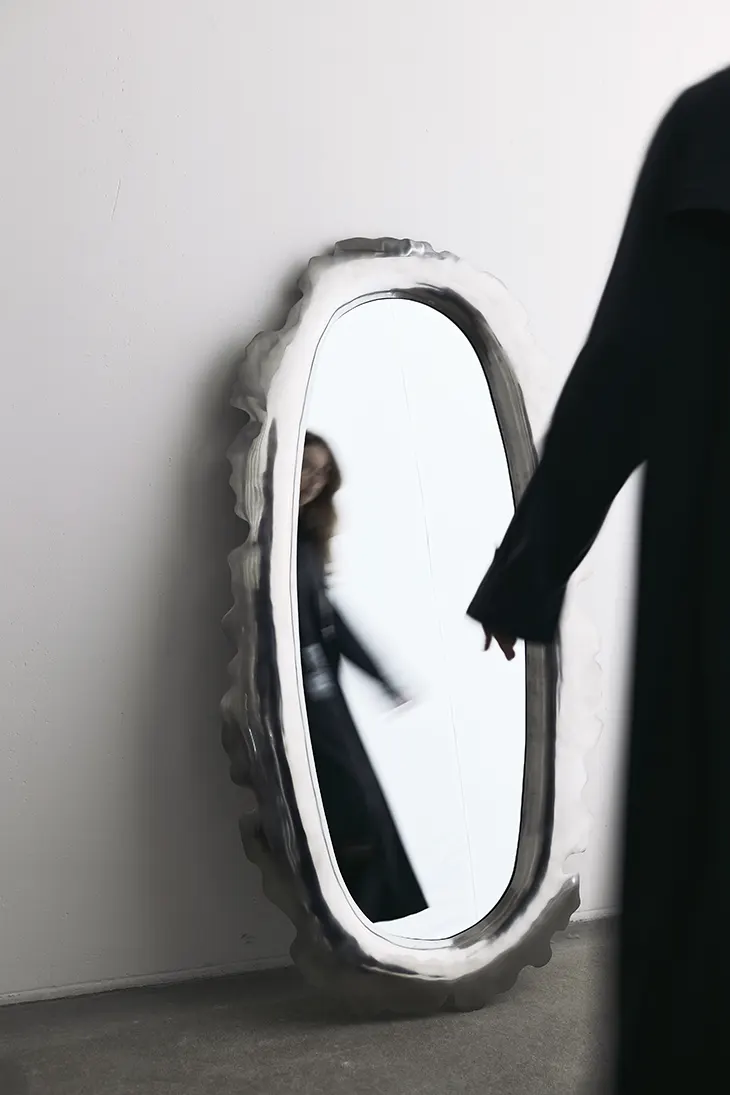
The Gate Mirror seems to question what a mirror can do beyond reflection. What kind of encounter did you want to create between the object and the person standing before it?
We wanted to move away from the idea of a mirror as a simple flat interior object. The Gate Mirror is a physical embodiment of a gateway.
Its secret lies in the form: the frame has a specific inward curve, resembling a funnel. This creates a visual effect of being drawn inward.
When placed in a space, the mirror pulls attention toward itself and effectively gathers the surrounding environment around it.
We wanted the viewer not just to see their reflection, but to feel depth. The mirror visually “invites” you to step forward, thanks to a powerful architectural gesture that completely transforms the perception of a familiar object.
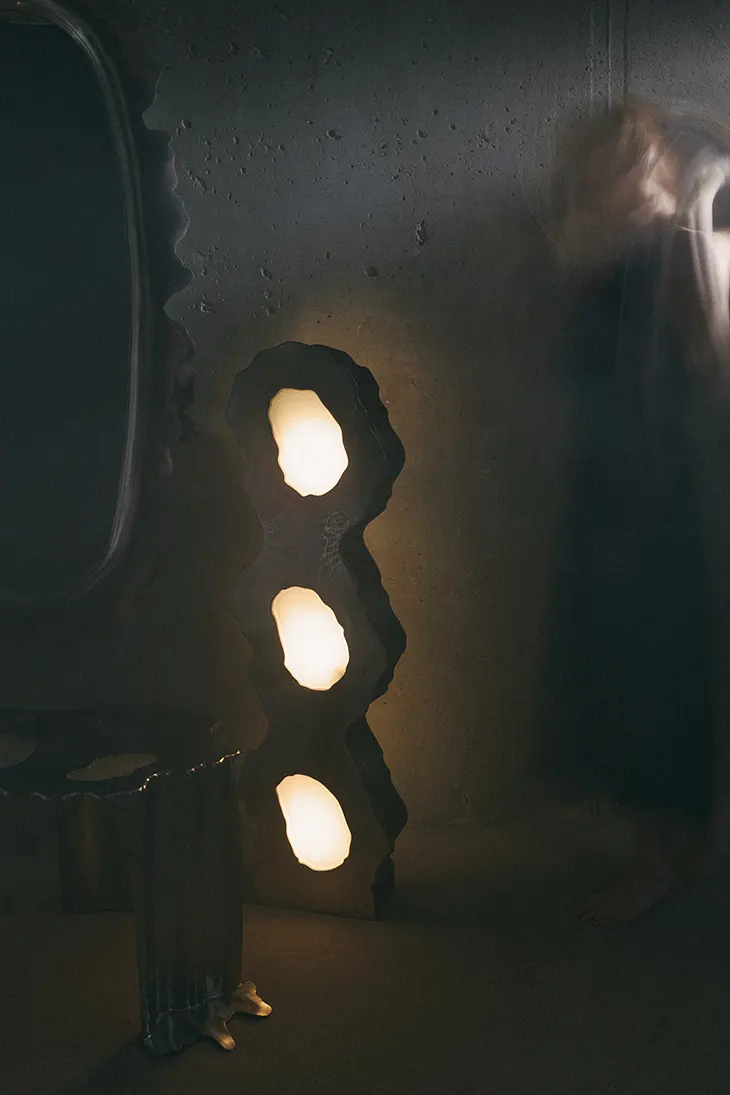
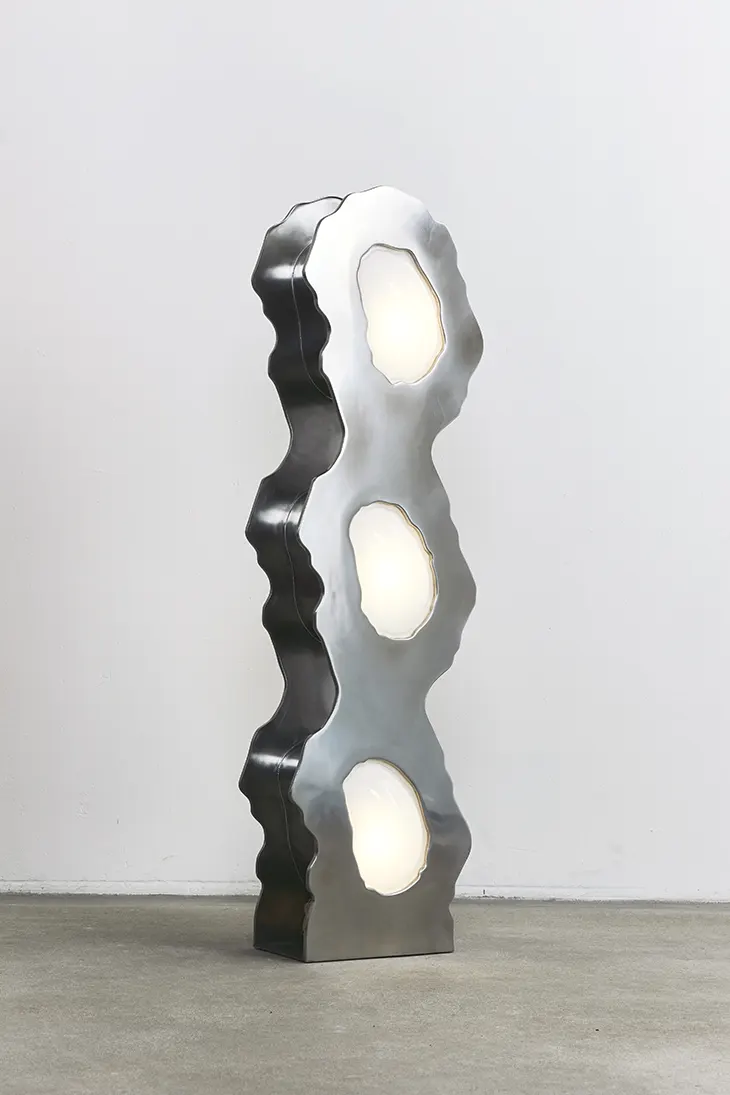
The Glimpse Floor Lamp captures a frozen moment of rupture, appearing more like a fragment caught in space. What kind of atmosphere did you want its fleeting light to create?
We called it Glimpse because it captures a moment of rupture through which energy breaks through. A glimpse is usually understood as something fleeting and elusive. But we believe light has immense power: once it appears in a space, it never truly disappears. We may think it has faded or gone, but it remains forever, transforming the environment.
With this floor lamp, we wanted to create an intimate, mysterious corner where time briefly stands still. This object is a reminder that even the smallest glimpse of light and joy in our harsh world leaves a lasting trace.
Furn Object encourages people to seek what feels truly theirs. How do you create collectible pieces that feel personal, emotional, and connected to everyday life?
The secret is that we are not trying to appeal to everyone. We simply create what we see and feel ourselves, as if we were literally extracting objects from our inner world and bringing them into reality.
These objects are direct projections of our instincts and our understanding of beauty. We use contrasting materials to make them vulnerable and alive, and it’s this interplay that creates a true emotional connection.
Furn Object pieces are not just functional design objects, they are independent characters.
A single object can unify a space, fragment it, or disappear entirely.
How much power do you think one object can have over the mood of a room?
The impact is enormous. A single object can unify a space, fragment it, or disappear entirely.
Every object has its own “gravity.” When you place a strong character piece in a room, it becomes a point of convergence. It draws attention and sets the rhythm of the entire interior. Our objects, these “characters,” are created precisely to function as such anchors of meaning. They carry enough internal strength to organize the space around them and define its atmosphere.
As designers and co-founders, how do your shared instincts shape Furn Object, and where do you see this language of nature, freedom, and emotional design going next?
We consciously do not build rigid conceptual plans. Our main instinct as co-founders is the ability to sensitively feel reality in the present moment.
For us, design is not cold calculation, but the recording of a moment. If something appears in our inner world, it means it needs to be materialized.
We did not plan the Portals collection. It emerged naturally as a continuation of our lives, shortly after the birth of our daughter. In a way, she is what brought these “portals” into being.
We don’t know where our language will evolve next or what will come tomorrow, we’re not trying to predict the future. We simply continue observing life and see what it brings us.