
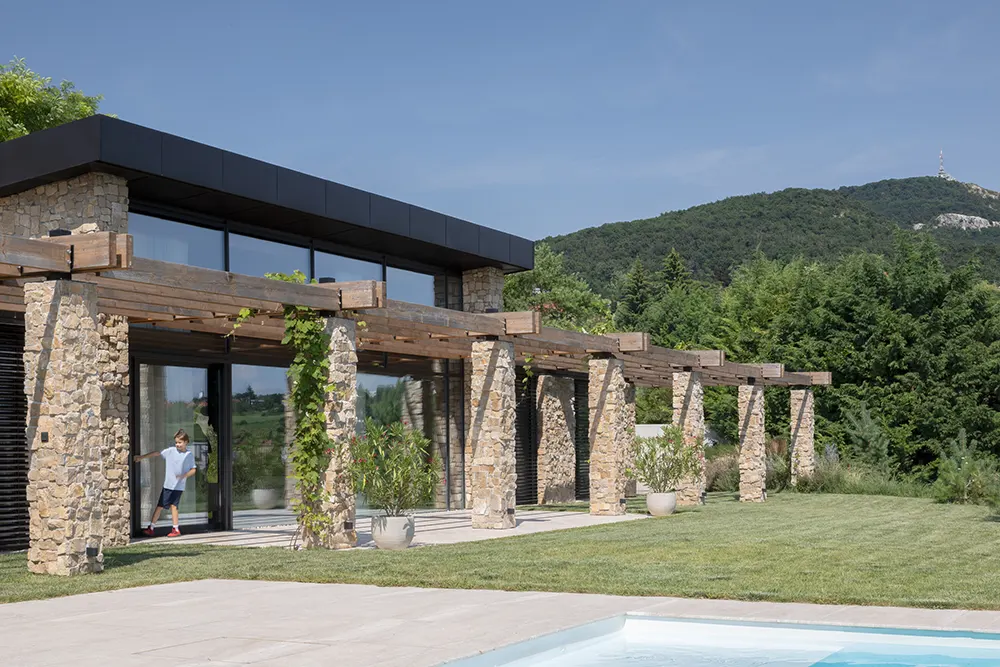
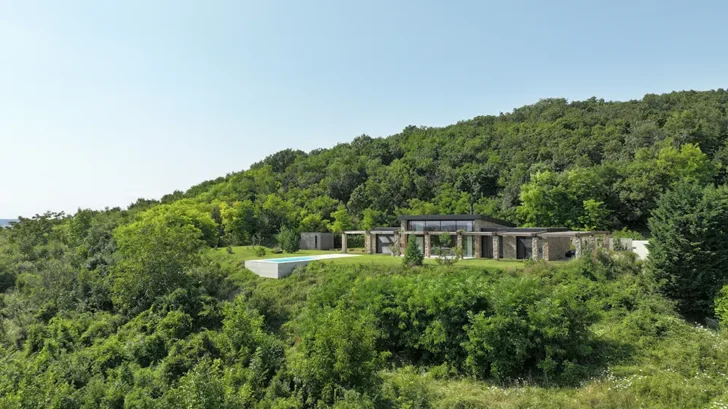
Villa Vicus by Sebastian Nagy Architects occupies a sloping plot below Zobor Hill in Nitra. The site sits at the end of a quiet street, with forest rising behind the property and open views extending south toward the city, Calvary Hill and Nitra Castle. The owners asked for a family house that would preserve these views from every living space while supporting the daily routines of the household.
HOUSING
The architects answered with a linear, single-story plan arranged along the southern facade. A continuous timber pergola runs across the length of the house and brings the composition together. The structure defines the terraces, provides sheltered outdoor areas and controls sunlight across the glazed elevation. It also extends the interior spaces visually toward the garden and the distant city views.
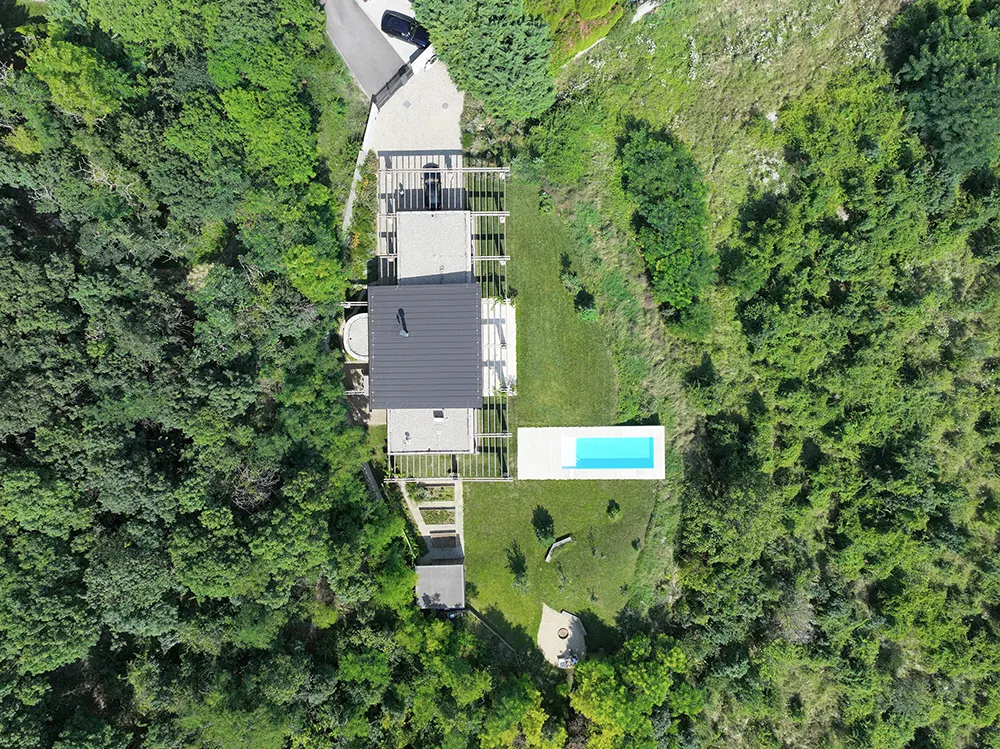
The house contains 158 square meters of usable floor area. Its program includes an elevated living room with an integrated kitchen and dining area, a main bedroom, two children’s rooms, two bathrooms and technical spaces. The plan places service functions along the northern edge, leaving the principal living areas open toward the south. This arrangement gives the main rooms direct access to daylight, the terrace and the wider view.
A summer kitchen occupies the northern side of the house and adds another setting for family activities. Long sightlines pass through the interior and connect opposite sides of the plan. These visual routes support a clear sense of continuity while maintaining a close relationship between the rooms and the surrounding terrain. The single-story layout keeps movement direct and allows the family spaces to remain closely connected throughout the day.
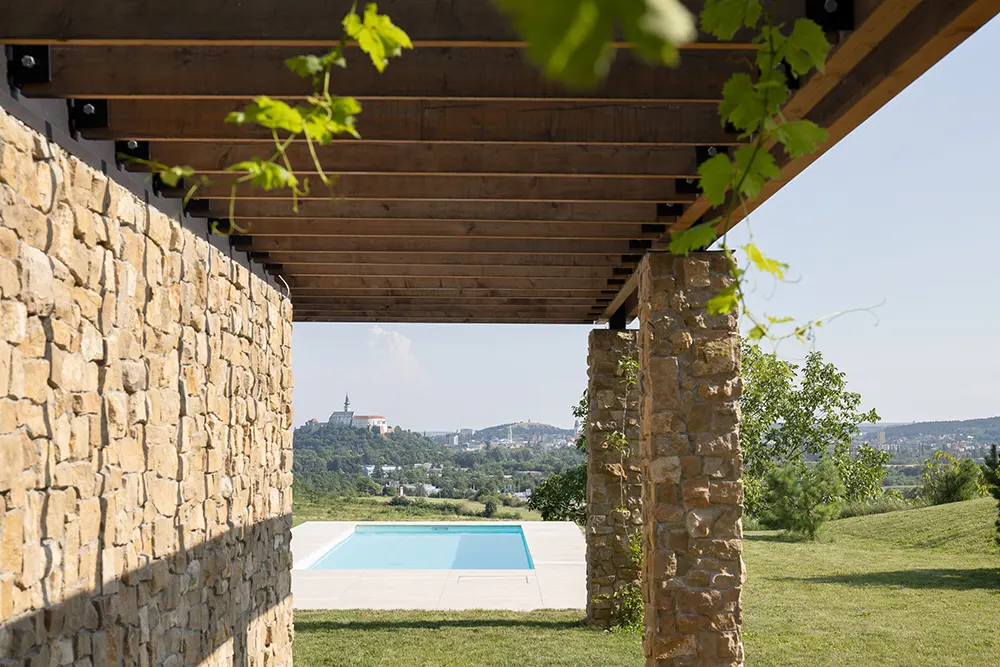
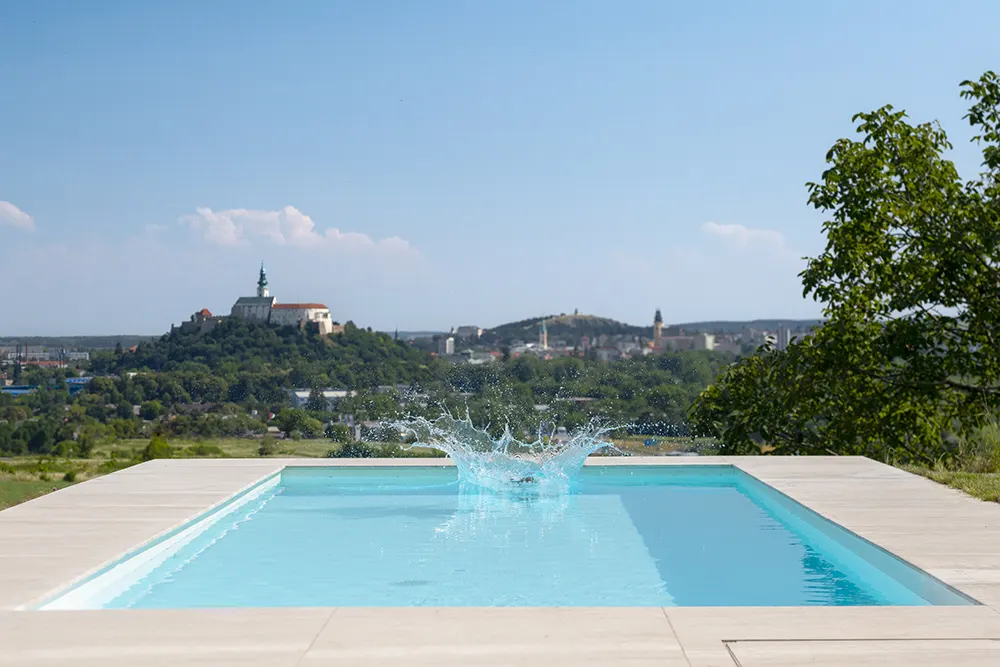
The design follows a passive climatic strategy based on the house’s orientation and the depth of the pergola. During winter, the southern glazing allows sunlight to enter the interior and contribute solar heat. During summer, the timber structure shades the glass and limits excessive heat. The same architectural element defines the exterior character of the house and responds to seasonal changes without relying on a separate decorative feature.
Material choices continue the project’s focus on continuity. Travertine flooring runs from the interior onto the terrace, reducing the visual separation between indoor and outdoor areas. Clay plaster gives the walls a soft, tactile surface, while exposed timber beams establish a visible structural rhythm overhead. The architects selected a limited group of natural materials for their durability and capacity to develop character over time.
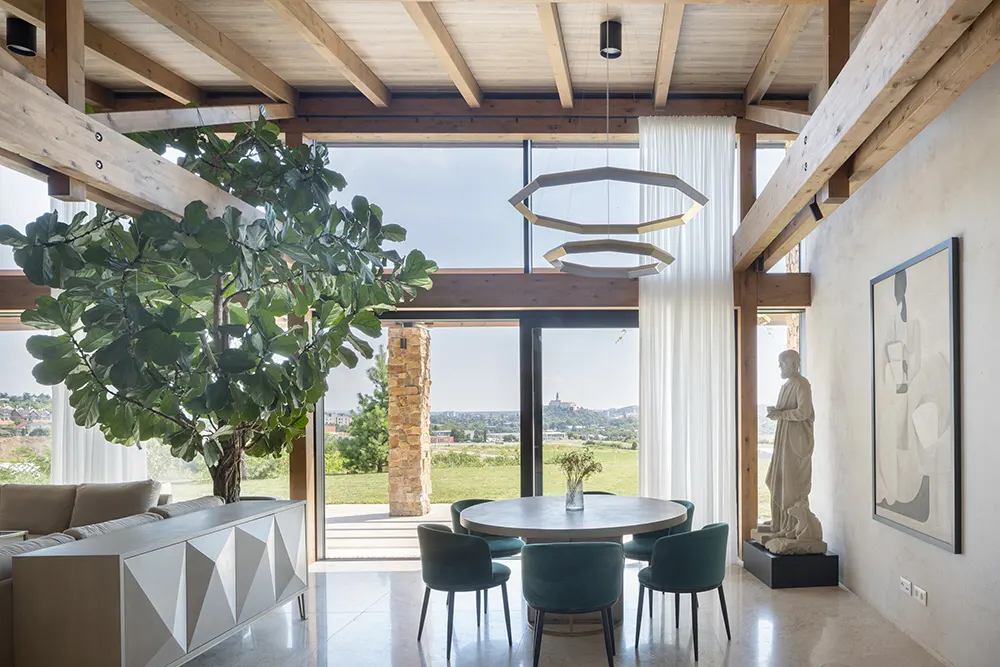
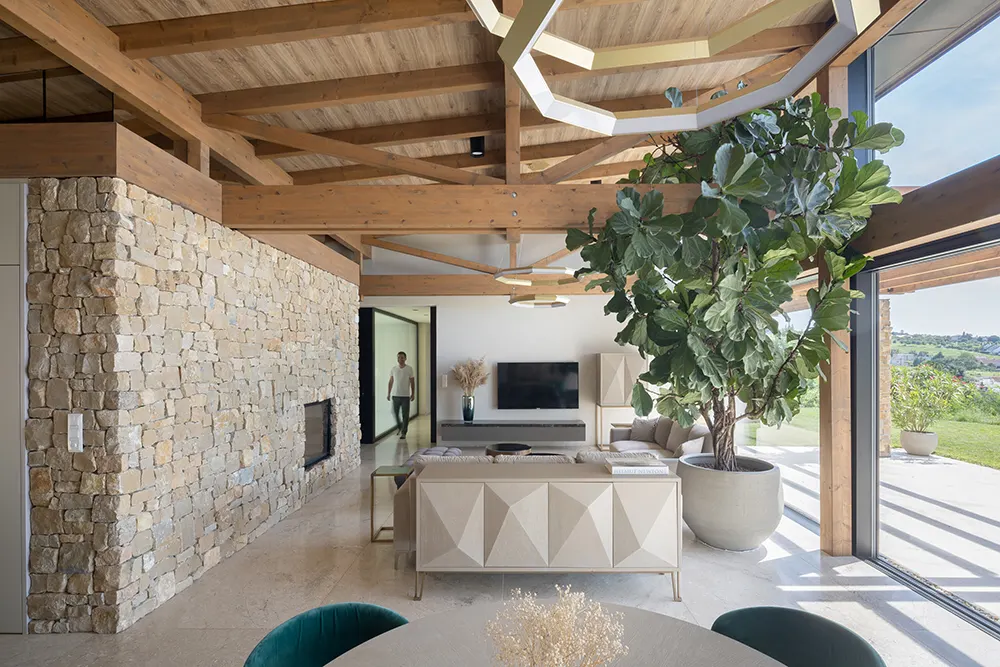
The house uses precise planning and a measured scale to shape daily life. Its architecture avoids unnecessary gestures and relies on orientation, proportion and material consistency. The timber pergola acts as the central element, connecting the glazed facade, terraces and outdoor living areas. Inside, the arrangement of private rooms, shared spaces and service zones creates a clear structure for family use.
Villa Vicus responds directly to its hillside position through a plan that follows the southern view. Every principal living space participates in that relationship, while the pergola regulates light and defines the edge of the house. Sebastian Nagy Architects turns the owners’ request into a focused residential design where layout, climate and material work as one system.
Studio: Sebastian Nagy Architects
Author: Sebastian Nagy
Co-author: Martina Pulmanová
Project location: Nitra, Slovakia
Project year: 2015-2024
Completion year: 2024
Built-up area: 195 m²
Usable floor area: 158 m²
Plot size: 1050 m²
Photographer: Tomáš Manina
Collaborators and suppliers
Travertine flooring: EURO KAMEŇ
Timber roof structure: kontrakting