
Set along Brazil’s northeastern coastline, House in Pituba by Vasco Lima Mayer emerges from a careful negotiation between two distinct architectural traditions. Rather than privileging one cultural language over another, the project establishes a measured dialogue between the restraint and permanence often associated with Portuguese architecture and the openness, climatic responsiveness, and spatial fluidity that characterize modern Brazilian design.
HOUSING
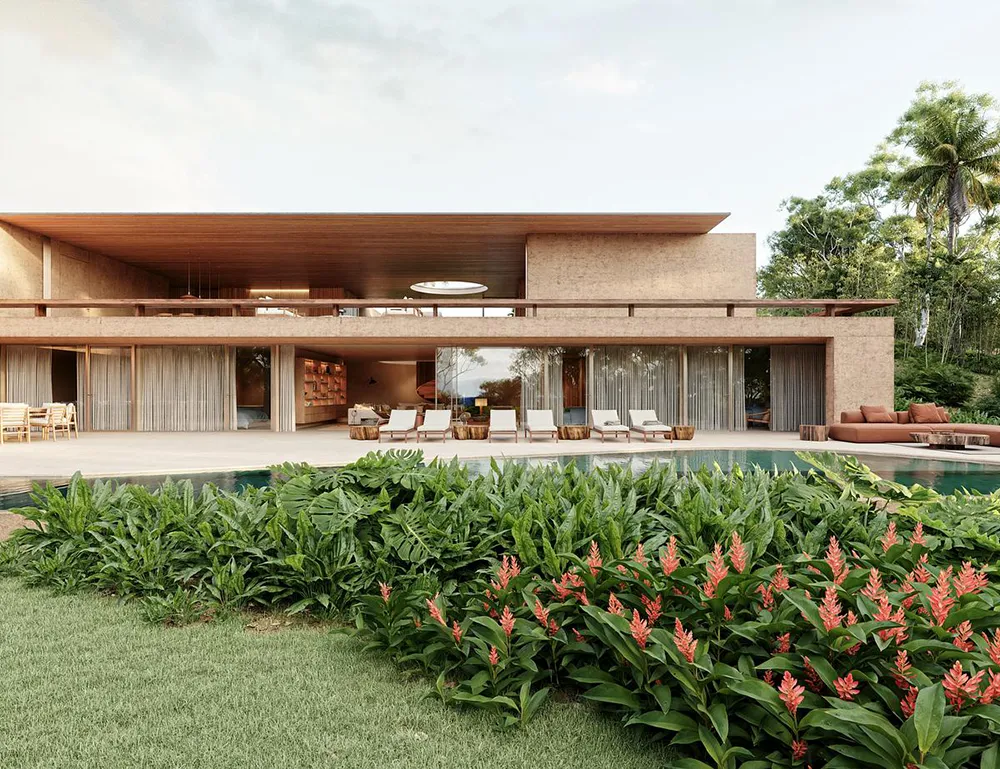
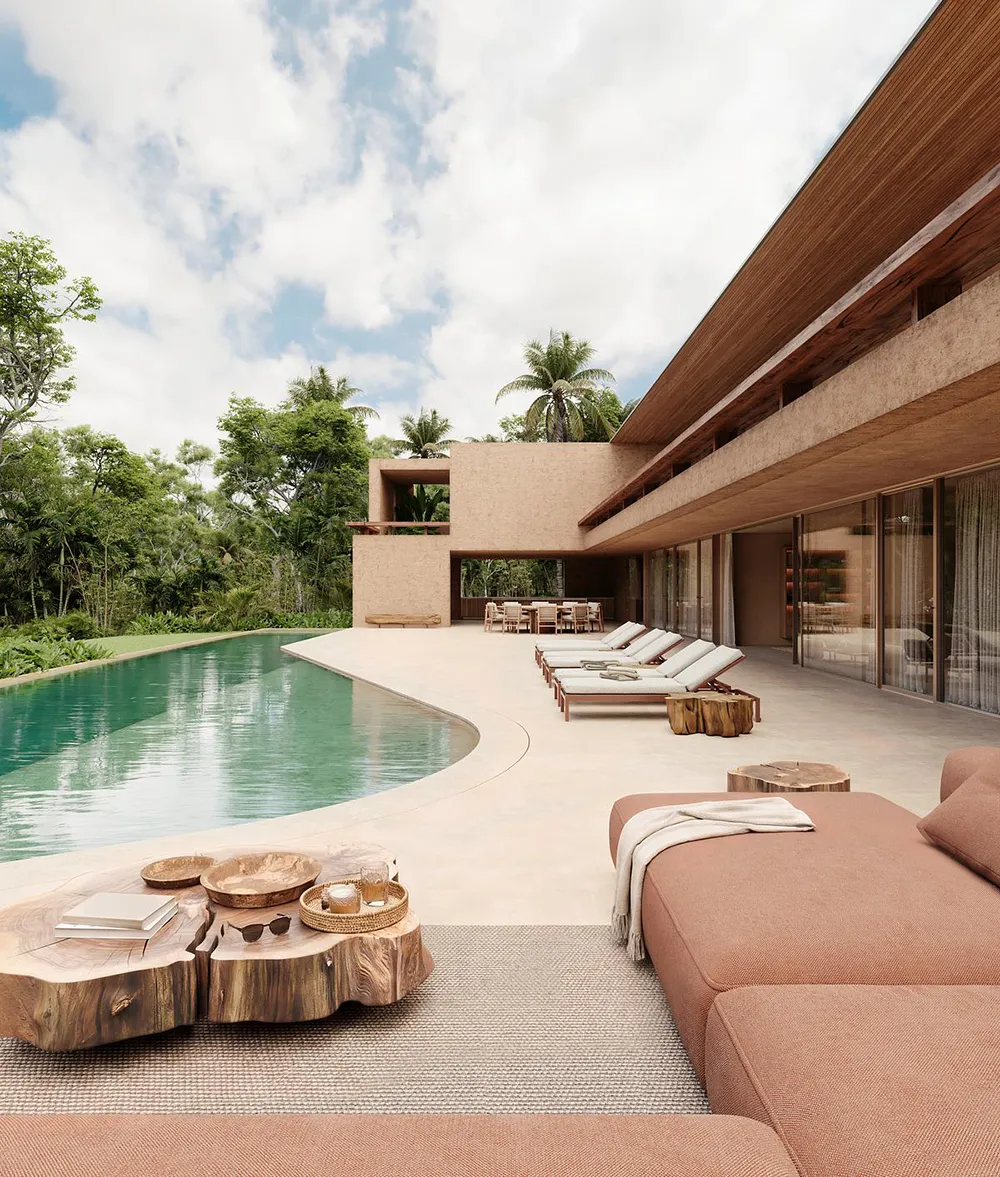
Positioned to face the sea, approximately two hours from Maceió, the residence avoids overt formal gestures in favor of a quieter architectural confidence. Its composition is defined by compact volumes and a disciplined material palette that anchor the house to the landscape, while expansive roof planes and generous horizontal spans extend outward, reinforcing a sense of openness toward the horizon. The result is an architecture that feels simultaneously grounded and expansive.
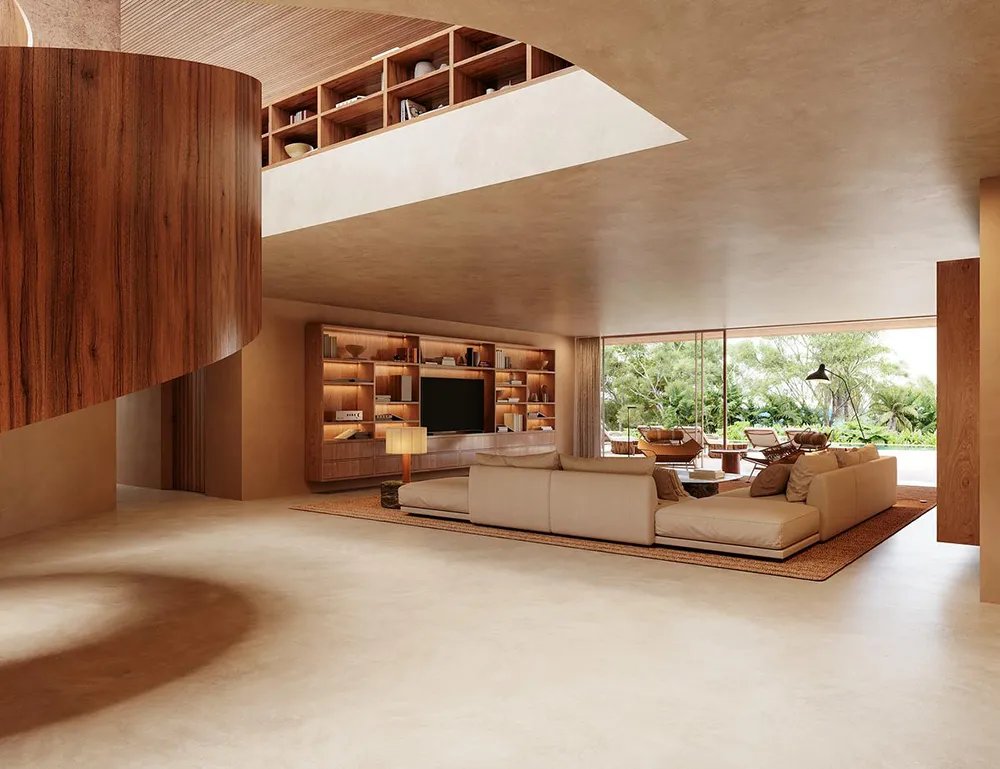
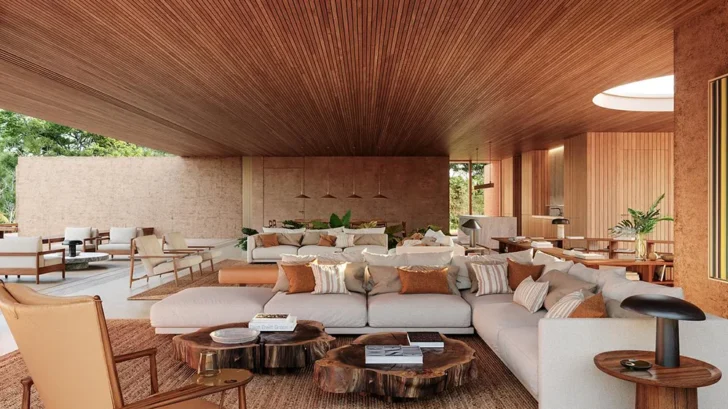
The project’s strength lies in its handling of transitions. Rather than relying on extensive glazing or dramatic structural moves to connect interior and exterior environments, the architects employ subtler strategies of alignment, proportion, and continuity. Living spaces unfold as a continuous sequence, where the boundaries between living room, dining area, and terrace are deliberately softened. A single ceiling plane extends across these zones, establishing a visual and spatial framework that unifies the experience of the house while emphasizing its horizontal character.
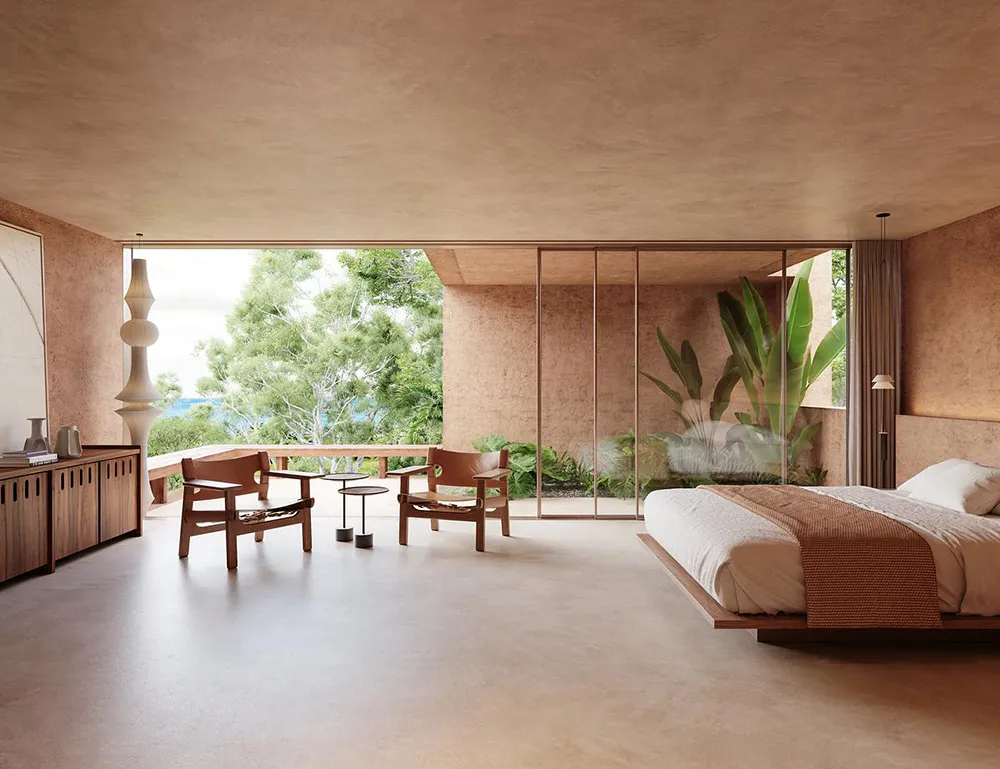
Materiality further reinforces this sense of continuity. The tonal palette draws directly from the soil and vegetation of Pituba, allowing the architecture to feel intrinsically connected to its setting. The house avoids excessive contrast, instead embracing textures and colors that establish a quiet dialogue with the surrounding landscape. This approach lends the project a sense of permanence, as though it has emerged naturally from the site rather than been imposed upon it.
Perhaps the most expressive moment arrives at the edge of the property, where the geometry briefly relaxes into a singular curved gesture that defines the swimming pool. Against the disciplined rectilinear language of the architecture, the curve introduces a note of softness and movement. While subtle, it recalls the spatial imagination of Brazilian modernism and the legacy of Oscar Niemeyer, whose work frequently employed curves not as decorative devices but as instruments for shaping experience and perception.
What distinguishes House in Pituba is its resistance to spectacle. In an era when coastal residences often rely on dramatic forms and expansive visual statements, Vasco Lima Mayer pursues a more restrained ambition. The architecture is less concerned with framing the landscape as an object and more interested in creating a continuous relationship with it. Weight and lightness, enclosure and openness, permanence and flexibility are held in careful balance.
The result is a residence that transcends the notion of a seaside retreat. Through precise proportions, controlled gestures, and an acute sensitivity to place, House in Pituba becomes an elegant synthesis of Portuguese and Brazilian architectural thinking, resolved not through contrast but through atmosphere.