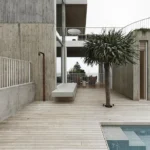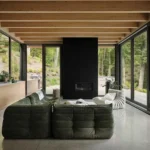

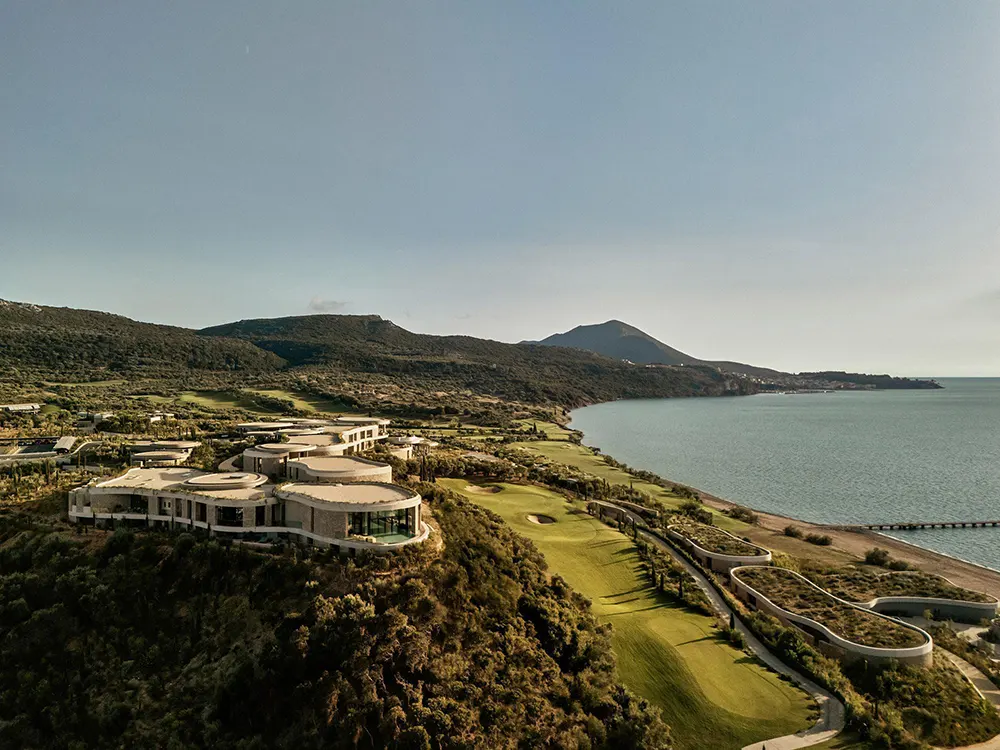
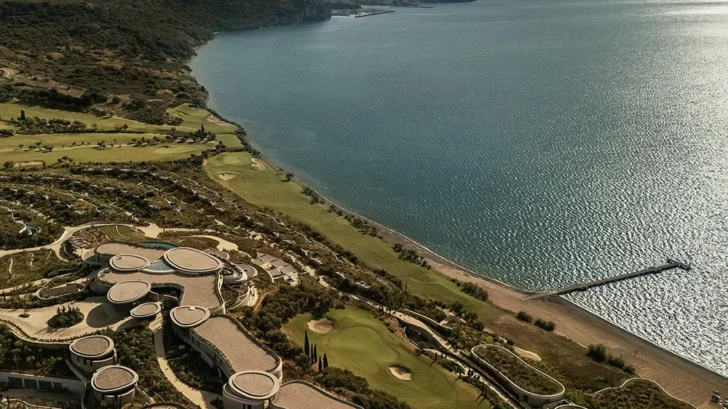
Alexandros N. Tombazis and Associates Architects S.A. and K-Studio designed Mandarin Oriental, Costa Navarino as a luxury resort closely connected to its setting above Navarino Bay. The architecture responds to the region’s terrain, climate and culture while creating privacy, generous spatial proportions and a direct relationship with the land.
HOTELS
The masterplan responds to a site with historical value, ecological sensitivity and strong natural character. Greek rural typologies guided the planning process, especially the “mandria,” organic stone enclosures that adapt to uneven ground through direct, practical forms. The resort applies this logic at a larger scale and arranges its accommodation in clusters that follow the contours of the hills. This decentralized structure divides the development into smaller parts and gives the property the character of a contemporary village.
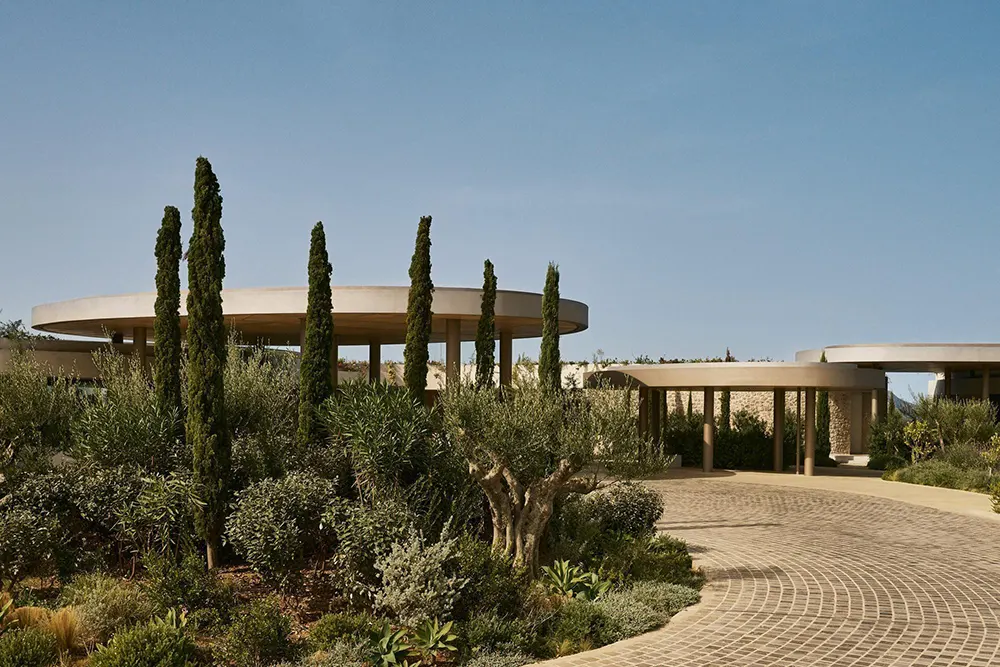
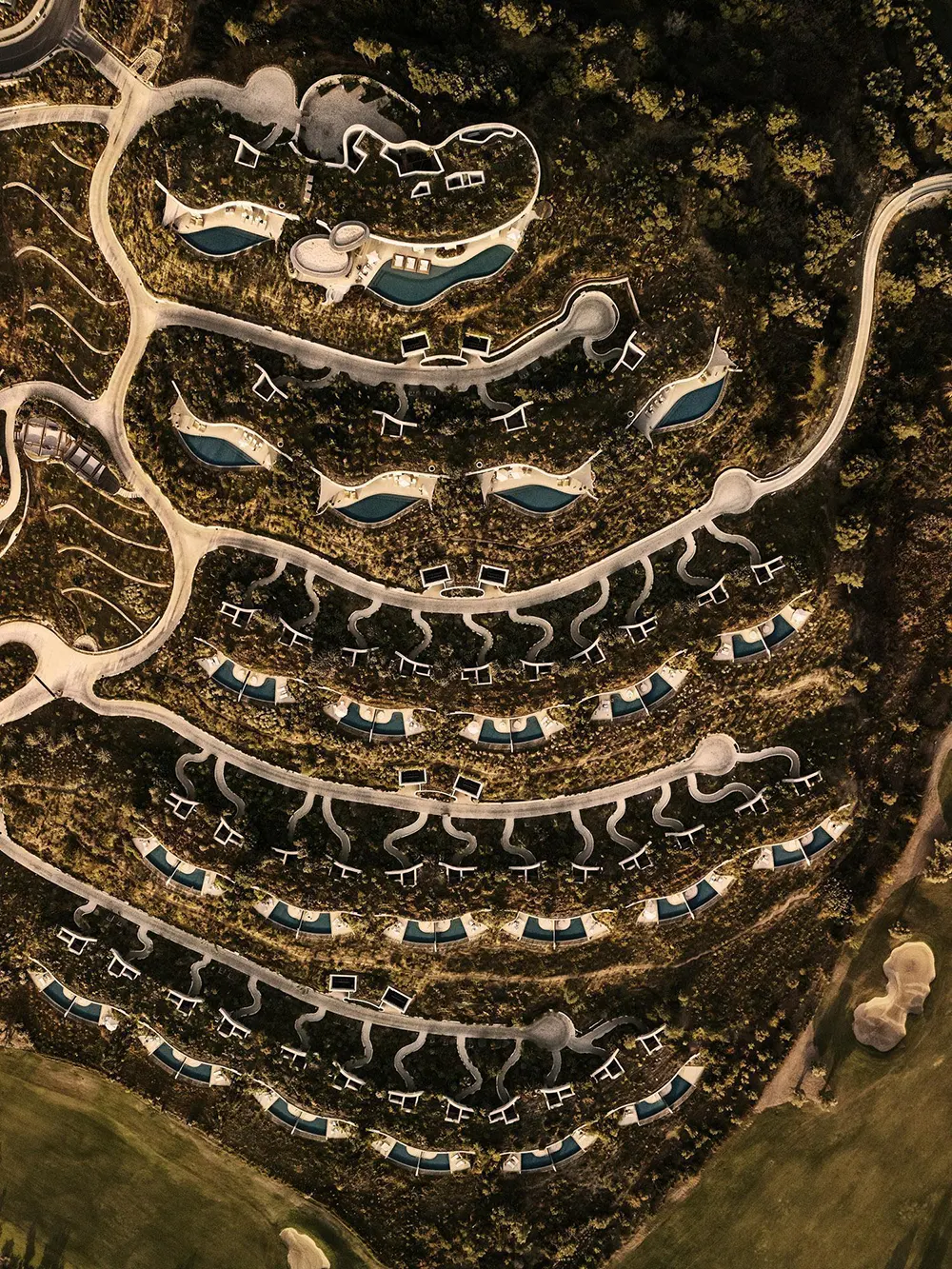
The plan includes 48 earth-sheltered private villas with pools. Each villa operates as an autonomous retreat surrounded by gardens, giving guests privacy within the wider resort. Interior rooms open toward shaded outdoor living areas and create a sequence of enclosed, sheltered and open spaces. Wide overhangs, recessed openings and filtered views shape each transition and maintain contact with the surrounding terrain. These thresholds provide refuge from the climate and keep light, air and views present throughout the day.
The design uses stone and terrazzo with restraint, allowing texture and material weight to define the interiors. Mediterranean tones establish a clear regional character, and selected international details introduce references to travel. The layouts support intuitive movement, comfortable proportions and carefully framed views from key spaces. Open-air circulation keeps guests close to nature and limits the need for enclosed, cooled corridors.
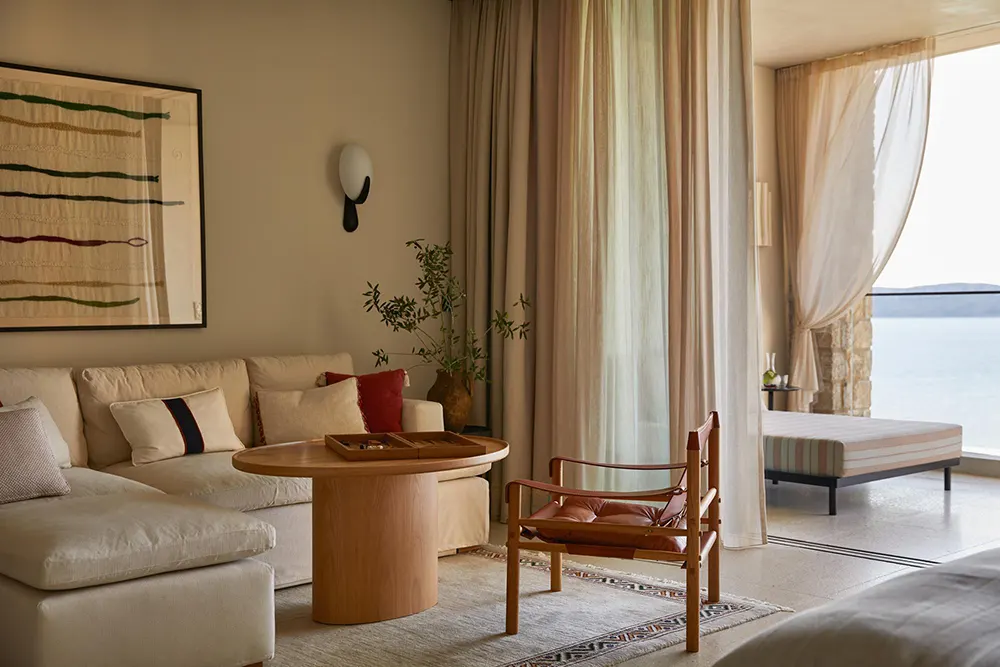
The clustered arrangement allows the property to open or close groups of rooms and villas according to seasonal demand. This system supports more efficient energy use and gives the operator greater control over occupancy. Covered terraces, entry courtyards and other semi-protected areas moderate heat and weather, reduce mechanical loads and improve comfort throughout the day. These elements also create gradual transitions between private accommodation and shared areas.
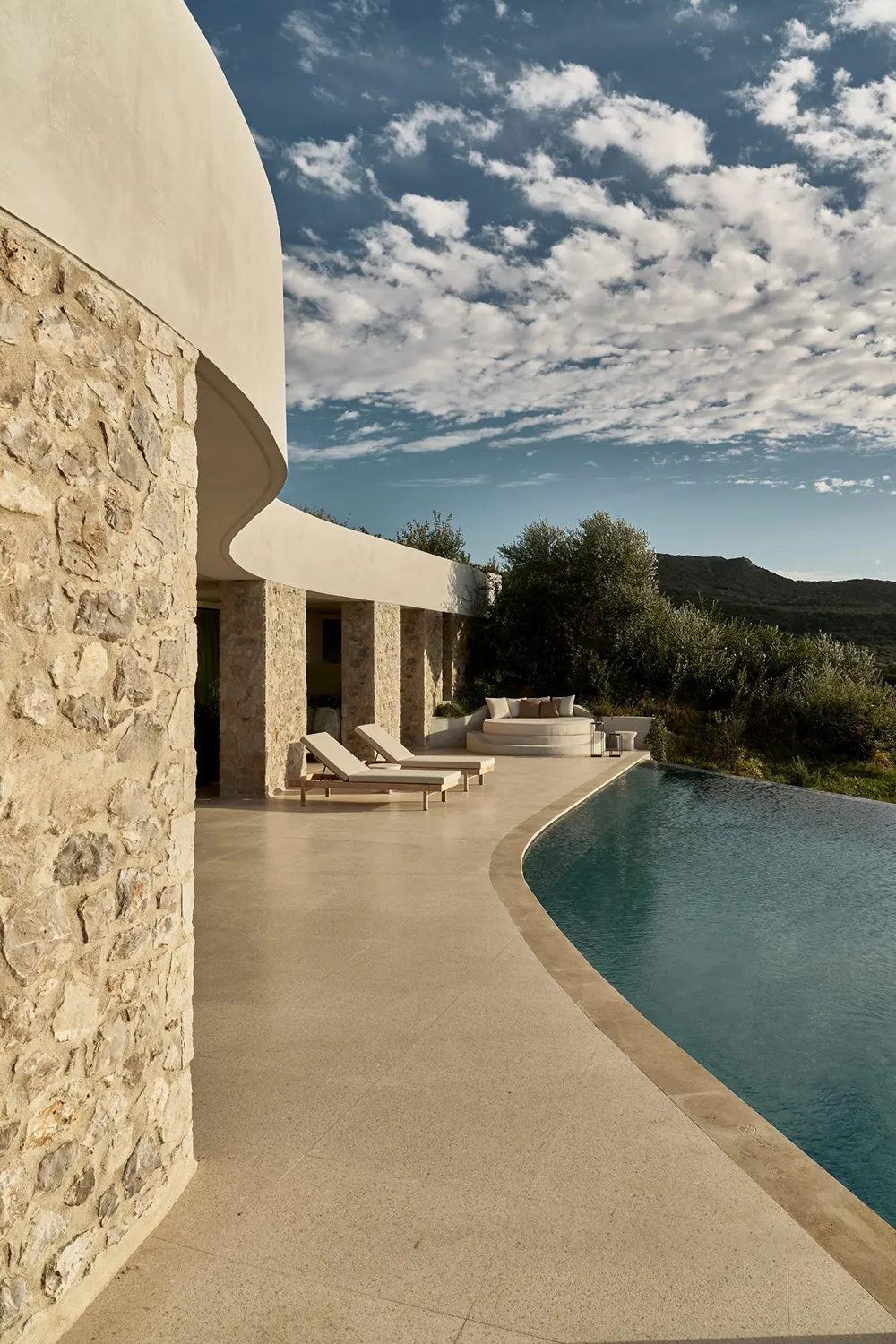
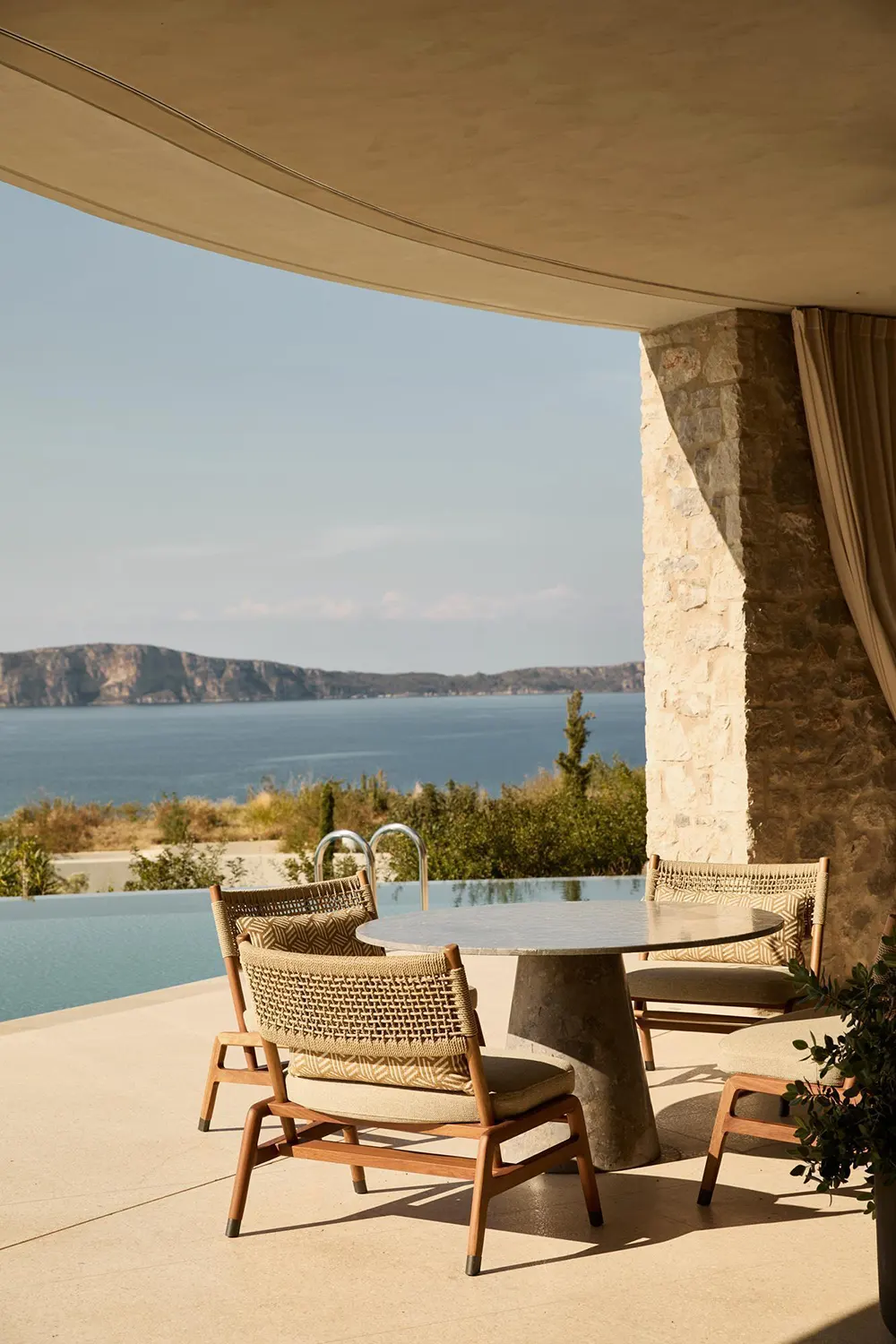
The architecture builds its identity through calm, scale and material continuity. The designers translated traditional forms into abstract contemporary structures instead of copying historical models. Current construction methods reinterpret the village type and create a hybrid resort model that responds to the site and its operational needs.
Environmental performance guided the project from planning through material selection. Planted roofs, thermal mass and cross-ventilation support passive cooling and temperature control. The material strategy prioritizes local sources whenever possible. Water-efficient planting, low-impact lighting and energy zoning further reduce resource use and preserve the quality of the guest experience.
Location: Costa Navarino, Messinia, Greece
Year of Completion: 2023 (soft opening), 2024 (full opening)
Floor area: 27.000 sqm
Owner/Developer: TEMES S.A.
Operator: Mandarin Oriental Hotel Group
Architectural design: Alexandros N. Tombazis and Associates Architects S.A., K-Studio
Photography: Claus Brechenmacher & Reiner Baumann, Helen Cathcart