
KCAP has started construction on Linck, a 198-home neighborhood in Oss designed around shared space, mixed housing, and public life. The project occupies a former surface car park between the city center and the Raadhuiskwartier cultural district, turning an underused site into a residential block with shops, cafés, co-working spaces, communal terraces, and a green courtyard. Construction will complete in 2028.
RESIDENTIAL
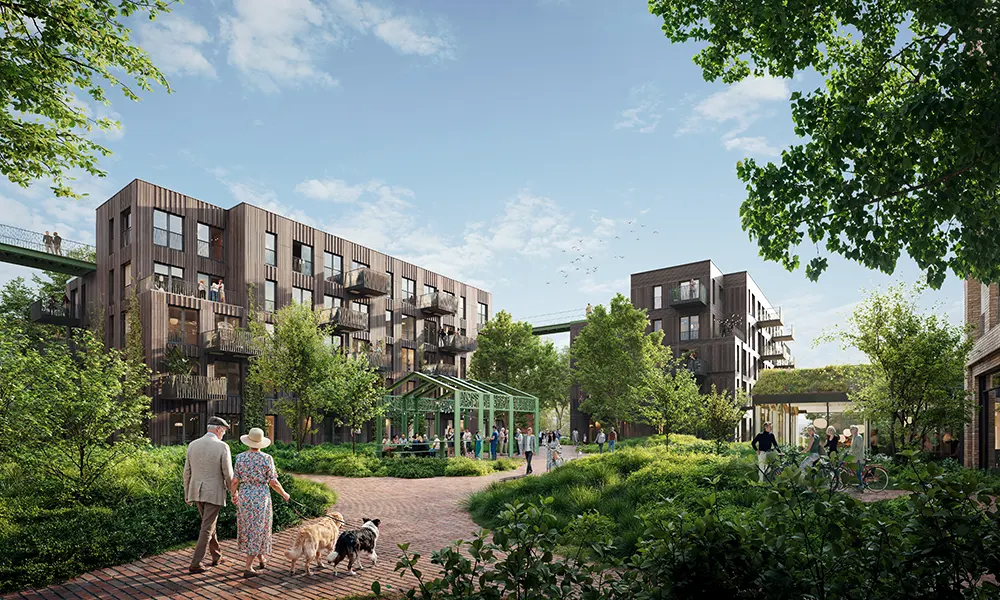
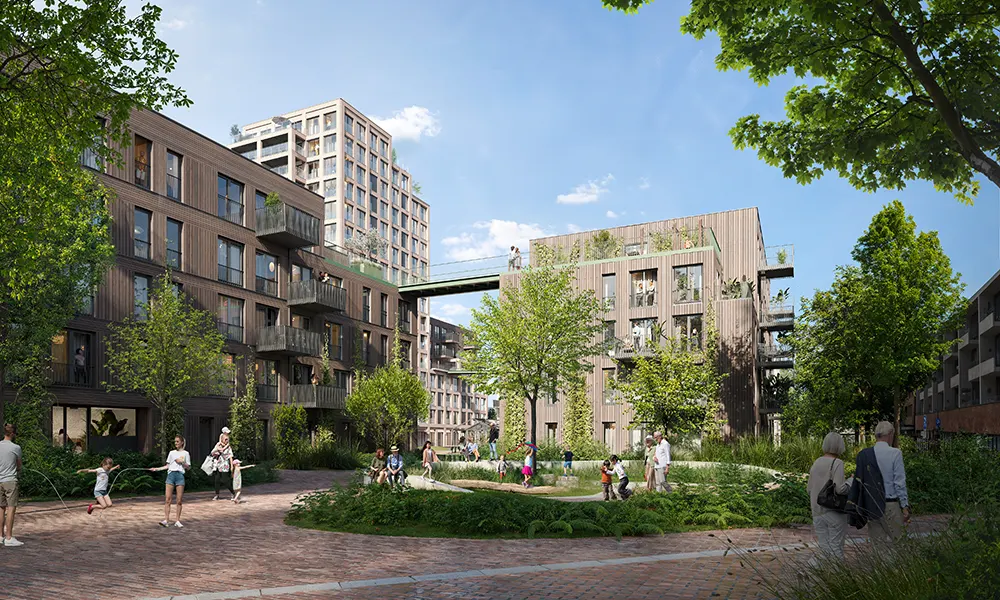
Linck places community at the center of its plan. Four buildings frame a public courtyard, creating a shared interior for residents and visitors. At ground level, the green space includes a children’s playground, seating under a pergola, and direct connections to surrounding streets. Commercial units across 950 square meters activate the pavement and the courtyard, giving the block a daily public rhythm beyond private residential use.
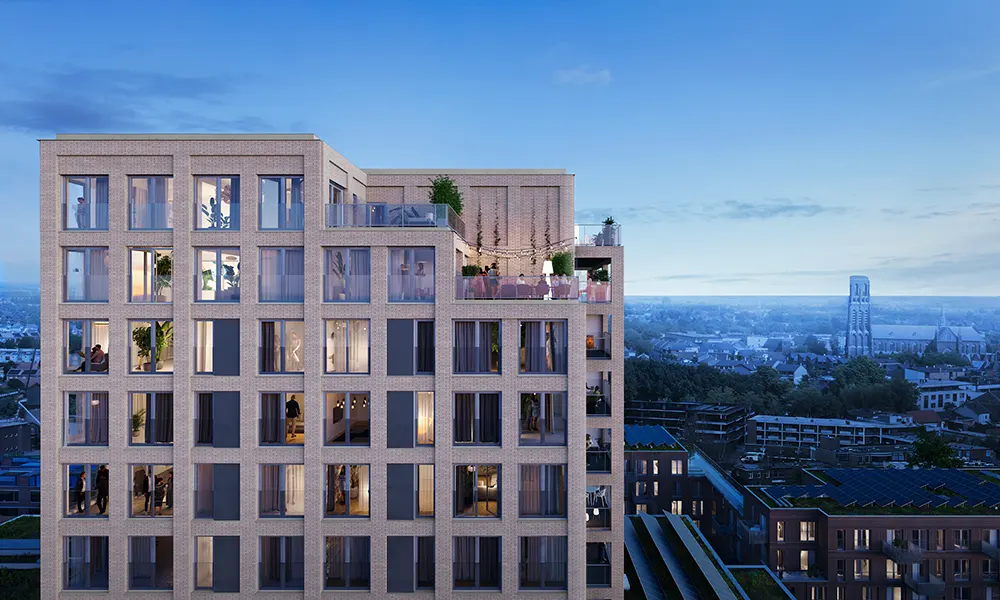
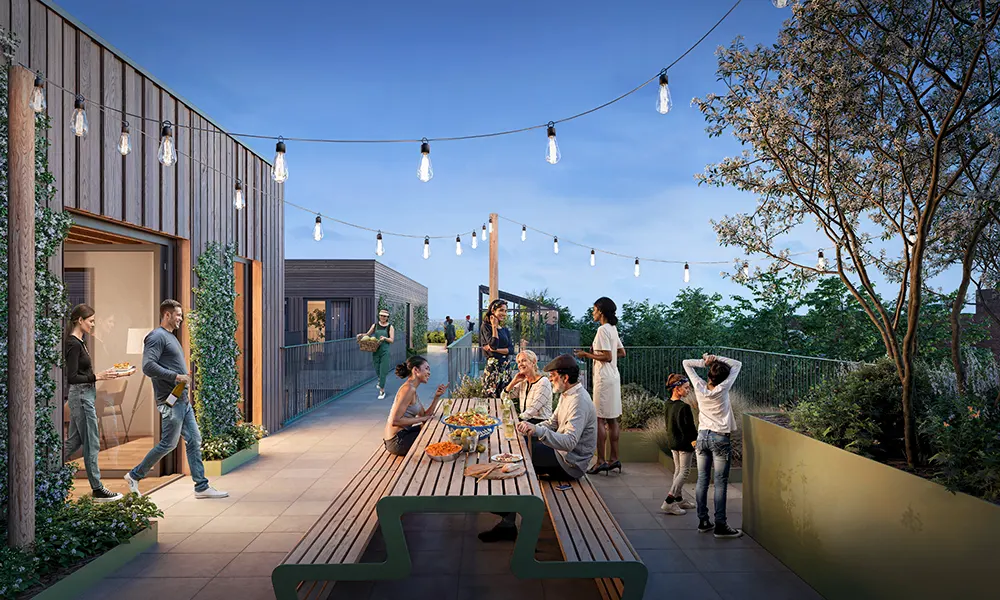
The fourth floor creates another social layer. Bridges connect all four buildings and give every resident access to shared rooftop amenities. The program includes a communal kitchen, a game room, fitness decks, rooftop terraces, and an urban greenhouse for growing food and gathering. KCAP uses these elevated connections to turn separate residential volumes into one connected neighborhood.
The housing mix addresses demand in a growing city. Linck includes 108 social housing units, 52 mid-range rental homes, 28 owner-occupied apartments, and 10 friends-units. The friends-units offer a shared-tenancy model, with private bedrooms and bathrooms supported by common spaces. This model responds to affordability pressure, limited urban space, and social isolation through a more collective way of living.
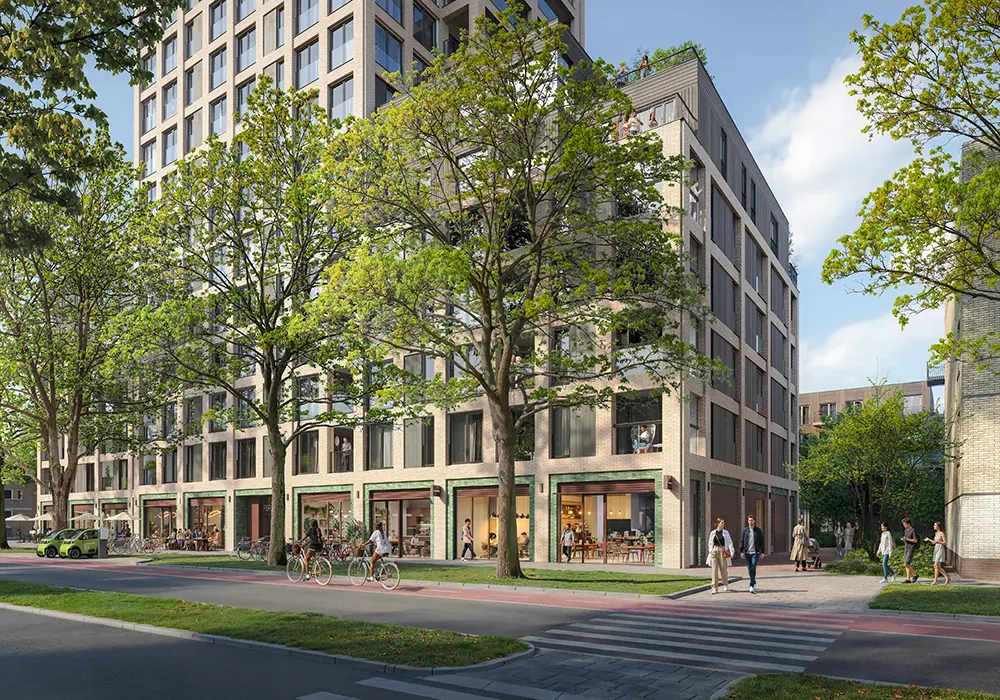
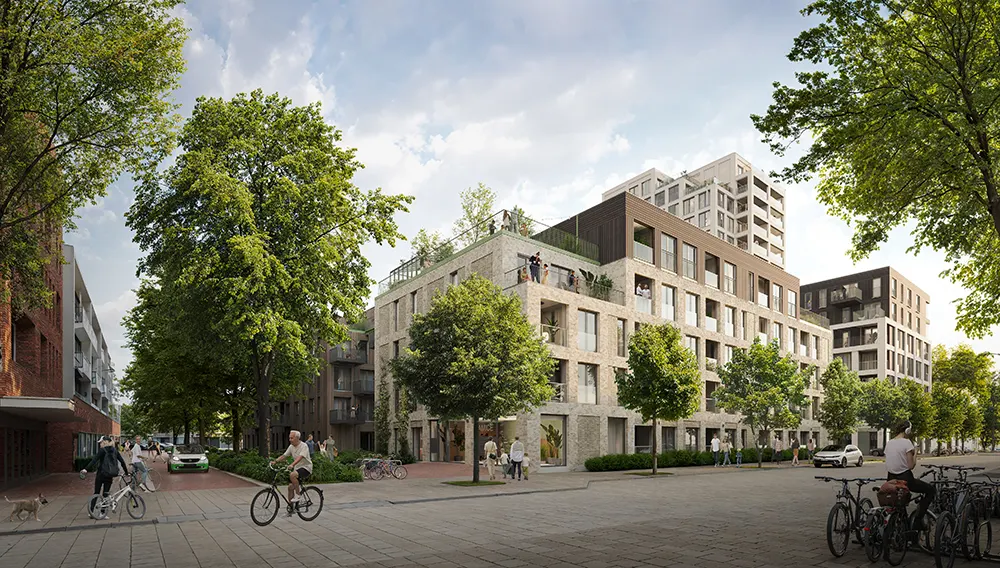
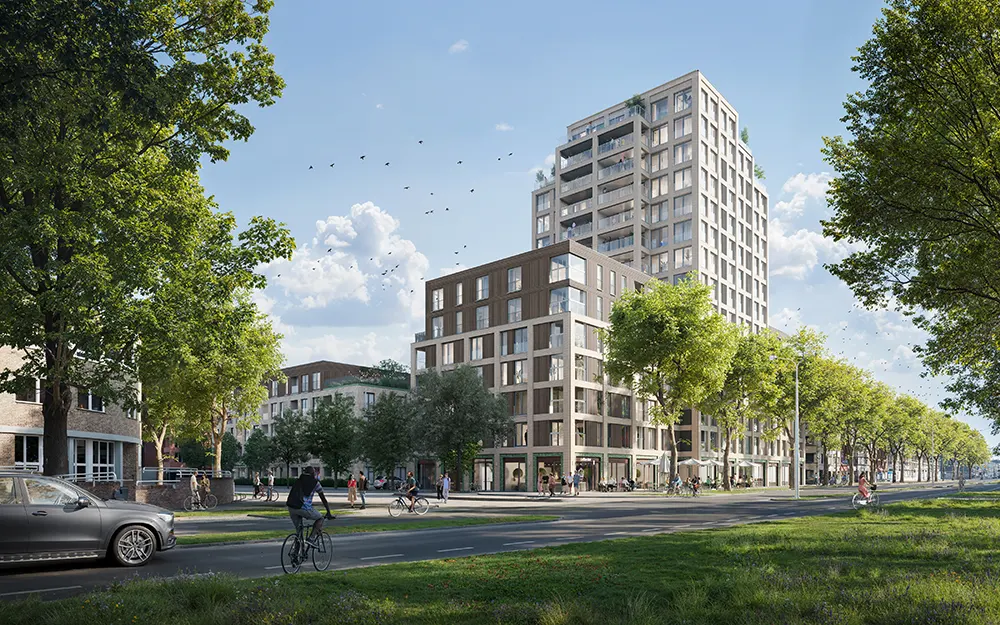
The design works with two distinct characters. Along Raadhuislaan, two street-edge buildings complete the urban block with light brick facades and loggias. A 48-meter tower gives the project a clear presence in the city center and responds to Oss’s plan for greater density. Inside the block, two courtyard buildings take a softer scale, with terraced forms, bamboo cladding, climbing plants, and balconies facing the shared green interior.
KCAP also gives Linck a strong environmental framework. The project achieves an MPG score of 0.57, below the Dutch legal maximum of 0.8, and reaches an embodied carbon figure of 341 kg CO₂-eq/m² GFA, below the Dutch Paris Proof threshold for residential construction. The two lower blocks use cross-laminated timber on their upper floors, storing carbon and reducing structural weight. Their lighter construction allows reduced foundations, cutting excavation and embodied carbon. The tower uses timber for pavilion extensions, and sand-lime stone replaces conventional concrete where possible.
Biobased insulation runs through the project, and bamboo cladding covers the garden-facing facades and top-up volumes. Ground-source heat pumps provide heating and cooling, photovoltaic panels generate electricity across all rooftops, and thermal storage balances demand during the day. Adjustable shading, careful window placement, and light-colored facades on sun-exposed elevations reduce summer cooling loads and support winter solar gain.
The courtyard manages climate through planting, water, and movement. Indigenous planting, facade climbers, nesting provisions, and green roofs support urban biodiversity and reduce heat stress. Rainwater from roofs and terraces flows into wadis across the courtyard, allowing stormwater to remain visible as part of the design. The car-free interior gives priority to pedestrians and cyclists, with shaded routes leading toward surrounding streets and the railway station.
Parking stays limited to 34 EV-ready underground spaces, supported by shared parking in a nearby mobility hub. Bicycle storage sits clearly at every entrance. Beyond the block, KCAP also designed the public route from the city center to the theatre district for the Municipality of Oss, turning a through-traffic road into a route for pedestrians and cyclists.
Location: Raadhuislaan-Noord, Oss, The Netherlands
Client: AM and BrabantWonen
Landscape Architecture Client: Municipality of Oss
KCAP: Urban design, architecture & landscape architecture
Collaborators:
Structural Engineer: Goudstikker de Vries
MEP: Huisman & van Muijen
Fire Safety/Energy and Climate: LBP Sight
Cost Calculation: VGG
Contractor: Berghege
Total Area: 22,565 m² (above ground), 1,425 m² underground parking
Landscape Area: 1,75 ha
Program: 198 residential units (108 social housing, 52 mid-range rental, 10 friends-units, 28 owner-occupied apartments), 950 m² commercial space, 2 collective spaces (95 m²), 34 underground parking spaces (all EV-ready), green courtyard and public spaces
Construction: March 2026 – 2028 (projected completion)
Image Credits: Renders by VIVID-VISION